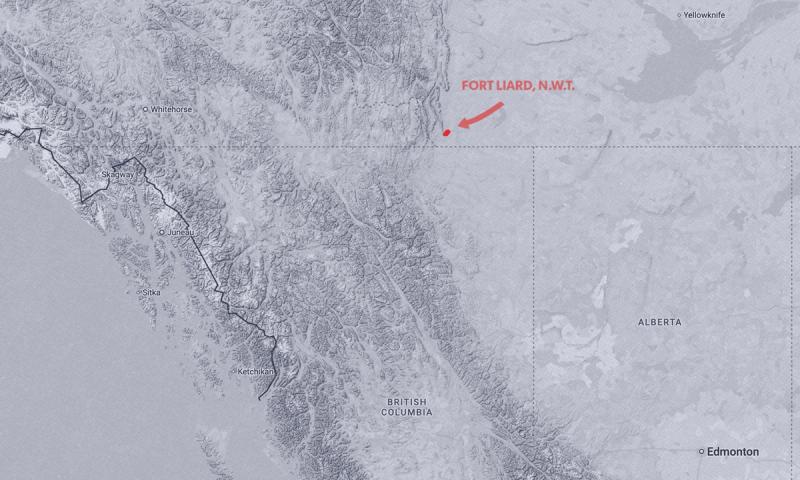
The riverfront hamlet of Fort Liard in the Northwest Territories – population about 600 – is fondly known as the “tropics of the North.” This is due to its unusual microclimate. “We have very cold winters, but very hot summers,” says Angus James Capot-Blanc Jr., band councillor of the Acho Dene Koe (ADK) First Nation, which makes up most of the residents. And very high power bills, too. “My bills are about $300 a month in the summer when using the [air conditioning] and fans.”
Fort Liard is one of more than 280 remote communities in Canada that aren’t connected to the North American electricity grid or to natural gas pipelines. They mostly use diesel generators to produce electricity, and that diesel must be shipped in. Residents of the Northwest Territories and Nunavut pay the highest electricity rates in Canada, and it’s not just energy that’s expensive; food and other supplies must travel up a single highway into Fort Liard. Other remote communities rely on seasonal ice roads, barges or planes. Wildfires, bad weather and road closures can all lead to even higher prices and shortages.
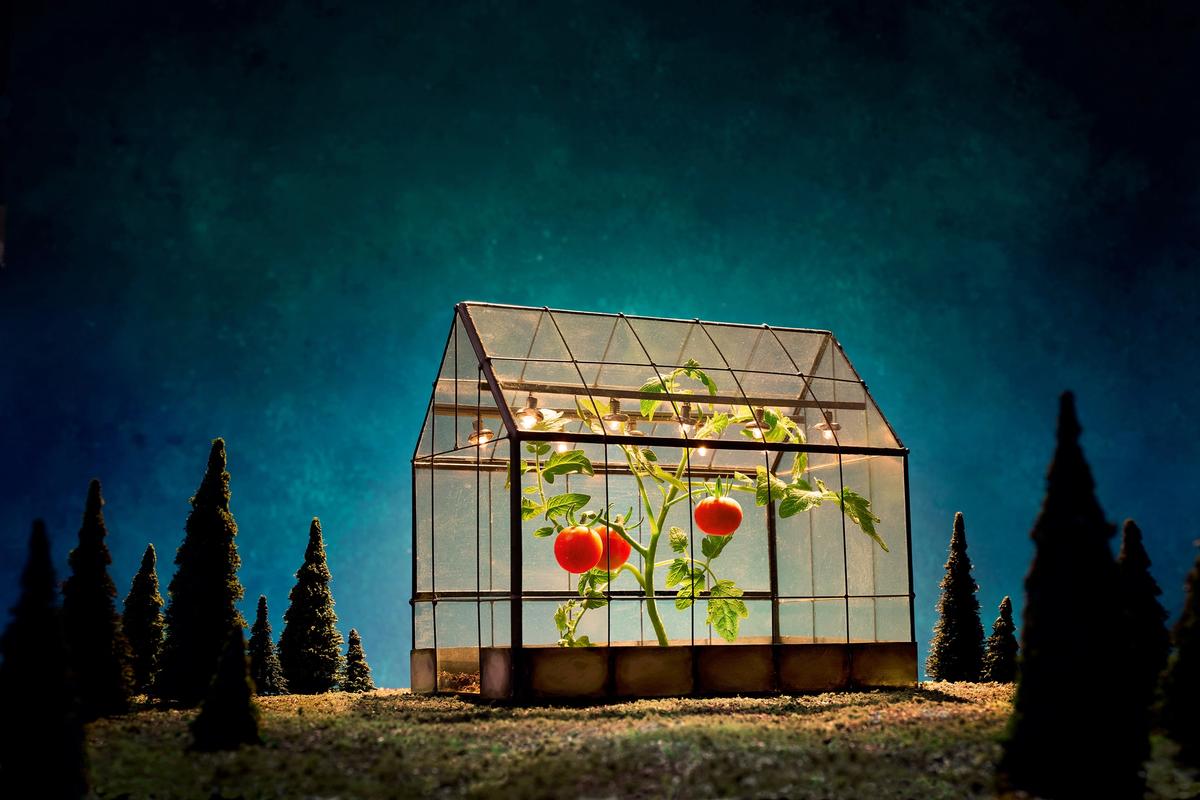
That’s why ADK First Nation is developing plans to use geothermal energy – Earth’s natural heat underground – to help address the problem, starting with a greenhouse to address food insecurity. A pilot model will be installed in the next few months. Although it won’t be geothermally heated, a commercially sized one that should follow later this year will be, if all goes according to plan.
While shallower “geo-exchange” systems (or ground-source heat pumps) aren’t so unusual, Fort Liard’s greenhouse would use geothermal energy for direct heat, which means drilling a lot deeper. Early modelling suggests there’s enough heat down there to cover most of the heating needs for the entire community, which could happen down the road.
“We need to get off reliance on diesel, because it’s taking so much money from our community,” says Capot-Blanc, 25. In June, he was part of a small team presenting ADK First Nation’s project to an international crowd at the World Geothermal Congress in Calgary. Their focus was on how geothermal power can promote food security and energy sovereignty in the North.
ADK First Nation isn’t alone in taking advantage of the heat underground. Other communities in remote parts of Canada are also working on geothermal for direct heat (including for greenhouses) or electricity generation, in which geothermal heat would create energy for the grid. Unlike diesel, geothermal is a renewable energy source and doesn’t have to be shipped in. And, unlike wind and solar, it’s “always on.” But there are still plenty of hurdles to getting geothermal projects off the ground in Canada, including the high upfront cost, especially for drilling.
Capot-Blanc, who’s also a member of the Deh Cho Youth Clean Energy Action Council, which builds youth engagement around sustainable energy projects, sees this as a long-term investment. (Deh Cho is a region of the Northwest Territories, sometimes spelled Dehcho). “For us, success isn’t only about drilling a geothermal well,” he said in Calgary. “It’s also about building local knowledge, skills and confidence that will benefit our community long after the project is completed.”
The Liard Basin, which straddles the borders of British Columbia, Yukon and the Northwest Territories, holds vast deposits of natural gas that once brought jobs to Fort Liard. But production collapsed in the North, dropping more than 90 per cent from 2003 to 2016 as gas prices fell and production costs rose. Jobs disappeared and the area, says Capot-Blanc, was left “high and dry.”
ADK First Nation started looking into developing the geothermal resource underground more than a decade ago. Heat exists everywhere on Earth, but in some places it’s closer to the surface than others, and Fort Liard has a high “geothermal gradient,” meaning as you dig, the temperature goes up quickly.
An early plan to partner with a Calgary company to build a geothermal power plant to generate electricity fell apart when the company couldn’t reach an agreement with the Northwest Territories Power Corporation, which owns and operates Fort Liard’s micro-grid and diesel generation plant.
A few years ago, ADK First Nation revived the idea. The current project, which has received federal funding, is owned by the First Nation and focuses on direct heating rather than electricity. “Decisions are being guided by the community,” says Capot-Blanc, who’s the community liaison for the project and was its first local hire. “Benefits can stay with the community for generations.”
Recent modelling suggests there’s enough heat 1,300 metres down to meet most of Fort Liard’s heating needs. However, drilling still must be done to confirm that geothermal resource, and the design has yet to be finalized, factors which could affect how it plays out, according to Megan Eyre of Calgary-based Barkley Project Group, a consulting firm hired by ADK. Once the resource has been drilled and thoroughly tested, direct heating – most likely for shared community buildings and new homes – might become possible, she explains.
Capot-Blanc says community members are most excited about the greenhouse. Other remote communities in Canada are exploring them, too. Last year, the NunatuKavut Community Council, which represents 6,000 Inuit in south and central Labrador, received about $160,000 from the province to investigate the potential of geothermal greenhouses in diesel-dependent communities, and held in-person discussions earlier this year. And West Moberly First Nations in B.C. has been developing its own plans for a direct-heat geothermal greenhouse.
“Food security is a major challenge in the North,” ADK’s junior project co-ordinator, Cameron Bertrand, said at the Calgary conference. Geothermally heated greenhouses could extend the growing season and help address food insecurity, while providing learning and work opportunities. Bertrand says the Fort Liard greenhouse could supply the local restaurant once it’s up and running.
A couple of hours’ drive south of Fort Liard in northeastern B.C. is Fort Nelson First Nation, which is behind one of the most ambitious projects of its kind in the country. That First Nation owns Tu Deh-Kah Geothermal, which aims to generate electricity from a hot reservoir of brine underground. (Tu Deh-Kah means “water in the form of steam” in the Dene language.)
Tu Deh-Kah has made significant strides toward this goal. “We’ve drilled two wells,” says Cyndi Bonn, affiliate member of Fort Nelson First Nation and training and employment co-ordinator at Tu Deh-Kah. One well would draw heated brine up from underground to spin a turbine for electricity; the other would then re-inject fluid back down into the reservoir.
In 2022, Tu Deh-Kah announced it had completed a 30-day “pump test” confirming the geothermal resource could work for electricity generation. But to fully power the community, another three or four pairs of wells are needed, Bonn says. To secure more funding, Tu Deh-Kah needs a purchase agreement with B.C. Hydro, which hasn’t happened yet. “We continue to engage with the Tu Deh-Kah proponents to better understand the technical and economic aspects of the project,” B.C. Hydro spokesperson Kevin Aquino wrote in an email.
"It hasn't been an easy road," Bonn said. "But the reasons aren't due to technology." Conventional geothermal power plants have existed in other parts of the world, like the United States, for decades, but there are no standalone plants in Canada. “We are still 100 per cent interested in pursuing electrification,” she adds. In the meantime, Tu Deh-Kah is exploring other ways to use its pair of geothermal wells, including to heat a two-acre commercial greenhouse. “Food sovereignty is incredibly important,” Bonn says. “The heat coming off these wells has value” – one that can potentially be put to use growing fruits and vegetables in the community.
Canada is lagging behind other countries when it comes to developing geothermal resources, in part because electricity is cheap and plentiful here. The same doesn’t hold true in the North, where some of the most interesting and ambitious geothermal projects are being developed by First Nations and are community-owned. Maybe that’s where geothermal will take off. “The idea,” says Capot-Blanc, “is to start that clean energy movement in the North.”
Get our weekly newsletter - the people, places, and ideas revealing where Canada is headed.