Melanie Bitner didn’t want to believe what her intuition was telling her. For two weeks, a fire raged in the alpine forest five kilometres from the Gun Lake, B.C., family property where she spent most summers with her teenaged children and her partner, Alex Deslauriers.
During the day, planes skimmed the lake so close to their dock that they could see the pilots’ faces through the cockpit glass. But every evening the sky fell strangely quiet as the aircraft were grounded. At most, somewhere beyond the ridges, small surveillance drones might circle the fire through the night, gathering intelligence for the next day. Otherwise, the flames burned on, largely unchecked until morning.
“Every single night, the effort that had been put in during the day to suppress those flames was essentially undone by the fire progressing during those nighttime hours,” recalls Deslauriers. A licensed pilot and aeronautical engineer, he knew fires are more easily controlled at night, when typically winds calm, temperatures drop and humidity rises.
As unsettling as it all was, the couple refused to consider a personal loss of such magnitude. The land had been in Bitner’s family for generations: her grandfather had built the original homestead, her father made his retirement home there and, in 2005, she acquired a small portion of the land, which she now owns with Deslauriers.
And so Bitner tried to believe Alex and her dad, who reassured her that the July 2023 Gun Lake blaze was too remote to threaten their property.
But in her gut, she was scared. The wildfire season of 2023 bore little resemblance to those of her childhood. By late July, 4,251 distinct fires had already scorched almost 12 million hectares of land across the country – more than double the size of Nova Scotia and far more than the average two million hectares recorded by the National Forestry Database – straining emergency services, emptying towns and displacing 100,000 people across the northern territories, eastern Shield and especially western boreal forests. Foreign countries sent more than 5,000 firefighters, including 700 from Australia’s largely volunteer-based fire brigade, to help extinguish the flames, with a third of them deployed in British Columbia.
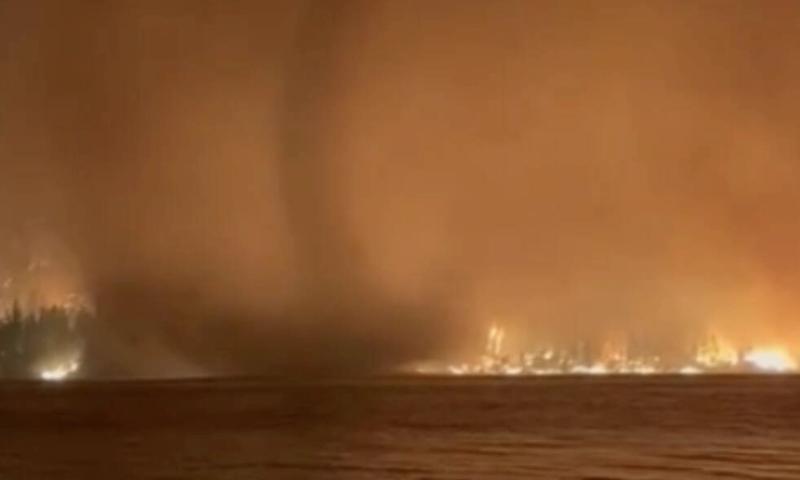
Despite their efforts, the Gun Lake fire couldn’t be contained. On Aug. 1, days after Bitner and Deslauriers returned to their home in Squamish, the community was evacuated and BC Wildfire Service (BCWS) pulled its ground crews. The fire had begun to make its own weather. Superheated air rose in a violent column, twisted by shifting winds into a vertical funnel – a pyrogenic vortex, or what firefighters grimly call a “firenado.” Once rare, these spinning towers of flame are becoming more common in an era of hotter, drier extremes.
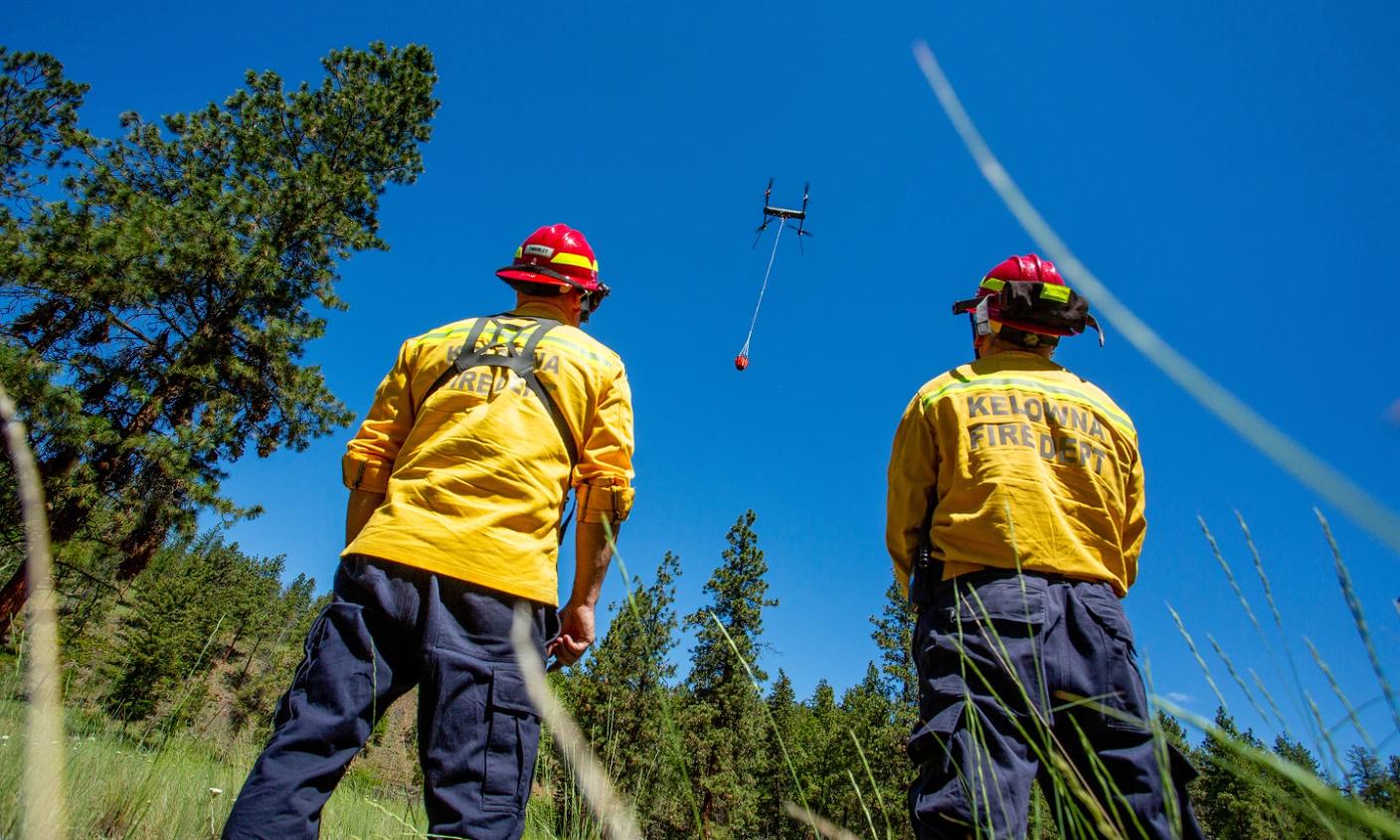
On the night of Aug. 17, the family was glued to their phones, refreshing feeds from nearby surveillance cameras, watching a hot white light grow brighter until around 4:30 a.m., when the feeds went black. Their home was one of 56 properties in the area that were annihilated by the flames.
By the end of B.C.’s long fire season, another 200 buildings had been destroyed in wildfires in the Okanagan Valley, and blazes elsewhere in the country had threatened a host of other communities. Across Canada, more than 230,000 people were forced to evacuate in 2023.
While the direct death toll stood at seven firefighters, a Nature article published in 2025 estimated that smoke from the 2023 fires caused more than 87,500 acute and premature deaths worldwide. Approximately 354 million people across North America and Europe were exposed to it, including 98 per cent of the Canadian population.
Deslauriers and Bitner couldn’t help thinking that things might have been different if firefighters had been able to do more at night. As evening temperatures drop, relative humidity rises and vegetation begins to absorb moisture from the air, slowing combustion. Calmer winds also help reduce the oxygen that feeds the flames and make fire behaviour more predictable for ground crews. But because flying heavy airtankers in darkness is dangerous, especially in mountainous terrain, pilots are typically grounded after dusk unless human life or critical infrastructure is in immediate danger.
Stopping firefighting during what might be the most strategic window to attack seemed counterintuitive to Bitner and Deslauriers. In this new age of uncontrollable megafires – an epoch now commonly referred to as the Pyrocene – blazes like the one that destroyed Gun Lake are “one of the major threats to the livability of the planet,” Bitner says. “You just can’t ignore the speed at which things are changing.”
The night gap in firefighting isn’t the only problem Canada faces as it struggles to deal with longer, more intense fire seasons. The country operates without a national agency like the U.S.’s Federal Emergency Management Agency (FEMA), relying instead on a patchwork of provincial units that are often overwhelmed – hamstrung by a century-old “fire deficit” of unburned biomass, a seasonal revolving-door workforce and interprovincial red tape that turns resource sharing into a logistical maze during emergencies.
But to Bitner and Deslauriers, the most glaring glitch was the tactical blackout that happens at night. Deslauriers was convinced that at least some of the devastation of the Gun Lake fire, and others like it, could have been avoided if fire suppression had continued 24/7.
Somewhere in those abandoned night hours, he believed, was an aeronautical solution.
Alex Deslauriers had possessed two distinct abilities since childhood.
The first was hyper-focus. “Not sure why, but as soon as I learned how to speak, it was all about airplanes and aviation,” he says as he drags his light luggage to international departures with the same mundaneness as all the stewards, border agents and baggage handlers in Vancouver International Airport.
As soon as his hands were dexterous enough, he began building plastic models, sometimes working on the same project for months, breaking only to watch Top Gun for the umpteenth time. He joined the cadets as soon as he could and wanted to become a pilot – a choice that didn’t please his father, who wanted him to pursue university. But because Alex’s other ability was solving problems, they made a deal: his father helped pay for pilot training in exchange for Alex getting an aerospace engineering degree.
Deslauriers then spent his life solving more problems – implementing “extremely complex software” on military and commercial aircraft around the world. He worked on the F-18 program in Kuwait and spent a decade on Boeing’s 787 program. But until the Gun Lake fire, he’d never met an aviation problem so personal. For a systems engineer, the night gap was impossible to ignore, and the solution, to him at least, seemed so simple: autonomous drones.
“Why is no one using technology available today that we’re using in war settings to actually put a dent in this problem at a fraction of the cost of operating an aircraft? It made no sense,” he says, setting his bag down in a quiet part of the airport. Unlike helicopters, which require trained pilots and complex mechanical systems, Deslauriers says, drones are a much simpler aircraft with far fewer moving parts, lowering both maintenance and insurance costs. They’re cheaper to operate, too. The cost of a trained helicopter pilot is much higher than the cost of an operator on the ground, overseeing a number of machines being operated by a swarm algorithm, he says.
After the fire, while Bitner dealt with the logistics of cleanup, insurance and rehoming his father-in-law, Deslauriers focused on closing the night gap with autonomous water bombers – which is what brought us together at the airport. I was flying in to research the usage of drone technology in wildfire suppression; he was flying out to sell it at an aerospace and defence conference in Munich, Germany.

FireSwarm Solutions, the company he co-founded with two others, including Bitner as chief marketing officer, is not, strictly speaking, a drone company. The drone is the hardware. The real invention is the software – an AI-driven operating system that teaches swarms of drones to attack hotspots 24/7. The algorithm pulls in data related to real-time weather, shifting fire perimeters and infrared hotspot detection alongside canopy height, fuel type, fuel moisture, slope gradients, lake locations and potential snags that could interfere with autonomous water pickup. It maps topography and identifies safe egress routes for ground crews in case conditions deteriorate, and it incorporates detect-and-avoid protocols – the aviation logic that keeps unmanned aircraft safely separated from crewed helicopters and tankers.
When the drone’s fuel runs low, the software calls the aircraft home. A technician refuels it in minutes. The engine spools back up. The system dispatches the drone to the nearest viable lake. It dips the bucket into the water, refills, climbs back into the sky and drops its payload onto the most effective hotspots, all day and all night.
FireSwarm is not the first drone technology to market. In April 2023, XPRIZE – a non-profit known for staging innovation challenges to spur breakthrough technologies – launched a global competition calling on teams to develop autonomous systems capable of suppressing wildfires across vast landscapes. Many of the more than 300 entrants proposed fleets of small electric quadcopters that drop fire-suppressant canisters, drone-sensor networks to detect ignitions or semi-autonomous retrofits of existing aircraft. But, says Deslauriers, most of those technologies are too light to move meaningful volumes of water. What sets FireSwarm apart is its focus on “ultra” heavy-lift drones. FireSwarm quadcopters can handle payloads of 400 kg, he says, while most competing drones are only equipped for up to about 25 kg.
FireSwarm’s growth has accelerated quickly. In December, the company was selected for NATO’s DIANA accelerator, which connects emerging defence and dual-use technologies with a network of more than 200 test centres across the alliance. In January, it was named one of five finalists for the XPRIZE Wildfire challenge – and the only Canadian company competing for the $11-million award. When I met him in early February, Deslauriers was on his way to speak with military officials and international investors about how autonomous logistics systems could support both defence operations and humanitarian response in extreme environments.
“We feel like we’re the Wright brothers at the beginning of aviation back in the 1900s, when nobody had done this before,” Deslauriers says, sounding like a man still adjusting to the transition from cautious systems engineer to tech entrepreneur. “There’s a lot of people laughing at us, but there’s a lot of people cheering us on.”
One of the first people to laugh was, in fact, FireSwarm’s third co-founder. In September 2023, Deslauriers phoned David Thanh, a BCWS logistics specialist he’d met while volunteering on search-and-rescue calls in the mountains. He wanted to get, as Thanh recalls, “[my] take on drones suppressing wildfire.”
Thanh was sympathetic – the man had just lost a house – but it was at that point that he couldn’t help but chuckle at the idea. He pictured the average drone scooping a gallon of water to extinguish a fire blazing through the treetops, burning at 1,000 degrees Celsius. “What if we’re talking about a lot of drones?” he recalls Deslauriers asking. “Let’s just say we had 50 drones delivering five litres of water.”
Thanh likened it to a bunch of drinking buddies trying to put out a bonfire with their urine. “You can piss on that fire for as long as you want, but it’s not going out with the amount of piss that you’re putting on it as long as it’s still being fed with fuel,” he told him. “It’s not going to have that heat transfer that you need to be able to put the fire out, to be able to smother it or cool it down enough to be able to stop it.”
Deslauriers thought for a moment. “Well, what if we’re talking about big amounts of water, like 25 litres?” It would evaporate before it touched the tree canopy, said Thanh. He estimated a minimum payload of 150 litres would be needed to punch through the tree canopy to the root of the fire. “Well, what if we were able to do that, and what if we were able to do that in a swarm?”
He suddenly had Thanh’s attention. A few months later they were at a Las Vegas drone convention together in search of such a machine. They found just one: the Thunder Wasp.
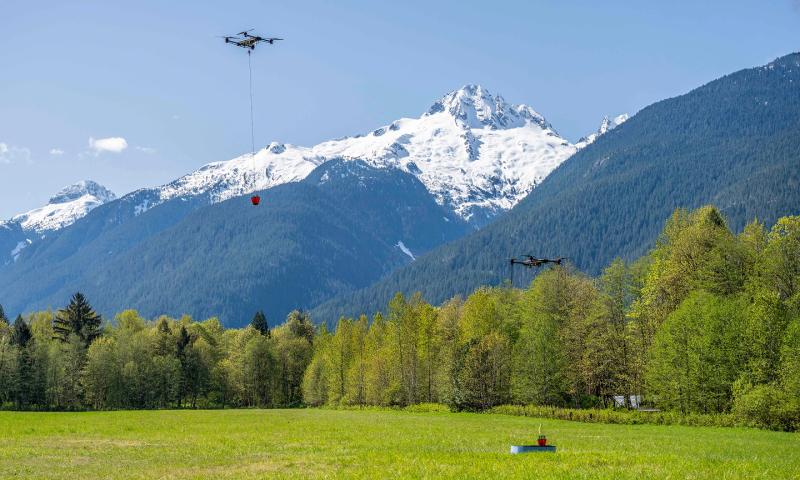
Manufactured in Sweden by ACC Innovation, the unmanned machine is a jet-turbine-powered, ultra-heavy-lift quadcopter – a helicopter with four fixed-wing propellers. Designed for military logistics, Thunder Wasps typically haul ammunition, medical supplies or equipment into terrain too dangerous for crewed aircraft. They are built for endurance and hostile environments – for moving payloads of up to 400 kg to places humans cannot safely go.
What’s more, two or more of these machines can be programmed to communicate with one another mid-air. And because the Wasp is turbine-engined, it can stay airborne for between two and four hours without the recharging limits that would ground a battery-powered machine every 15 minutes if it were carrying the same heavy load. It comes down to energy density: jet fuel contains roughly 40 times more energy per kilogram than lithium batteries, giving it about 75 more minutes of flight time. “It’s already being sold to military markets and to logistics markets,” explains Deslauriers.
Before pitching their idea to wildfire agencies and operators, Thanh urged caution. Firefighters had seen many miracle technologies come and go – from fighting fires with missile launchers to sonic waves. These agencies are used to opportunists, he says. Every disaster draws in serial entrepreneurs chasing “disaster dollars,” pitching slick technology to people who spend their summers trying to keep entire forests from burning. So FireSwarm stayed stealth until it had a viable product.
In September 2024, they struck a distribution agreement with ACC Innovation, becoming the exclusive North American distributor of its ultra-heavy-lift uncrewed aircraft systems, including the long-endurance Thunder Wasp quadcopter. Installed with what Deslauriers calls a “fire mission kit” – proprietary sensors, AI decision-support systems and a massive water bucket – as well as FireSwarm’s own swarming software, it would become a unique product called the “Fire Wasp.”
For now, however, the aircraft exists more as a test concept than an operational tool. FireSwarm’s heavy-lift drones are far larger than most unmanned aircraft currently allowed under Canadian aviation rules – a regulatory hurdle the company will eventually have to clear before they can fly over real fires.
But for prospective customers, the question is still whether drones of any size can deliver enough water, in the chaotic conditions of a real wildfire, and deliver it fast enough to matter. A 400-kg payload equates to roughly 100 gallons of water. Modern large airtankers deliver between 3,000 and 4,000 gallons in a single pass, says Britton Coulson, president of Coulson Aviation, the B.C.-based aerial firefighting company founded by his grandfather in 1960.
“To match the delivery capability of even a single conventional airtanker would require dozens of small drones operating simultaneously,” he said via email. That he still refers to ultra-heavy-lift drones as “small” is revealing: even the smallest single-engine plane can match the payload of eight Fire Wasps.
“There’s a time and place for both kinds of loads,” says Thanh of the skepticism. Large volumes of water carried by winged aircraft are effective for building containment lines and knocking back large fronts, he says, but the sheer weight of those drops can destabilize trees, especially in steep terrain, forcing ground crews out of the danger zone. Smaller loads, like those comparable to BCWS’s fleet of A-Star helicopters, or the Fire Wasp, allow for more surgical drops without pausing ground lines. In those scenarios, he says, drones have the added advantage of swarming together to attack a hot spot in a continuous circuit.
Thanh isn’t surprised to hear wariness from wildfire professionals. Resistance to change, he says, is embedded in the structure of the sector. “It’s a very different beast from any other emergency service,” he explains. Unlike police or paramedics, wildfire crews don’t operate year-round. Fire season arrives, the crews mobilize and the system runs at full tilt before standing down again. For full-time staff, the end of fire season is either spent attacking fires in the Southern Hemisphere or taking long-deferred vacations before preparing for the next season. This leaves little time for experimentation.
Introducing a new technology – especially one involving autonomous aircraft – means rethinking tactics, training and command structures in a system that barely has time to catch its breath. An emailed statement from BCWS illustrates this: “We are not aware of any specific studies that show nighttime fire suppression changing containment outcomes,” it reads. “Increasing NVIS (night-vision imaging systems) operations may seem like a logical step given the capabilities this technology provides, however, it is not always reasonable or practical.”
Canada’s wildfire doctrine has always been shaped as much by geography as by ideology. With vast stretches of backcountry and fewer towns in the path of many burns, it has – or had, until recently – the luxury of letting fires burn. The country is also contending with a backlog of fuel for fires. For decades, modern suppression treated all wildfires as emergencies to be extinguished, even though fire is also a natural maintenance system: it clears understory (vegetation under a forest’s canopy), returns nutrients and prevents forests from becoming overstocked tinderboxes.
After the Second World War, as surplus aircraft were converted into water bombers, there was huge institutional momentum to put out every blaze as quickly as possible – including the low, creeping ground fires that would normally thin forests and burn off deadfall – leaving an unnatural buildup of “ladder” fuel that now helps small ignitions climb into the canopy and become crown fires. In the timeline of ecological history, it’s a deviation from the natural order.
“Think back 300 years. Did the First Nations actively go out with helicopters and fire trucks to suppress fire?” asks Thanh rhetorically. “They didn’t do that, but what they did do was help Mother Nature work the fire.”
In recent decades, wildfire managers began correcting that earlier instinct to extinguish every blaze, recognizing that low-intensity burns are a natural part of forest ecology. But the forests we’re trying to rebalance are no longer the forests we inherited. Decades of over-suppression left them thick with fuel, and a warming climate has since dried that fuel into vast reserves of tinder.
Allowing ground fires to run their natural course – once seen as an ecological correction – now often means allowing them to explode into crown fires, releasing enormous volumes of greenhouse gases and feeding the same climate feedback loop that created them. “We’re kind of past the stage where we can let fires burn, because if they do, they’re just going to turn into destructive wildfires,” Thanh says. The result is a cycle of what firefighters now call “super fires.”
“We brought this on ourselves,” he adds. The best we can do now is try to “work with” the fire.
Other jurisdictions have been more willing – or more compelled – to push deeper into night aviation. In parts of the United States and Australia, night water-bombing programs have expanded over the past two decades, relying primarily on night-vision support for pilots to keep aircraft operating after dark. Fires often threaten communities more quickly there, creating stronger political and operational pressure to keep aircraft flying even after dark, especially around major urban centres. (Australia may be sparsely populated, but a third of residents live in two megacities, Sydney and Melbourne.)

Many of Canada’s most destructive fires burn in steep, remote terrain – particularly in B.C. – where night flying of any aircraft is inherently riskier. However, recent fire seasons have begun nudging Canadian agencies toward nighttime suppression, albeit cautiously. These operations typically rely on helicopters equipped with night-vision goggles rather than large fixed-wing tankers, which require higher speeds and longer drop runs that are riskier to execute in darkness, allowing crews to continue dropping water during the cooler, calmer overnight window when fire behaviour often slows.
Alberta Wildfire added night-vision capability to the first of now seven helicopters in 2022, and though B.C. began testing the technology earlier – in 2019 – full integration into wildfire operations only began in 2024 with two NVIS-equipped helicopters, now expanded to four. An emailed statement from the B.C. service reports 260 NVIS missions in 2025 but stresses the limits: the pool of trained pilots remains small, annual training is required and assigning experienced staff to night operations “limits their availability” in daytime command roles.
That’s because, no matter how many nighttime helicopters you add to the fleet, the underlying risk for the people who fly them does not change. “Flying a helicopter in a wildfire is dangerous to begin with,” says Thanh. “Doing it at night with night vision is even more dangerous. Doing it at night with night vision in the mountains is ridiculously dangerous.” Heavy-lift drones, then, would seem like a logical solution. They behave like helicopters, hovering vertically in tight terrain where fixed-wing aircraft cannot, but with one huge advantage: “The great thing about drones is they don’t have a family to go home to.”
Even so, the path to deploying them isn’t simple. Aviation rules and wildfire procedures are built around keeping crewed aircraft safe in a crowded airspace, and integrating autonomous machines into that system raises difficult questions about co-ordination, air-traffic management, staging areas and refuelling logistics. Transport Canada has recently introduced rules allowing drones to fly beyond the visual line of sight of their operators, but most unmanned aircraft are still capped at roughly 150 kg. Between the maximum payload and machine itself, a Fire Wasp’s takeoff weight is 800 kg – “well beyond what the regulations would currently allow,” explains Deslauriers. Operating something at that scale currently requires a Special Flight Operations Certificate, a case-by-case approval that so far only one Ontario company has achieved as a soft commitment to FireSwarm.
That caution is understandable to Deslauriers, a systems engineer at heart, but he believes it’s failing to meet the moment. “Anybody in the know will tell you that this is a cataclysmic problem that we’re about to face. Like, we’re talking an extinction-level-event type of problem, if we don’t do anything different,” he says. “This is a problem that will not be fixed with current resources.”
Viewed that way, leveraging AI drone technology begins to look less like a startup pitch and more like a national security response. Wildfires now threaten infrastructure, supply chains, ecosystems and entire communities across the country. It’s no coincidence that FireSwarm has gained traction in defence technology programs. As Bitner puts it, “It is fighting the war at home.”
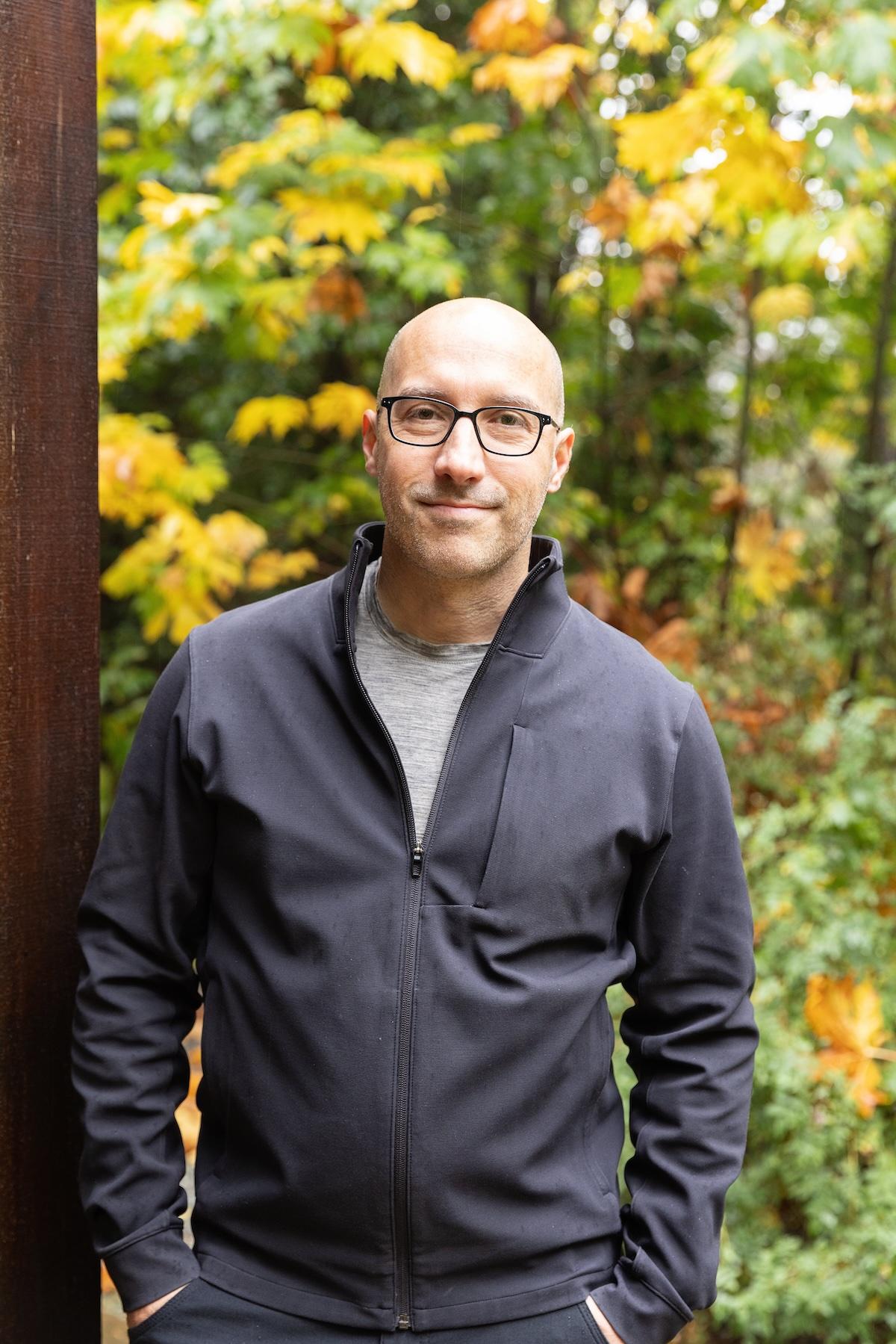
If wildfires are increasingly behaving like hostile incursions, then the tools of national defence begin to make a lot of sense, says Domenico Iannidinardo, CEO of Strategic Natural Resource Group (SNRG). The Vancouver Island-based company – owned by the Ehattesaht First Nation – specializes in natural-resource management, remote sensing and emergency response, deploying specialized crews to the front lines of provincial wildfire operations and other disasters.
The son of a logger, Iannidinardo started working in the natural-resource sector as a teenager, spending summers on logging and tree-planting crews before building a career in forest management. Over the decades, he has watched fires that were once seasonal hazards swell into sprawling economic and public-safety emergencies.
When he met Deslauriers, he was still a vice-president at a forest-management firm. The pitch intrigued him, but at the time he wasn’t in a position to do much about it. That changed in 2024, when he moved to SNRG. The company already operated drone and remote-sensing programs of its own, using smaller aircraft to map wildfire perimeters and identify hotspots. Integrating heavy-lift suppression drones into that work made immediate sense to him.
He went to see the drones for himself at a test facility in Sweden. As a forester accustomed to working around helicopters and heavy machinery, he thought he knew roughly what to expect. The specifications alone were striking: a drone roughly five metres across – about the size of the boardroom at SNRG’s Campbell River, B.C., headquarters – and far larger than the survey drones his team currently operates. “What really gets you is when the turbine starts up and the blades begin to whirl,” he says. “You feel the thrust, you hear it. The little drones people are used to buzzing around like mosquitoes – this is a freight train in the sky.”
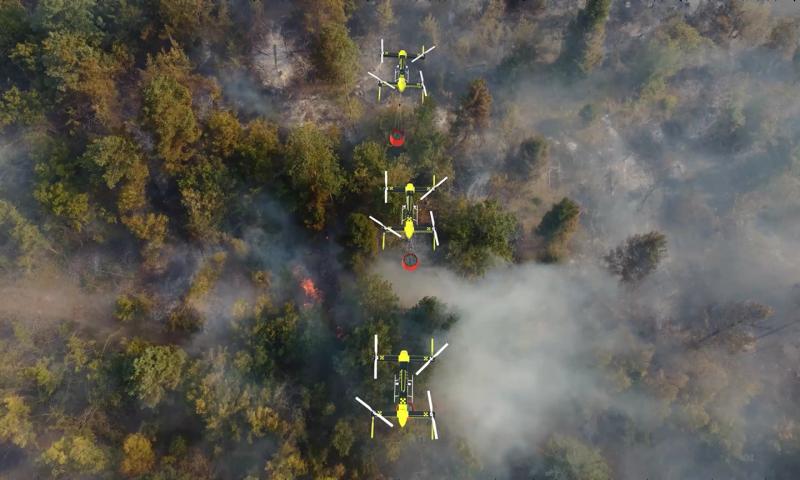
The company soon committed to becoming FireSwarm’s first customer, pre-purchasing one of the aircraft while offering its crews and operations to support field testing and development. It’s now pursuing a Special Flight Operations Certificate with Transport Canada to operate the drone, encouraged by the fact that another operator has already obtained one. The endorsement from SNRG, a long-trusted wildfire emergency contractor, helped lend the young startup the credibility it had struggled to secure with wildfire agencies.
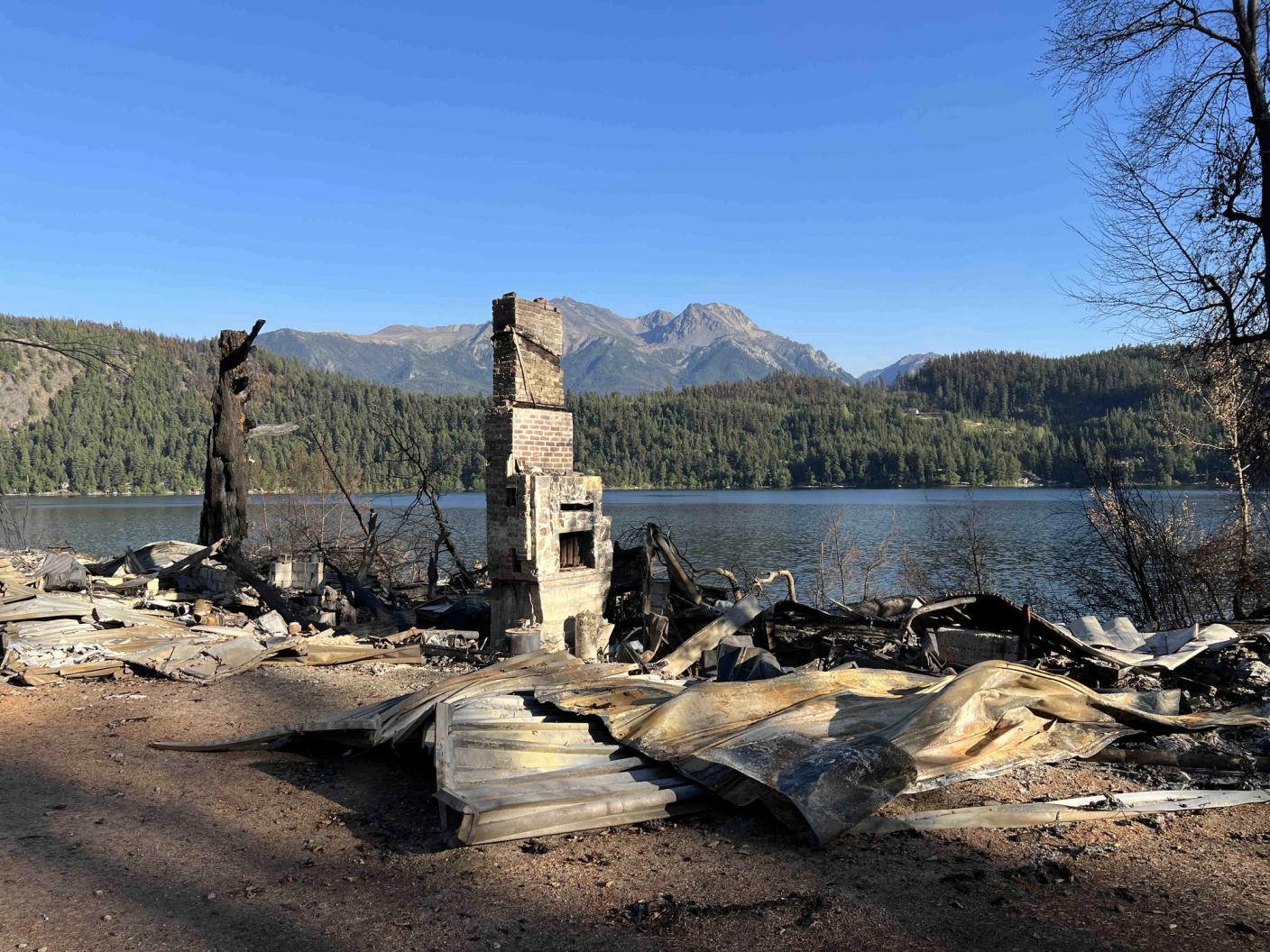
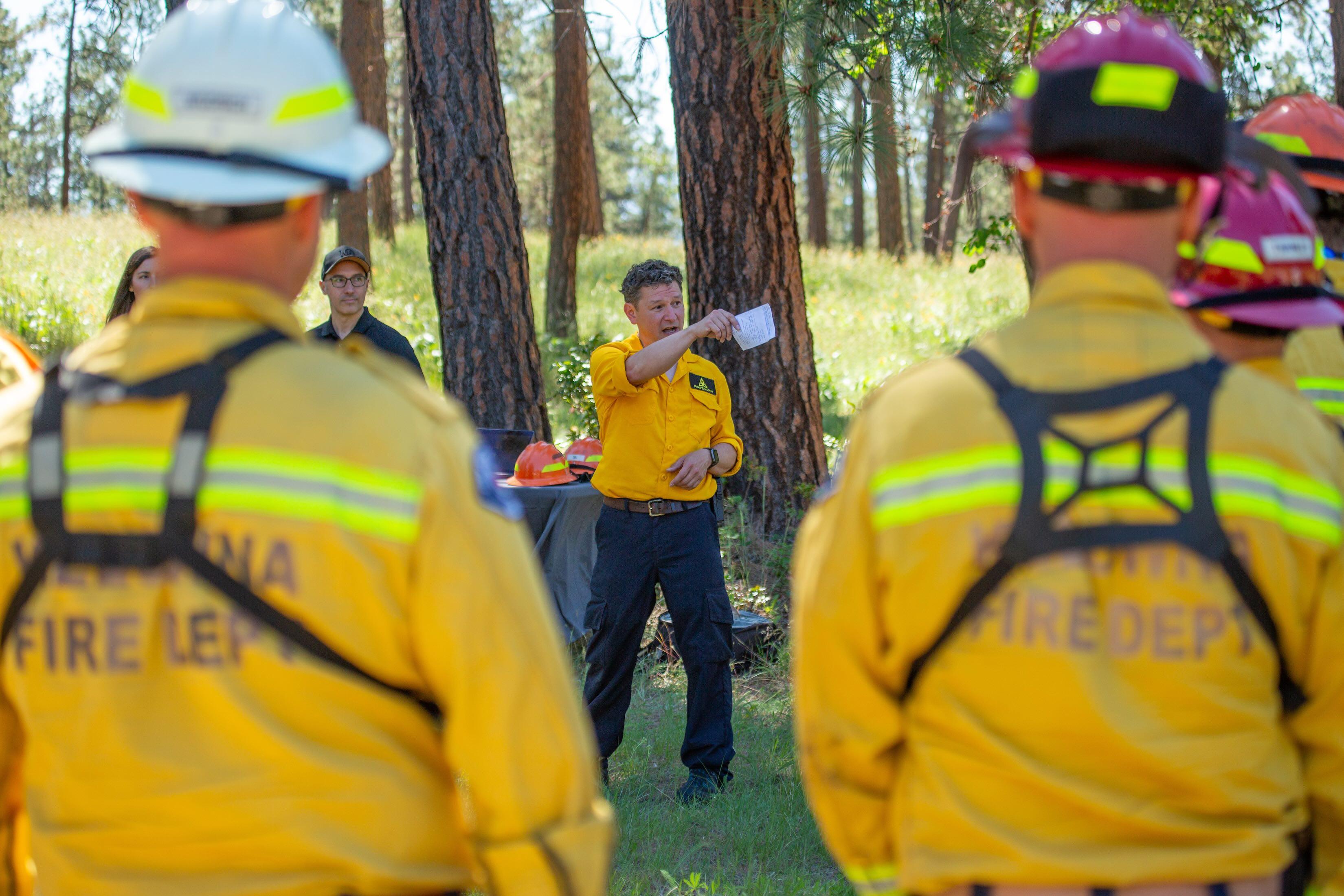
A month after the collaboration was announced, in April 2025, BCWS issued a letter to Transport Canada supporting FireSwarm’s continued development, citing the potential for autonomous heavy-lift drones to deliver water and cargo to firelines in smoke, darkness and other conditions too dangerous for crewed aircraft. To reinforce that support, the Kelowna Fire Department hosted a Knox Mountain demonstration later that spring using commercial drones running FireSwarm’s software, showing how multiple aircraft could co-ordinate as a swarm to deliver equipment and water into difficult terrain.
Last fall, Deslauriers and Iannidinardo appeared before the Standing Senate Committee on Agriculture and Forestry to press the federal government to accelerate the regulatory changes needed to integrate heavy-lift drones into wildfire response – from allowing them to share fire-zone airspace with crewed aircraft to expanding the number of machines a single operator can oversee. “Wildfire is a matter of national security,” Iannidinardo told the Senate committee. “A wildfire threatening a family’s home is not just a local concern – it is a security threat to that family and a matter of national urgency.”
FireSwarm demonstrated its system using heavy-lift drones for the first time in January as part of the XPRIZE Wildfire competition, ultimately earning the company a spot in the final round this June in Alaska. There, for the first time, the team plans to show something closer to the real vision: drones that can autonomously detect the most active edge of a wildfire and target their drops on the moving flame front rather than fixed GPS co-ordinates.
Winning the prize would help, but not in the way most people think. The $11-million purse is split across tracks and teams, leaving FireSwarm with roughly $1 million, about what it costs just to compete in Sweden and Alaska. The real value would be credibility. With the heavy-lift Thunder Wasp drones estimated to cost about $2 million each, FireSwarm must raise the capital to bring the aircraft into Canada and prove they belong in wildfire operations.
FireSwarm plans further tests with SNRG and BC Wildfire this fall, with the goal of moving from demonstrations to real deployments – and having the drones ready for active wildfire operations by the 2027 season.
For all the promise of the technology, Iannidinardo is careful not to oversell it. Drones alone won’t solve Canada’s wildfire crisis. They are one new layer of capacity inside a much larger system. They could fill the most glaring gap in firefighting, but unlocking that potential will require innovation beyond the machines themselves. Canada’s wildfire response remains fragmented across provinces, with certification rules, labour pools and resource sharing that don’t always move quickly in emergencies. Other jurisdictions, especially European ones, he argues, have shown how unified standards and faster mobilization can stretch existing resources much further.
When asked whether we are entering a kind of “harm-reduction” era – simply trying to contain a crisis that climate change will keep fuelling – he pushes back with cautious hopefulness. Landscapes, he says, are never static. Canada’s forests have always been changing, even if the pace of change today is unprecedented. Even in the Pyrocene that we’re now living in, fires may never behave the way they once did, but the outcome is still shaped by how quickly we respond when fire first appears. It will always begin with a small ignition. What matters is whether the systems exist to reach it in time.