One Tesla, two Teslas, three Teslas, five. For some of us stuck in big-city traffic, it’s a numbers game, akin to that punchbuggy time-passer of days gone by when we counted Volkswagen Beetles from the back seat of the family station wagon. These days, electric vehicles are common in places like Vancouver, Toronto and Montreal.
The number of electric vehicles (EVs) operating in Canada was already approaching 500,000 in 2024, not including hybrid and plug-in electric varieties. Sales growth has been uneven since then as some government rebates were reduced, but there’s little doubt more EVs are on the way, from North American manufacturers and new-source countries such as China. That’s good news for clean energy advocates, but more zero-emission cars means more EV batteries that need to be replaced every year.
An EV battery is made up of modules, which contain cells, all of which must be in working order for the battery to function as intended. The entire battery must be replaced when a single cell dies, or when its warranty expires. In either case, the typical battery will still have 80 per cent or more of its storage capacity remaining at the end of its vehicle life.
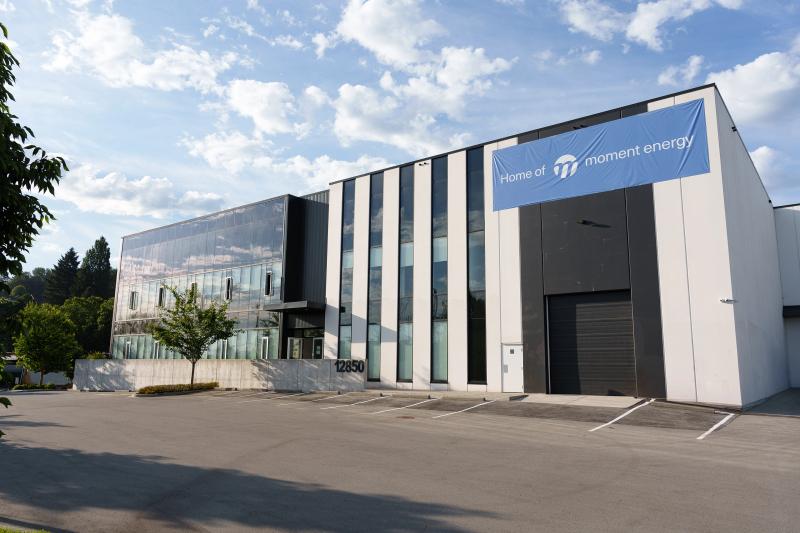
Even so, used EV batteries have usually been discarded, either by diversion into recycling plants, where minerals such as cobalt, lithium and nickel are harvested, or into landfills, which is a bigger problem. This brings us to an unassuming warehouse in a Coquitlam, B.C., business park, on the north bank of the Fraser River.
There’s a small sign at the door: Moment Energy. Inside, along a stretch of windows, a dozen or so individuals peck away at keyboards. A tiny kitchen space doubles as a meeting/storage room. It’s not what one would expect from a hot tech startup that has, in the last few years, raised more than US$100 million in working capital, from local venture capital funds to Amazon and the U.S. Department of Energy.
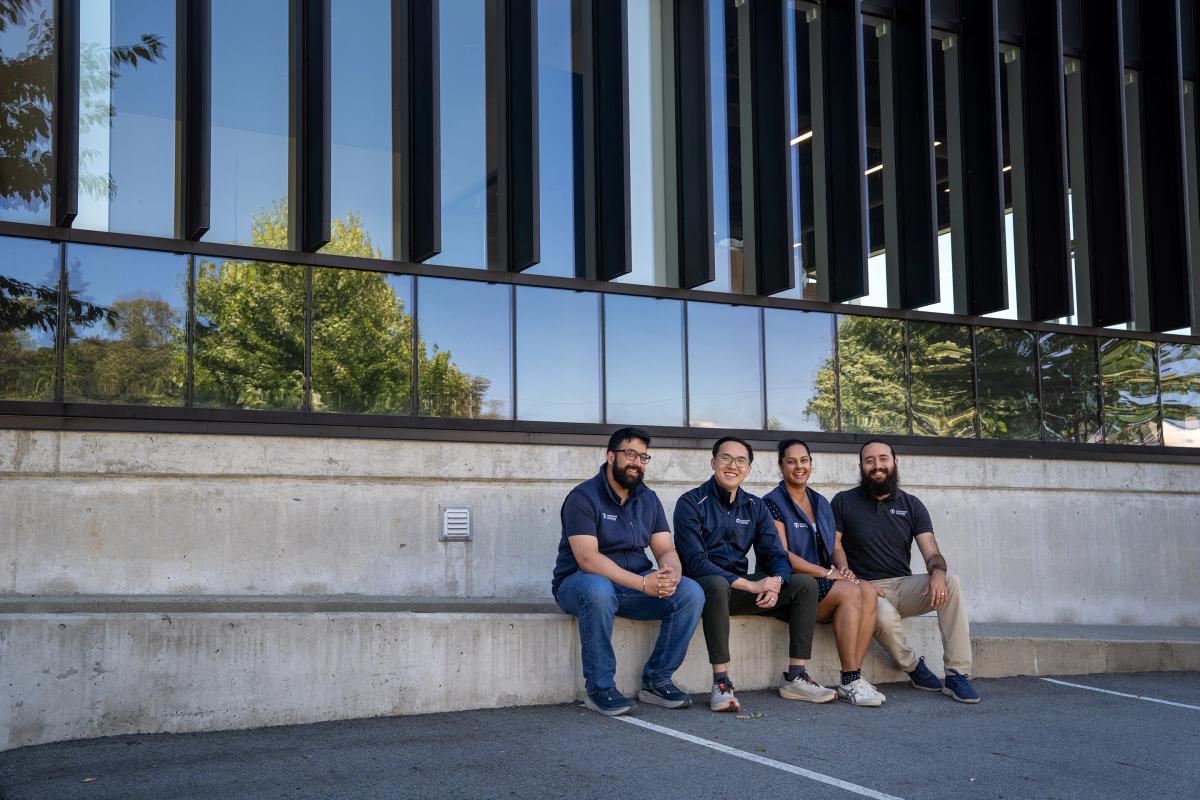
Founded in early 2020 by four engineering graduates from Simon Fraser University, Moment is carving a niche in the growing business of battery energy storage systems, or BESS. Specifically, the company is in the business of purchasing discarded EV batteries and bundling them into larger packs, which can then be used to store renewable or grid-produced power for use when it’s most needed – say in the event of a power outage – or during peak hours of use when electrons produced by hydro, nuclear or natural gas-fired plants are in highest demand, and most expensive.
This second-life application is a boon for EV battery manufacturers and EV dealers; they would rather sell a used battery than see it recycled or thrown away. For businesses in remote locations such as work camps, farms and recreational lodges, a battery system that stores renewable power allows them to avoid using noisy, carbon-emitting diesel generators.
While still new on the scene, Moment has already successfully sold and installed repurposed EV packages to 11 customers, including a scuba diving operation in northern B.C. But it has bigger ambitions. It’s making a hard push to sell its bundles to commercial and industrial operations looking to reduce their dependence on expensive, high-demand power while polishing their clean energy credentials.
To this end, the company has leveraged its strong cash position to develop more robust product lines, and to forge partnerships and collaborations with the likes of the Vancouver Airport Authority (YVR), Hydro Ottawa and Canada’s Department of National Defence (DND). Moment’s revenue is already in the millions, according to its chief executive officer, Edward Chiang, and it recently hired its 80th employee. In late June, it expanded into a shiny new “megafactory” in neighbouring Surrey, and it’s planning on opening another plant in Texas to tap into a much larger American market. It’s a far cry from where the journey began.
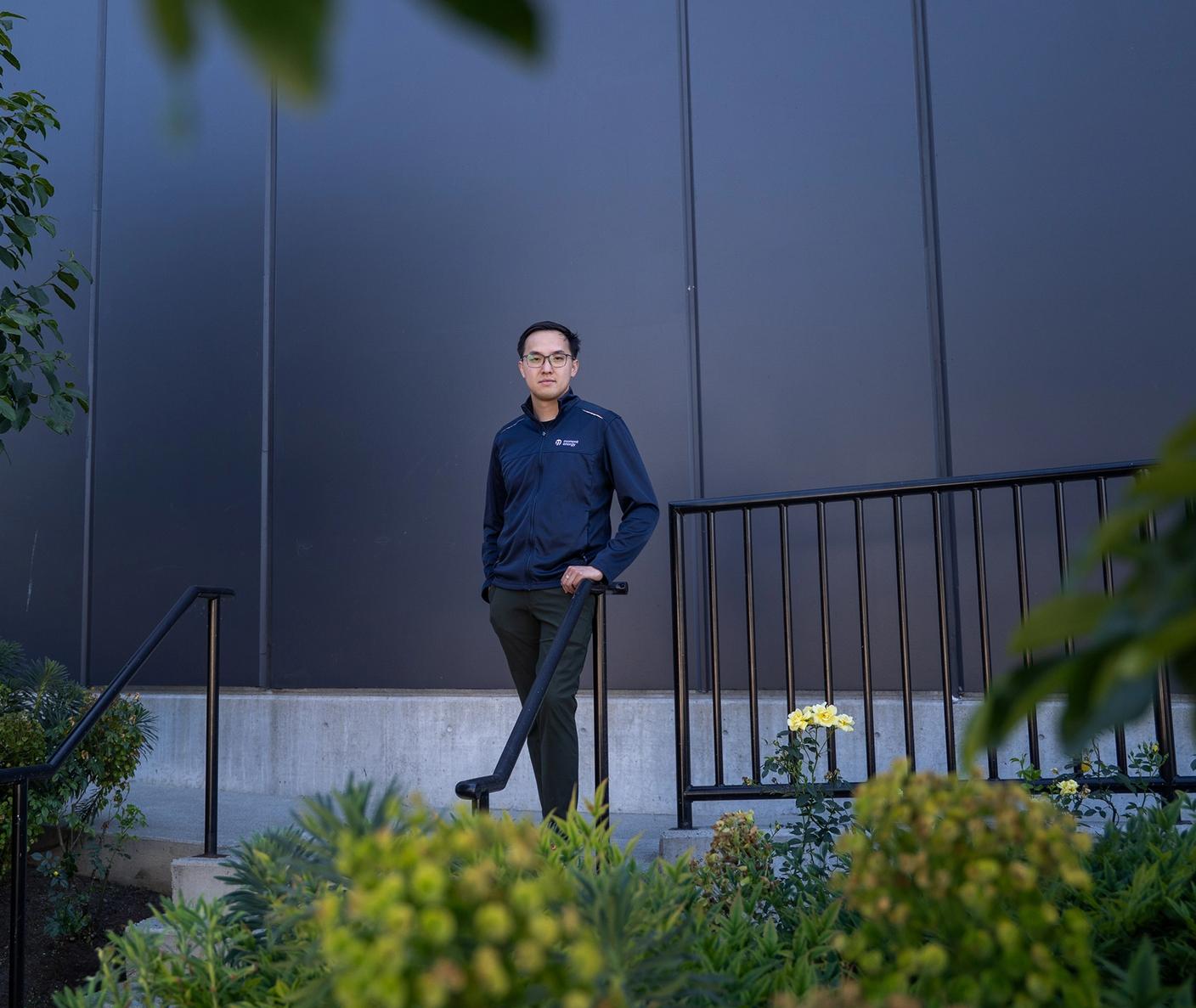
Moment’s startup story is quintessentially Canadian. The four co-founders – Chiang, Sumreen Rattan, Gabriel Soares and Gurmesh Sidhu – are all children of immigrant parents. Some came from almost nothing. Chiang was raised by a single mother who, he quips, “was an Uber driver before Uber had even been invented.” All four enrolled at SFU’s School of Mechatronic Systems Engineering, where mechanical engineering, electronics and computer science intersect. They were robot-loving kids, heavily into electric scooters, bikes and cars – basically anything with wheels and a battery.
With their brains similarly wired, they decided to get entrepreneurial together. After graduation, they formed their first company: Moment Meditate. As the name would suggest, it had absolutely nothing to do with EV batteries.
“We all had a very intimate relationship with mental health,” explains Sidhu, the company's chief product officer. “I think everyone struggles with mental health at some point in their life. And we realized there are things you can do before it gets serious. Meditation is one of those methods.”
The company’s purpose, according to an early description, was to provide employers “key insights into what causes employee stress, by improving the methods used to track the stress” with some sort of “wearable hardware” device.
They soon landed their first paying customer, but that triggered some sobering group introspection. Sidhu recalls them wondering if four young engineering grads in their early 20s were really equipped to address the “complexities of mental health and neuroscience.” An SFU adviser suggested they change tack and pursue something they had studied and worked toward while in school. “That kind of kept replaying in our heads,” Sidhu says. Moment Meditate was wound down, but the group stuck together and looked for something else.
“We all had a bunch of different ideas,” Sidhu says. “Clean tech was one of our big focuses. And we had a lot of skill and expertise with batteries. So those two things came together. We really wanted to make a company that could make a global environmental change. That’s where we came up with the idea of Moment Energy.”
They weren’t the first to come up with the idea of repurposing EV batteries. With demand for stored electricity solutions increasing as intermittent renewables like solar and wind power take hold – and with an abundant supply of used, but still useful, EV batteries available – it wouldn’t take a genius to make a business case. By one estimate, the global market for repurposed EV batteries will grow from US$1.3 billion this year to US$7.6 billion by 2034. No surprise, then, that upstarts such as Smartville, B2U Storage Solutions and RePurpose Energy in the United States, and ConnectedEnergy in the U.K., are crowding into the space.
Here at home, provinces such as Ontario and Alberta are well on their way to developing and deploying massive purpose-built, utility-scale battery storage systems connected to grid networks. But the second-life EV battery opportunity has remained largely overlooked. The laggard’s list includes B.C., despite its status as a clean tech hub with a strong EV market.
“B.C. has been an absolute leader in Canada when it comes to the adoption and policies to support EVs,” says Evan Pivnick, associate director of public affairs at Clean Energy Canada, a research and policy think tank. “But if we look at our energy system, batteries are almost non-existent. B.C. is still relatively cautious about the role that batteries can play in its energy systems, and that really is a missed opportunity.”
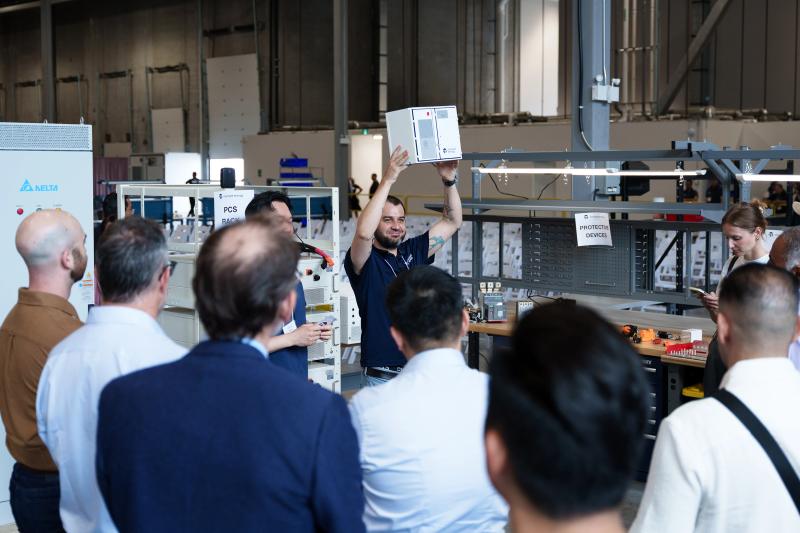
Recognizing this gap, Moment set out to address it, first by raising cash, hiring staff, securing materials, building and testing prototypes, and then landing actual customers.
After the meditation pivot in early 2020, roles at the new company were clearly articulated and assigned: Chiang, an affable polymath, was voted in as chief executive officer. Soares, with his passion for science and problem-solving, found his place as chief technical officer. Sidhu was put in charge of sales and customer relations. And Rattan, a relentless organizer, was made chief operating officer. She provided another key asset: half of her parents’ garage, which became Moment’s first headquarters.
Within months, in September 2020, they announced their first battery supply deal. The arrangement with Nissan North America would put Moment Energy “on the road to not only efficiently deliver renewable energy to remote communities but also prevent these batteries from producing toxic waste in landfills,” the company said. An official with Nissan North America said Moment “is proving that second-life Nissan LEAF batteries can continue to have value outside of the vehicle.”
A year later, having deployed an initial prototype for off-grid use, the team announced it had raised $3.5 million in seed funding from a variety of local venture capital firms. At this point, Chiang was already talking about expanding to include commercial and industrial customers who get their power from the electrical grid. Moment soon had two flagship products in development, representing its bespoke “Luna” line: an EV assembly that offers 400 kilowatt hours of storage, or enough energy to power 100 homes for up to four hours, and a one-megawatt-hour unit, which can power a small factory over a similar length of time.
More announcements followed, including a second supply agreement, this one with Mercedes-Benz Energy, and the collaborations with Ottawa Hydro, DND and YVR. Additional funds were secured. In late 2024, Moment announced it had been awarded US$20.3 million by the U.S. Department of Energy to build a “state-of-the-art gigafactory” in Taylor, Texas.
Eager to scale up in the U.S. and take advantage of that country’s huge used EV battery supply, Moment got cracking on the new facility’s design and development. Nearly two years on, they’ve secured a building and are now preparing to refit it for production, says Chiang. (For competitive reasons, the company won’t provide the names of every battery manufacturer and EV dealer it procures used batteries from, but Chiang says they deal with “almost all of them.” Which should at least in theory include Tesla; it happens to have an EV manufacturing plant nearby in Austin.)
In May this year, Moment announced it had raised a further US$40 million in venture capital, which is being used to move things along in Texas and build its new Surrey factory, which will eventually supply the Canadian market.
In a news release announcing the funding, the company said it had advanced beyond “experimental use cases to enterprise-grade commercial deployment.” Moreover, it was leading the way in second-life battery storage, something that could profoundly change the way energy is managed and, ultimately, controlled. “The era of independent energy is here, energy free from a grid that can’t keep up, supply chains we don’t control, and decades of new [minerals] extraction. It starts with the batteries already on our roads,” Chiang declared.
Get our weekly newsletter – the people, places, and ideas revealing where Canada is headed.
Okay, so Moment has demonstrated a knack for raising funds and expectations. But has it caught up with its ambitions? That remains to be seen. The partnership announced with YVR back in 2024, for example, has taken some time to gain traction. In an emailed response to Be Giant, the airport authority says it expects to “begin installing” two of Moment’s battery modules sometime this summer. “Once the system is operating, it will support daytime charging for our fleet of electric vehicles and then recharge itself from the grid,” says the authority. “We see strong potential for battery energy storage systems across YVR. Future expansion will be guided by ongoing planning studies.” In other words, stay tuned.
Then there’s the competition. What sets Moment’s products apart? Cost effectiveness, adaptability and safety and reliability, says Sidhu. The company claims to have developed a proprietary system that can outlast others, by making battery bundles that can be easily replaced with new ones. Swapping out bundles can effectively double a Luna unit’s lifespan to as many as 30 years, far beyond what others can claim, Sidhu says.
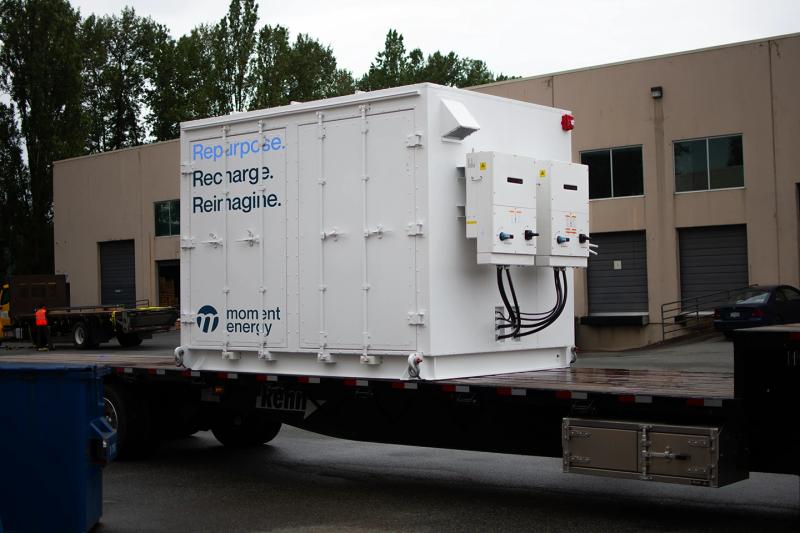
Meanwhile, in another announcement this May, the company said it had become the first in the world to achieve product safety certification for a battery management system specifically designed for repurposed EV batteries, thus removing “the final technical barrier to the mass-market adoption of second-life battery storage.” That, in turn, would streamline “the path to deployment for commercial and industrial customers,” it said.
That appears to be Moment’s sweet spot, says Clean Energy Canada’s Pivnick: “They fall into that middle space, between much smaller battery storage systems you might see in individual households and much larger ones on the utility scale.” The opportunity for battery storage systems to reduce strain on traditional electrical grids is especially present in commercial and industrial applications, he adds.
All of that bodes well for Moment. It’s been five years since the four co-founders flipped the switch from stress-relieving wearables to used EV batteries, and they’re just getting started. Their goal is to build a completely new industry in B.C. and help fundamentally change the world’s energy landscape. That, says Chiang, “and to become a $10-billion to $20-billion company.”