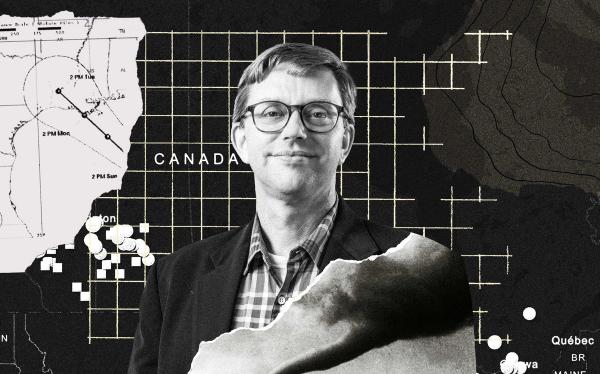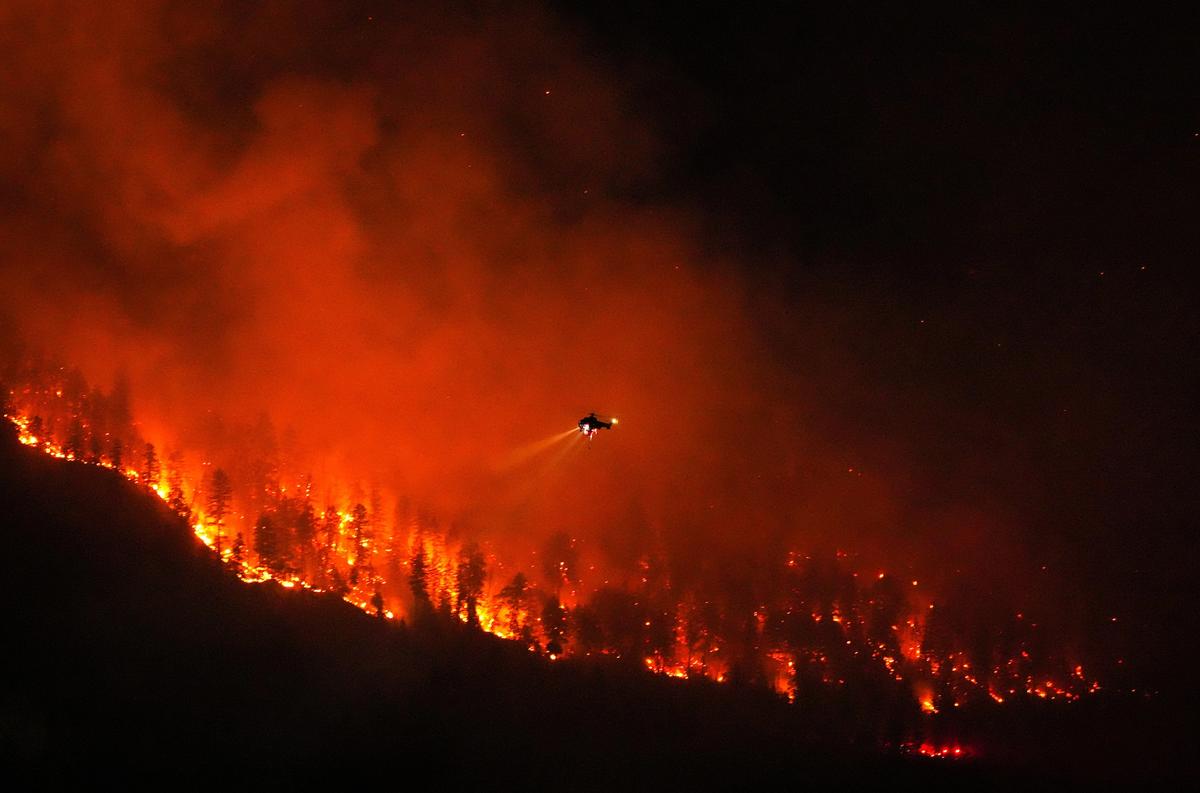
Eric B. Kennedy’s formal title is associate professor in the disaster and emergency management program at York University in Toronto, but he describes himself as a “pyrosociologist” because he’s most interested in the relationship between humans and fire, including how we shape it and how it shapes us. Specifically, his work investigates the decision-making around wildfires, from how emergency agencies make choices during a response to how communities prepare for increasingly frequent and intense fire seasons.
Be Giant recently spoke with Kennedy about what this year’s destructive wildfire season (the past three years have been among the 10 worst fire seasons on record) can reveal about Canada’s changing fire landscape, the decisions that shape wildfire response and what individuals and communities can do to better prepare for the future.
More than 600 wildfires are burning across the country in what’s among the hottest summers on record. How did Canadian fire seasons get so bad?
There are several truths we have to hold in our heads simultaneously with fire, and the challenge is figuring out how to use all of them to shape our management.
First, we have always had big fire in this country. Many of our ecosystems have evolved with, and actually depend on, fire – think of historical fires like the Great Porcupine Fire in 1911 in Ontario. When you remove fire from these ecosystems, you can actually damage them, because they depend on it. So we always have fire, and we always have big, peaky years.
At the same time, we’ve seen changes in fire regimes because of climate change. As conditions get hotter, drier and windier, that creates the ingredients for both intense fire behaviour and longer fire seasons. If you imagine a system that already has the potential for megafires and then add climate pressure on top, you get the kind of huge peaks we’re capable of seeing.
It gets more complex still. For a long time we tried to put out every fire, in a system that actually depends on routine fire. When you suppress fires on days that would otherwise burn at low intensity, you leave behind material that ends up burning on the days when conditions are far more extreme and harder to control. So it’s never just one of these factors, but it’s all of them converging, which is what puts us in the situation we’re in now.
Are there any innovations in Canada and elsewhere that you see as promising in fighting wildfires?
There’s progress in aircraft, in equipment like more portable, lighter pumps, and in detection and prediction: better models and the use of satellite and other geospatial data to identify where fires have started.
But ultimately, fire is not a technical problem. It’s a values problem. The questions we’re facing in Ontario are things like: has the government invested enough in fire response? What counts as “enough” is a hard question, and it’s not a technical one, it’s values-based. The same goes for how much funding should go toward risk reduction versus response.
There are exciting innovations worth pursuing – for example, technologies that allow small-scale prescribed burns using equipment that filters the air, so you’re not releasing smoke. These are cool tools, but I think the most important innovations have more to do with community engagement and collective action than with technology. We can’t “techno-fix” our way out of this or think we’re one AI model away from solving it.
Where do you still see a need for improvement or investment, whether from the government or businesses?
There’s already a lot of investment happening in response, including things like firefighting drones and other response-side innovations. Where we need more work is on the mitigation and preparedness side. How do we help a community reduce the risk around wildfires, and change how it builds and maintains itself so it can better accommodate fire events?
Do you think there needs to be policy change at the federal or provincial level to enable that kind of preparedness?
When we talk about policy change, it’s easy to focus on mandates and requirements, and those may play a role. We could be much more innovative in using building codes and planning regulations to spur these changes and give community leaders cover to prioritize wildfire mitigation.
A lot of this is also about systemic investment. Take air quality, for example. Some of the solution is regulatory – passing strong standards for indoor air quality – but it’s also investment, in getting schools, community centres, workplaces, hospitals and everybody’s home to a level with genuinely safe indoor air. That’s an expensive undertaking even once regulation is in place.
This is where I push back a little on techno-fixes for air quality. We do need better air purifiers and better tools to measure air quality, but for the most part, we already have good enough options in those areas.
If you could prioritize one area of investment to improve Canada’s wildfire resilience, what would it be?
The scaling up of mitigation and preparedness. In many cases, we already know what to do – we have tools and strategies that work, and there’s room to optimize them further.
The same is true for indoor air safety – not just for fire smoke, but for regular air pollution and airborne viruses like COVID and influenza, and even the common cold. We know the tools: air cleaners, improved ventilation, appropriate filtration for smoke events. These are problems where the investment gap is about action and implementation, not about needing more innovation before we can act.
While it is hard to feel hopeful when we’re seeing the impacts of wildfires in real time, is there anything that makes you feel optimistic about Canada’s ability to better manage wildfires in the future?
One is seeing examples of community readiness, adaptation and preparedness. And, closely related, the revitalization of Indigenous fire stewardship and Indigenous leadership on these topics, which has so much to offer in helping us understand our relationship with fire and how to live in good relations with it.
Events like this also bring attention to fire – this has probably been my 30th or 40th interview in the last 72 hours. We need to convert that energy and sustain it 365 days a year, not just during crisis events. But the fact that people are passionate and want to think about how we can do better matters.
Ultimately, no single level of government, and no single entity, is going to solve this on its own. It needs everybody – from the federal government to individual community members and innovators – working together, in co-ordination and with sustained passion.
This interview has been edited for length and clarity.
Get our weekly newsletter – the people, places, and ideas revealing where Canada is headed.