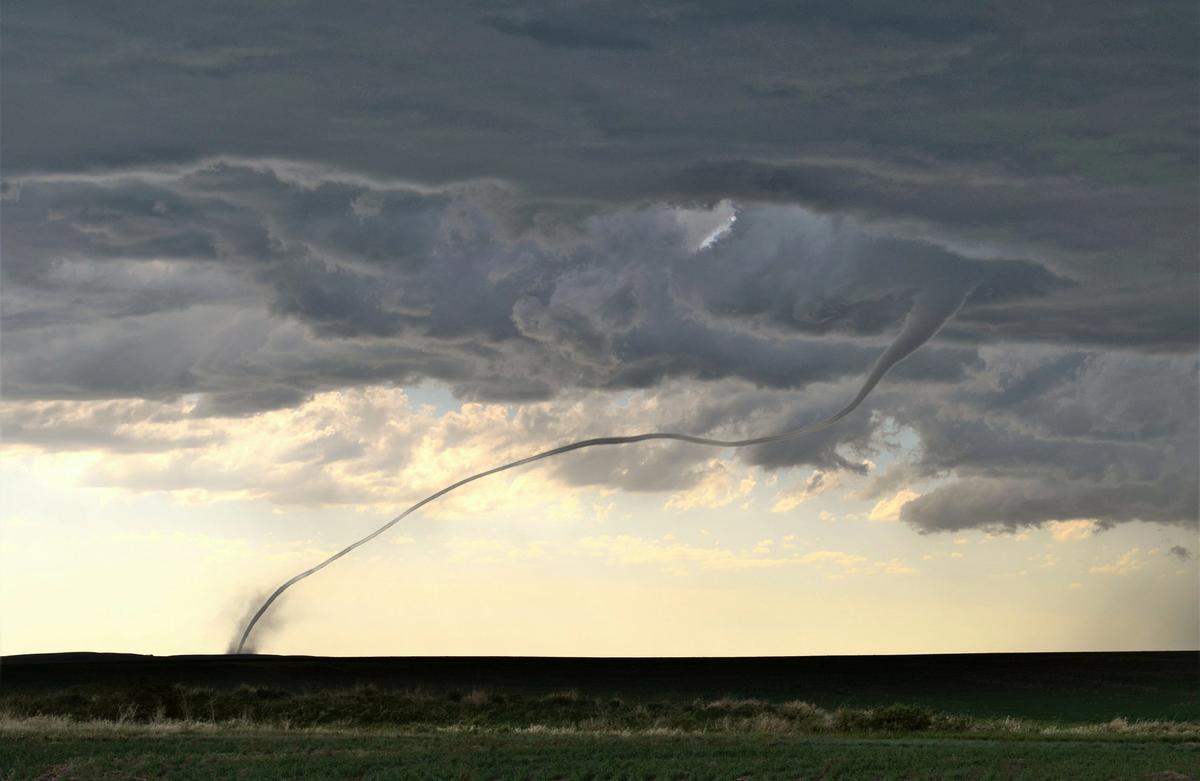
They’re some of the most violent storms in nature, funnel clouds so forceful that even weak ones can slam a two-by-four through the side of a building. The strongest – twisters swirling 315 kilometres per hour or more – can tear houses from their foundations and launch cars hundreds of feet into the air.
Tornadoes strike Canada every year, but experts warn that the systems meant to protect people in the path of destruction remain inadequate. Warnings aren’t issued ahead of most tornadoes, and most houses aren’t built to withstand their fierce winds. David Sills, the director of the Northern Tornadoes Project founded at Western University in London, Ont., puts it simply: “We can do better.”
For almost a decade, Sills and his team have been documenting tornadoes across Canada, collecting foundational data for improving warning systems as well as the National Building Code of Canada. Earlier this year, the team published the most comprehensive picture yet of tornadoes in our country, using their updated methodology to document 1,948 tornadoes between 1991 and 2020. Compared to the previous 30-year data set, which spanned 1980 to 2009, the team found a notable and concerning change: where Saskatchewan once saw more twisters than any other province or territory, Ontario, with its larger and more densely packed population, now holds the record.
Tornado counts are increasing as researchers get better at detection, Sills notes, but the eastward migration of tornadoes is still evident even after that higher detection rate is accounted for. A similar shift is playing out in the United States, where more tornadoes are also striking farther east than they used to. Sills doesn’t yet have a clear understanding of why this shift is happening, but it could be related to climate change, he says.
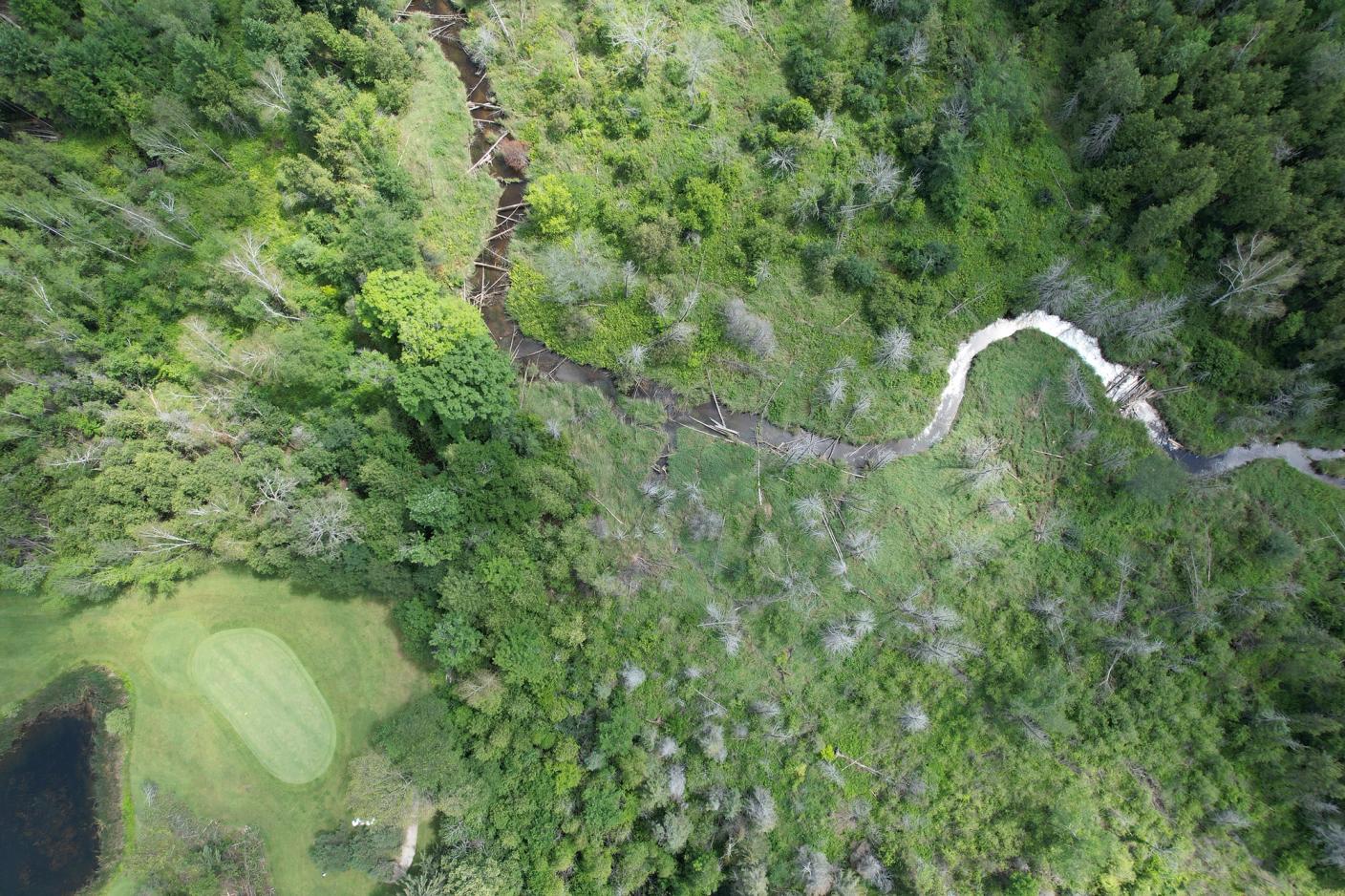
To better understand how tornadoes may be changing in Canada, Sills and his team are first working to improve detection, especially in remote areas where eyewitness reports are few and far between. At the end of every season, they scan satellite images of forests for the telltale sign that a tornado has blown through: a long, narrow strip of flattened forest. Sills estimates his staff spent roughly 300 hours combined at the end of each season on that eye-straining work. But a new AI tool developed by Daniel Butt, a part-time researcher with the Northern Tornadoes Project and a PhD student in software engineering, could take over the bulk of it.
The tool essentially takes the first pass, comparing before-and-after satellite images and searching for that specific pattern of tree damage. Then a researcher confirms the pattern is indeed consistent with a tornado and not another kind of windstorm or, say, a logging operation. It’s “a perfect job for AI to do,” says Sills. It handles the tedious parts and lets the human expert focus on the important work of confirming a tornado strike and documenting it.
Last year, the team confirmed more than two dozen tornadoes in remote forested areas with the help of the AI tool, including four tornadoes that ripped through the forests east of Lake Superior in the early-morning hours of July 28, 2025. The strongest of those four struck about six kilometres south of White River, Ont., a township of approximately 600 people. If not for the Northern Tornadoes Project, the roughly 9.5-kilometre path the tornado carved through the trees may have gone unrecorded, despite its close proximity to a community.
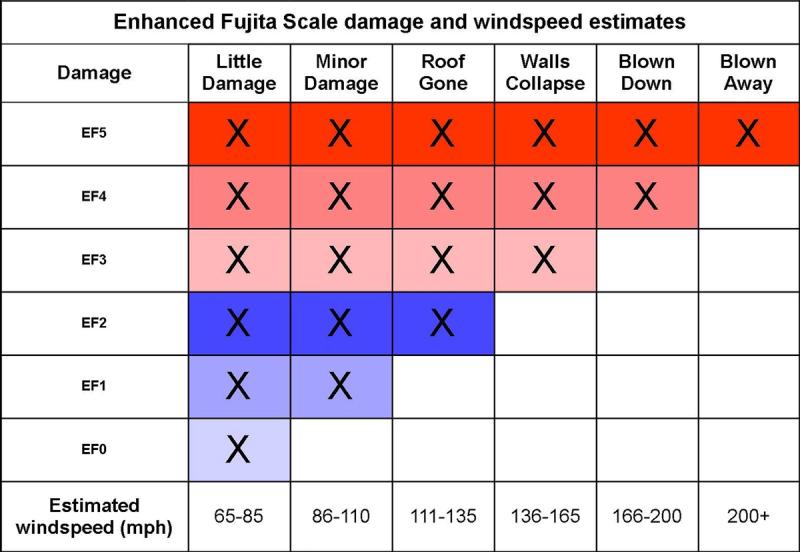
A tornado’s strength is assessed based on observed damage, which is then used to estimate wind speeds and rank the twister on a six-point system called the Enhanced Fujita Scale (named for the creator of the original scale in 1971, Tetsuya Theodore Fujita – the “enhanced” update came in 2007). The weakest tornadoes, those with wind speeds between 90 and 130 kilometres per hour, are ranked as EF0. The strongest, with wind speeds of 315 kilometres per hour or more, are rated as EF5. Even an EF0 tornado can be strong enough to rip gutters and awnings from a house; an EF5 would tear it apart.
Relying on tree damage to accurately rate a tornado can be challenging, especially in the forests of the Canadian Shield, where the soil is shallow and trees go down relatively easily. Satellite imagery is too coarse to detect EF0s, which break branches but aren’t strong enough to flatten a swath of forest. “You’re pretty much stuck with an EF1 or EF2 tornado rating,” says Sills. “We’ll never get all of the tornadoes at the low end, there are just hundreds and hundreds that occur every year that we know we’re not going to get.” Ultimately, that means an incomplete picture of the weakest tornadoes that strike each season and the potential risk to communities. But EF0s aren’t the tornadoes researchers are most worried about.
Historically, it’s also been challenging to distinguish the difference between the damage caused by an EF2 and something stronger. But that’s changing. A second AI tool, also developed at Western, is helping improve how tornadoes in forested areas are rated based on tree-fall patterns. Now if the team collects aerial images of tornado damage in a forest that shows the direction of the blown-down trees, the new tool can compare it to tornado models to better rate intensity, giving a clearer picture of where stronger tornadoes strike across Canada and the true risk for communities in different regions.
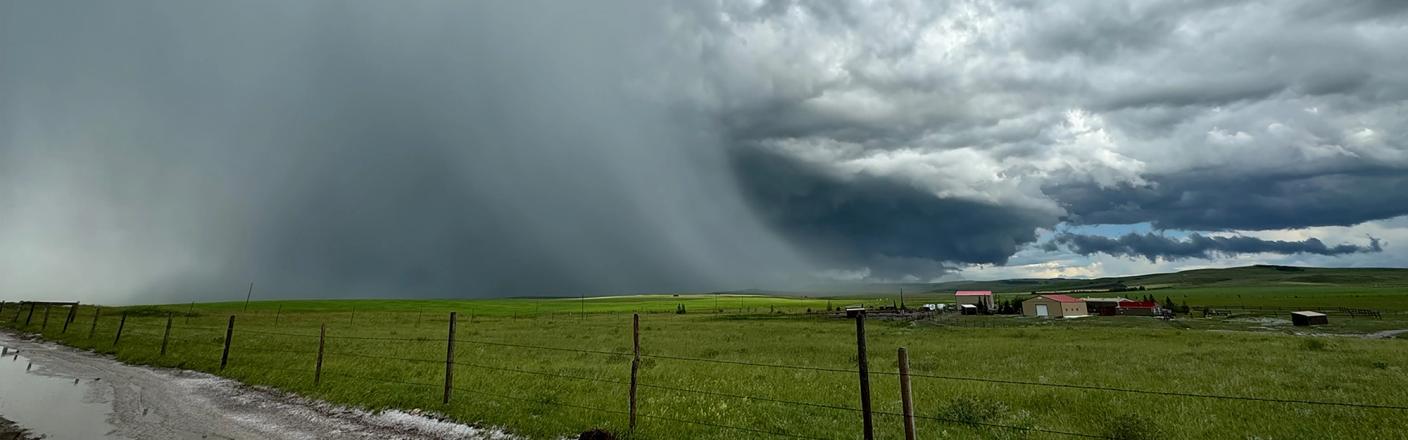
Sills says improving our understanding of where tornadoes actually occur in Canada will also help support better forecasting in the long run, but our national emergency alerting system also needs a fix. Last year, warnings were issued for 20 per cent of tornado occurrences in Canada. While it’s a marked improvement from seven per cent in 2015, warnings still aren’t issued for most. The stats are only slightly better for stronger tornadoes, with warnings issued for 27 per cent between 2022 and 2025. In a statement to Be Giant, Samantha Bayard, a spokesperson for Environment and Climate Change Canada (ECCC), said, “Tornadoes remain among the most challenging weather hazards to warn for because they can be short-lived, highly localized and difficult to detect consistently.”
Sills warns that the federal department’s decision earlier this year to disband its radar science team undermines efforts to improve detection of supercell thunderstorms and other tornado-producing weather. Canada’s new network of 33 Doppler radars was finalized only a few years ago. Weather radars work by sending out pulses of radio frequency energy, which bounce back to the radar when they encounter particles of rain or snow. At a cost of $180 million, the new network significantly expanded radar coverage of the country’s most populated areas, providing meteorologists with better tools to forecast heavy rain, thunderstorms and tornadoes. These are top-of-the-line radars, Sills says, but there are a lot of issues, including noisy pictures and data dropouts, that need to be addressed. And it’s the very team whose research would have addressed those issues that has been cut.
Bayard didn’t directly respond to Be Giant’s question about cuts to the radar research team; instead, she said, “Targeted reductions were made at Environment and Climate Change Canada that will not impact the current weather and environmental prediction services provided to people located in Canada.” Bayard added that “ECCC radar experts will continue to address technical issues related to radar products when they arise to ensure continuous and quality information, including making improvement to noise detection in images.” She said the department is working to improve communication of tornado threats, better define risk areas and avoid over-warning.
Warning areas can be “really large” right now, says Sills, which means “lots of people get warned who don’t need to be warned.” ECCC is working on ways to target warnings to more specific areas, but it’s challenging, he says.
And warnings alone aren’t always enough to keep people safe. They buy people a short bit of precious time to take shelter, but they don’t guarantee a structure will actually survive a tornado. Most houses in Canada aren’t designed to withstand the force of these swirling winds.
Greg Kopp, a wind engineer and the director of the Canadian Severe Storms Laboratory at Western University, says once the roof goes, the walls are at risk of collapse. Roofs in Canada tend to be strong enough not to collapse under the weight of heavy snow, but when it comes to tornadoes, the weakness is in the roof’s connection to the walls. “When the wind comes, it wants to lift the roof up, and so you have to hold it down,” he says. But in most houses, the roof is secured to the walls with a series of angled nails. “From an engineering point of view, that’s kind of a crappy connection.” Nails may not be easy to snap in half, but they’re pretty easy to pull out.
For years, Kopp and his colleagues have been working to get new home-building standards for tornadoes into the National Building Code. To make their case, they built a tornado simulator to estimate the loads these spinning windstorms exert on buildings. From there, they built full-size model homes in a lab, then pulled them apart to see how much load they could withstand. They used an enormous vacuum cleaner and fans to pull up the roof, measuring for weak links in the system, before moving on to test individual components such as nails, screws and metal hurricane straps.
The team found that it’s really not that expensive to build a house capable of withstanding an EF2 tornado – and most tornadoes documented in Canada are EF2s or lower. Metal hurricane straps, which are attached to both the wall and the roof truss, cost about $1 a piece at a hardware store, and you need only a couple dozen per house, says Kopp. An even easier option would be for builders to use six-inch screws to attach the roof truss to the walls. “You can pull a nail out with a hammer, but pulling a screw out is really hard,” he says.
These are just two of the options Kopp included in the building codes he drafted for the National Research Council, now under consideration. Kopp hopes to see these guidelines included in the next update to the national codes in 2030. From there, he estimates it could take a couple more years for the changes to be incorporated into provincial codes, the legal standards home builders must follow.
Upgrading existing homes would be more of a challenge, says Kopp. Changing the connections between the roof and the walls of an existing house means getting into the roof or taking down the drywall, making it a bigger, more expensive job. There aren’t likely to be many circumstances where a homeowner would be required to meet a new building code in an old home, but it’s something homeowners could consider when replacing a roof or making other major renovations.
For Kopp, the ultimate goal is ensuring that when tornadoes tear through Canadian communities, the homes stay on the ground. “When people lose their houses or the neighbourhood school is destroyed, it disrupts lives in ways that I think are hard for people who haven’t been through disasters to understand,” he says. “It affects people for the rest of their lives.”
Get our weekly newsletter – the people, places, and ideas revealing where Canada is headed.