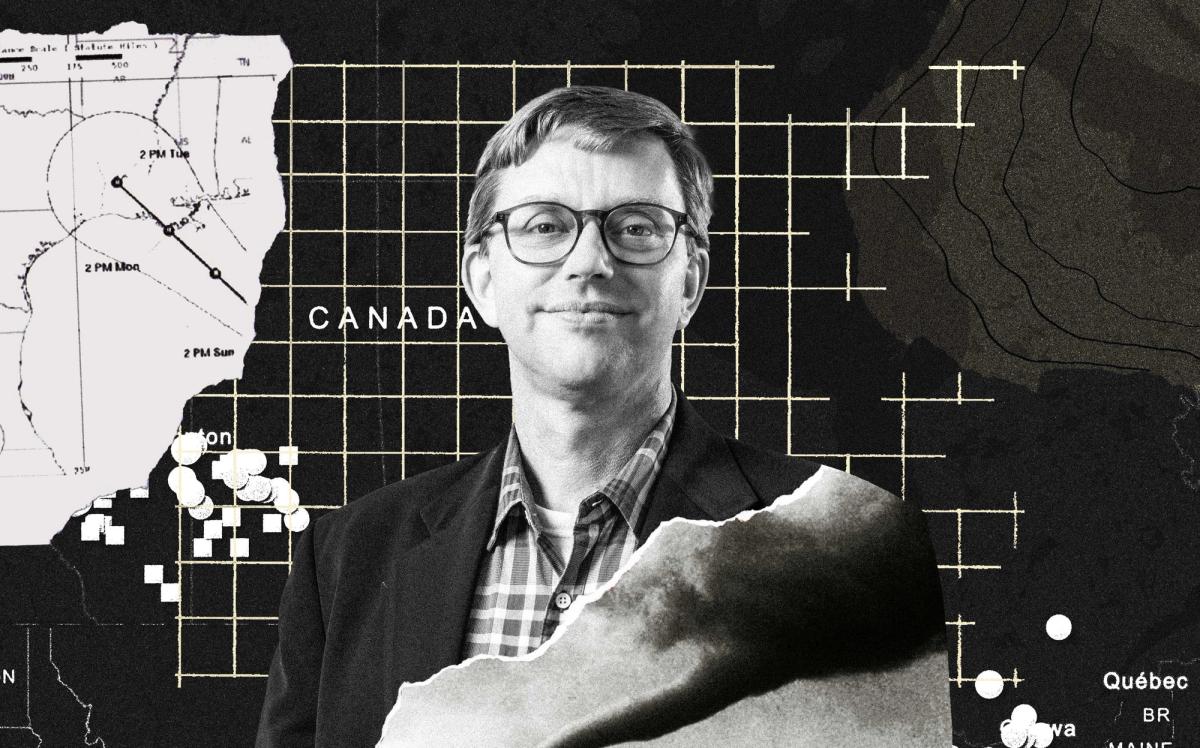
For Seth Guikema, resilience can be measured in how many obstacles stand between you and a bag of milk, working A/C or your next paycheque. An international expert in civil and environmental engineering, Guikema is the latest American researcher to move his work to a Canadian university, attracted by strong federal and institutional support.
Guikema joins Western University as the Eddie Goldenberg Research Chair in Climate Risk and Resilience Analytics, one of 64 new research chairs funded through a $1.7-billion federal program designed to accelerate academic research, commercialization and social and economic benefits here at home and internationally. (His new research lab will receive $8 million of that investment.)
The former Canada Impact+ Research Chairs program was renamed in July 2026 to honour the late Eddie Goldenberg, the well-known lawyer and longtime advisor to former prime minister Jean Chrétien, who championed advanced research.
Be Giant caught up with Guikema as he prepared to move north from the University of Michigan.
What attracted you to Western, other than the fact it’s got crazy weather?
I’m not sure it’s that much different. I live about three hours from there in Michigan, so [there’s] similar weather. I had a job offer from Western 25 years or so ago. We were there to interview in April and there was a big ice storm on the 401.
Western has a really strong team where natural hazards is a main focus within the university community, [so] it felt like a natural place to plug in and help build that. The school is already a world leader in natural hazards research, and I’m hoping to contribute with more of a focus on communities, and to combine that with their incredible strength in hazard modelling.
You’re coming out of the engineering world, but your research has a very strong place-based element thanks to the idea of community resilience. What sits at the core of your research?
In my mind, resilience has to look at the household at scale, because that’s where we experience disruption – it’s the inability to go to work or get food or send our kids to daycare.
So you’re bringing engineering together with social science to drill down to individuals. What are some of those data sources you find particularly interesting?
We use a lot of different types of data. We do simulation of the hazard, which is more traditional engineering climatology, and we combine that with cellphone location data to study mobility around hazards – before, during and after.
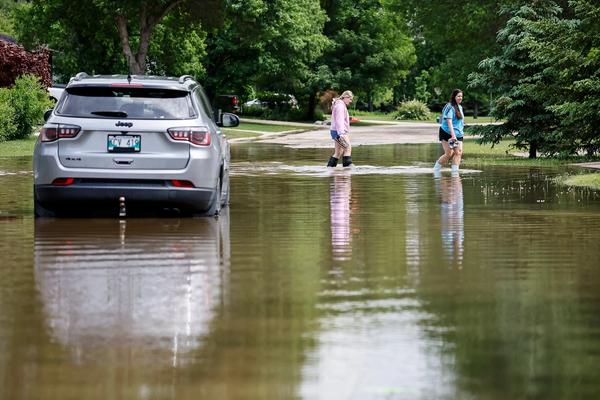
We have a project where we’re looking at low-impact flooding in southeast Michigan’s Detroit area. It’s still pretty high-impact, but it’s not major river flooding or coastal flooding; it’s urban flooding from heavy rain. We’re trying to understand who is being impacted, and what sorts of communities are being impacted in what ways. Who’s losing the ability to get to work? That’s a huge problem for lower-income people. Who’s losing access to childcare, to places of worship, etc.?
We also use a lot of census data, and we do surveys. We did some surveys after the 2021 winter storm in Texas, trying to understand what people did in response to the event. You lost water. You lost power. You didn’t have heat. What were your actions in response to this, and what were the impacts?
What was the impetus to come to Western and to move to Canada?
There’s both a push and a pull. The pull is the tremendous opportunities to work with a strong team, to make a real difference and to do this community-driven work in Canada, but also to look globally. I’m an adjunct faculty member in Norway and we work in Ethiopia. The Eddie Goldenberg Chair provides a tremendous amount of resources to build a big interdisciplinary team to tackle these problems.
The environment for doing this kind of work in the U.S. has gotten a lot more challenging in the last few years and it’s a lot harder to access funding. My hope is [that] we can help Canada become even more of a leader in international research across a wide range of different domains.
What’s the first step once you’re here?
I have a number of collaborations in Canada I’ll be building on, building a research team there and working closely with groups at Western and other places that work with communities, because to do community-centred research, you really have to understand communities. That’s the starting point.
Get our weekly newsletter – the people, places, and ideas revealing where Canada is headed.