On the outskirts of central Sudbury, Ont., at the intersection of the Trans-Canada Highway and a smaller local road that links the communities of Garson and Coniston, there is a parking lot and a trailhead. Signage welcomes visitors to the Jane Goodall Reclamation Trail; just steps down the one-kilometre path, a plaque commemorates “the planting of this two millionth tree on September 6, 1994.” The tree in question is a tall, long-needled red pine, and in October 2026, it towers above its plaque.
“When we planted it, it was probably five feet tall,” says Tina McCaffrey, a lifelong local and the supervisor of land reclamation for the city of Greater Sudbury. “Now it’s – what is that – 30 feet?” She considers the tree with the October sun lighting up its boughs. “It really is magnificent.”
The year of the tree’s planting also marked McCaffrey’s first season with Sudbury’s world-renowned regreening program. “I remember coming here and preparing for this big party,” she says over the rumble of passing trucks. “And I was looking around thinking, ‘What an ugly place for an event.’ You could see the bedrock across the road, you could see for miles that way, you could see the highway. I know it’s very noisy here now, but it would have been worse. And just no vegetation whatsoever.”

Get our new book for free.
Subscribe to our newsletter and we’ll mail you a printed copy.
It’s difficult for a newcomer like me to picture. To recent arrivals, Sudbury’s once notoriously barren landscape is a hypothetical: in place of a wasteland of blackened bedrock and lakes acid-poisoned by mining emissions, today the trailhead is surrounded by the kind of conifer-heavy forest that blankets much of the rest of northern Ontario. The three millionth tree put down its roots in 1997, and by 2022 Sudbury was planting its 10 millionth seedling in the ground. Jane Goodall came to town to get hands-on with that one herself, hence the trail named in her honour.
Millions of trees add up, even at the scale of Canadian wilderness. Growing up just a few hours’ drive down the same Trans-Canada Highway that carries traffic past the trailhead, I remember being told that Sudbury looked like the surface of the moon, or maybe like a nuclear bomb had gone off. But now the landscape looks no different than the one that surrounds Timmins or North Bay, or that draws visitors around the world to the national and provincial parks that are scattered across the Canadian Shield.
How did Sudbury achieve such a remarkable turnaround? The answer is a combination of science, persistence and a remarkably wide coalition of community members working together to achieve change on a scale that once seemed impossible.
You’ve probably heard the one about the astronauts. NASA, the old story goes, sent its astronauts to Sudbury in the early 1970s because the area’s famously barren landscape made it an ideal training ground. Nearly a century of mining emissions had erased the boreal forest all around the city, as sulphuric acid seared the land down to the bedrock: the Nickel City’s “moonscape” was the perfect place to practise for a voyage to the surface of the moon.
The truth is not quite so pat. NASA’s people really did come to Sudbury, but they weren’t there to practise their moonwalks. In 1971 and 1972, crew members preparing for the Apollo 16 and Apollo 17 missions travelled to northern Ontario to study the area’s unusual geology. They wanted to understand what a meteorite impact looks like, and Sudbury offered a prime example, conveniently free of surface vegetation.
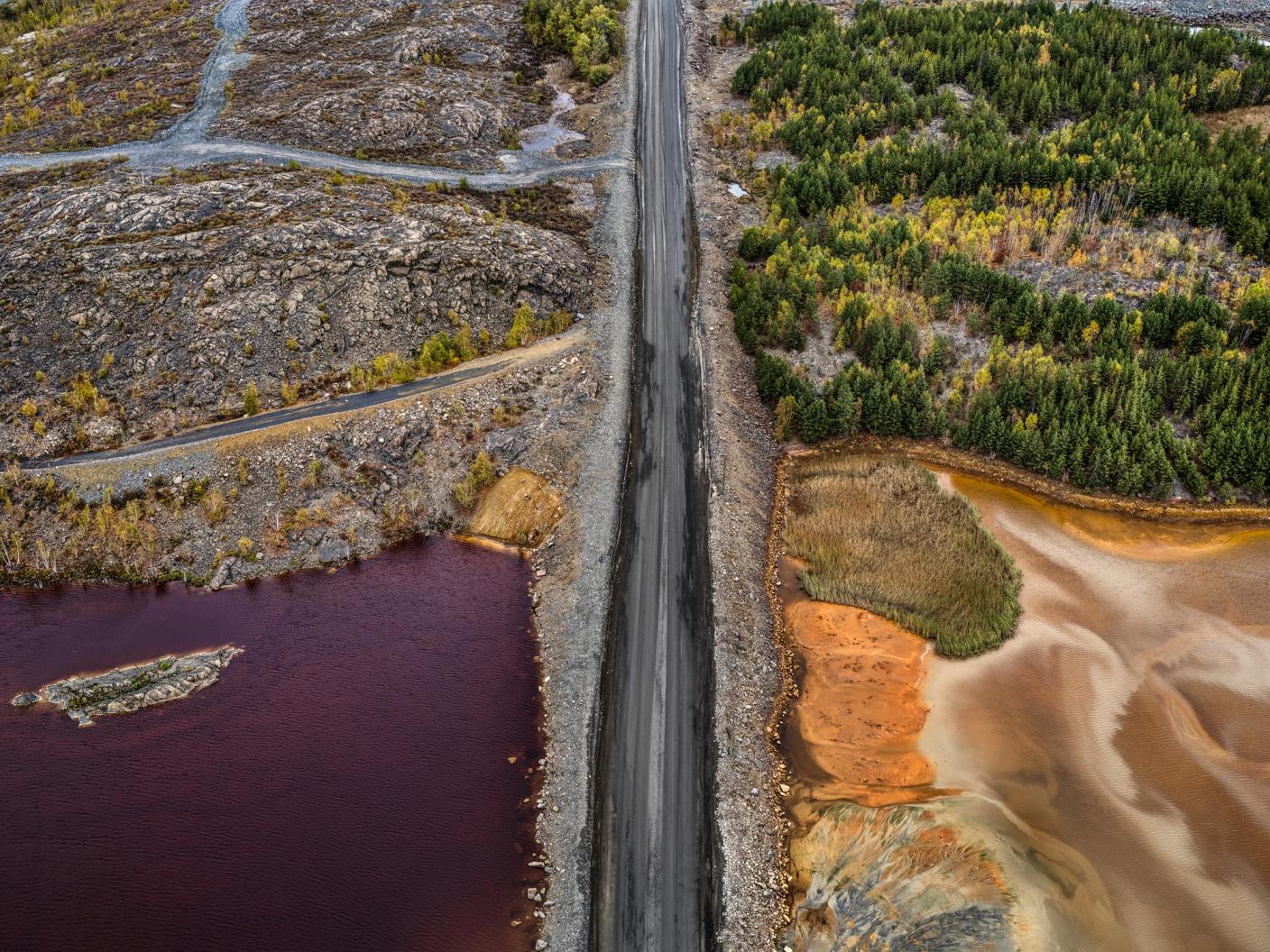
Though there’s still some academic debate about the theory, most geologists believe that more than 1.8 billion years ago, a meteorite barged through Earth’s atmosphere and slammed into the planet in the area that is now Sudbury. The impact melted a swath of the Earth’s crust and flung vast quantities of rock into the air; the initial impact crater is believed to have been 200 kilometres long and 10 kilometres deep.
The crater filled with a pool of mineral-rich magma and, hundreds of millions of years later, settlers arrived to log the forests and prospect for valuable metals. By the 1880s, they were staking claims on remarkably rich ore bodies.
Initial mining interest in the region was focused on copper. In the 19th century, nickel was relatively unknown, but soon its use as a hardening element in military armour made it highly desirable as well. The quantity of nickel in Sudbury’s bedrock is enormous: mining companies have been working the same deposits for more than 125 years, offering a degree of stability that few boom-bust mining towns have enjoyed. (In addition to copper and nickel, the earth around Sudbury has also coughed up cobalt, platinum, gold and silver.)
As mineral extraction got underway, more and more of the surrounding forest was logged – not just for building materials, but also to produce the energy needed to separate ore from rock. “An early mining practice, a refining practice, was something called open-heap roasting,” says Quentin Smith, an environmental engineer who works at Vale Base Metals, the international mining company that absorbed what was once Sudbury’s Inco Ltd. in 2006. “We chopped down trees, and then we piled them, say, 10 feet high, and then we put ore on top of this pile and we lit it up, and it would burn for the whole summer, for months at a time,” until the sulphide components of the mineralized rock had become gassified, leaving usable metals behind. “That went on for years here.”
The open-heap era was eventually succeeded by Sudbury’s first smelters, but the byproduct of the ore extraction process remained the same: sulphur dioxide, in vast quantities. When gaseous sulphur dioxide meets oxygen and then water, whether up in the clouds or down on moist, green ground, it becomes sulphuric acid. And sulphuric acid, over time, torques the pH value of soil so far out of balance that plants can no longer grow. “We chopped down everything and then we impacted the soil so things couldn’t grow back easily,” says Smith.
With fewer living tree roots and less plant cover to hold the land in place, much of Sudbury’s soil was swept into creeks, rivers and lakes by spring runoff or drifted away on the wind. Without the microbes that would live in healthy soil, the large stumps and roots of logged old-growth trees didn’t break down; instead, they became semi-petrified as the forest that had nurtured them vanished. Many wound up sitting eerily on bare, black bedrock, like skeletons baked clean by the sun.
Songbirds vanished, and large mammals retreated to more intact forest. The acid nullified so much life in the area’s lakes that fish populations disappeared, and the lake waters, free of organic matter, became eerily clear. Loons, the near-ubiquitous symbol of Canadian lake country, failed to breed in and around Sudbury for nearly a century. And nothing changed until 1972, when NASA’s astronauts visited for the second time and, separately, Inco implemented a major change in its operations.
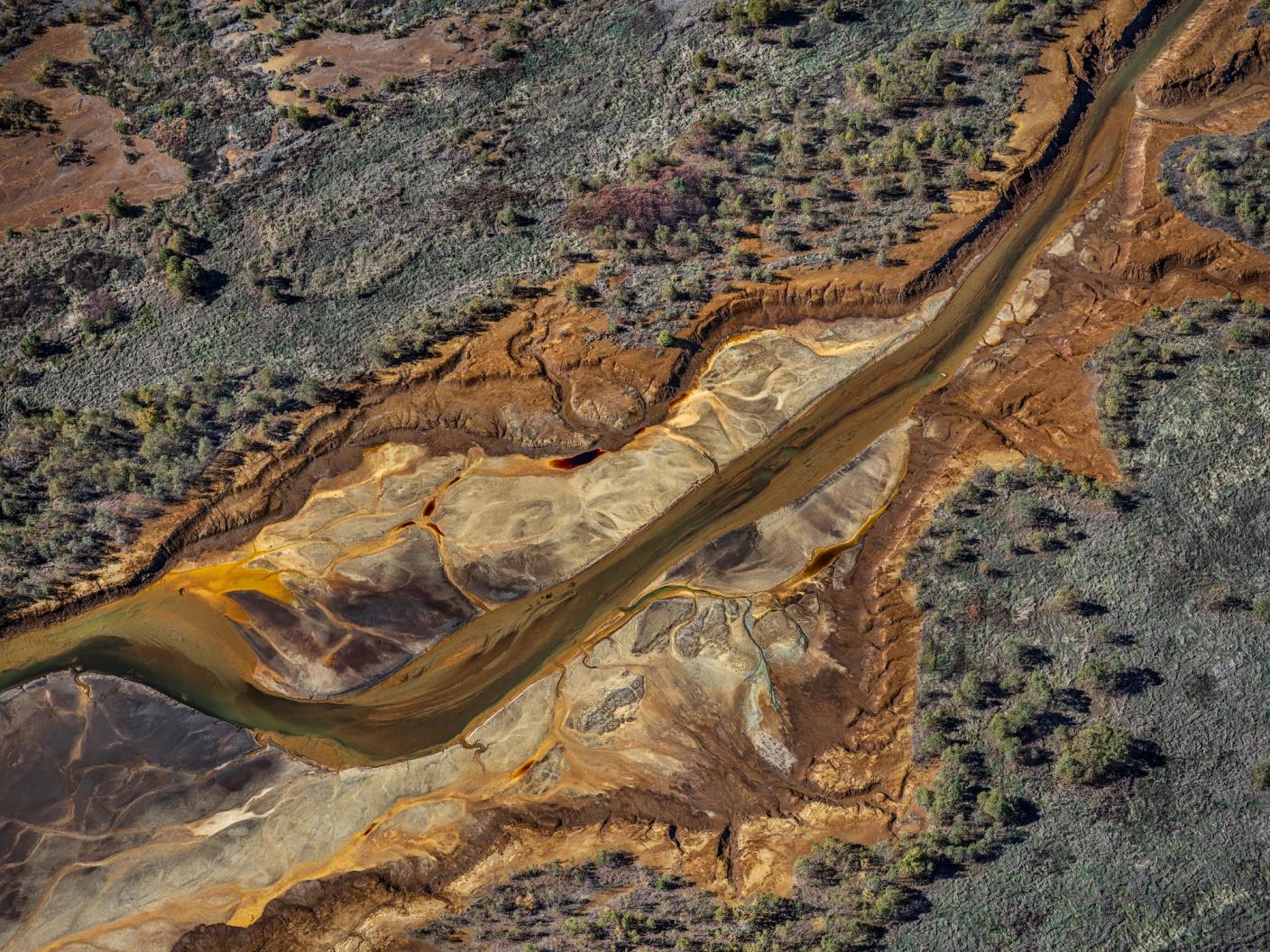
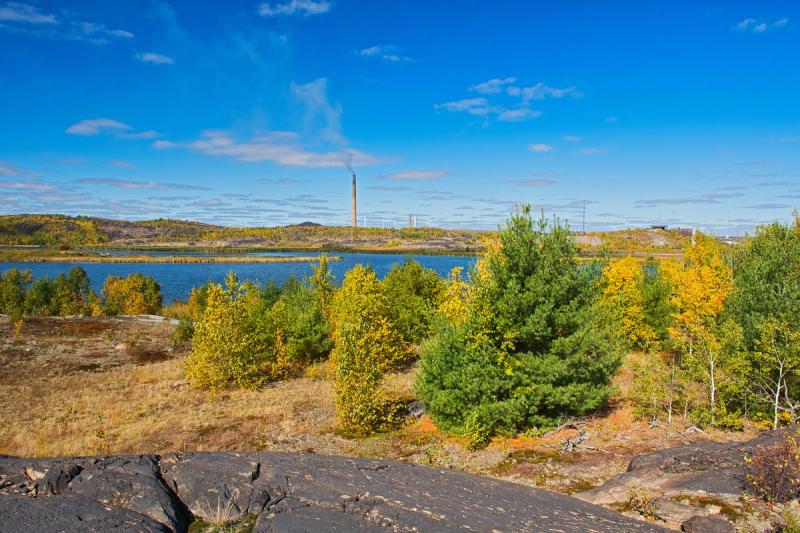
From the window of his office at Laurentian University, Dr. Peter Beckett can see the story of Sudbury’s regreening. Outside, the hills are covered with evergreen trees, Ramsey Lake glitters in the sun and, on the western horizon, the Sudbury Superstack, decommissioned and partway through a years-long dismantling process, still looms.
“It’s only two-thirds of what it was, because it’s coming down as we talk,” says Beckett, a wetland ecologist and professor emeritus at Laurentian. When Inco opened the Superstack in 1972, it was the tallest free-standing structure in Canada – it would be eclipsed by the CN Tower just a few years later – and the tallest smokestack in the world. “And of course,” Beckett says, “that was the impetus for the start of the [reclamation] work in Sudbury.”
Beckett, a Londoner who’d already studied local smelter waste during his post-doctoral fellowship at Swansea University in Wales, arrived in Sudbury in 1976. The Superstack, built in the wake of Ontario’s first major regulatory restrictions – an Air Pollution Control Act passed in 1967 and a Waste Management Act in 1970 – had been operational for four years. Its height, combined with the introduction of electrostatic precipitators, both reduced Inco’s overall emission of pollutants and spread the remainder over a much wider region. (“Dilution is the solution to pollution,” the old, outdated saying goes.) For the immediate Sudbury area, the result was a rapid reduction in acute daily emissions. That meant, for the first time in decades, it might be possible for green things to grow.
In 1973, seizing the opportunity that the Superstack had presented, the Regional Municipality of Sudbury created its Vegetation Enhancement Technical Advisory Committee, or VETAC – a body made up of representatives from governments, First Nations, academia, mining companies, community groups and more that is still overseeing the Greater Sudbury regreening program today. By the time Beckett arrived at Laurentian, some of his colleagues had already begun running small-scale re-vegetation experiments, laying the groundwork for an eventual regreening campaign.
The plan was to work in phases, beginning by applying a treatment of powdered lime (the mineral mixture, not the fruit) as a base to neutralize the highly acidic soil that still clung to the hills. The lime was laid down alongside fertilizer and grass seed, in what would eventually become known as the “Sudbury recipe.” Assuming it worked, once the soil layer had been treated and the grass had taken hold, the team would plant trees the following year.
The first attempt was made on a swath of ground in the summer of 1978. “We used to have a different climate in those days,” says Beckett. “There would be a dry period in the summer, and then the autumn rains would come after Aug. 15, almost guaranteed. So we were out there every day, waiting to see whether there was any green appearing…. After several days of rain, we saw a green fuzz on the hills.” It was a eureka moment and, in 1979, the first tree seedlings were planted in that same pre-treated ground. The regreening of Sudbury had begun in earnest.
Dr. John Gunn, a freshwater ecologist, arrived in Sudbury to work at Laurentian University in 1978, the same year regreening really got rolling. Originally from a coal-mining area in Cape Breton, Gunn says, “I went from the dirtiest town in Nova Scotia to the dirtiest town in Ontario.” The Superstack had improved things locally, but the air quality was still bad enough that Gunn and his wife chose the location for their first home based on prevailing smoke levels. “We intentionally tried to protect ourselves from the air quality,” he says. “She and I both said, ‘Well, we could survive this for two years….’” Nearly 50 years later, Gunn is still in Sudbury.
While Peter Beckett and his colleagues worked on restoring the land, Gunn’s focus was on the region’s water. On land, the defoliation was relatively confined: the focus of the regreening program is on roughly 80,000 hectares that represent the area surrounding Sudbury’s original smelters and smokestacks. But the sulphur dioxide the stacks emitted had travelled much farther, and as it fell back to the ground as acid rain, it acidified roughly 7,000 lakes spread out over 17,000 square kilometres of Ontario. “Forty of the smallest countries in the world are smaller than that area,” says Gunn.
Inside that vast swath of damaged waters, there was a smaller area of more acute disruption. Within about a 30-kilometre radius of Sudbury’s mines, the pollutants included not just sulphur dioxide but also dangerously large deposits of metal particles. “There were tens of thousands of tonnes of that dustfall,” Gunn says. Within that 30-kilometre area, “you have everything happening: the trees are gone, the metals are there, the acid is there.”
Initially, researchers tried to address the acidified water and dying fish with lime, much like their land-focused colleagues. “We thought the answer was a chemical treatment,” says Gunn, looking back on his early years in Sudbury, “and that was because we had no hope that [the mining companies] would ever stop polluting.” But lime was an imperfect solution to acidified, barren lakes; it had to be constantly reapplied to be even marginally effective.
Meanwhile, the regulatory momentum that had started in the late 1960s rolled on. The federal Clean Air Act, intended to support and standardize provincial efforts at controlling air pollution, was passed in 1971, and Ontario followed up with several more control orders and regulations between 1970 and 1985. “And, of course, virtually every time the ministry put out an order, the company said, ‘We can’t do it,’” says Beckett, wryly describing the industry response. “But they would get on and do it anyway.”
In time, Gunn and his colleagues noted, water quality improvements followed. In 1990, Gunn published an influential paper in Nature showing that the best fix for Sudbury’s lakes wasn’t direct intervention; it was clean air.
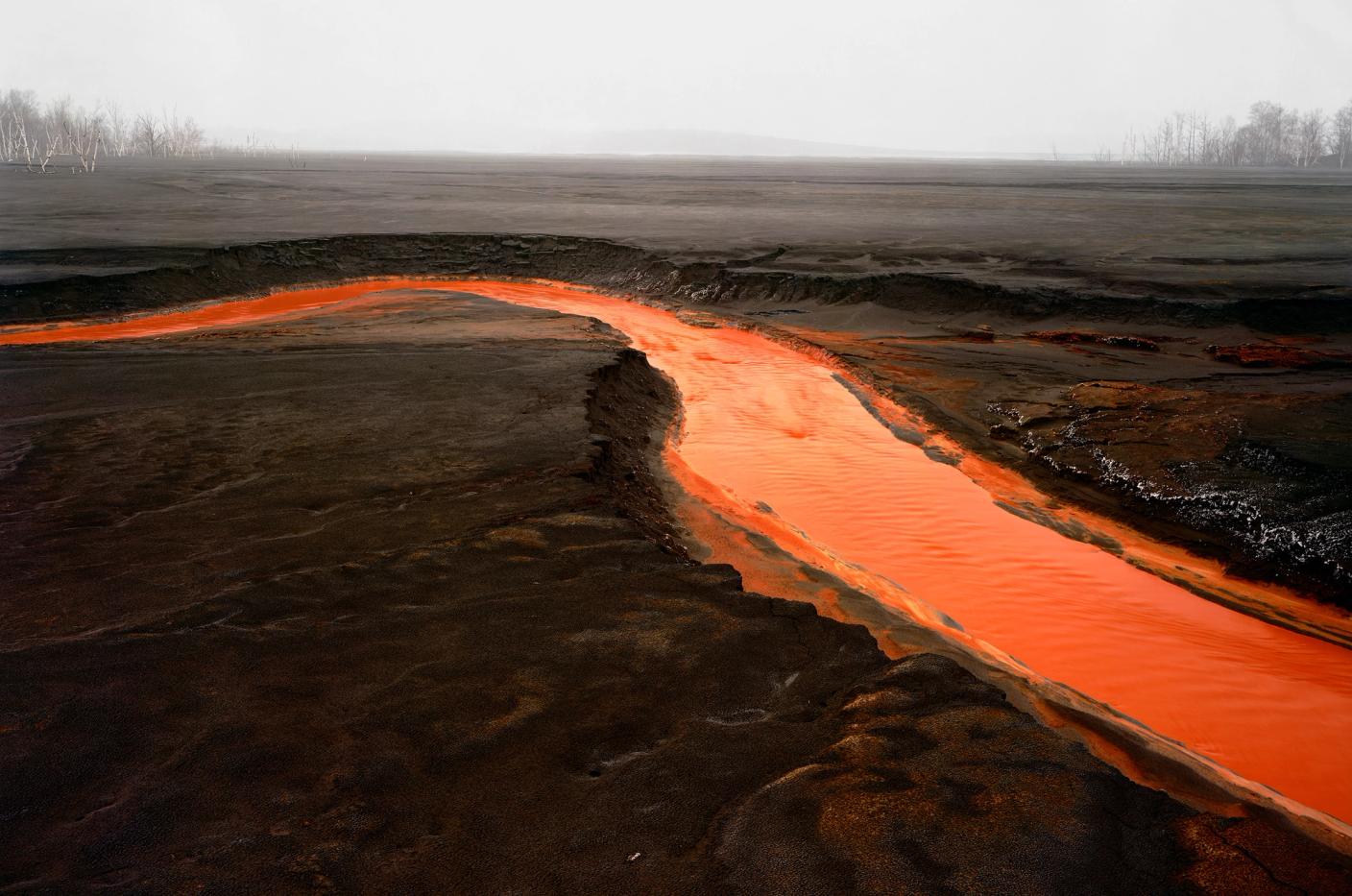
As the regreening has proceeded, it’s also played a part in the recovery of the area’s most damaged lakes. Runoff from land that had been treated with lime helped to neutralize the acid in the water, and tree cover helped to break the winds that had howled unchecked through the moonscape. According to Gunn, that meant that the lakes were able to stay cooler in their bottom layers, providing habitat for fish. “Some of the dissolved organic material, the colour that comes from the bogs and wetlands, started to flow into the lakes and they started to return to their normal colours again – they didn’t look like Windex anymore,” adds Gunn. “And those materials – the tea, we called it, forest tea – not only shade the bottom waters from overheating, but they bind up any of the local metals and make them less toxic. So I have to give the forest people credit for their work too. The forest was helping heal the lakes in several ways.”
Today, many of the lakes in that 30-kilometre radius are once again home to fish that are safe to eat. Further afield, thousands of less-impacted lakes have also recovered on their own. The Superstack has been replaced by smaller, more modern smokestacks: Vale Base Metals notes that their emissions in 2025 were just 18 per cent of the provincial limit – data that gets audited by a third-party consultant and submitted to the Ministry of Environment annually. Overall, sulphur dioxide pollution from the various mines operating in the Sudbury area is down to two per cent of what it was in the 1960s.
VETAC has been overseeing the planting of trees in the “barren” and “semi-barren” zones of the local landscape for nearly half a century now. In that time, they’ve successfully reforested roughly half of the 81,000 hectares under their purview.
In the early years, their focus was on planting a handful of tree species: tough, fast-growing conifers like Jack pine and red pine. They sourced seedlings from nurseries and, initially, grass seed from agricultural providers. (They’ve since replaced it with native grass seed, as supplies have become more available.) In the early 1990s, Inco turned its long-standing greenhouse, which had previously been dedicated to company landscaping, over to wholesale tree-seedling production: under engineer Quentin Smith’s supervision, what’s now the Vale greenhouse grows 200,000 seedlings per year, many of which are donated to McCaffrey’s tree-planting crews to support the regreening.
But McCaffrey’s team has also increasingly turned its attention to the quality of the forest they’re rebuilding, and that means nurturing diversity and complexity. In addition to planting more than 25 different canopy tree species, the reclamation team has also now planted dozens of understory trees and shrubs, including boreal forest standbys like bearberry, juniper, wild rose and highbush cranberry. The team has also dug up and then relocated whole pieces of healthy forest floor in an effort to seed even more biodiversity.
“This is one of our [transplanted] forest floor mats here,” McCaffrey says, crouching down in the duff beside the Jane Goodall trail. “It does get hard to see because it’s not the right time of year, but I believe that this is some twin flower, and this is the mountain rice grass, and these big leaves are large-leaf aster. We always call those bushmen’s toilet paper – large leaf, a little fuzzy.” She laughs, then turns her focus back to the plants. “There’s a bit of bunchberry that’s turned a beautiful colour of burgundy, and then there’s some Maianthemum here….”
I point to a patch of moss hiding below all the shed pine needles and ask whether it’s a transplant, too. “That moss is coming back on its own,” says McCaffrey. Mature trees are the most obvious evidence of Sudbury’s deforestation and subsequent reclamation, but many vastly smaller life forms, the kinds that most people don’t pay much attention to, have also returned to the area. “Sudbury was considered a lichen desert, because lichen is susceptible to air quality.” Even the rocks were stripped clean of life. But McCaffrey and the regreening team have found that within about 15 years of any given area being treated with the lime-and-fertilizer recipe, lichens start to re-establish themselves.
For me, it’s the long absence even of lichen on Sudbury’s rocks that puts the sheer scale of the reclamation project into perspective. That iconic line uttered by Jeff Goldblum’s Dr. Ian Malcolm in the movie Jurassic Park, “Life, uh, finds a way,” was uttered just a year before Sudbury planted its two millionth tree, but for decades here, it couldn’t find a way. “There was nothing bigger than the Sudbury problem,” says Gunn. “It was large. It was multinational companies.”
He gets asked sometimes how the city was able to clean up such a complex, sprawling mess so effectively. His answer? “It starts with democracy. You have to have good government. You have to have good regulations; they have to be firm but fair. You can’t say, ‘You’ve got to change this all by next year.’ And then you need innovation. You need some smart people. And then partnerships with the public so that people feel they’re involved.” Those factors, he adds, are all “exemplified in Sudbury.”
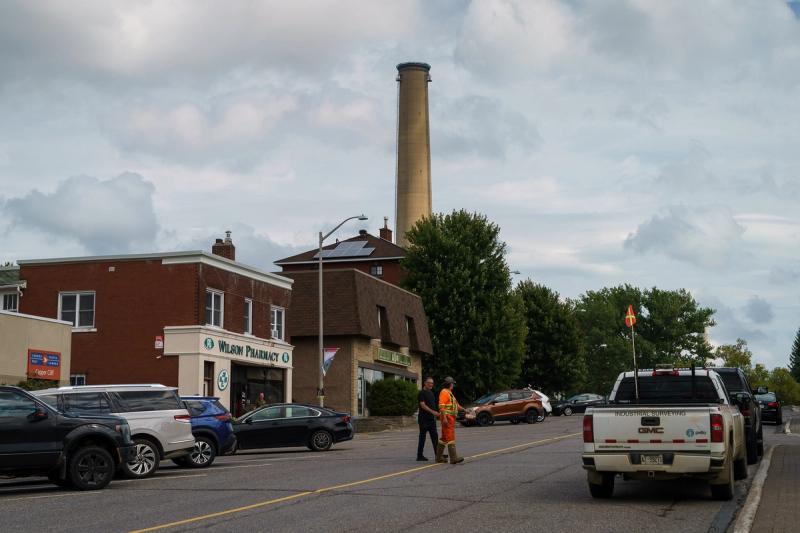
You also need to spend the money. From 2012 to 2018, Vale put more than $1 billion into pollution capture in Sudbury through its Clean Atmospheric Emissions Reduction project, work that culminated in the Superstack being made obsolete. “This was all done to meet emission targets,” Smith says.
As for the regreening process, that work has been entirely voluntary, according to Beckett. The damage done to the landscape predates the province’s earliest reforestation and reclamation requirements, and so the area’s older mining companies are exempt from those standards. That voluntary effort stands in contrast to some of Canada’s most infamous mining messes, which are still being cleaned up with taxpayer dollars long after strategic bankruptcies allowed some mining firms to dissolve and walk away before cleanup.
McCaffrey is due to retire at the end of this year, after more than three decades with the city’s reclamation program. Walking with her on the Jane Goodall trail, I’m struck by the longevity and consistency of personnel on the regreening effort. Peter Beckett has been participating in Sudbury’s restoration for 50 years, and John Gunn for nearly as long. On the industry side, Vale engineer Quentin Smith first came to Sudbury when he was still a student and has now been with the company for 22 years. His part-time colleague at the greenhouse, Mike Peters, put in 37 full-time years at Vale before un-retiring to keep nurturing the company’s hundreds of thousands of seedlings. (“I watched it go up in high school,” Peters says of the Superstack. “And now I’m watching it go down.”) Something about VETAC’s work seems to inspire people to stick around.
Maybe it’s the tangibility of the results, and the job satisfaction that comes from watching a landscape heal, one hilltop and lake at a time. Or maybe it’s the sense of shared purpose between VETAC and its partners: both Beckett and McCaffrey say the group has always been forward-facing, focused on solutions rather than on placing blame. The “Sudbury recipe” is lime, fertilizer and grass seed, sure. But it’s also about the way the community tackled its homegrown environmental disaster.