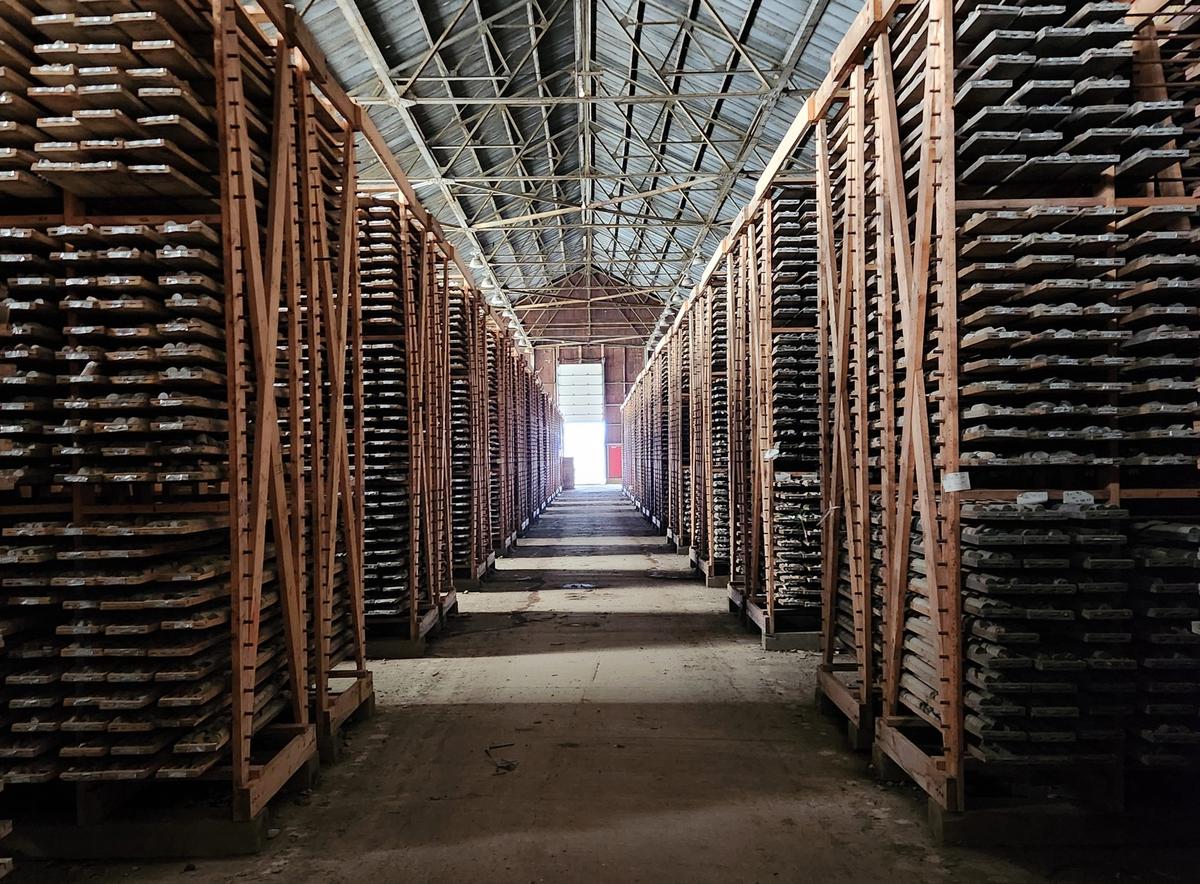
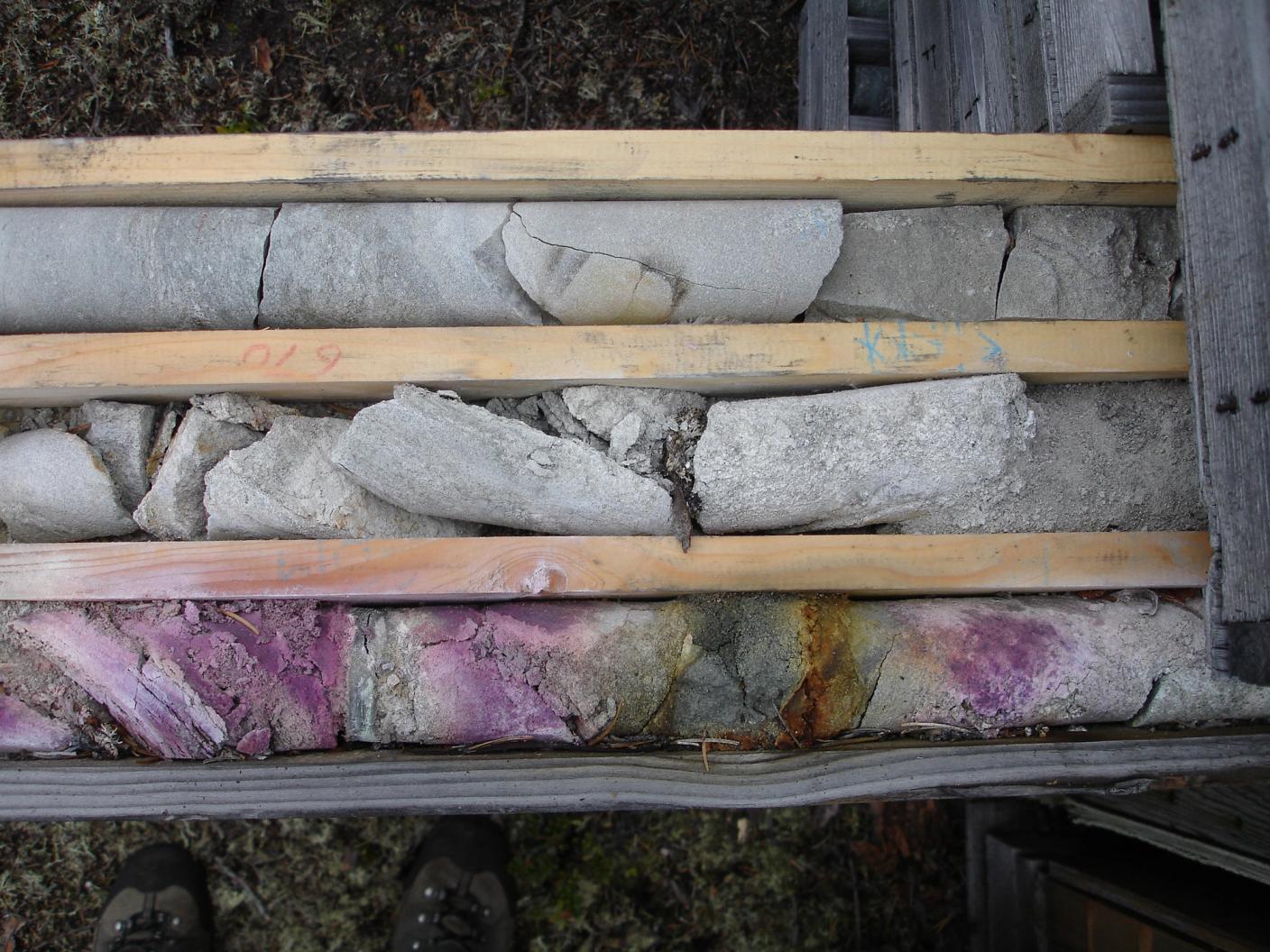
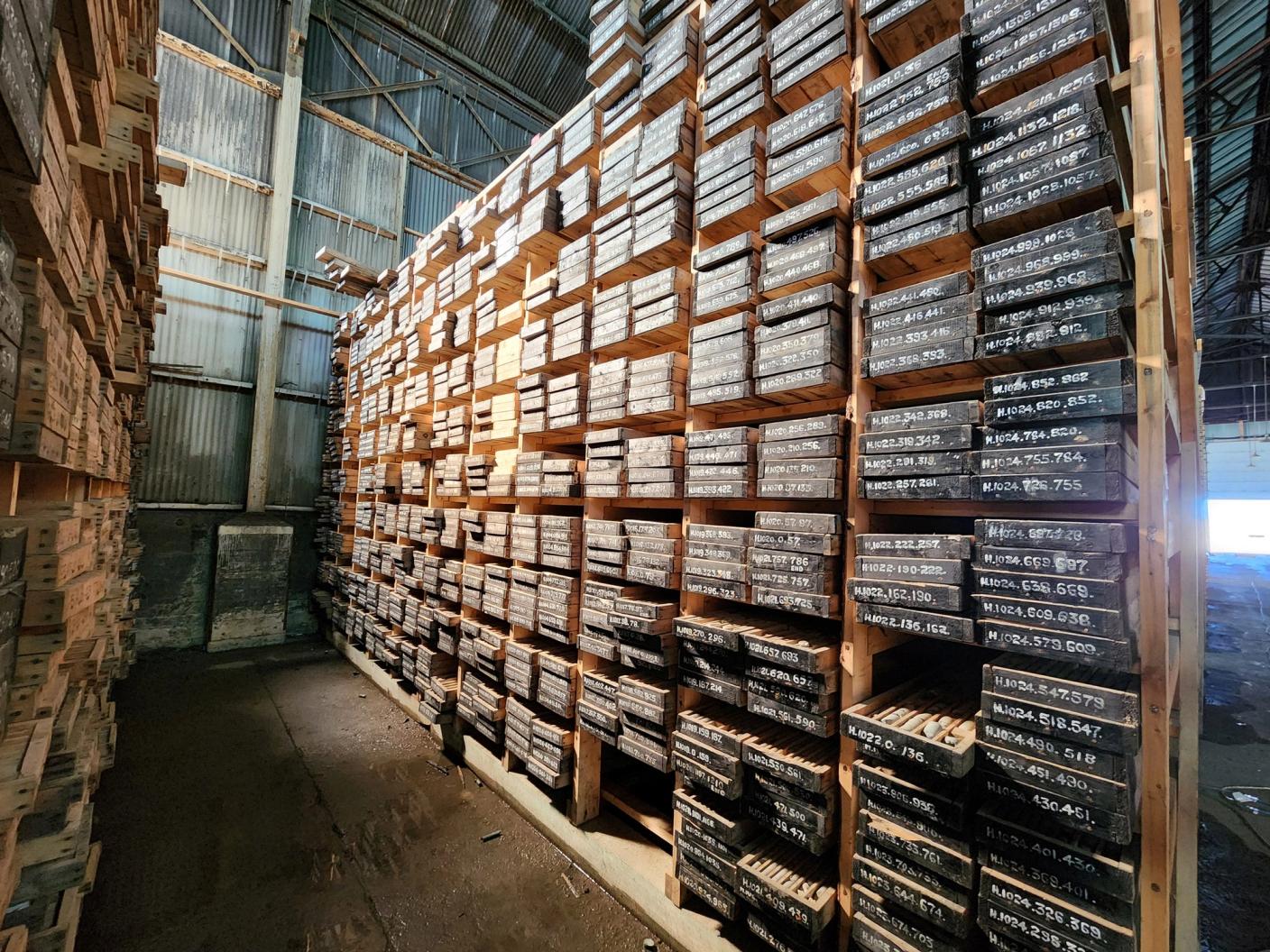
Locked away in repositories scattered across Canada are millions of metres of drill core that have quietly been gathering dust. Much of it has never been digitized or catalogued in a single place. These narrow cylinders of rock, some about the diameter of a pop can, have been pulled from deep underground by prospectors and drill crews going back decades. Laid end to end, Canada’s core catalogue would stretch across the country from Vancouver to St. John’s N.L. – and it could hold Canada’s next important mineral discovery.
Some prospectors have spent decades looking for signs of valuable ore deposits, such as copper, nickel and other critical minerals, first by traversing the Canadian landscape in search of mineralized rock on the earth’s surface and later by adding satellite imaging. Once a promising site is identified, geologists who are typically working for an exploration company will drill an initial set of holes to collect samples and map the regional geology. If the results are promising, more extensive drilling usually follows to test whether the site has the potential for a mine. If not, the company moves on.
Today, most deposits visible at the surface have already been found. What’s left is buried under tens or hundreds of metres of rock and soil and detectable by laborious, expensive drilling – or by analyzing existing rock samples.
Now, a collaboration between federal, provincial and territorial governments, universities and some of the world’s biggest mining companies is betting that digitizing decades-old drill-core records and feeding them into AI could speed up the discovery of such critical minerals as copper, nickel, lithium and cobalt while also allowing researchers to spot minerals that prospectors weren’t looking for when the drill core was originally collected.
“The interesting thing about Canada’s exploration potential is that it’s such a large country and so much of it is remote,” says Tim O’Connor, a geologist by training and group exploration officer at collaboration member BHP. “One of the critical questions when you have large amounts of data in disparate places is, how can we get as much of that together so we can fill in the gaps that we might have, especially as we start moving more toward the Arctic or more toward remote environments?”
This matters now more than ever. Copper, nickel, lithium and a host of other critical minerals and metals power the technologies behind the clean energy transition – electric vehicles, wind farms, power grids – along with national defence and advanced manufacturing. But finding new deposits is getting harder and more expensive, and Canada, like much of the world, hasn’t made a major discovery in years.
What’s more, critical minerals have become a central bargaining chip in the push for industrial sovereignty and expanding trade. So, for the Canadian government, which is strategizing about how to make its economy more resilient, and for companies looking to reverse more than a decade of thinning discoveries, the potential of a digital core sample library is irresistible.
The initiative, known as the Canadian Digital Core Library (CDCL), is bringing together the federal government, Laurentian University (which is in Sudbury, Ont.) and mining majors (including Agnico Eagle, Anglo American, BHP, Teck, Vale and Hudbay) as well as the Creative Destruction Lab, a non-profit that delivers programs for scalable science- and technology-based startups. Together, the collaboration is building a national geoscience data platform to make Canada’s drill-core data far easier to access, a first-of-its-kind effort at this scale in the country.
Natural Resources Canada has committed to investing up to $40 million over two years to digitize the geological drill-core data. At the 2026 Energy and Mines Ministers’ Conference in June, Tim Hodgson, minister of energy and natural resources, announced up to $15 million for the Creative Destruction Lab to build the CDCL platform. Scanning of the drill core is set to begin next month.
The CDCL builds on an AI-based core-scanning partnership between the federal government and the Northwest Territories signed in 2025. O’Connor frames the library as a “rising tide lifts all ships” moment. What makes this project unusual is that it brings mining competitors to the same table to share their samples. “Anglo or Vale or Agnico’s success doesn’t preclude our success, nor can any one of us fill the market,” he explains. “We fundamentally are pro exploration across the board.”
Under Canada’s mining laws, most subsurface minerals belong to the Crown. Exploration rights go to whoever stakes a claim first, on the ground or online. The claim holders must keep exploring to maintain the claim, and then they can pursue a mining lease to move to full-scale production. If a researcher or junior explorer spots something in the CDCL data – say, lithium in ground no one previously targeted – turning that lead into a mine still requires staking a new claim over that land, as the data itself doesn’t confer rights.
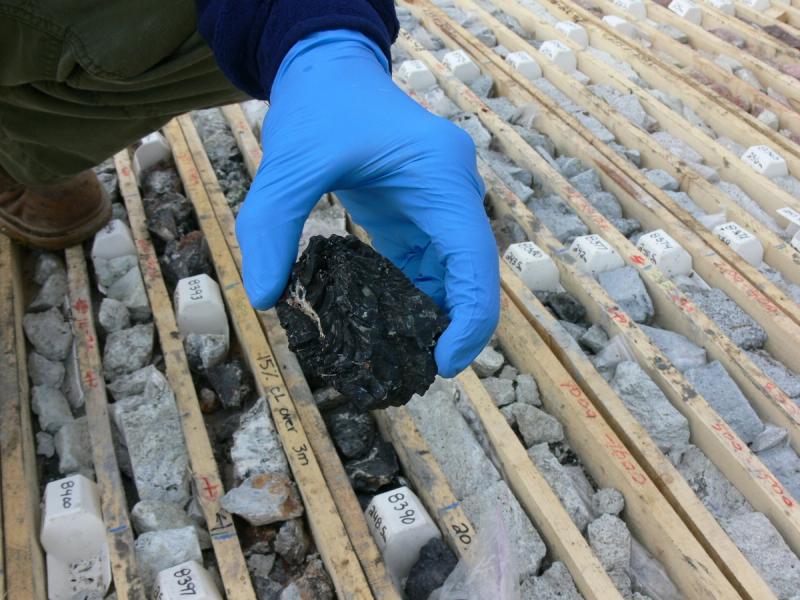
To those outside the mining sector, the concept of a digital drill-core library probably sounds a bit abstract. Drill core is extracted from the earth typically by hollow, diamond-studded drill bits that preserve a physical record of the geology beneath the surface. The drill cores are among the most important sources of subsurface information and help companies determine whether a mine would be viable. A drill core also acts as a geological time capsule, giving an intact picture of what lies underground. Satellite imagery and other remote sensing tools can pinpoint promising areas, but according to Jennifer Day, an associate professor of geological engineering at Queen’s University in Kingston, Ont. (who isn’t involved in the project), geologists and geological engineers still need to examine the actual rock to confirm what’s down there.
Right now, that’s neither cheap nor easy. In some of Canada’s remote regions, says Day, drilling programs may require helicopters to transport rigs, crews and recovered core to and from isolated exploration sites. Because so much of that expensive and time-consuming work has already been completed over decades of exploration, she commends the CDCL’s effort to digitize existing collections. Rather than repeating expensive drilling campaigns, researchers and companies can extract new insights from previously drilled cores.
“New discoveries ultimately require new ideas,” says O’Connor. For example, the industry’s declining discovery rate over the past 15 years, especially for nickel and copper, has left major producers competing harder for a shrinking number of viable deposits. “Our job is to produce the metals and the minerals that the world needs. Within the resources industry, we are a depleting business. So there’s an opportunity in front of us to rethink how we go about exploration.”
The economic case for a national drill-core library is compelling too. Among the international models the CDCL cites – including open-geoscience-data programs in Finland, the U.K. and Norway – the initiative most similar in structure and scope is Australia’s National Virtual Core Library (NVCL), a national digital drill-core database built across the country’s state and territory surveys. In 2016, an independent review of the AuScope infrastructure program, Australia’s national provider of geoscience research infrastructure, found that AuScope’s programs – including the NVCL – generated a net benefit of about A$3.7 billion. That’s about A$15 in economic value for every dollar spent, with mineral exploration alone contributing about one-quarter of the net benefits.
O’Connor breaks the technical process into three stages. The first step is digitizing the existing drill-core data. The second involves organizing that data into what are called schemas, which is their file structure, since digitized data is useful only if it’s easily accessible. The third step is where AI comes in: integrating this data into prediction models that can then pose new geological questions. For porphyry copper deposits, which are found in such places as British Columbia, Chile and Argentina, a key question could be what geologic process had to have occurred to concentrate copper into one specific, extractable area. Answering this question, O’Connor says, could inform experts on where to drill, test and potentially develop a mine.
“As for what will be most valuable, we’re keen to see how geoscientists, researchers, innovators and explorers interpret the data at scale,” says Sonia Sennik, CEO of the Creative Destruction Lab.
From outside the mining industry, Day is most excited by the project’s aim of making drill-core data more accessible. She argues that the initiative could “almost democratize” access to drill core by making decades of geological information available to universities, researchers, junior exploration companies and established miners alike. She hopes the CDCL creates opportunities for post-secondary geology and geological engineering students to help analyze drill core through internships and field placements, giving them hands-on experience with the digital tools and real-world data sets.
In O’Connor’s view, success will primarily be measured by the number of new discoveries. But other goalposts matter too, including broader data access, more juniors and majors exploring with better information and, eventually, new mines. “There’s no rational argument that says, ‘I think I’m going to be successful ignoring the past or not leveraging all the lessons that have been done to this point,’” he explains.
Get our weekly newsletter – the people, places, and ideas revealing where Canada is headed.