When Vett Lloyd was first bitten by a tick about 15 years ago, she was told by public health authorities that there were no ticks in her home province of New Brunswick. “That was quite patently false, as there was one on me,” said Lloyd, a professor of biology at Mount Allison University in Sackville, N.B. “They also told me that even if there are ticks, I didn’t have to worry about Lyme disease. But apparently I did.”
In the weeks and months following the bite, Lloyd fell ill with flu-like symptoms and was eventually diagnosed with Lyme disease, the most common tick-borne illness. While she’s fully recovered now, Lloyd fought the disease for years, just like so many other Canadians who contract Lyme disease and suffer from lingering symptoms like fatigue, aches and brain fog, sometimes even developing long-term chronic illnesses.
Get our weekly newsletter – the people, places, and ideas revealing where Canada is headed.
Reports of Lyme disease and other tick-borne illnesses are skyrocketing: in 2010, the year Lloyd was bitten by a tick, there were 143 recorded cases of Lyme disease in Canada; in 2025, there were 7,105.
Today, Lloyd focuses her research on ticks and the disease-causing pathogens they carry. At her lab at Mount Allison, she and her students are working to detect new pathogens in the local tick population before they make the jump to humans. They are also developing a rapid test for Lyme disease people can use at home.
Be Giant spoke with Lloyd about her tick research, why we’re seeing an uptick in tick-borne diseases – and why there’s hope for a simple home test.
How is climate change impacting Canada’s tick population?
Aside from making Canada warmer, climate change is also impacting our winters. If snow stays on the ground long enough in winter that ticks waiting for spring in the topsoil can’t come out and get a good meal, they eventually starve to death. That’s why historically, Canadian winters have kept the tick population down. With global warming, we have less snow and more variable weather. Ticks are opportunists – they don’t hibernate. The moment it’s warm, they’re gonna crawl up, see if they can grab a snack and then go back into hiding if it’s cold and come back up during the next warm stretch. That variable weather isn’t starving ticks out anymore and is promoting tick survival.
What else is causing this increase in the tick population?
Changes in land use. People are moving into greener, moister suburban areas which support wild rodent populations, which support ticks. We are essentially providing more opportunities for the wildlife that are tolerant of humans to hang out – suburbs are really good for things like raccoons and both wild and house mice, which mix and mingle and share their fleas and other arthropods that can transmit pathogens.
Lovely green neighbourhoods are wonderful, and I’m in no way suggesting we pave Canada. But ticks need wild animals, and wild animals like small broken forests and fields, which are common in suburbs.
With all that in mind, how bad will this year’s tick season be?
Well, it depends where you are. In Maritime Canada, we had a cooler winter with bits of snow, but we didn’t have deep snow that lasted four or five months, long enough to starve them out. So we had an earlier tick season here, and a much more intense tick season. Usually, tick season starts in late April or early May. By early April, we were already seeing a lot of ticks being found.
How much has the occurrence of tick-borne diseases like Lyme increased recently?
We actually don’t know how many people have Lyme disease. You can go to the Public Health Agency of Canada (PHAC) website and search for Lyme disease statistics, and you’ll get a nice little chart. But these are only the people who actually noticed the tick, had access to health care, and the health-care provider knew what to do and filled out the forms so the tests and results were recorded by the government. The numbers from PHAC are consistent with an increase, but they are an underestimation of the number of people who are impacted.
The best guess, and scientists argue about numbers because that’s kind of what we do, is that there has been a tenfold increase in the past 10 years.
The other problem is that even if you can catch a tick and be treated right away, a portion of people won’t respond to treatment and [will] develop long-term chronic illnesses. And obviously, if you don’t catch the tick and get treated, you stay sick. We’re having an ongoing increase with long-term chronic illness, and that’s got a significant economic impact, to say nothing of the personal and family tragedy.
One of the things that’s been in the news recently is a tick-borne disease that causes a red meat allergy. How worrisome is this?
That’s actually not caused by a pathogen, so it’s different from Lyme disease. It’s our bodies’ reaction to tick saliva. You get that reaction if you’ve gotten a lot of bites from blacklegged ticks or deer ticks. But the ticks with really powerful saliva are the lone star ticks and Gulf Coast ticks. They have a lot of compounds in their saliva that, if your genetics are set up a certain way, you can then develop an allergy to consuming red meat. It could be mild, though mild is still unpleasant – you get really bad diarrhea and your life is miserable until it clears your body – or [it can] cause anaphylactic shock and be potentially fatal. Now, not everyone becomes that allergic, and for some, the allergy will wear off over time.
It used to be that these ticks were rare in Canada. They might have been brought in on a migrating bird or on livestock or pets, but the ticks didn’t last here because they’re more sensitive to cold than blacklegged ticks. However, southern Ontario is one of the warmest places in Canada and getting warmer. So now these ticks are surviving the milder winters, having babies, and the babies are having babies. And we know this because the number of these ticks found in southern Ontario is way higher than what we’d see through just normal introduction by wildlife.
Areas around Windsor, all the way around the Great Lakes and the Greater Toronto Area are all starting to see a lot of these ticks. And aside from the meat allergy, they’re also really aggressive ticks. Blacklegged ticks just wait for you to go to them, which is bad enough. But lone star ticks will hunt you.
Most likely, Nova Scotia will be the next place to see these ticks. And then New Brunswick.
What kinds of pathogens are you looking for in ticks?
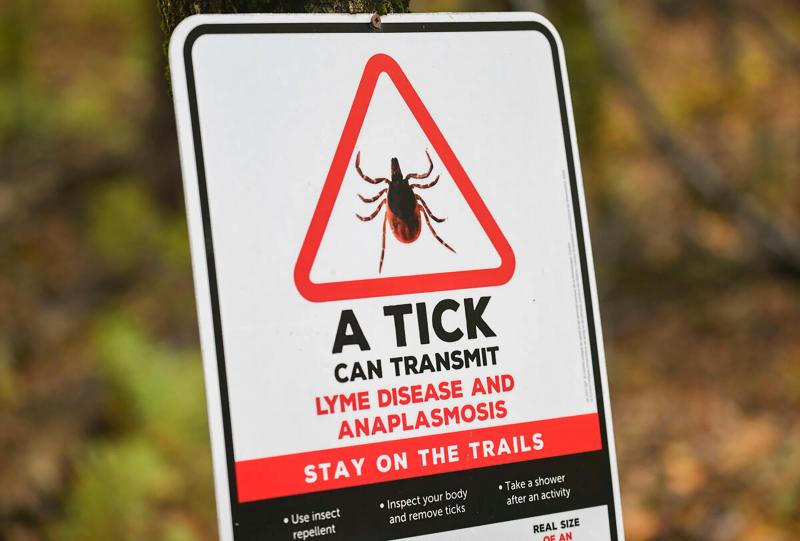
We’re looking for the known stuff and trying to figure out how prevalent they are. We’re looking for the bacteria borrelia that causes Lyme disease. We’re looking for one called anaplasma that causes a disease called anaplasmosis that is rapidly increasing in prevalence in Nova Scotia, and it’s creeping up into New Brunswick. It’s really terrifying because it acts quickly, and it’s been hitting those occupationally exposed to ticks quite badly and can be fatal. And we’re looking for babesiosis, which is Canada’s answer to malaria. We’re also following some of the deer tick virus lineages like Powassan virus.
But we’re also looking now at likely suspects that cause disease. So we’re chasing a bunch of DNA viruses and RNA viruses to see what’s present in the wild rodent population and could jump to humans through ticks. That means we’re going through a bunch of things that climate modelling predicts might be here in Canada, as well as broad screens to ask what viruses are here that we haven’t got a clue about. And if it’s in the wild mouse population, then it’s something we check to see if it’s in pet dogs. After that, the next thing to worry about is if it’s showing up in humans. And if it’s not in the wild mouse population, we celebrate.
What’s introducing these new pathogens, or have they always been here?
Some of the viruses and bacteria evolve quickly, and they’ll mix and match bits and pieces of themselves. But for the most part, they’ve always been somewhere – just not here [in Canada].
Ticks move around on migrating birds, and a lot of migration routes end up around the Great Lakes and into Canada. So those birds are moving ticks from warmer areas where there are a lot of ticks. And as Canada’s climates get warmer, the ticks stay and produce babies.
Your lab is working on rapid Lyme diagnosis methods. Can you tell me a bit about that?
Currently, there are two main problems with diagnosis. For starters, your standard Lyme disease test is just looking for antibodies against the pathogen, and there are a whole bunch of reasons why you might not have enough antibodies for a positive test, like being too old or too young or being on medications that knock back your antibody response. Or you could have perfectly good antibodies, but to a pathogen that’s closely related to what we test for but not the exact same one. Then you’d get a false negative. So rather than looking for antibodies, it’s far better to look for the bacteria, because if it’s there, there’s no ambiguity. We’re working on one test that essentially triggers a tiny electrical charge [if it detects bacteria] when you pour urine over something like a pregnancy test dipstick, and then it’ll be hooked up to something that changes colour [to indicate positive or negative].
Where are you at in the commercialization process for that test?
The easy part is building the test and doing the science. The hard part is the regulatory framework. The science is going great. After that, it’s a matter of getting a large company with the resources to take it through the regulatory process, which could take years. Right now, we’re shopping it around and trying to persuade people that there’s a market for this thing.
What’s the most effective thing Canadians can do to protect themselves this summer?
Bug repellents will work to some extent, and the ones that have chemicals in them that work specifically on ticks work better. Look for bug sprays with picaridin, which is derived from the essential oil of black peppers that ticks find repulsive. Those don’t work 100 per cent of the time, but it’s a good start.
People who are heavily exposed or occupationally exposed can get clothing that’s treated with permethrin, which the ticks really don’t like also.
For our furry family members, there’s a vaccine for Lyme disease that you can administer annually. There are also edible formulations that my dogs tell me are absolutely delicious – these work well for hairy, dark-coloured dogs since you won’t be able to see a tick on them easily. Previously, we were told just to treat dogs in the spring and fall, but now in Canada we need to be treating them 12 months a year.
Some people also advise you to wear light-coloured clothes, but that’s because it makes it easier to see ticks crawling up your clothing. It’s also a good idea to tuck your pants into your socks and [wear] hiking boots that cover your ankles.
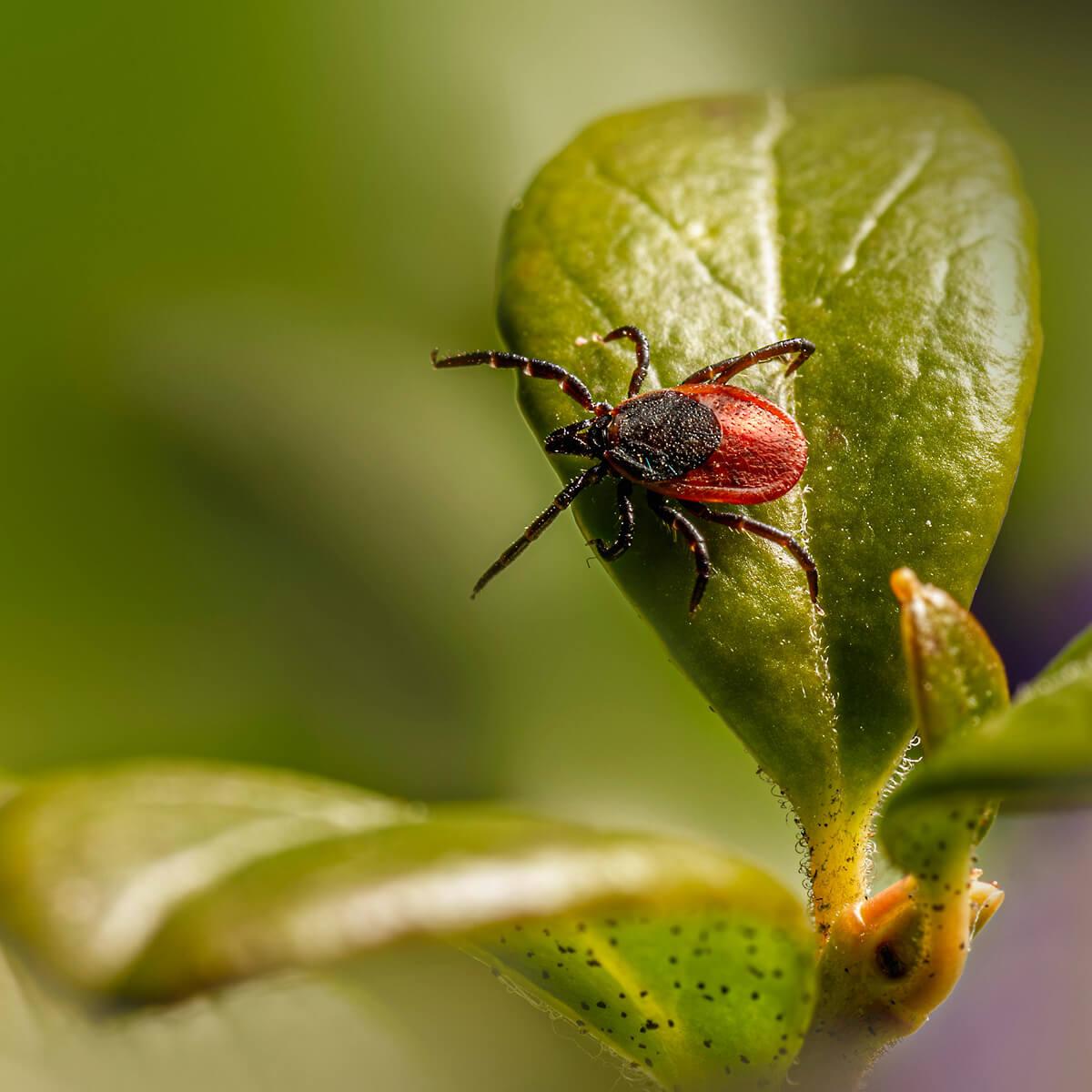
If you’ve been outside or occupationally exposed, it’s important to strip down and look at your body carefully when you get home. It can be hard to spot them: you’re looking for something that looks like a freckle, but with legs. Ticks like to hide in the dark, damp parts of our bodies. If you find a tick, remove it with tweezers and save it so you can get it tested. And then go see a pharmacist for a preventative round of antibiotics and hope for the best. The antibiotics don’t always work, so if you get a rash or a fever, it’s time to go to the doctor for a longer course of antibiotics.
I always encourage people not to get too freaked out and to go outside and enjoy nature. But if you’re really freaked out by ticks, ticks do not like beaches and they don’t care for sand. And if it’s really hot out, ticks don’t like that, either.
This interview has been edited and condensed.