There is a Goldilocks quality to Kingston, Ont. The city is large enough to support serious institutional infrastructure – Queen’s University, the Royal Military College of Canada (RMC), St. Lawrence College, regional hospitals, specialized manufacturers and deep technical talent – but compact enough that those assets don’t sit in silos. A founder hunting for lab space, a clinician with a problem to solve or a researcher with protectable intellectual property can often find a path through the local network unusually quickly.
That closeness has helped Kingston emerge as one of Canada’s most effective small-city innovation hubs. StartupBlink’s 2025 global rankings placed it ninth nationally – ahead of Halifax, Victoria, London and Winnipeg – while naming it Canada’s top small city for startups for the sixth consecutive year.
“Every month, players in the startup ecosystem get together to talk about what they’re working on and what those companies need next,” says Shelley Hirstwood, director of business development at Kingston Economic Development. “We’re a tight-knit group, and that intentional collaboration is part of what helps Kingston punch above its weight nationally.”
The city’s strengths increasingly cluster around two areas with outsized geopolitical and economic relevance: advanced manufacturing and life sciences. The following nine companies are already finding traction well beyond Kingston, helping Canada to build greater domestic capacity and global competitiveness.

A new economy for unused computing power
Many AI infrastructures today still depend on enormous cloud networks that are centralized, expensive and often foreign-owned. The Kingston company Distributive is betting there is another way. Founded in 2017, it develops software that turns idle computers inside hospitals, universities and enterprises into secure distributed computing networks capable of handling AI, analytics and scientific workloads without sending sensitive raw data into external cloud systems. In health-care settings, for example, that could allow hospitals to analyze genomic or patient data internally rather than transferring it into third-party environments.
“Right now, we live in a digital pyramid, and at the base are a handful of foreign hyperscalers,” says co-founder Dan Desjardins, a former military pilot, physics professor at RMC and Queen’s University PhD graduate. In his view, too much digital value flows toward a small number of global cloud providers rather than the institutions generating the underlying infrastructure and data. His company could fix that.
Distributive employs just seven people, but has raised double-digit millions, and Desjardins says they recently signed a major agreement with an international company operating across 172 countries.

A circular supply chain for rare earth magnets
The rare earth elements powering permanent magnets are small pieces of very large geopolitical puzzles. They are critical to some forms of electric vehicle motors, wind turbines, hard disk drives, AI infrastructure, robotics and medical equipment, but much of the world’s rare earth processing is concentrated in China.
Cyclic Materials is trying to build a circular alternative with its Kingston-based recycling plant. Instead of relying on new mining projects – expensive, slow-moving and environmentally intensive – the company recovers rare earth elements already embedded in end-of-life products. Its process begins at spoke facilities, where discarded products are broken down to recover magnet concentrate alongside copper, aluminum and other critical minerals. That material is then refined at larger hub facilities into high-purity mixed rare earth oxides that can re-enter manufacturing supply chains.
Kingston will soon become home to one of those commercial-scale hubs. Expected to open later this year, the facility will produce 500 tonnes of recycled mixed rare earth oxides annually while creating high-skilled engineering and manufacturing jobs in the region. Cyclic is also developing facilities in Arizona and South Carolina and has raised over US$163 million to date from investors including the Canada Growth Fund, Amazon and Microsoft.

Turning mixed rare earths into manufacturing-ready materials
Recovery is only part of the challenge. The next bottleneck is separation. Rare earth elements naturally occur together, but manufacturers need highly specific purified combinations to produce the permanent magnets used in EVs, robotics, defence systems and other advanced technologies.
Ucore Rare Metals is trying to build part of that processing capacity locally. Working alongside Kingston Process Metallurgy (KPM), the company is testing RapidSX, its proprietary solvent-extraction technology designed to separate elements more efficiently than conventional systems do. Ucore says the process is faster, more compact and operates within a closed system that avoids exhaust emissions.
The company is using Kingston as a bridge toward larger-scale commercial production planned for Louisiana beginning in early 2027. Its commercial demonstration facility now occupies more than one-third of KPM’s operational footprint and employs roughly 50 people, making Ucore the metallurgical firm’s largest client – and further deepening Kingston’s growing role in North America’s critical-minerals ecosystem.

A Lego-like approach to stronger, faster construction
Prefab housing has spent decades cycling through waves of optimism, often struggling to deliver on promises of affordability, speed and scale. Lodestar Structures believes large-format concrete construction can finally close that gap.
A division of Anchor Concrete Products, which was founded in Kingston in 1969, Lodestar manufactures massive precast concrete components designed to stack together almost like oversized building blocks. The system can be used for houses, apartment buildings, hotels and community infrastructure.
The appeal is straightforward: faster assembly, repeatable manufacturing and long-term durability. Lodestar says the frame for a 3,000-square-foot house can be erected in hours rather than the weeks or months it takes with conventional framing methods. Its recent project for the Society of Saint Vincent de Paul helped demonstrate the model, drawing prospective licensees from over 50 countries.

An interactive robot for studying how the brain controls movement
Something as simple as reaching for a coffee cup requires multiple brain systems working together seamlessly: sensory processing, motor control and cognition all interacting in fractions of a second. Kingston’s Kinarm has spent two decades building robotic systems designed to measure those interactions with impeccable precision.
Founded out of Queen’s University research in 2004, the company develops interactive robotic assessment platforms used by neuroscientists studying stroke recovery, aging, concussion and other neurological conditions. Participants perform movement-based tasks while the system captures detailed behavioural and neurological data.
The technology is now used at 110 institutions across 15 countries and has contributed to more than 500 research publications, and Kinarm has contributed more than $2 million in matched research funding and equipment to the Queen’s Centre for Neuroscience Studies – reinforcing the tight feedback loop between research and commercialization in Kingston.

A smart contact lens for tracking eye pressure over time
Glaucoma care still depends heavily on snapshot data: patients visit a clinic, have their eye pressure measured at a single moment in time, then return months later for another reading. But eye pressure can fluctuate significantly throughout the day, potentially leaving clinicians with an incomplete picture of disease progression. LenSense is developing a smart contact lens meant to fill in the gaps between those visits.
The Queen’s University spinout is working on a lens capable of tracking eye-pressure changes continuously over extended periods, giving clinicians a more complete picture as they plan care. “The aim is to help move glaucoma care to more proactive, data-informed management,” says co-founder Tanzila Afrin.
Incorporated in 2022, LenSense is in the prototype and preclinical testing stage. The company has received a $596,700 commercialization grant from Canadian Institutes of Health Research plus $50,000 in Helix funding through Kingston Economic Development to assist with Health Canada regulatory approval.

A simpler way to capture subtle signs of neurological change
Neurological diseases are often difficult to detect early, particularly when symptoms emerge gradually or rely heavily on subjective clinical observation. Dynamiris is exploring whether subtle changes in eye movement could help provide earlier signals.
Founded in 2022 from research conducted at Queen’s University’s Munoz lab, the Kingston startup is developing SimplyView, an eye-tracking and AI-based system that analyzes how patients visually respond to short video clips. The technology is designed to identify behavioural patterns potentially associated with neurological disorders including Parkinson’s disease.
“Our tool is easy to use without complicated instructions,” says co-founder Janis Kan, who has a PhD in neuroscience from Queen’s. “That makes it more accessible across language and cognitive barriers, and for patients with limited access to highly trained experts.”
While awaiting regulatory approval, Dynamiris is testing the technology with collaborators in Kingston, the United States, Europe, Japan, Brazil, Australia and India. Since incorporating, the company has secured $350,000 in grant funding for Kingston-based product development, including work conducted through the Queen’s Centre for Advanced Computing.
The company’s broader ambition is to make neurological screening less dependent on geography, language and specialist access – a significant challenge in aging populations worldwide.

A faster read on cancer treatment response
For many cancer patients, the anxious wait to learn whether treatment is working is measured in months. mDETECT wants to shrink that window to weeks. The Queen’s startup is developing blood tests that use DNA methylation technology to monitor how cancers respond to treatment in near real time, giving clinicians earlier signals – potentially weeks before conventional imaging alone would provide answers.
“Only about 30 per cent of patients respond well to a given drug,” says co-founder and business development officer Irsa Wiginton when speaking of metastatic breast cancer monitoring. “Using mDETECT’s blood tests, we can determine whether a patient is responding to treatment much sooner than usual – within a few weeks.”
mDETECT is in clinical studies at Kingston General Hospital and Toronto’s Sunnybrook Health Sciences Centre, with plans to launch breast and lung cancer tests for hospital use. The company recently received a patent covering tests for breast, prostate and uveal melanoma cancers, and closed a $3-million funding round.

An automated platform for personalized medicine at scale
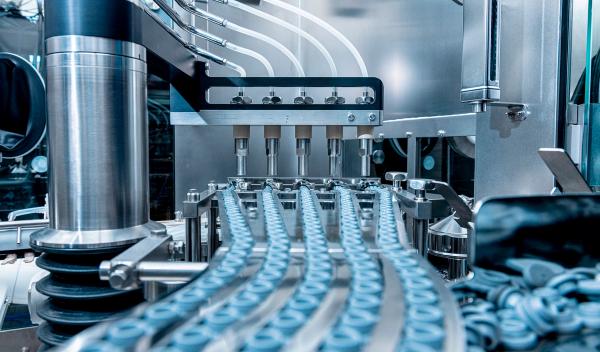
Octane Medical Group works in the part of medicine that can feel closest to science fiction: personalized cell and gene therapies, biomaterials designed for repair and devices that make complex treatments easier to produce. The practical challenge is scale. Cell and gene therapies often depend on highly specialized lab work – experts, cleanrooms, pipettes and beakers – which can limit access as demand grows.
The company’s Cocoon Platform is designed to automate portions of the complex manufacturing process behind cell and gene therapies, reducing the need for highly manual lab work and helping treatments move through closed production systems with less handling.
Octane operates a 40,000-square-foot facility in Kingston where it manufactures Cocoon instruments and accessories. The company also developed HyperPEEK, a biomaterials platform being studied for spinal fusion applications, alongside Clinical Systems, which manufactures components used in next-generation diagnostics.
Its recent acquisition of Lonza’s Personalized Medicine business – including the Cocoon Platform – positions the company more centrally within one of regenerative medicine’s biggest commercial questions: how to move highly customized therapies from experimental settings into scalable patient care.
Turning momentum into scale
If there is a lesson in Kingston’s innovation landscape, it may be that scale is a working method: connect the right people, move the next piece into place and give companies somewhere practical to grow.
The next challenge is ensuring Kingston becomes not just the place where those companies are born, but where they are adopted, scaled and retained. “People say startups need more capital, and they’re not wrong, but they’re talking about the wrong issue,” says Distributive’s Desjardins. “We need established incumbents to care about trying Canadian innovations, so we can refine them, mature them and export them. Give me the proof points, and I’ll use those proof points to get the capital.”
Turning strong research, local collaboration and public-sector support into actual procurement, adoption and long-term commercialization is a familiar Canadian innovation challenge. But Kingston’s ecosystem increasingly suggests that smaller hubs can play an outsized role in solving it, particularly when universities, research centres, manufacturers and founders operate in unusually close proximity.
“As an ecosystem, we just quietly support companies and do what we can,” says Kingston Economic Development’s Hirstwood. “We don’t sing our praises from the rooftops.”
Increasingly, though, Kingston has less reason to stay quiet.