
Kevin Smith, president and CEO at Toronto’s University Health Network, has a pitch: he wants to turn Canada into the best place in the world to take scientific discoveries to market.
“My objective is world dominance in clinical enterprises that we can be competitive in, and I think Canada should stop being shy about that,” says Smith.
It’s an ambitious goal, bordering on pie-in-the-sky stuff, given Canada’s long history of being very good at making scientific discoveries and very bad at bringing them to market.
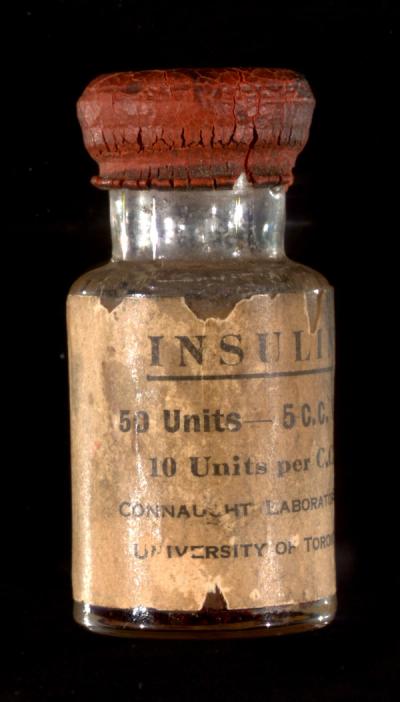
Take insulin, for instance. Just over a century ago, University of Toronto researchers Frederick Banting, Charles Best and James Collip discovered the lifesaving diabetes treatment, with the support of physiologist John Macleod, and sold the patent rights to U of T for $1 each – a story often upheld as an example of Canadian altruism. Today, no insulin is manufactured in Canada. Instead, it’s produced mostly in Denmark, France and Germany.
More recently, there’s the case of GLP-1 therapies like Ozempic and Wegovy. The foundational work that led to their discovery was carried out in Smith’s own backyard at U of T by researcher Daniel Drucker, a professor of medicine in the Temerty Faculty of Medicine. GLP-1s are now titans of the pharmaceutical industry, with a predicted market value of $190 billion by 2035. They’re produced mostly by companies based in Europe, particularly Denmark, which is home to Novo Nordisk, the maker of Ozempic and Wegovy. They’re not made at all here in Canada, though Toronto-based Vimy Pharma has announced plans to start making generic Ozempic in Edmonton.
Europe has built a concentration of pharmaceutical manufacturing and it’s paid off handsomely, says Smith, noting that the gross domestic product of Denmark has to be calculated with and without the manufacturers of GLP-1s.
Smith wants to see a similar health science commercial power base built here. So this summer he and colleagues from the UHN are releasing a detailed proposal they hope will erase Canada’s commercialization gap. Smith gave Be Giant an advance copy and sat for several interviews to talk about how to get Canadian discoveries safely across the so-called “Valley of Death” – the nickname for the gap between the science lab and the market. It’s the space where Canadian discoveries often disappear or move abroad in search of a commercial partner.
As Smith sees it, federal and provincial governments have failed to back Canadian discoveries like GLP-1s and Canadian investors aren’t rewarded for doing so either. Canadian venture capital doesn’t show up to boost homegrown ideas. The end result is that inventions dreamed up in Canadian universities move elsewhere to go prime time.
Smith is on a mission to change that. He’s been sharing his playbook and sitting down with business leaders, pension plan managers and bank and government representatives. He wants the major players in Canadian business and politics to believe they must act to boost the health science industry, and that their support is essential for Canada’s economy, health systems and even sovereignty.
“I think the time has really come for us to roll up our sleeves,” Smith says. “Collectively, I think the brains and money of Canada can come together with our political decision-makers and we can make this happen.”
He’s not alone in calling this Canada’s moment. The federal government under Mark Carney (with whom Smith helped launch Canada’s AI strategy recently) is on a “buy Canada, build Canada” campaign, and universities like U of T and McMaster in Hamilton are stepping up to anchor new venture capital funds to boost life science startups. But those steps don’t go far enough, Smith says. He wants a national plan of action for the health science sector rather than pockets of activity.
The gist of his idea is that federal and provincial governments must jumpstart change with a series of quick moves over the next six to 12 months. His priority items include a tax reduction on income from investments in Canadian companies built on domestic research; a commitment from all levels of government to preferentially buy Canadian products for their health systems; recognition that research hospitals are vital national infrastructure; an end to the red tape around clinical trials and drug and device approvals; retention of intellectual property in Canada; and convention of a first ministers conference with the stated goal of getting Canadian discoveries into Canadian health systems.
All this, he’d like to see stat.
Smith grew up in Prescott, Ont., in the ‘60s and ‘70s, when the region was home to companies like RCA, DuPont and the Hathaway Shirt factory, which have disappeared. His tales of Canada past are part of Smith’s pitch now – Canada used to manufacture things and it can do so again, he likes to say. After he left Prescott, Smith went on to study psychology at McMaster and then completed a PhD in philosophy at the University of Sussex in England. Before returning to Canada, he was a visiting fellow at The Wellcome Trust, a London-based foundation that is one of the world’s largest donors to health research, and a visiting professor at University College London.
Back in Canada, he spent most of the next three decades in Ontario’s health-care system, including long stints as president and CEO of St. Joseph’s Health System in Hamilton and CEO of Niagara Health, before joining UHN in 2018. His work in Catholic health care at St. Joseph’s earned him special honours from the Pope, so now he is saluted by the Swiss Guard when he visits the Vatican.
At UHN, Smith heads Canada’s largest and best-known research hospital, which news magazine Newsweek recently ranked as the world’s second-best hospital system – a real accolade for a publicly funded hospital in a health system with major issues. That’s all to say that Smith – who, somewhere along the way, was once referred to as Canada’s “Wayne Gretzky of health care,” a nickname that keeps coming back – is uniquely placed to convince Canadians of the need to change the country’s health science industrial sector.

Smith doesn’t expect Canadian manufacturing to return to what it was in 1960s Ontario. But Canadian companies could make many of the products and pharmaceuticals needed every day in hospitals, he says. Right now, they don’t. Canadian health systems spend roughly $25-$30 billion a year on health-care supplies and medical equipment just in hospitals, he adds. “Almost none of it is made in Canada.”
Smith wants federal and provincial governments to set binding targets for the adoption of Canadian products in their health systems. Canada’s 13 different health systems are “the country’s single largest untapped first customer” for health-care products, he says. To make uptake easier, he recommends a mutual system of validation so a technology used in one province’s health system would be acceptable across them all. That will dramatically increase the odds that a Canadian company will thrive, he believes. “The number one predictor of success of a new entity in a domestic nation is government or funder as a first purchaser.”
Making Canadian health products isn’t necessarily a cheap way to do things, he acknowledges. Some products will be more expensive if made in Canada. “We won’t compete with China; we saw this during COVID on the price point of swabs or gloves,” he says. “I’m not suggesting we make all of the cheapest stuff here at a higher price, but there's a bunch of stuff at higher pricing that we could make here and we could sell to other people. Why aren't we doing that?”
A thriving health science industry cannot happen without money and incentives, he admits, and it won’t come cheap. He wants the federal government to set up a Canadian small business innovation research program to support companies that are built on university research. And those companies should be backed by a patent box, which is a reduced tax rate on income from Canadian-owned intellectual property – similar to programs used in the United Kingdom and at least 13 European countries to support and incentivize homegrown intellectual property. To finance all this, Canada’s large public pension funds should anchor growth-focused funding rounds for domestic startups; Canada’s giant pension plans have been notoriously absent in backing Canada’s health science ventures.
Smith is quick to say that this funding should be based on merit, not government-directed mandates. He’s not envisioning Soviet-style companies that don’t stand a chance of competing abroad. “I’m not saying we should invest in substandard science; I'm saying we should invest in science that will make those returns, just as they're doing in other places.”
Get our weekly newsletter – the people, places, and ideas revealing where Canada is headed.
To get there, he’s calling for changes to the bureaucracy that surrounds drug and device approvals and clinical trials. Canada has some of the longest waits in the world for new drugs to come to market, with multiple layers of approvals required. Health Canada is slow in its initial approval of drugs and devices, and then that has to be followed by green lights from provinces and health systems. Even setting up clinical trials can be a hassle here, with province-by-province research ethics approvals, slow startup times and a lack of funding. As a result, companies aren’t eager to run clinical trials in Canada, he says.
“Every day we delay is an opportunity for [companies] to look elsewhere. We really have to [be able to] say, ‘You can’t get a clinical trial filled anywhere faster than in Canada.’”
From a scientific perspective, Canada is an extraordinary place to do research, says Smith. Canada’s multicultural mosaic makes this the perfect place to study medications and other interventions. “When you generalize your results of a clinical trial on the Canadian population, you are generalizing to the world's gene pool. That is not true in Australia. That is not true in Rochester, Minnesota. That is not true in Asia. Canada has the world's most diverse population, and that is a distinct advantage.”
Experts who study the commercialization gap say Smith’s plan isn’t a bad one. But plans to build up Canada’s health science sector have been pitched and piloted and dropped, again and again. Those plans have floundered due to a lack of political will and venture capital for every government since former cabinet minister C.D. Howe in the 1950s, says Richard Hawkins, professor emeritus at the University of Calgary.
“We don't have a very good record of doing this. We're not interested, for the most part. And when we do it, we generally lose our [nerve],” he says.
Building up Canada’s industrial sector is an “Everest to climb,” he adds. “When I see a plan like this, I say to myself, ‘That's a great idea, let's start climbing the mountain.’ But I don't know if it would be successful.”

One of the main limitations of Smith’s vision is the level of federal-provincial co-operation required to make it work. That seems optimistic in present-day Canada, says Hawkins. “Quebec will opt out … it'll want to go its own way. Alberta will opt out, because they'll just turn it into a political cudgel to beat the feds with.”
Smith says he’s heard concerns that Canada’s creaky federalism will impede his plan. If some provinces refuse to jump on board, the federal government should go with the ones that will, he says.
Now is the time to prioritize building a Canadian health sector industry, he adds. The economy needs it. The revenue from a thriving industry could be used to invigorate ailing hospitals. And many of the world’s scientists are looking for a safe place to land. The United States is not a science-friendly place at the moment. Many areas of medical science are no longer being adequately funded – viruses and vaccines among them, he points out.
Canada should fund these initiatives and recruit the scientists and industries that specialize in them, he says. “Come here as scientists, as manufacturers and global suppliers, because most of the eight billion people in the world, with the exception of a small portion of 400 million, actually still believe in vaccines.”
Smith’s dream is that companies founded on hospital research and backed by Canadian capital will run pivotal clinical trials here, develop and sell their products here and then scale up here. According to his proposal, by 2035 a thriving health sciences industry could bring more than $100 billion into Canada, create more than 20 companies valued above $1 billion, have more publicly funded intellectual property owned and commercialized here and reduce Canada’s dependency on other countries in a crisis like the pandemic.
Making this happen is “among the most important initiatives of my career, without question,” he says. He just needs to convince everyone else of that.
“I don't think it's ever been more important for science, and for jobs, and for prosperity, and for sovereignty for Canada to be super competitive with the best places in the world to turn science into commerce and commerce into social benefit.”