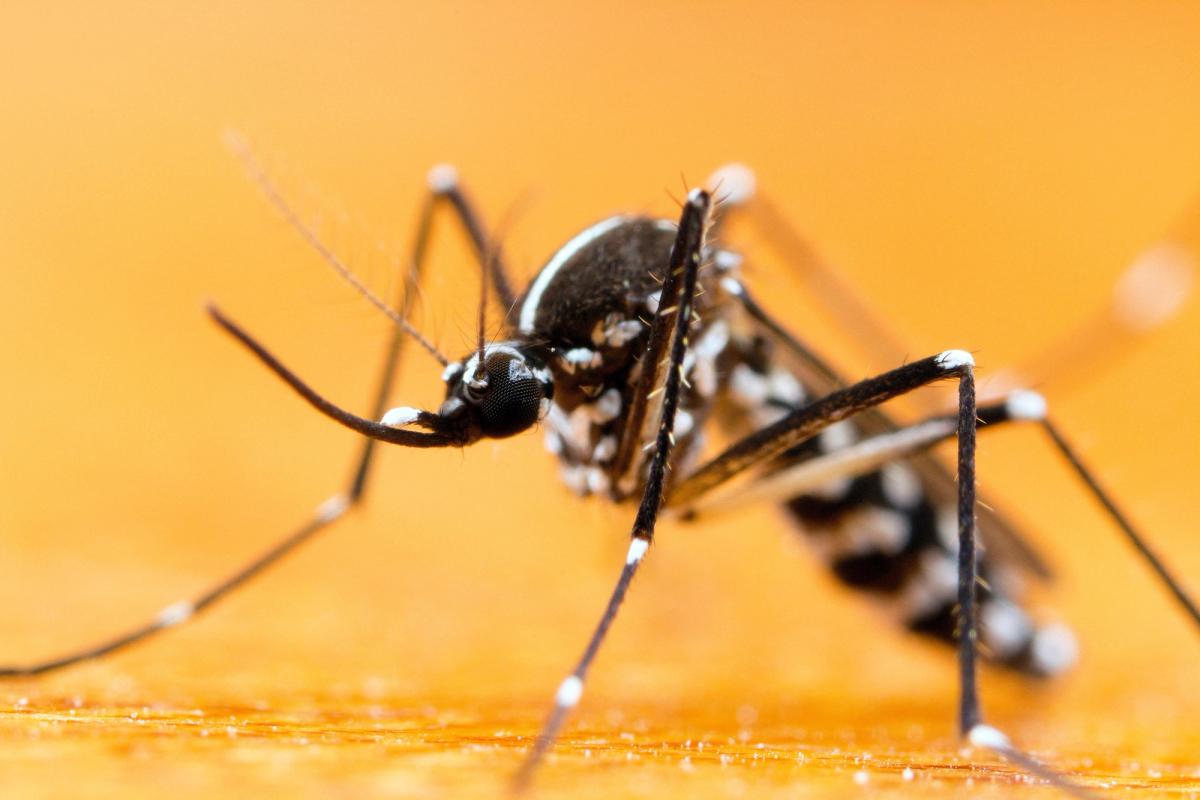
Tiger mosquitoes are one of the world’s most successful invasive species: hardy little striped suckers that have made their way from Southeast Asia around the world and, most recently, to Ontario.
And the prolific disease spreaders are becoming ever more dangerous. Their resilient eggs help them survive Canadian winters, and there is increasing concern that they will become a vector for deadly illnesses such as dengue, chikungunya and Zika.
The problem: current mosquito surveillance programs that keep tabs on the bloodsuckers’ whereabouts are costly and limited to where health agencies can place traps. Instead, Dr. Victoria Ng, a senior scientist at the Public Health Agency of Canada (PHAC), is tasking young Canadians with tracking mosquitoes in their neighbourhoods to augment data collected by local health units.
Be Giant sat down with Ng to talk about her Tiger Mosquito Citizen Science study and the importance of public engagement in science, as well as the level of anticipated risk of mosquito-borne illnesses in Canada.

What are some of the mosquito-borne illnesses you’re monitoring, and how did they get to Canada?
We are particularly interested in dengue, chikungunya and Zika. They circulate year-round in many tropical countries of the world. Usually a Canadian resident will get infected while they’re travelling and come back with an imported case.
The concern is if Canadian travellers pass on these diseases through mosquitoes. A traveller has to come back with enough virus in their bloodstream to be picked up by a mosquito, and then that mosquito has to transmit the pathogen to another [person here at home]. This hasn’t happened in Canada yet, and a lot has to line up, but it does happen elsewhere – like in Italy, where mosquitoes have passed chikungunya to people who haven’t travelled, leading to over 200 locally acquired cases in 2014.
There are about 80 mosquito species in Canada – why are you focusing on tiger mosquitoes?
We want to see where they are spreading, because they are an invasive species. They spread from Southeast Asia to much of the world in the last few decades, driven largely by an increase in travel and trade. Their eggs are very hardy and drought-resistant, so [they can cling] onto packages and stay dormant for many months until they reach a new location, where they hatch in local rainwater. They can also survive frost and cold months, lying dormant before coming out in the warm season.
Adult mosquitoes are also prolific carriers of pathogens that cause human diseases. Dengue, chikungunya and Zika virus, yes, but they also carry the West Nile virus and others. [Editor’s note: We haven’t seen tiger mosquitoes spread these diseases in Canada yet, but they can spread all of them, which makes them a rising concern.]
Here in Canada, it’s a problem because tiger mosquitoes are very cold-tolerant compared to many tropical species. They were first detected in Windsor-Essex in southern Ontario in 2016 and have been found in that region ever since. We’re now tracking their spread to see if they establish elsewhere, like the Greater Toronto Area, which, according to my modelling work, is an area of potential expansion for the tiger mosquito.
How does the citizen science study come in?
We wanted to work with the public to track these mosquitoes. We call the study TIMO-CS, which stands for Tiger Mosquito-Citizen Science study. It’s run by PHAC, but it’s a collaboration with Let’s Talk Science at the University of Windsor, the Windsor-Essex County Health Unit and Public Health Ontario. We first launched in 2024. Since then, we’ve collected 927 samples and reached nearly 700 people. This has been our most successful year so far – since starting up in May, we’ve taught 80 students and collected 549 samples.
How did you find citizen scientists to work with?
Our first citizen scientists were kids in classrooms and University of Windsor students. PHAC developed a workshop to teach kids about mosquitoes, then trained UWindsor students to deliver it in classrooms. In that first year, we gave kids a siphon called a pooter made out of recycled water bottles to help them collect mosquito samples for us.
Citizen scientists can really be anyone; that’s the essence of citizen science. Our volunteers don’t get paid, but they don’t have to pay anything out of pocket. We try to make the program as accessible as possible, so that anyone who wants to participate has the opportunity to.
Mosquitoes are notoriously sneaky – how do you even teach kids to catch them?
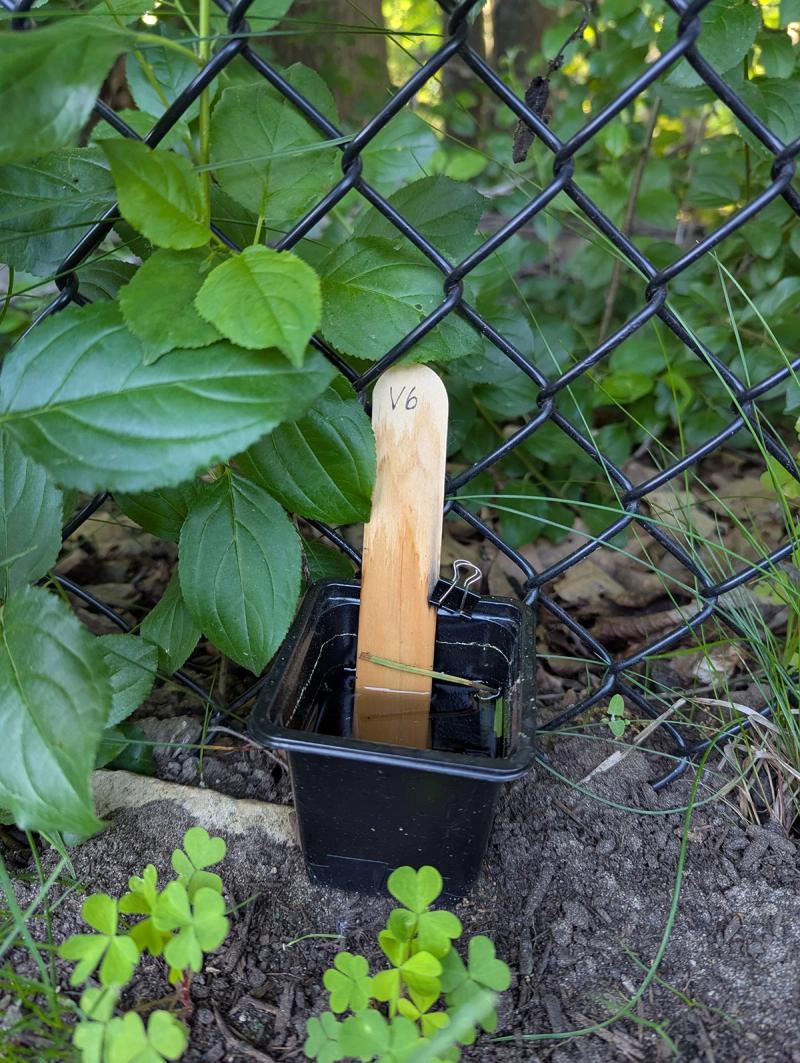
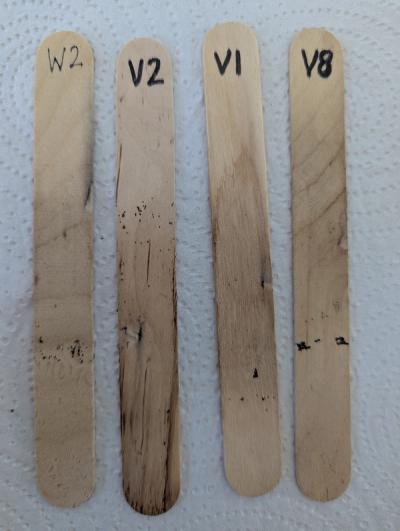
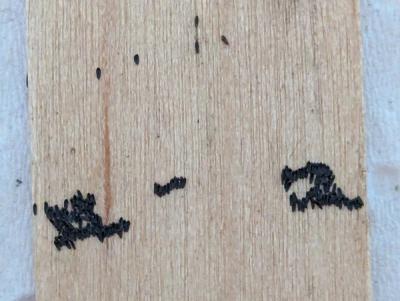
There are a few methods. We don’t do pooters anymore because they didn’t really work. Now we give out ovitraps, which are made from a craft stick and a black pot. Students put the stick and a bit of grass in the pot along with some water, then they keep them outside in their backyards for five to seven days to collect mosquito eggs.
Another way is 3D-printed traps, which we piloted last year. Commercial mosquito traps are very expensive, upward of US$400 per trap. But 3D-printed traps are assembled with nuts and bolts that can be bought anywhere and fitted with a USB fan to suck up the mosquitoes. We give these traps to students and faculty at the University of Windsor and the British Columbia Centre for Disease Control, as well as the Windsor-Essex Health Unit.
This year, we gave out little baggies with test tubes, and we tell people that if they encounter a mosquito on a hike, to slap it lightly and put it in the test tube and send it back to us for identification.
Traditionally, we had to ship our mosquitoes to labs for identification, but we no longer face that barrier. We have a new machine that uses artificial intelligence to help us identify mosquitoes. We still need the labs for testing for viruses, so that’s something that the machine can’t do. And it’s not perfect yet; a lot of the time it’s still saying “unknown species,” so we do send our unknowns to the National Microbiology Laboratory in Winnipeg. But it’s great because they aren’t getting thousands of samples from us; our machines can identify 85 to 90 per cent of them.
What have you learned about tiger mosquitoes from the study?
The study is still in its early stages, but this year’s data collection is critical. Our primary goal is to gain a clearer, evidence‑based understanding of the geographic spread of the invasive tiger mosquito in Ontario. We want to determine whether its range has expanded beyond what is currently documented, and if so, how far and how quickly that expansion is occurring. This information will directly shape future public health planning.
If tiger mosquitoes are so good at spreading disease, is it safe for citizen scientists to collect them?
There are clear safety precautions in place for everyone participating in the study. In classroom and camp workshops, students are first taught essential mosquito-bite prevention strategies, and this safety component is mandatory before any hands-on activity begins. Only after completing this lesson are homemade ovitrap kits distributed to children and 3D-printed mosquito traps distributed to adult volunteers at the university. Both tools are passive collection methods, meaning they attract and capture mosquitoes without requiring any active searching or increased exposure from participants. As a result, they pose very low risk to the public and are well-suited for safe, community-based collection.
For individuals using test‑tube mosquito collection kits, we emphasize that they should never seek out mosquitoes or put themselves in situations that increase their exposure. They are instructed to collect only mosquitoes that naturally land on them during their normal daily activities. This ensures that we gather mosquitoes genuinely attracted to humans while maintaining participant safety and avoiding unnecessary risk.
Why was it so important to involve regular folks in this study?
Citizen science is an excellent way to engage members of the public, particularly on a public health issue that will affect them. I think students are a valuable educational gateway into the household, because what they learn in the classroom often makes its way home. We wanted citizen scientists in classrooms because this is an emerging public health issue that will be important in years to come, and schoolkids are the ones who will most likely be affected by mosquito-borne diseases in the future.
And a lot of our citizen scientists will provide us with samples in locations where we don’t have routine surveillance – that in itself is enriching the study so much already. Monitoring is always the first line of defence for public health, and, in this case, understanding where the mosquitoes are distributed across Canada helps us identify the most at-risk communities, which in turn will allow us to target public health and vector control strategies in those at-risk communities.
This interview has been edited and condensed.
Get our weekly newsletter – the people, places, and ideas revealing where Canada is headed.