If they’re wildly successful, and halfway decent at marketing themselves, the story of a founder’s journey transcends mere biography to become legend – and sometimes even industry cliché. Think college kid starts paradigm-shifting tech company out of a dorm room (Facebook, Google, Dell) or garage (Hewlett-Packard, Microsoft). Or scrappy engineer codes the solution to their own problem, inadvertently creating a billion-dollar business (Airbnb, Dropbox). Or even much-maligned true believer on the cusp of financial ruin is saved by one smart decision (SpaceX, Apple).
Swish Goswami’s first founder story is . . . not like that. The young Canadian entrepreneur is not yet in that league, for one thing, and his road to success began when he was a tiny nine-year-old – then going by his given name, Manu – who became enamoured with Bollywood superstar Hrithik Roshan’s latest movie, Krrish. He loved the dancing and the superhero storyline, but it was a business tycoon character that made the real impression. He’d heard about investing from his father, but this made it exciting. He came up with the idea of a virtual investment service aimed at two very specific customers: his grandparents.
“I went to my grandparents in India, and I remember looking at their money and [thinking], ‘You just keep your money under a mattress? You're not investing?’” says Goswami, now age 29. “I was only nine, so I didn’t really understand anything, but I did understand the idea that you put some money in and the stock goes up, then the value goes higher. So I thought, ‘Why don’t I go and do this for my grandparents?’”
Get our weekly newsletter – the people, places, and ideas revealing where Canada is headed.
The result was Money Bank, not a company but a series of red journals where Goswami painstakingly recorded each trade he would have made, if anyone had given him real money to work with, that is. On each light blue line, he made a note of the stocks he’d buy and sell in the gently rounded penmanship universal to fourth graders with columns indicating how much profit he made for his grandparents accompanied by sketches of money bags, dollar signs and one imposing representation of what Money Bank would look like if it were a brick-and-mortar building. Goswami pinpoints those notebooks – which still live on a shelf in his childhood home in Calgary – as the genesis of his entrepreneurial ambitions.
In the two decades since, he’s co-founded two companies – Dunk, a social media brand focused on basketball, and Surf, an audience engagement platform – written a book on entrepreneurship – 2022’s The Young Entrepreneur – and racked up accolades, including spots on Plan Canada’s Top 20 under 20 and Bay Street Bull’s 30 under 30 lists and a United Nations Outstanding Youth Leadership Award. Now, he’s shifting gears and is ready, he says, to make some real money.
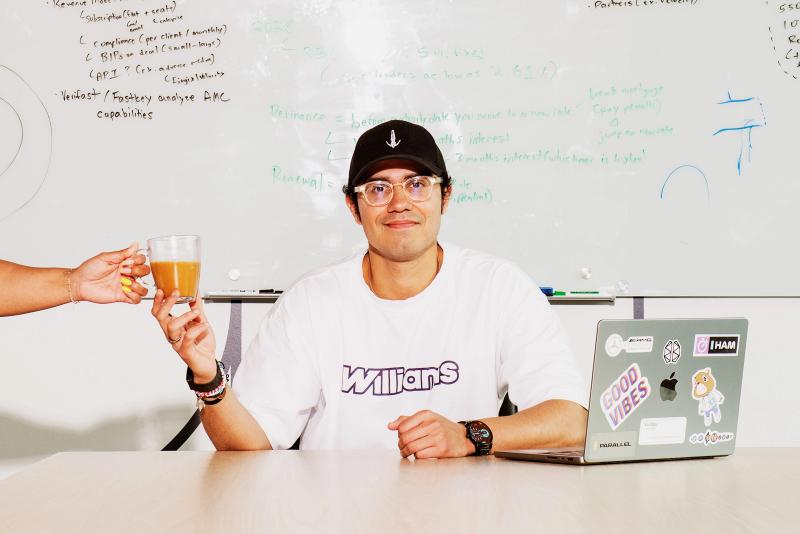
Goswami’s career so far has aligned with a certain approach to entrepreneurship seen in a new crop of young founders: audacity, endless hustle and a type of social media savvy that lends itself to enthusiastic self-promotion. After his second year at the University of Toronto, he dropped out, moved to New York City and co-founded Dunk with Eliot Robinson, a friend he’d met on Instagram. The company, a self-described “fun platform for basketball lovers to connect,” publishes basketball-related memes and other content. Robinson handled the creative, while Goswami tackled fundraising, managing employees and contractors and business development. Together, they grew their following to 11 million people across a network of 21 accounts on TikTok (then Musical.ly), Snapchat and Instagram.
There was just one problem: Goswami hated New York. “I realized I never wanted to live there again. I’m definitely Canadian, and want to be in Canada for the rest of my life,” he says. So in 2018 he left the company, retaining some advisor equity, and moved home to co-found Surf with Aanikh Kler; the duo had met when Goswami was 15 and Kler was 14. Originally called Trufan, it provided companies with insights on their social media followers. In 2021, they developed Surf, a browser extension that rewarded customers for sharing their anonymized browsing habits and rebranded under that name the next year.
Surf counted Amazon, Netflix, League of Legends, Electronic Arts, L’Oréal and the NBA and NFL among its client base and raised $6.3 million in funding from Canadian investors such as serial entrepreneur Michele Romanow and Hootsuite founder and CEO Ryan Holmes, as well as NBA players like Kyle Kuzma (Los Angeles Lakers) and Davon Reed (Indiana Pacers). Goswami and Kler would eventually acquire two other companies – SocialRank, an algorithm that measured a user’s relative importance within an online network, and Playr.gg, a platform that helped gaming companies grow their audiences through giveaways – before selling Surf to marketing analytics company Datacy in 2024 for an undisclosed sum.
Off the side of his desk, Goswami was co-hosting Track Limits, a Formula One podcast; delivering TEDx Talks (he’s done four); sitting on Covenant House’s Next Gen Council; and acting as the chairman of the League of Innovators, a non-profit startup accelerator. And giving talks on AI adoption, the future of work, the art of public speaking and his own journey.
It was around this time that he started taking stock of his approach. After a period of burnout and anxiety, he realized his previous hustle mentality wasn’t helping his mental health. Worse, it wasn’t actually getting him the results he wanted.
“I was like, ‘I can’t be doing five, six different things, I need to really focus in on a few and take a bigger bet with them,’” he says. “I had a lot of projects. Did I have insane success with any one of them? No. I was doing well in certain areas, but I wasn't successful in any one particular area, at least by my standards.”
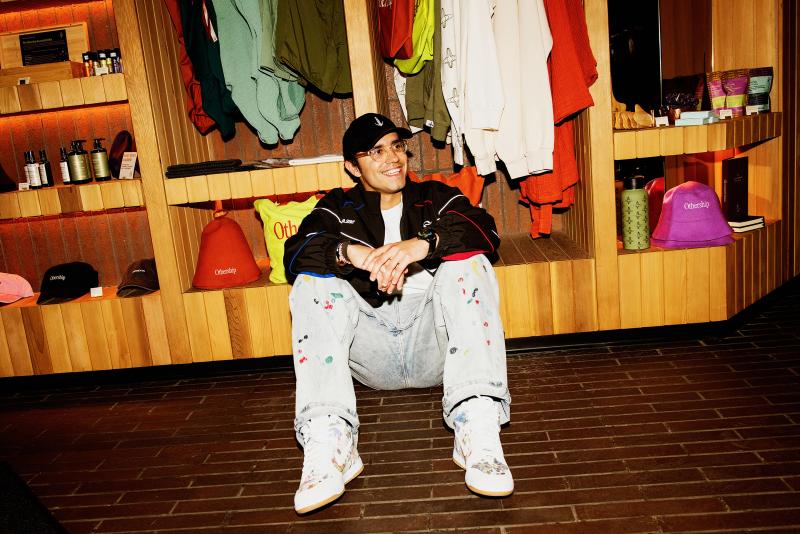
Goswami is now settling into a different style. He’s working mostly on his new startup, BrokerPlus, which targets a decidedly ”unsexy” customer: Canadian mortgage brokers. He’s doing some angel investing as well, and putting a bigger priority on work-life balance. (He does a lot of immersive sauna and ice baths at Yorkville’s Othership, a sauna-and-plunge chain where he was an early investor.) The common thread? “Early on, it was about mad curiosity, obsession over an idea. Nowadays, it’s actually a lot more around focus,” he says.
It's a sunny afternoon in mid-May and we’re sitting in a glass-enclosed boardroom in the Hyatt family office, which manages the assets of Goswami’s mentor, the entrepreneur and investor Michael Hyatt. This unassuming office space in midtown Toronto is where Goswami, his co-founder Amir Agassi and their team have hunkered down to develop BrokerPlus, which promises to streamline administrative work for mortgage brokers. A whiteboard stretches across one wall, covered with an out-of-date to-do list, notes on a go-to-market strategy and what looks like a parabolic curve, but might just be a doodle.
The platform uses AI to reduce the time a mortgage broker spends on tasks like compliance, document verification and identifying refinancing opportunities, ideally from 25 to 30 hours per deal to just two or three. (It’s the fastest he’s ever built a business, Goswami says; it’s gone from zero to minimum viable product in 30 days and acquired its first customers within 60.) Compared to Surf, which was designed for virality, both in value proposition and public perception, BrokerPlus is significantly less flashy. That’s on purpose.
Goswami says he was looking to build a company around a single ideal customer profile (ICP) – what he refers to as “a niche of a niche of a niche” – figuring out how he could innovate in a legacy industry. He and Agassi looked at insurance, construction and land use entitlements before landing on the residential mortgage business. “I knew that I wanted to do something where the incumbents within that industry were kind of sleeping at the wheel — like, the tech companies in that [sector] had a good grasp over the market, but because they had such a good grasp, they didn't feel the need to innovate,” he says.
He credits his angel investments with helping him develop this new approach. For the past several years, he has been advising founders and investing in what he refers to as “category-defining” companies through his consulting firm, Agex. He’s made what he calls modest investments in upward of 20 companies so far, in various sectors from wellness, via Othership; food service, via the fast casual restaurant Brasa Peruvian Kitchen; even automotive services.
One early win was Shopgenie, a Scottsdale, Arizona-based startup that helped auto repair shops automate tasks like booking bays or ordering parts; Goswami wrote what he calls a “very small cheque” and advised its founder, Kieran O’Brien, on fundraising. When the company was acquired in 2024 for US$50 million, the resulting payout was not only a nice return on investment, but also a lesson: there are exciting, and more importantly profitable, opportunities in even the most prosaic sector, especially if you drill down to solve very specific problems.
Some of his worst investments, he admits, were in sectors where he thought his own experience would give him an advantage, such as consumer social networks. He now believes vertical startups that disrupt a specific category have a better chance of achieving product market fit. He calls this his new “thesis,” which he’s been testing both in his angel investments and now with BrokerPlus.

Goswami may have been building businesses since he was a teenager, but Michael Hyatt says he’s just now hitting his stride: “For his first companies, I never invested. I'd reflect on his numbers, and then he went on his merry way. Eventually, he came back to me with this new idea. I think he’s ready to start a real company.”
Hyatt believes the public perception of entrepreneurship – that it’s synonymous with big personalities and early success — is flawed. His own thesis is that The Apprentice started the glorification of the entrepreneur, although the elevation of tech founders from behind-the-scenes grinders to a new type of celebrity-slash-political mover and shaker has certainly played a role, too. It explains our cultural obsession with business wunderkinds, he says, and feeds the idea that “entrepreneurship is a genetic predisposition. It’s not. Entrepreneurship largely can be taught, [so] you have to be teachable, and you have to be malleable, and you have to listen.”
Both Hyatt and Goswami told me a story that has become part of their collective lore: they met because Goswami tracked Hyatt down for advice on building a business. He was in his late teens and bright, inquisitive, driven and “full of piss and vinegar,” as Hyatt put it. He was also constantly distracted by whatever interesting idea crossed his path, and drastically lacking in professionalism. One day, they’d booked a 9 a.m. meeting and Goswami didn’t show up. He’d slept in.
“That was a privileged kid kind of bullshit,” Hyatt says. “I said, ‘I'm not meeting with you again.’ I iced him for a long period of time, because if you're not going to respect my time, I don't have time for you.”
At their next meeting, Goswami was humble, professional and thankful for the meeting, an approach he takes into all of his professional interactions, even now.
“I've always been good with coming up with the idea, I've always been good at running really fast and being like the hardest worker, but all of these soft skills that I had to learn from people like Michael have helped refine it a little bit more,” he says. “If you can channel [your energy] in a more sustainable way, people will like you more. They’ll want to come work for you, or want to surround themselves with you.”
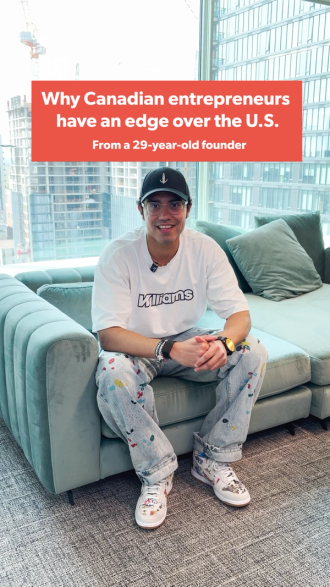
One thing that hasn't changed, he says, is his commitment to building in Canada. Yes, it’s harder to access capital, the population is smaller and taxation is higher than in the U.S., but he believes it’s easier to stand out and gain traction here, and he’s personally benefited from government policies that support entrepreneurship, including rebates like the Scientific Research and Experimental Development tax credit and the Industrial Research Assistance Program. In Surf’s early stages, these programs reimbursed 40 to 50 per cent of the company’s R&D costs. Most important, he says, are the people. Business leaders like Romanow, Holmes and Boardy’s Andrew D'Souza are approachable and want to support young entrepreneurs, and there’s an overall trend toward collaboration and support.
When he was 19, Goswami wrote an essay for CBC about seeing Canada as a place that invites people to seize opportunity. “We believe that succeeding by helping others succeed is not only a strategy but a responsibility,” he wrote at the time. A decade later, he still feels that way.
“I think there are certain things I've become a little bit more mature on, but the dream, going after a big goal and not letting people dissuade you for whatever reason, that’s still ingrained in me.”