Canada doesn’t know what its own Arctic waters sound like – not systematically and not at the scale the next decade will demand.
That will begin to change as a new program assembles something the country has never had: a continuous acoustic record of its under-ice waters, built from autonomous sensors across Parry Channel, south of Resolute Bay, or Qausuittuq.
For decades, undersea warfare has depended on a simple reality: submarines are detected by sound. Every navy keeps libraries of acoustic signatures, recordings that allow operators to distinguish one vessel from another, in order to separate nature from machinery and determine whether something beneath the surface deserves attention. Those libraries took decades to build, but almost none of that work includes below-ice recordings.
In late summer 2027, Project Deep Crown, an initiative spearheaded by Dominion Dynamics, will begin dropping sensors to assemble the below-ice record the country has never had. Understanding why that’s so difficult – and so overdue – means understanding the ice.
The Arctic is one of the most acoustically complex environments on Earth, because ice changes the physics. Sea ice expands, fractures and grinds. It reflects and scatters sound along paths that open water never produces. Temperature and salinity shift with depth and season, bending sound waves in directions that a sonar operator trained on open-water sounds wouldn’t expect. Storms can transform the underwater environment in a matter of hours. Even identical vessels can sound different depending on ice cover and water depth. Every one of these factors affects how sound propagates.
In other words, there is no universal Arctic acoustic fingerprint. There are thousands of them, and a library built in the North Atlantic doesn’t transfer to the Arctic Ocean.

Get our new book for free.
Subscribe to our newsletter and we’ll mail you a printed copy.
Canada has listened here before. Defence Research and Development Canada ran passive acoustic arrays at Gascoyne Inlet on Devon Island, Nunavut, for years, but those were two arrays at a single choke point, cabled to shore and powered from it.
Project Deep Crown would work at a different scale. Rather than treating underwater sensors as isolated surveillance devices, Deep Crown approaches them as contributors to a continuously expanding acoustic archive of Canada’s northern waters.
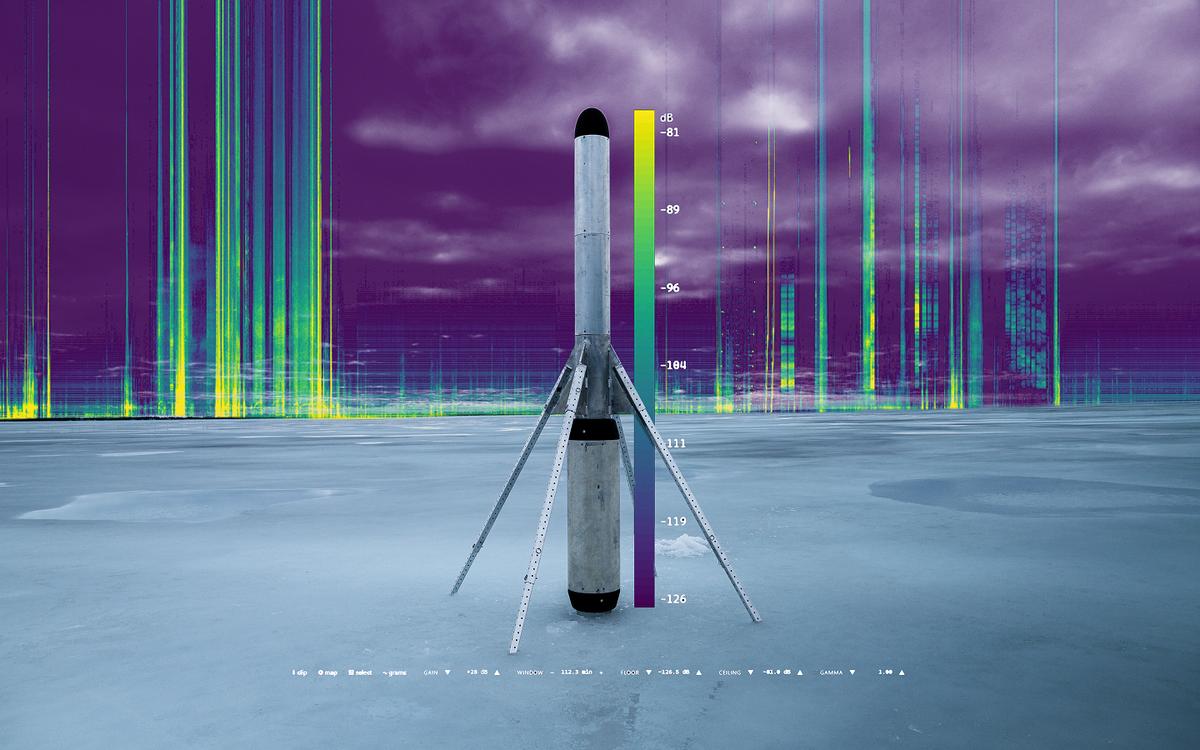
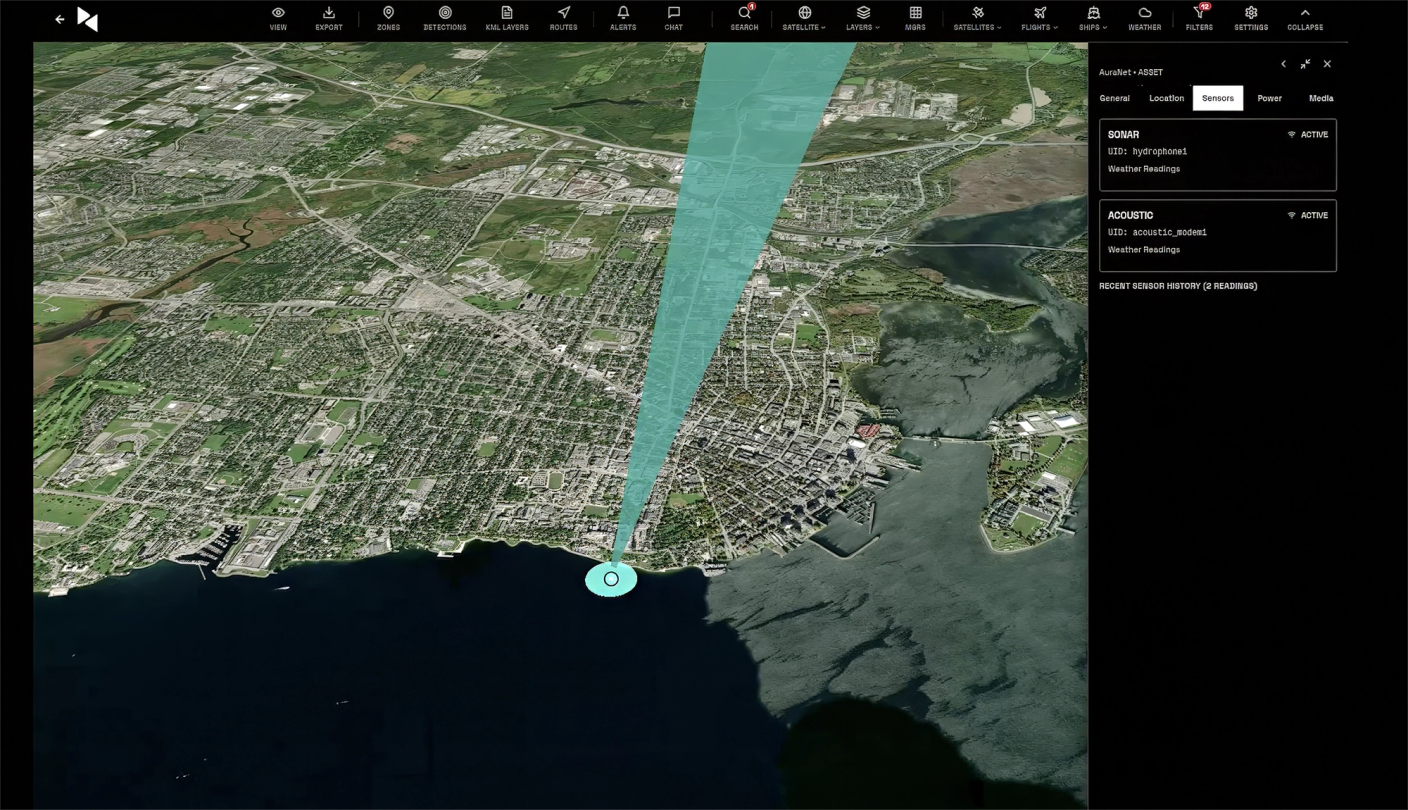
Dominion Dynamics plans to drop dozens of rugged spar buoys, called Echo, into open water, which will be left to freeze into the sea ice as it forms. Attached to each buoy will be an autonomous sensor that deploys beneath the ice, while a communications mast will ride above the surface, transmitting data by satellite. The buoys listen, hour after hour, day after day, recording shifting ice, marine mammals, storms, currents, shipping traffic and every other sound that defines the northern maritime environment.
Machine learning is very good at finding subtle statistical patterns in enormous datasets that no human analyst could ever review manually. But AI is only as good as the data it learns from. An algorithm without an Arctic dataset is like facial-recognition software that has never seen a human face. Before Canada can identify what doesn’t belong beneath the ice, it first needs to understand what does.
Ottawa already accepts this logic. Its planned Canadian Arctic Suite of Sensors, a defence project valued at between $500 million and $1 billion, will deploy sensors to monitor Arctic waters and rests on the premise that finding submarines in Canadian waters depends first on understanding the Arctic environment itself. But the project’s implementation is years away; in the meantime, Dominion is self-funding Project Deep Crown. The record has to exist before the system that reads it can be specified.
This is why the next generation of maritime awareness requires building a persistent record of the environment itself. Every recording improves the baseline. Every season reveals new patterns. Every year makes future detections more accurate.
Canada possesses the world’s longest Arctic coastline and one of its largest areas of responsibility beneath the polar ice. For much of our history, geography insulated us from the consequences of not knowing what was happening there. That era is ending. Commercial shipping is increasing. Scientific activity is expanding. Military operations beneath the ice are becoming more frequent as great-power competition returns to the High Arctic.
Persistent acoustic knowledge becomes a form of national infrastructure every bit as important as ports, runways and radar stations. It matters because strategic surprise rarely announces itself. It appears as a faint anomaly buried inside millions of ordinary observations, and detecting it depends on first understanding what normal sounds like.
The next strategic map of the Arctic will be drawn in sound. The work starts with listening.
This piece is an excerpt from our new book, 27 Giant Ideas for 2027, which gathers some of Canada’s most imaginative thinkers to explore the ideas that will shape the year ahead. Get your copy for free now.