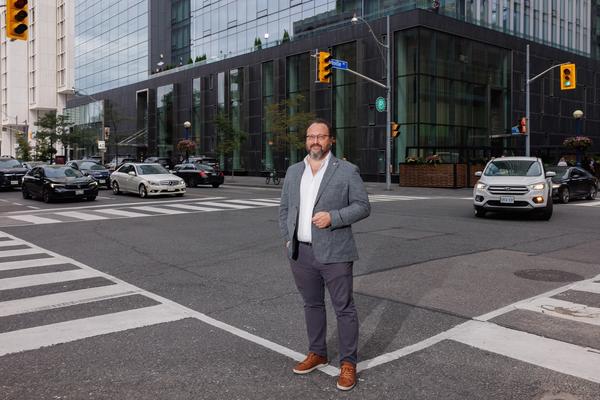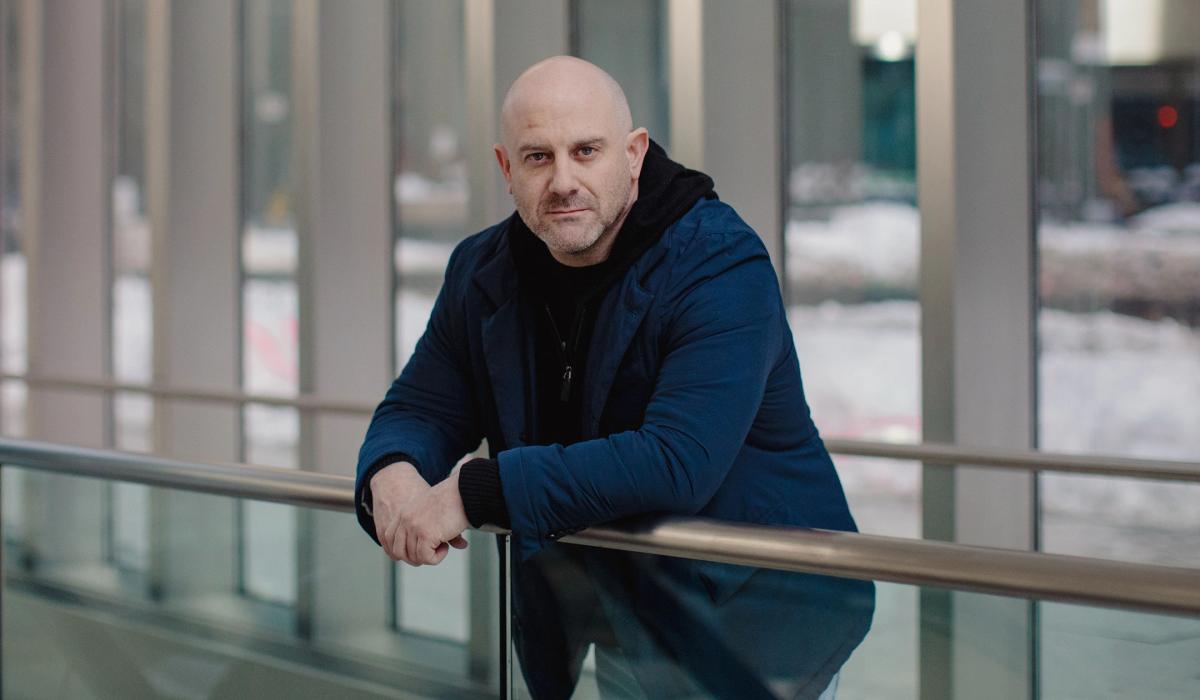
When Eliot Pence needed a name for the high-tech drone factory he has established in an Ottawa industrial park, he turned to what some might consider an unlikely inspiration: the swashbuckling coureur des bois of Canada’s past.
Pence, founder and CEO of the defence technology company Dominion Dynamics, sees himself walking in the footsteps of the frontier capitalists who sought new economic opportunities in what is now Canada. The facility he’s opening in May, where engineers will develop drones that he hopes will one day patrol the Arctic, is named after Pierre-Esprit Radisson, who helped found the Hudson’s Bay Company.
To many Canadians, the HBC era represents a grim period of colonization, but Pence views it as a time of admirable derring-do. “We forget that we were extremely ambitious and aggressive when we settled this place in the 17th century,” he says. “We were doing stuff that the Americans would later kind of adopt.” The period between 1670, when the Hudson’s Bay Company was founded, and 1867, when Canada officially became a dominion of the British Empire, was “truly incredible to read about,” he says.
Get our weekly newsletter – the people, places, and ideas revealing where Canada is headed.
Pence, who is in the process of moving his family to Canada after 20 years in the United States, has ambitious plans of his own: to build a company that can help preserve Canadian sovereignty with high-tech drones and remote sensors and communications networks that can work in the Arctic.
Now 43, Pence grew up in Victoria, B.C., the son of hippies who took him on camping trips around Vancouver Island in their green Volkswagen van. After graduating from the University of Victoria with a BA, he did development work in Kenya, then a master’s degree in international relations at Yale University. In 2009, he started working for private equity and travelled around Africa for a decade, looking for talent on a continent that was transforming itself economically. Ultimately, he invested in businesses in 40 countries.
A friend at one of the companies Pence was working with introduced him to Silicon Valley venture capitalist Palmer Luckey, founder of Oculus VR. Through Luckey, he met Trae Stephens, formerly of Peter Thiel’s tech company Palantir, and went to work on their startup, Anduril Industries, which was then so small it occupied a garage in Irvine, Calif.
Anduril is the prototypical “neoprime,” a defence company that operates with the move-fast-and-break-things philosophy of tech startups, rather than the typically bureaucratic approach of the giant defence companies that dominate the industry.
Anduril started out small, building sensor systems for the southern U.S. border, but its approach – raising venture capital to fund cutting-edge innovation in drones, AI and remote sensors – gave it speed and capabilities that were in high demand in the United States and around the world. By working closely with end users to develop innovative solutions to real-world problems, the company quickly found a growing niche. As of March 2026, Anduril was valued at about US$60 billion.
Pence led Anduril’s product launch strategies for four years, building teams and selling their systems on three continents. When he became a father – he has two young daughters – he wanted to stop travelling so much, so he left and became chief business officer at tech companies Cambium Biomaterials and Osmo, earning a reputation as a driven and creative businessman with experience in bringing new technology to market.
When Prime Minister Mark Carney was elected, having made Canadian sovereignty a defining issue of his campaign (promising, among other things, to increase defence spending by $18 billion by 2030), Pence thought Canada needed someone with his skills and experience.
The first person he contacted in Canada was former Conservative leader Erin O’Toole, a former Sea King helicopter navigator who has continued advocating for defence policy since leaving politics.
“I think he represents kind of a unique Venn diagram in Canadian politics,” says Pence. “He was a veteran, he was a party leader, he was moderate. He had clear, fixed views on what we needed to do, and a long track record of saying it, and so I really respected that.”
O’Toole knew what Anduril had done at the southern U.S. border and had been frustrated for years by Canada’s failure to put remote sensors in the Arctic. Pence had a plan to do that. O’Toole was impressed. “Super smart, super patriotic” is how O’Toole describes Pence. “And what I think he brings from the U.S. is a strategic impatience.”
O’Toole connected Pence with Gen. Wayne Eyre, former chief of the defence staff, who is now on Dominion Dynamics’ advisory board, and Dan Debow, former vice-president of partnerships at Shopify, who had recently started Build Canada, an advocacy group pushing for policy that encourages entrepreneurship.
Debow encouraged Pence to move home.
“At this moment in Canada, I think we need people like Eliot, who's driven not just by wanting to build a great business, which I think he's doing, and starting and building great solutions, but also contributing.”
Last May, Pence flew to Ottawa for CANSEC, Canada’s annual defence trade show, full of lobbyists and contractors showing off their wares. What he saw there surprised him. Most companies were pitching traditional military equipment and didn’t appear to feel the urgency he did to develop sovereign defence capabilities.
On June 6, 2025, the 81st anniversary of D-Day, he founded Dominion Dynamics. When he began soliciting employees, the first email he received was from Mitch Carkner, a Canadian Forces veteran who is now chief operating officer.
In October, the company raised $4 million in a round of pre-seed funding. Debow was the first investor.
In January, Dominion raised $21 million more, a seed fund led by Georgian Partners, Canada's largest independent venture capital firm, and including Bessemer Venture Partners and the British Columbia Investment Management Corporation.
Margaret Wu, a lead investor at Georgian, praised Dominion in a prepared statement as a “team that is fundamentally reimagining how Canada and its allies protect their interests.”
Pence’s extensive track record as a venture capitalist is likely part of the reason why investors are interested. But he cites another reason, too.
“You want to make bets on people that basically are a little bit crazy and are impatient. A lot of what venture is about is, ‘Can you make something happen quickly?’ And I'm extremely impatient.”
The traditional model for defence procurement in Canada is extremely slow and bureaucratic. An internal audit last year found most purchases take a decade or more. When there is political disagreement over big-ticket items, the timelines get stretched even further. For instance, the federal government first expressed interest in buying F-35 fighter jets from the United States in 2010, but the first one won’t be delivered until 2028.
That pace is no longer acceptable. Technology is advancing too quickly. Consider how the Ukrainians are now fighting – using massive fleets of drones in the air and robots on the ground to resist the Russian invasion, both sides working on technological upgrades as quickly as they can. It no longer makes sense to order equipment and wait 10 years for a bureaucratic process to unfold.
Instead of waiting for government contracts, Dominion is using venture capital to build equipment and betting the government will buy it, says Carkner. “We're trying to bring a model that brings speed and innovation by investing ourselves.”
So far, Dominion is working on two big projects, both related to what Pence calls “domain awareness.”
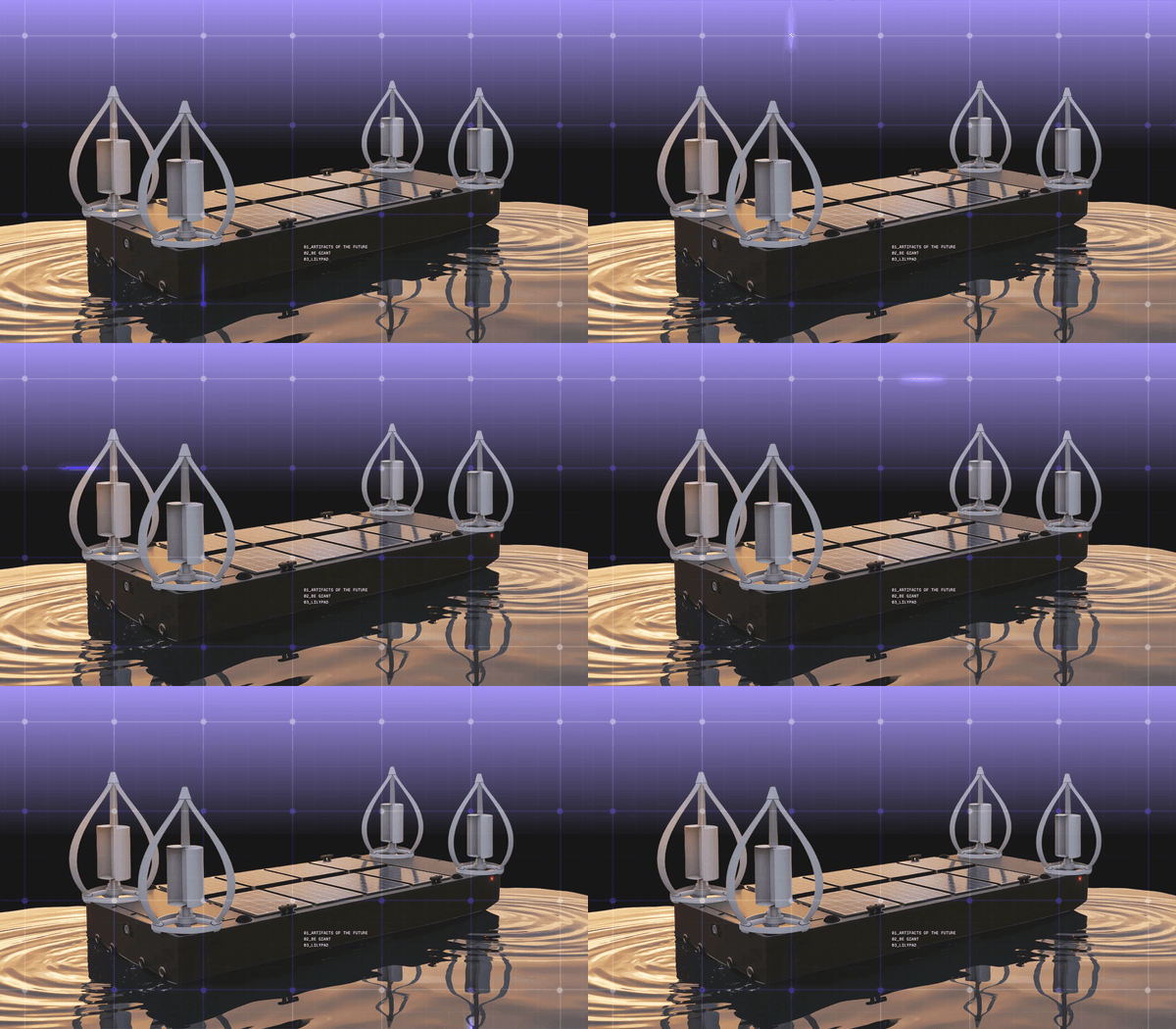
In the Ottawa facility named after Radisson, the company is working on building aerial drones – “autonomous collaborative platforms” that can operate independently or in concert with a fighter jet – to extend the range of the Canadian military and potentially intercept missiles.
AuraNet, a communications network designed for the vast hostile Arctic spaces, is the other big piece. This winter, Carkner travelled to Inuvik to outfit the Canadian Rangers with communications equipment before they set off on Operation Nanook-Nunalivut – a perilous snowmobile journey to Churchill, Man. The Dominion team was testing the communications equipment and tweaking the software so that isolated soldiers on snowmobiles could be linked electronically to one another and to command centres in southern Canada, even when there is no cell service and spotty satellite coverage.
A related initiative came out of a project with students from Queen’s University and the University of Toronto, whom Pence hired to brainstorm. They came up with the Echo, an ice spike that can be dropped from a helicopter, screw itself into the ice and then monitor the water below with a hydrophone.
These projects are designed to improve Canada’s ability to monitor the vast northern spaces that are seen to be more vulnerable to foreign threats.
But Pence aims to build something bigger – the kind of company that can manage major defence projects, putting together pieces produced by smaller companies and integrating them in a single platform: “the sub, the plane, the drone, whatever it is we need to have.”
Because Canada has been buying equipment from allies for so long – mostly from the United States – it lacks “system integration” experience.
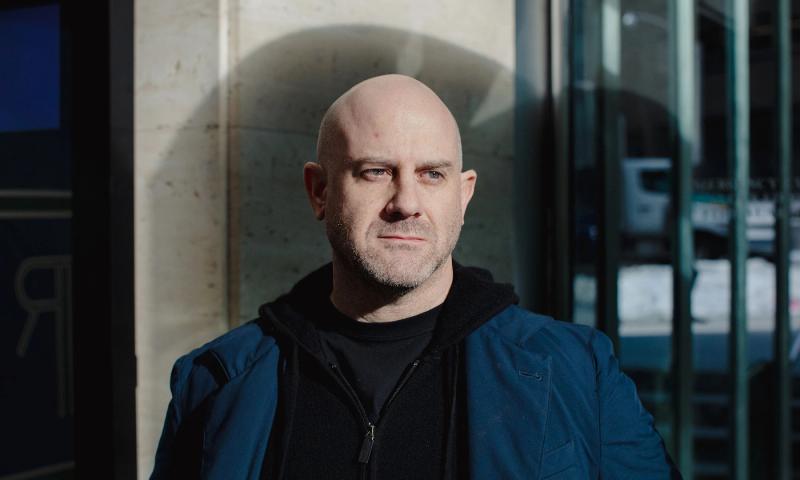
“Every single NATO country has a system integrator, except for Canada. That is what we need, and we need it now,” says Pence, who speaks with the intense gaze and certainty of someone with a vision. “Otherwise, those companies just get plugged into foreign platforms.”
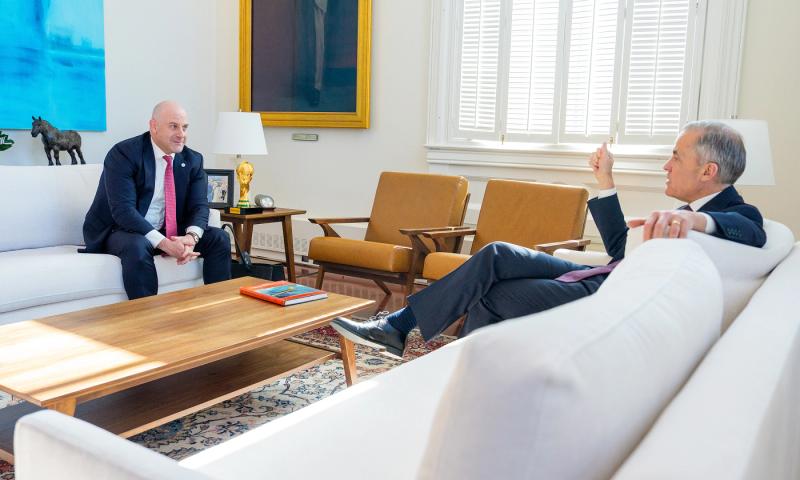
Carney, who recently announced a $35 billion plan to expand Canada’s military footprint in the North, invited Pence to his office for a meeting in April, and Pence says they had a wide-ranging conversation about the future of warfare and how to build a defence industry that doesn’t just adopt technology, but generates new tech. Since then, he’s been appointed to the federal government’s new Advisory Committee on Canada-U.S. Economic Relations.
“I want to change the country,” Pence says. “I'm not here to build a business and get a cottage. I don't even care about this Muskoka nonsense. I want to change the country full stop. And I'm going to try as hard as I possibly can to do it.”