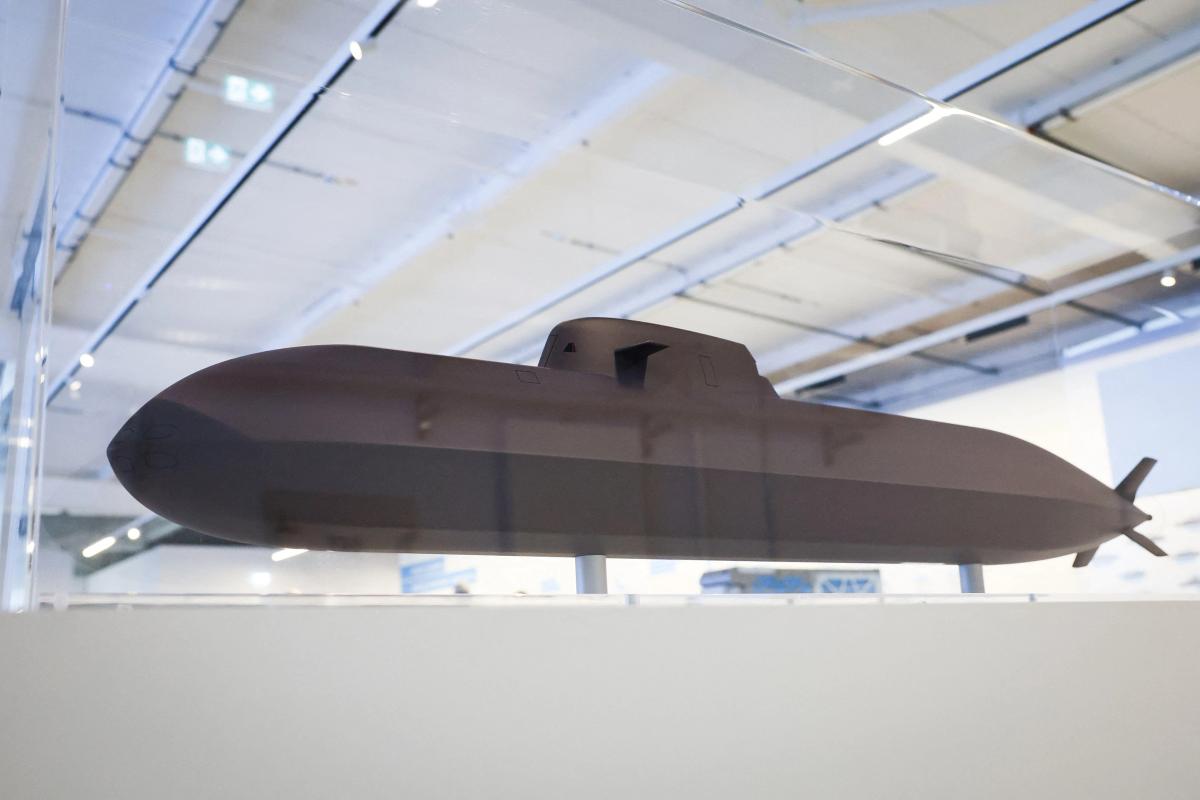
Canada’s decision to buy up to 12 new submarines from German naval giant TKMS is more than just the country’s biggest-ever defence procurement deal: it’s a chance to build a new industry to maintain the vessels and join a global supply chain serving countries both within and potentially outside the NATO alliance.
That’s the promise built into the proposed deal Canada announced this week, according to experts and executives who spoke to Be Giant. The deal named TKMS as the preferred supplier of new 212CD diesel-electric submarines, and there were some massive numbers swirling around it. The total value is expected to reach $80 to $100 billion, with more than half of that for operations, maintenance and upgrades. The single largest order in TKMS’s history will generate $167 billion in total economic activity across Canada, the company says, as well as creating more than 650,000 “job-years” over its lifespan, a job-year being one job sustained for one year.
By choosing TKMS over South Korea’s Hanwha, the rival bidder, Canada is opting to join Germany and Norway in procuring this new class of submarine, with the initial vessels to be built at the company’s shipyard in Kiel, Germany. The first is slated for delivery by 2033. Whether some of that production work could eventually shift to Canada is expected to be part of the final negotiations on the contract, which could take another six to 18 months.
But building capacity for ongoing support and maintenance over the next 30 to 50 years will have the biggest impact, officials say. So just what’s involved in the care and feeding of a submarine fleet?
For starters, two massive maintenance facilities, one on either side of the country. “By joining the 212CD Club, we will now have 212CD facilities on the east and west coasts of Canada,” said Dave Hargreaves, senior vice-president, strategy, business development and communications for Seaspan, Canada’s largest shipbuilding company.
Seaspan currently maintains Canada’s four Victoria-class submarines at its Esquimalt shipyard in Victoria, B.C., which will soon expand and upgrade, and become the only shipyard on the Pacific Ocean capable of maintaining TKMS’ new class of submarines. TKMS has provided submarines to a number of Pacific countries over the years, including Singapore, Indonesia, South Korea, Colombia, Ecuador, Peru and Chile. “That opens up some opportunity,” Hargreaves said.
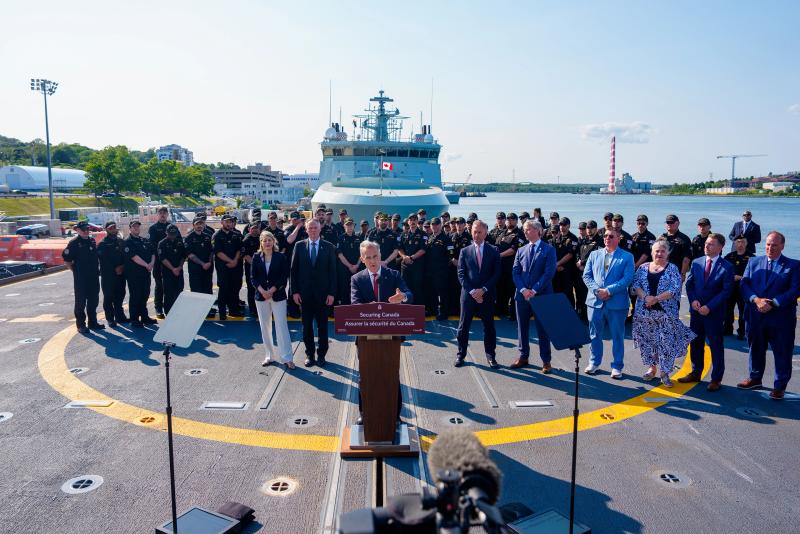
On the East Coast, the Department of National Defence has been preparing Halifax for what will be a major defence-led transformation of the city’s historic harbour. Earlier this year, it purchased over 400 acres of land on the Dartmouth side of Halifax Harbour, site of the former Valero petroleum refinery, where a new submarine shipyard is expected to be built.
Seaspan has been working with TKMS to determine how to transition Canadian supply chains and expertise to sustain the Canadian Navy’s new submarines. That includes designing facilities, processes and workforce plans to conduct regular and preventive maintenance, upgrades when new equipment or technology becomes available, and repairs. “If the current submarines are, let’s call them classic cars, the new submarines are like brand-spanking-new sports cars. It’s going to be very different,” Hargreaves said.

To sustain Canada’s current quartet of submarines, Seaspan manages a supply chain of over 400 companies, including global players like the construction giant Ellis-Don, as well as small local suppliers that provide scaffolding, welding or electrical work. That’s in addition to Seaspan’s workforce of 1,200 people at its Victoria shipyard, including about 300 submarine-qualified workers.
Irving Shipbuilding, Canada’s primary builder of naval combat vessels, will also likely play a role. It is currently completing construction of six Arctic and offshore patrol ships and has just laid the hull for the first of 15 River-class destroyers, the latter being Canada’s largest and most complex shipbuilding contract.
Hargreaves said future linkages between the two shipyards are a “very good assumption,” pairing Seaspan’s submarine expertise with Irving’s combat vessel shipbuilding workforce and Atlantic-based supply chain.
The full supply chain required stretches across the country. TKMS named more than a dozen partners big and small, including Valbruna ASW Inc., in Welland, Ont., which will supply “non-magnetic submarine steel,” GH Power, which will work on cleantech, CAE Inc. for training and simulation technology and Cohere Inc. on AI-powered systems. Its Indigenous partnerships include the Songhees Development Corporation in British Columbia, Des Nedhe Group Defence in Saskatchewan, the Inuit Development Corporation Association in Ottawa and Glooscap Ventures in Nova Scotia.
Collaboration will come at the national level as well, said Sheldon Gillis, managing director of Defence Investment Attraction for Invest Nova Scotia, the province’s economic development agency. A former commander of the Canadian Navy’s Atlantic Fleet, Gillis led Operation Nanook in 2022, an annual exercise that defends Arctic sovereignty and builds cooperation with other Arctic allies.
Joining with Germany and Norway, he said, will bring the benefits of a transatlantic knowledge and skills network: “We’re going to have a level of knowledge that will transfer here to Canada so we can start to educate our workforces, our community colleges, universities, engineering programs to ensure Canada is ready,” he said. In Halifax alone, he added, “we’re essentially going to take a piece of forest and we’re going to turn it into a fully functioning shipyard in the next six years, with a workforce that is trained and educated to [NATO] standards.”
Get our weekly newsletter –the people, places, and ideas revealing where Canada is headed.
Gillis, who also served as the director of naval requirements at National Defence Headquarters in Ottawa, said the vessels’ technical complexity and the need to operate in dangerous Arctic conditions explain why they take so long to build and require so much expertise to maintain. “There is so much technology packed into such a small space that needs to operate in such an austere environment that the tolerances for error are incredibly tight…. It’s not an industry you can turn on quickly.”
In his current role, Gillis has been visiting communities and companies across Nova Scotia, briefing them on what the new submarine program could mean for local economies and workforces. From the water and power needs of the new Halifax submarine base – and even its effect on local traffic patterns – to training engineers and skilled tradespeople, his job is to help line up local capabilities with national defence requirements.
“This is really a generational opportunity for long-term, stable, high-paying work that contributes directly to national security in Canada,” he said.
Victoria Belbin, president and CEO of the Atlantic Canada Aerospace and Defence Association (ACADA), says companies are already vying to plug themselves into TKMS’s global supply chain. Last fall, more than 100 companies showed up at a company event in Halifax to hear TKMS’s pitch.
“This is a full supply chain opportunity,” she said. “From small, highly specialized firms to large manufacturers, Atlantic Canadian companies are already integrated into allied defence markets. The difference now is the scale and the certainty that a program like this brings.” Most of the companies in the region looking for opportunity didn’t start in the defence sector, but evolved into it from sectors like energy, marine and shipbuilding. Now they have a change to expand and deepen those ties, she said: “We’re here to play.”