The global Arctic has become an increasingly important economic and geopolitical arena in recent years. Russia’s push to grow its power has altered its relationship with the seven other Arctic states that ring the top of the planet, including Canada. And U.S. President Donald Trump’s interest in Greenland and the broader Arctic has further heightened concerns about stewardship and sovereignty.
As climate change accelerates sea-ice loss, the potential to develop new shipping lanes and access massive stores of oil and gas and critical minerals has grown as well, as has the interest of a host of non-Arctic states, including China, India and many European nations.
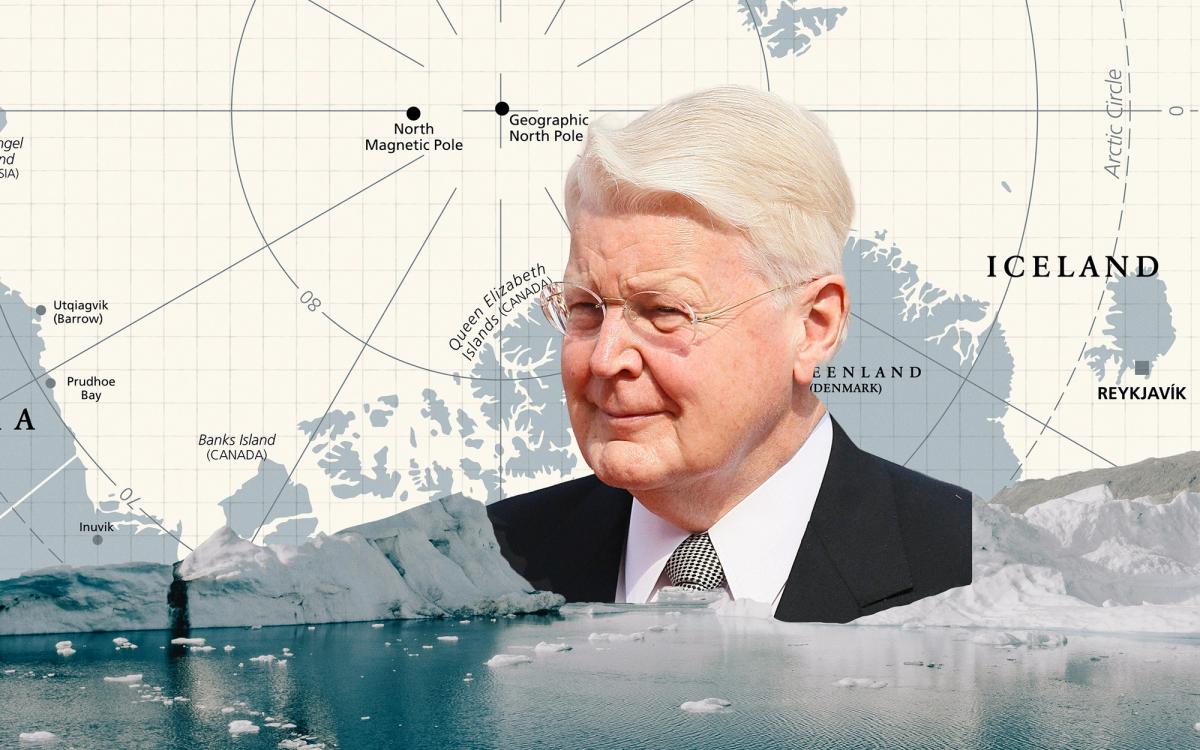
On the eve of the Arctic Circle Assembly, the world’s largest annual gathering of Arctic nations, Be Giant spoke to assembly chairman Ólafur Ragnar Grímsson about the opportunities and the tensions in the region and about Canada’s new-found ambitions. The famously blunt former president of Iceland has previously called out Canada for failing to send a sufficiently powerful delegation to the conference, which is regularly attended by high-level ministers and ambassadors. (Foreign Affairs Minister Anita Anand is attending this year.)
Get our weekly newsletter - the people, places, and ideas revealing where Canada is headed.
Canada has had a reputation for punching below its weight on Arctic issues. Why has that been the case, and is it finally changing?
Looking back on it, the Government of Canada in the early years of this century did not pay particular attention to the Arctic. Of course, the Arctic at that time was seen by most people as a peripheral issue. Very few countries or national leaders saw the emerging potential of the Arctic.
Justin Trudeau’s government had great interest in the Arctic, but they decided they needed to do some homework on the Indigenous issues within Canada and establish a new framework for the relationship with the northern territories.
I think the new Carney government is really the first in Canada in this century to see the Arctic from an international global-security political-to-economic perspective. We are now in a new era of Canada as a major player on Arctic issues and Arctic co-operation. And I’m also seeing a new generation of leadership in the northern territories of Canada. We are now in a very interesting new phase of Canada meeting the moment in Arctic issues.
Of the 18 projects currently being fast-tracked by the federal government’s Major Projects Office, more than a quarter are in the North. Are we prioritizing the right things?
It’s very difficult for me to pass judgment on that. To build the infrastructure, roads, communications, airports, even health-care systems, educational systems, cultural institutions, where people are spread all over this vast territory is a monumental task. But I think it is more than worthwhile. I think it will make Canada very strong.
Canada has been taking steps to form tighter alliances around the world, including in Europe. What do you think about the idea of Canada becoming a sort of honorary European country – an idea that’s been floated recently – or even an honorary Nordic country?
I don’t really know what that means because neither the Nordic institutions nor the EU structure allow for the kind of associations that seem to be the essence of this discussion. If, however, it means political, economic and security co-operation, yes, I think there is a lot of scope for that.
I often say to people, start by looking at the globe from the top. And when you do that, you realize the Nordic countries, starting with Greenland and Iceland and Norway, are Canada’s neighbours. I know that, traditionally, the U.S. is so dominant that many of my Canadian friends would say Canada has only one neighbour, but I think the discussion of Greenland has perhaps opened Canada up to the fact that there is another neighbourhood. It is often said that diplomacy always starts with geography.
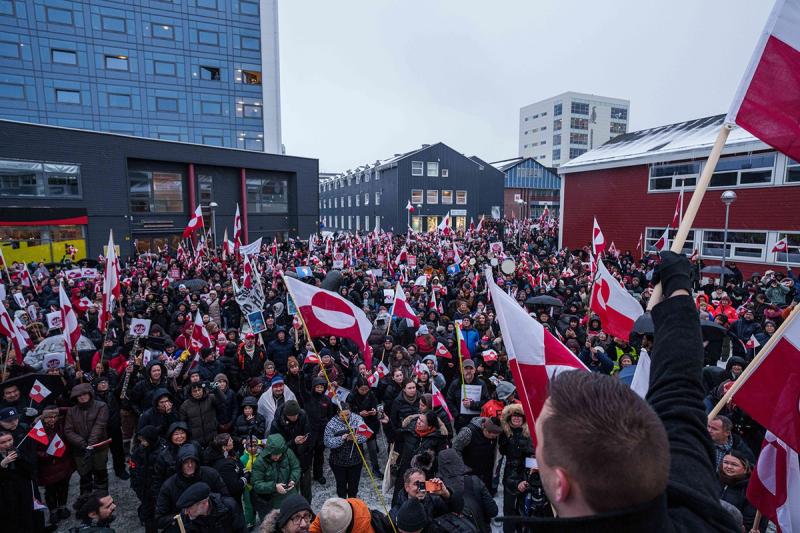
Canada’s northern security has long been highly integrated with the U.S., but under the current administration, the U.S. has increasingly been seen as a threat to Canada’s sovereignty. What are your thoughts on that situation?
With respect to President Trump, I used to say during his first term, one has to distinguish between the noise – meaning what he says or what comes out of the White House, what he tweets – and what he actually does. During the early part of this year, there was a lot of political fever that he was going to invade Greenland. I used to say, Well, let’s wait. It would have been rather foolish to jump to conclusions and even start implementing defence plans while the negotiations were taking place. Now we have a situation where the Danish government, the government of Greenland and the U.S. celebrate the new agreement.
The fact is that potentially the largest defence security infrastructure that is going to be built in the coming years will be in Greenland under this new agreement. And [early this week], U.S. Secretary of State Marco Rubio arrives in my country to talk about further co-operation with Iceland. So, for both Canada and Iceland, this will have consequences, and when we look at the security defence planning in Canada, as well as our own situation here in Iceland, we will have to figure that into the equation.
What does sovereignty mean for an Arctic nation, or what should it mean? Is it primarily about defence or security concerns?
No. Absolutely not. You have communities and people who have lived there for centuries, perhaps for thousands of years. And they have ambitions to have a modern life in terms of economic progress, education, health services, modern technology and so on.
And when you look at the development, the empowerment of these Arctic communities over the past 30, 40, 50, 60 years, I doubt if there is any other part of the world where Indigenous communities have had their political power enhanced in such a way. The people who live in these territories now have the power to elect representatives who increasingly are major players in deciding what is done, how it is done and who is doing it.
China was granted observer status on the Arctic Council in 2013. To what extent should the Arctic club be broadened?
If you add it all up – not only the land mass and the economic zones but also the oceans – we are talking about a part of the planet of continental proportions. And a big part of that is ocean territory, which is open to every nation. There are, according to international law, limits to the sovereign control that the Arctic states can have over the ocean.
We also tend to forget, especially since the war in Ukraine, when we have kind of excluded Russia from our dialogue, that half of the Arctic is Russian territory. Years ago, President Putin indicated that the part of the Arctic that was of most interest to Russia was the Asian part. It’s on that basis that we now have seen enormous co-operation between China and Russia and potentially India and Russia and perhaps also Pakistan and Russia with respect to energy projects, mining projects and so on.
When the Arctic Circle held its forum in Delhi last year, the foreign minister said very openly that India is becoming a big power, and when you become a big power, you concern yourself with every part of the planet. So, India aims to be a big player in the Arctic.
Western allies like South Korea are looking at some of the northern sea routes, and don’t forget that last week, it was announced with pride in Washington that South Korea has now become a major investor in Alaska. So, countries that are prominent Arctic states are also inviting non-Arctic states into the club.
There has been increased focus by the U.S., Canada and NATO in recent years on the potential threat posed by Russia–China co-operation in the Arctic. What do you think of that?
The underlying transformation is the Asian involvement in the Arctic. The second underlying development is the decision by Russia to concentrate on the Asian part of the Russian Arctic and build co-operation in energy, mining and other areas between the Asian powers, like India, China and Russia.
More than five years ago in Washington, I threw up the potential of what I called the nightmare scenario, which would be that when we – the Arctic Seven – are ready to co-operate with Russia according to our standards, we will discover that they have no interest in co-operating with us because they have successfully woven such a tight network of economic co-operation between the Asian part of the Russian Arctic and the major Asian powers.
Don’t forget, by the end of this decade, China and India will be two of the three largest economies in the world. That economic nexus could be almost unbreakable.
To bring it back to Canada, I think a lot of Canadians living outside the Arctic envision an idealized future where the region remains pristine, biodiversity is protected and Indigenous communities are left alone to protect their culture. But we also know the needs of northern communities are dramatic and the demands of global trade and security aren’t going away. How does Canada get the balance right?
When I was growing up in Iceland, we were perhaps the poorest nation in Europe. We have managed during my lifetime to reach the top standard according to almost every measurement of health, education, well-being and national income. So, we in Iceland can understand very well why the people in Greenland, why the people in Alaska and why the people in the northern part of Canada want to have the same opportunities as people in other parts of the world.
We have no moral right to demand from these people that they sacrifice their economic potential for our desire to have the wilderness untouched, even if we never visit their wilderness, which most of us never do.
Quite frankly, we have destroyed various parts of our nature in Iceland by building power dams, electricity companies, harbours and cities. But there’s still a lot of wilderness. One of the reasons why we have 2.5 million tourists coming every year is that this new generation from megacities wants to experience being alone in nature.
My own country is proof that you can have economic progress – in fact, astounding economic progress – while maintaining the opportunity to enjoy the wilderness on a big scale. So, I don’t think it is either/or.
This interview has been edited for length and clarity.