The alert pings your phone at 3 a.m., a pair of urgent chimes. Your continuous glucose monitor (CGM), a sensor that tracks blood sugar in real time, is expiring. You silence it and try to get back to sleep, but you know you’re facing the painful ritual of applying a new CGM in the morning. It goes like this: first, you peel off the old one, slowly and deliberately, leaving irritated skin behind. Next, you search for a new location amid the distressed real estate of your arm, press the applicator down and click – a spring-loaded needle punches another hair-thin filament under your skin. Some days, it’s just a sharp pinch. Other times, the dull pain follows you for hours afterward, tender like a bruise.
For the approximately 300,000 Canadians with Type 1 diabetes, monitoring glucose isn’t optional. Every meal, every workout, every night’s sleep is marked with a careful accounting of blood sugar. If it’s too low, shakiness and sweating can lead to loss of consciousness and, if untreated, death. Too high and the sugar levels can trigger a life-threatening condition in which the blood turns acidic. The average person living with Type 1 diabetes makes around 180 decisions a day to regulate the blood sugar their body’s pancreas is failing to control automatically.
Get our weekly newsletter – the people, places, and ideas revealing where Canada is headed.
The CGM device, first approved by the U.S. Food and Drug Administration (FDA) in 1999 but not licensed in Canada until 2017, has had a profound impact on the lives of those with diabetes. Still, it reveals only a small sliver of data about the body.
Mahla Poudineh knows the problem first-hand – diabetes runs in her family and she’s watched her mother, who has Type 2 diabetes, grapple with the reality of keeping tabs on her glucose with pinpricks and blood tests. The challenge of tracking what’s moving through our blood without a needle has remained elusive. Brilliant, well-funded minds have spent a lot of time on the problem. Apple has burned through hundreds of millions of dollars trying to build glucose monitoring into its smartwatches. Google designed a contact lens to measure glucose in tears but eventually abandoned it.
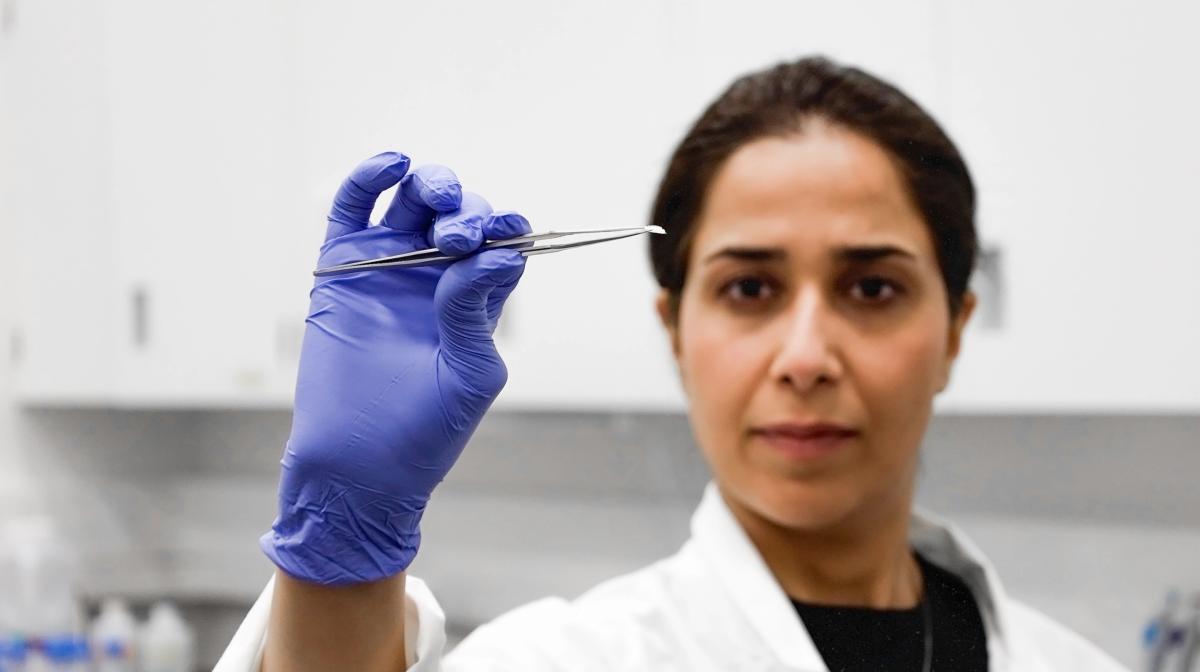
But Poudineh, an associate professor in electrical and computer engineering at the University of Waterloo, and Leyla Soleymani, a professor of engineering physics at Hamilton’s McMaster University, think they’ve cracked the code. Poudineh and Soleymani have combined over a decade of research into a creation called the Aptalyzer, a painless wearable device that can track molecules in the body in real time. In addition to glucose, they say their invention can track ketones, a vital indicator for insulin levels, and cardiac troponin, a protein that shows up in the blood when the heart is damaged – a key marker in heart attacks. The pair has launched a company, Aptec Health, to bring the technology to market.
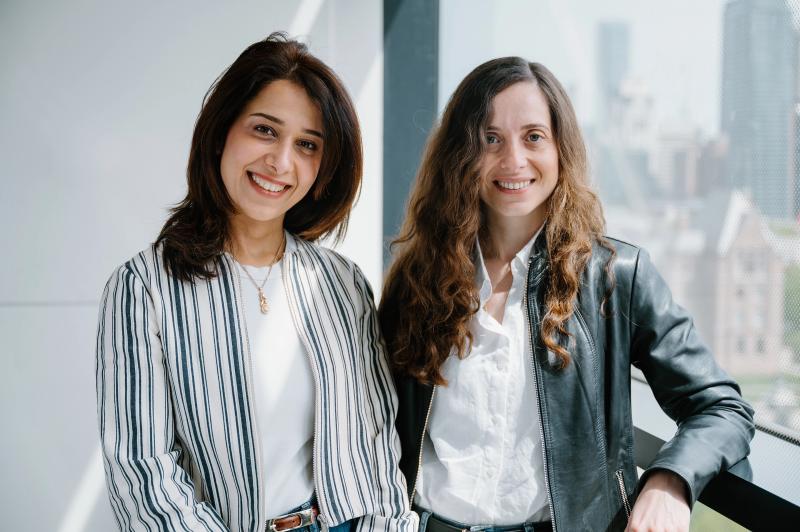
There’s something poetic about what the device could mean for people living with Type 1 diabetes, given Canada’s deep legacy in diabetes research. It was on the same University of Toronto campus where Poudineh and Soleymani first crossed paths that Frederick Banting, Charles Best, James Collip and John Macleod first discovered and purified insulin in 1921. Banting and his team sold the patent for a dollar each because they had no intention of profiting from it. A century later, diabetes care has become one of the more commercially predatory industries in modern medicine, including allegations of inflated insulin prices and counterfeit CGMs. Now, perhaps the same country can help restore that original promise.
To Poudineh and Soleymani, glucose, ketones and troponin are just the beginning. Like a detailed blood test, their device has the potential to track a whole spectrum of biomarkers and health data, beaming it to your phone in real time, says Soleymani. It could have a rippling and far-reaching impact on health management, not just for people with diabetes and those at risk of heart attacks but also for anyone who needs to monitor their health continuously, such as athletes and possibly even teams of astronauts on some future space journey to Mars.
The question now is how to survive the slow crawl through regulatory red tape, human trials and fundraising to get the device into the hands of Canadians. It’s a challenge Poudineh and Soleymani have been building toward their entire careers, even before they knew it.
Growing up in Iran, Poudineh didn’t plan on being an engineer. “I always wanted to be a medical doctor,” she says. But her family wanted her to pursue engineering, so she did, earning both her bachelor’s and master’s degrees in electrical engineering at the University of Tehran. Poudineh found her workaround in 2012, when she came to Canada for her PhD. “I mainly looked for labs that were using technologies for medical applications,” she says.
She got her PhD at the University of Toronto, with the groups led by Ted Sargent and Shana Kelley, husband-and-wife researchers renowned for their work in nanotechnology and diagnostics. There, Poudineh built “lab on chip” devices, thumbnail-sized tools that replicate in miniature what a full laboratory does to a blood sample, routing fluid through channels thinner than a human hair to identify and capture circulating tumour cells. The target was one of the hardest problems in oncology diagnostics: finding a single cancer cell among a billion normal blood cells in a patient sample, without destroying it. What she was learning was how to detect vanishingly small biological signals from human fluid in a tiny device.
Soleymani had been a part of the same labs a few years earlier and was invited back to speak with the group about her academic path. Poudineh remembers the talk. “Leyla was my role model,” she says with a slight fangirl giggle. “I was always looking at her papers to build my PhD project, but that was the first time we met.”
Also born in Iran, Soleymani immigrated to Canada in the 1990s. For her higher education, she faced a different conundrum than Poudineh: the paralysis of choice. “I didn’t know what I wanted to do. I liked chemistry, I liked biology, I liked all sciences,” she says. Her family suggested that engineering would open the most doors, and then she could figure it out. Soleymani attended Montreal’s McGill University and then the University of Southern California in Los Angeles to study electrical engineering. For her PhD, she joined the Sargent and Kelley groups in Toronto in 2006 to explore rapid diagnostics using nanomaterials. Her timing was serendipitous; the “bio-nano” era was gaining momentum. “With bio-nano, it doesn’t matter if you’re a [chemist] or a biologist or an engineer,” says Soleymani. “There’s a place for everybody.”
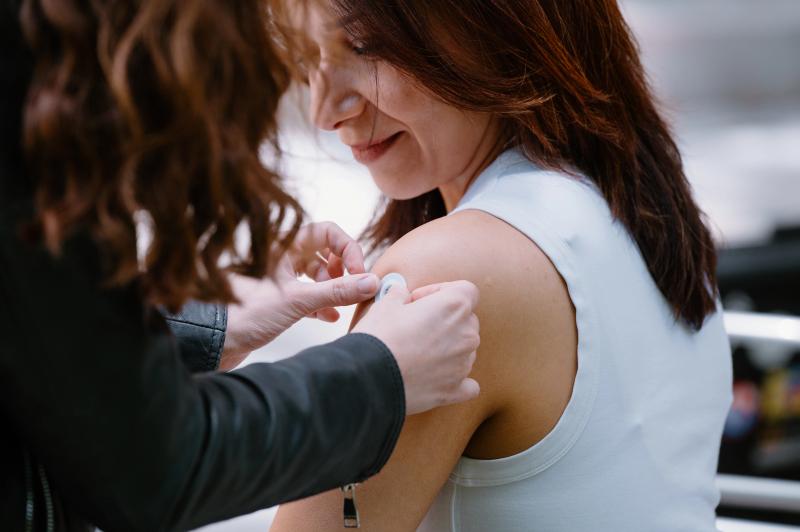
Soleymani joined McMaster in 2011 as an assistant professor. Her path intersected with Poudineh’s again in 2016, when Soleymani and her supervisor were due to give a talk at Pittcon in Philadelphia, the Coachella of analytical research and laboratory science. A week or so beforehand, the supervisor had to drop out and asked Poudineh, then working on an insulin-monitoring post-doctoral project at California’s Stanford University, to stand in. “I got to spend time with Mahla more intimately,” says Soleymani. She remembers it was Persian New Year and they wandered around a market – and that she knew then she wanted them to work together, but she wasn’t sure how to make it happen.
A few years later, Poudineh moved back to Canada to launch the IDEATION (Integrated Devices for Early Disease Awareness and Translational Applications) Lab at the University of Waterloo. With her mother in mind, Poudineh wanted to build something that could be used beyond labs and hospitals, to have an impact on a more individual level. Her team began developing a microneedle patch to continuously monitor glucose and ketone bodies, acids the body makes when it breaks down fat for energy. To make it painless, they’d have to reinvent the way data from below the skin is collected.
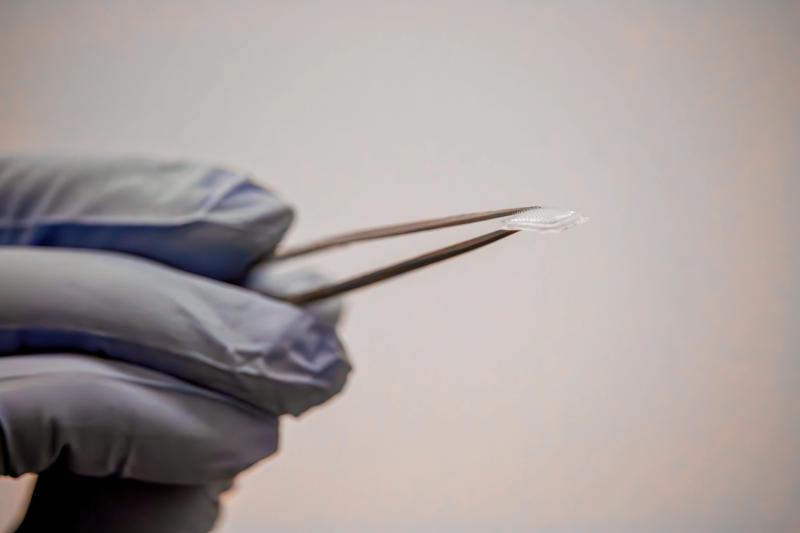
In zoomed-in photos, the patch’s spiky surface looks like a close cousin to a sea urchin lurking in the rocks where the ocean meets a white-sand beach, its points patiently waiting to ruin your vacation. In truth, the whole thing is only about the size of a fingernail, and the microneedles are less than a millimetre long, negligible in contrast with the three-to-four-millimetre needle currently used in a CGM. Made out of a pliable material called hydrogel, “they’re very compatible with the skin,” says Poudineh, “unlike the solid needles currently used by continuous glucose monitors.”
Hydrogel is soft and flexible yet at the same time rigid enough that it can press through the skin. Once the hydrogel microneedles painlessly pierce the surface, they absorb the interstitial fluid below. Think of interstitial fluid as the bathwater your cells are floating in. It’s filled with nutrients found in the blood, such as glucose, salt, potassium and magnesium, as well as more complex molecules like amino acids, fatty acids and enzymes – the building blocks of life. This interstitial fluid is full of critical data about your body, essentially the same kind of data it typically takes a blood panel to extract.
The research caught the attention of Breakthrough T1D – one of the world’s top funders of Type 1 diabetes research – particularly for its application to ketone monitoring. Ketones have become a buzzword via the popularity of the ketogenic diet, in which eating mainly fats and protein convinces the body to burn fat rather than glucose, says Lara Green, the national director of research partnerships and programs at Breakthrough T1D’s Canadian branch. But that makes ketones sound purely benign.
“Ketones aren’t dangerous to somebody who doesn’t have diabetes because the body will compensate,” says Green. For someone with Type 1 diabetes, however, excessive ketones can trigger diabetic ketoacidosis, a rapidly accelerating and life-threatening complication in which the blood becomes acidic, says Catherine Goulet-Delorme, a nurse clinician and national manager of medical affairs at Breakthrough T1D.
It’s a cascading condition that could land a patient in intensive care. “It gets scary quickly,” adds Green. “Diabetic ketoacidosis will put you in the hospital – could be an ICU stay, could mean coma, could mean death.”
Currently, there are no continuous ketone monitors available on the Canadian market. People with Type 1 diabetes have to do a blood or urine test. Ketone blood tests aren’t widely prescribed by health-care practitioners, says Goulet-Delorme, and there are potentially dangerous delays between ketone levels in your body and what’s trackable via a urine test. So Poudineh’s research into a combined glucose-and-ketone monitor, and a pain-free one at that, signalled an exciting development, says Green. Breakthrough T1D awarded Poudineh and her research team more than $1.3 million toward developing the device. (Last year, it gave them an additional $199,000 specifically toward improving the device’s ability to work seamlessly with existing automated insulin-delivery systems.)
To Poudineh, though, ketones were only a start, a proof of concept for a population in serious need of alternatives to improve their quality of life. Poudineh wanted to continue on to more complex measurements – proteins, hormones, inflammatory markers, even therapeutic drug levels in the body – molecules that lacked the convenient enzyme that CGMs could currently use to track glucose.
To do that, she’d need Soleymani and her lab.
Soleymani had been working on biosensing platforms with aptamers, which are synthetic molecules that can bind to a far wider range of targets than enzymes can. She’d also been helping McMaster researchers commercialize their research ideas – including co-founding FendX Technologies, a publicly traded nanotechnology company developing an antimicrobial plastic wrap – so she knew how to bring an idea to market.
In 2021, Soleymani and Poudineh brought their worlds together. The Canadian Space Agency had just launched the Deep Space Healthcare Challenge, calling on innovators to develop diagnostic and detection solutions for remote communities, and in the future, for crews on long-duration space missions, like a trip to Mars. “It was an opportunity to do something,” says Soleymani.
Their proposal was for a patch that combined Poudineh’s team’s microneedles and technology with Soleymani’s lab’s biosensing platform to monitor the elevated presence of troponin, the heart-attack marker. Right now, troponin levels are measured through blood draws, which the current standard of care says must take place within a 60-minute turnaround, a timeline difficult to meet in overcrowded emergency rooms. Delays can cost lives. Poudineh and Soleymani were awarded $30,000 for their idea to create a continuous monitor that astronauts or those with limited access to emergency medicine in remote communities could wear.
It marked their first project together. A few years later, in 2024, they launched Aptec Health.
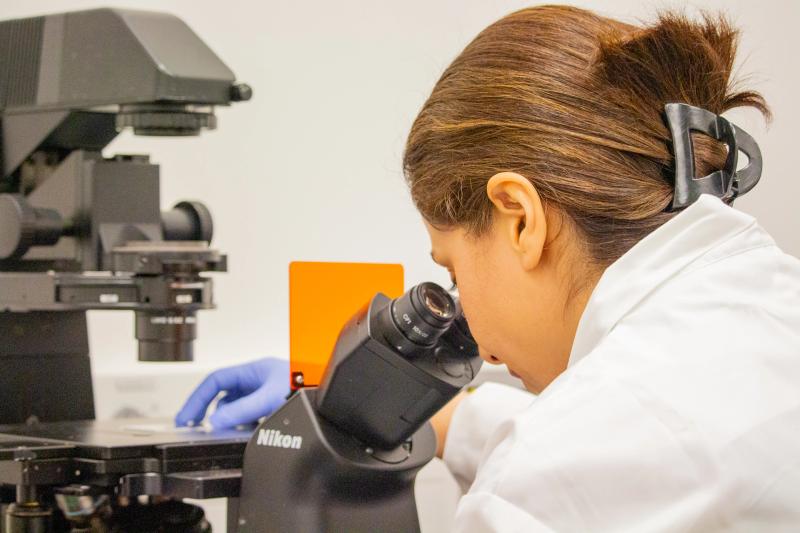
There is no “aha!” moment in this story, just a lot of years of hard work, long nights and trips back and forth between Waterloo and Hamilton, says Soleymani. Plus compatibility: Poudineh and Soleymani are the sum of their strengths.
“One thing about Mahla that I really admire is her creativity,” says Soleymani. “She has these great big ideas and she’s really ambitious, and I’m more like the details – how are we going to do it? I think we complement each other that way.” For Poudineh, Soleymani remains an inspiring role model who brought her entrepreneurial experience to the partnership.
In March, Soleymani and Poudineh released a paper that makes the future they’ve been building toward feel within reach: it announced that their Aptalyzer patch had successfully tracked both rising and falling troponin levels in living animals in real time. It was both a culmination and a beginning – because the next part, bringing the technology to market, might be the hardest.
Andy Stewart of the Diagnostic Consulting Group has spent a decade working with diagnostic-technology companies globally and is advising Aptec Health on its commercialization strategy. He says the journey ahead for Soleymani and Poudineh has a fairly scripted ending: they’re either going to raise hundreds of millions of dollars, get acquired, or cease to exist. “That’s just the nature of it,” Stewart says.
Funding is a major challenge. Angel investors and venture capital are currently entranced by the neon glow that is artificial intelligence. Then there’s the high regulatory burden. Aptec is eyeing approval from both Health Canada at home and the FDA stateside.
“[Diabetes and heart disease] are two very highly regulated environments,” says Stewart. “Where they’re at right now, there’s a long funding journey to pay for what they need to do to finish their design and development, get into validation of verification and then through the clinical trials.” Very few medical-technology devices make it out of that valley, especially in Canada.
However, Stewart is so impressed by what the pair has done so far that he’s willing to stick with them. Between the two researchers, they have 12 years of grant funding, a vast amount of intellectual property, a platform, good data and experience. They’re both Canada Research Chairs – Poudineh is Tier 2 in health-monitoring bio-nano devices and Soleymani is Tier 1 in miniaturized biomedical devices – which indicates high-calibre, peer-reviewed recognition. “I tell them, ‘Don’t tell people you’re a startup,’” says Stewart. “[They’re] so much further ahead than many equivalent startups.”
In some of their early calls with investors, Stewart had to step in to make sure people weren’t missing Soleymani’s and Poudineh’s pedigrees and their depth of experience. “They just glossed right over themselves and went right into the tech,” he says. “These are incredibly humble, articulate and very multi-functional women.”
At times, Stewart’s excitement spills out as if he can’t help projecting a future where the moon shots materialize. Not just troponin, ketones and glucose. Not even just big, complex molecules like proteins. “Imagine a smart Band-Aid that detects if there’s bad bacteria, and if there is, it gives you a little bit of antibiotic,” he says. “This detect-and-deliver concept is groundbreaking.”
People can wear these patches for days, which bridges into a whole other conversation about longevity. It’s a big dream – and Elizabeth Holmes’ notorious Theranos fraud in the U.S. could scare some investors off any talk of wearable blood-analytic devices. But if successful, the Aptalyzer could produce a staggering amount of data, 10,000 times what people have had before, says Stewart. “You’re going to have a personal AI assistant that’s going to comb that for your general well-being and health.”
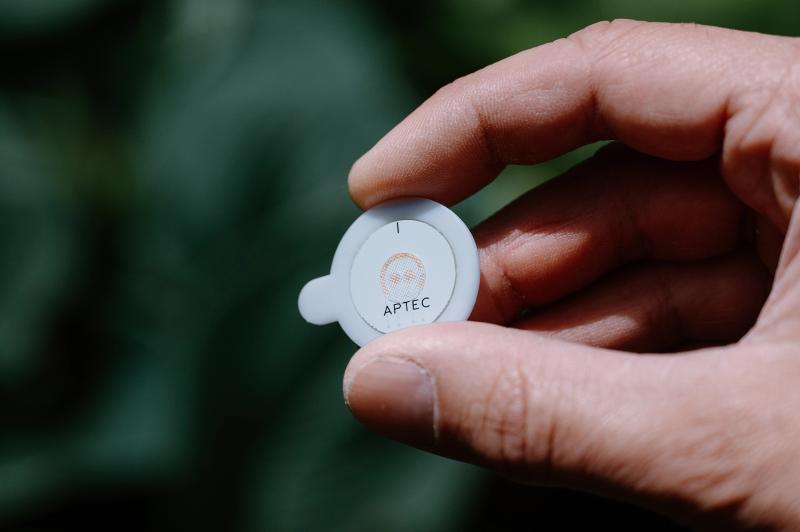
Like Banting, Best and company’s insulin discovery before it, the CGM changed everything for people living with diabetes. It offloaded some of the psychological burden that comes with incessantly checking glucose. It reduced the daily blood pricks to that uncomfortable but manageable needle pang every time a CGM is removed and another is reapplied. It’s saved lives. For those with diabetes, the Aptalyzer is the next step, with pain relief and the critical addition of ketone monitoring. But everyone involved in the project recognizes how much further the applications could go, especially Poudineh and Soleymani.
When they stare down the challenges ahead, the tech giants up against them and the investors they need to convince, they’re unfazed. They are confident in the core technology. For them, it’s always been about solving something seemingly unsolvable. “We have something unique,” says Soleymani. “We think we can do something that other people can’t do.”