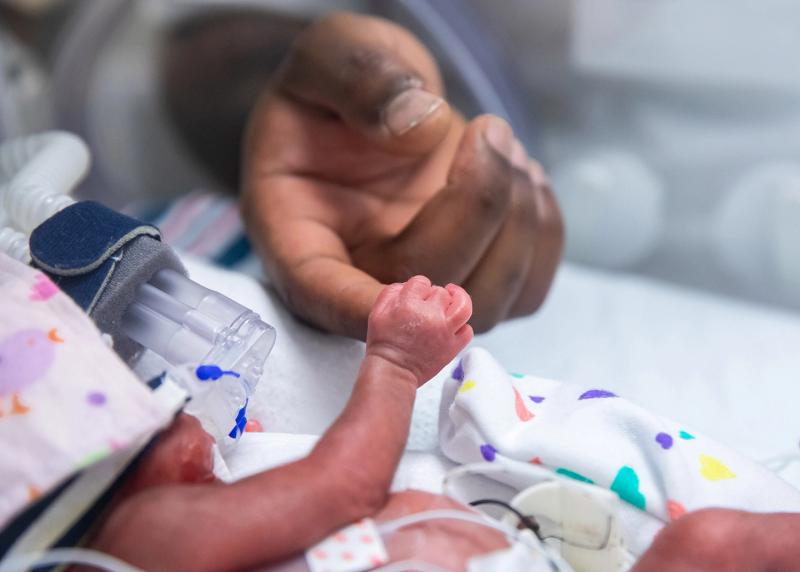
It is nearly impossible to comprehend just how tiny a premature baby can be. So try this: Go to your fridge and grab a can of pop or fizzy water. Put it lengthwise in your hand. Test its weight for a few seconds. Look at how your longest finger pops over the top and your palm peeks out from the bottom.
A can is almost the same size as a baby born at 22 gestational weeks. At that point, barely half of a full-term pregnancy, an infant will weigh somewhere between 300 to 500 grams. A can of Coke is about 350 grams. But a can is hard to the touch. A human who fits in the palm of a hand is delicate. Its skin at this size is nearly translucent.
A baby that wee seems incompatible with life. And until recently, that was the case. Two decades ago, the tiniest humans could not survive at younger than 25 weeks’ gestation except in extraordinary cases. That was particularly true in Canada, where the nearly 30,000 premature babies born each year had poorer outcomes compared to many in peer countries.
Now, preemies – babies who come into the world before 37 weeks’ gestation – are surviving at as young as 22 weeks and with fewer complications, and Canada is among the world leaders in neonatal outcomes.
Get our weekly newsletter – the people, places, and ideas revealing where Canada is headed.
This is not the result of dramatic new medications or technological breakthroughs. It is the story of a group of specialists, led by one Canadian in particular, who believed that for these very tiniest of humans, the boundary between viable and not could be moved by paying attention to the smallest details.
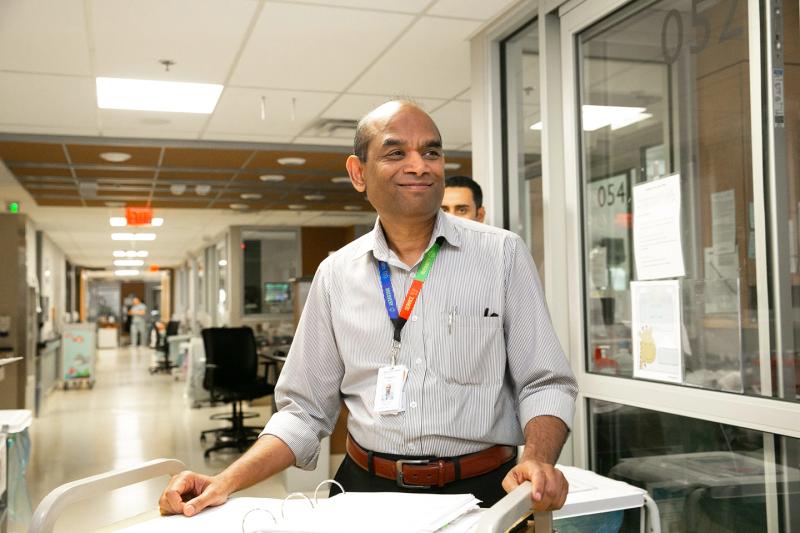
Prakeshkumar (Prakesh) Shah, professor of pediatrics at the University of Toronto and pediatrician-in-chief at Toronto’s Sinai Health System, did not initially plan to look after newborn babies. He was born in India and went to medical school with the dream of becoming a doctor. As soon as he did his first rotation in pediatrics, he knew he wanted to spend his career working with kids. So many of them couldn’t even talk; they could only cry, he says, and that posed interesting challenges. And he was deeply moved by parents who would go to the ends of the Earth to get medical care that they often couldn’t afford.
After graduating from Gujarat University in 1988 and finishing a residency in pediatrics, he moved to the United Kingdom for more training. There, he unexpectedly found himself struggling with the emotional challenge of caring for kids in the intensive care unit (ICU). Sometimes, they’d been healthy toddlers who’d had something horrible happen – a spilled kettle, a terrible accident, a devastating virus. Their parents and grandparents would bring photos of the kids from the Before Times, and they’d speak about the joy they’d had.
Shah still remembers children who were accidentally harmed while in the care of their grandparents and the devastation for families. Their medical care was emotionally “taxing,” he says. He had a young son at home, and he wanted to wrap him in wool to protect him.
Shah didn’t think he’d be able to carry out that kind of medical practice over a decades-long career. “I will burn out in 10 to 15 years,” he remembers thinking.
He applied for a fellowship in Canada, this time focused solely on newborns in the ICU. Looking after newborns was a different kind of medicine, and he loved it. Babies are “brand new,” he says. “There is no history. Whatever you create is their history.”
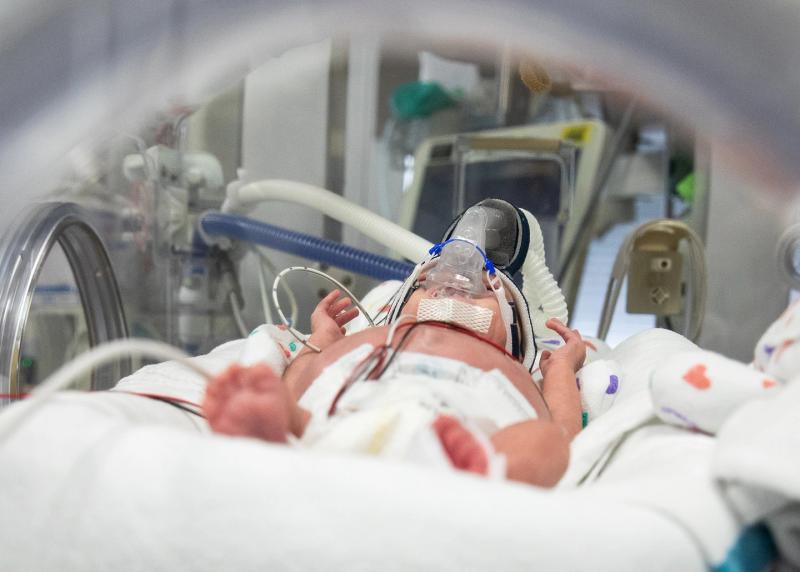
For most of human existence, extremely premature infants died soon after birth. There was little that could be done to help them. Even when there was hope of keeping them alive, the medical community questioned the wisdom of saving babies who were likely to have major complications. Such small beings, whose organs did not have enough time to fully develop before they were born, would often go on to have health complications, such as lung disease, brain bleeds or vision problems.
That medical mindset – that the risk of complications was too high – began to change in the late 1960s with the establishment of the first neonatal intensive care units (NICUs) and the Apgar score, a tool health-care providers use to assess the newborn infant. These innovations and more drove down mortality rates among premature infants. By 1990, American studies reported that deaths dropped to about 10 per cent among babies born at 28 weeks.
But for infants born before 28 weeks of pregnancy, the situation was more complicated. Their survival rate had improved significantly since 1960, when the mortality rate for babies delivered that early was a sky-high 80 per cent. At the time, one early Canadian neonatologist was quoted as saying there was no point in tracking nursery statistics for babies with a birth weight of less than 1,000 grams or under 28 weeks gestation: “The survival was so rare as to completely frustrate the purpose of vital statistics.” But by the mid-1990s, babies born at younger than 28 weeks’ gestation still faced a high risk of death in the NICU, with a mortality rate around 17 per cent in Canada. One-third were born with serious complications.
Neonatal teams around the globe figured out their own best practices based on what they felt was working at their centre and what they heard from other places. There were widely varying strategies on things like when to resuscitate, how to prevent infections and what temperature they liked to set in operating rooms.
In 1995, Dr. Shoo Lee, now a professor emeritus at the University of Toronto, came up with an idea to reduce that disparity and founded the Canadian Neonatal Network (CNN).
He organized NICUs across the country to submit data on premature babies treated in their hospitals to the network’s national database. He knew Canada lagged in neonatal outcomes because he’d trained in one of the top institutions south of the border, but it had an advantage: the publicly funded health system meant that population-based data could be collected across Canada. Researchers and health-care workers could compare outcomes and identify what worked well and what didn’t.
The Medical Research Council of Canada (now the Canadian Institutes of Health Research or CIHR) provided two years of funding and the network quickly grew to more than a dozen centres, but then rapidly shrank back to four when the money ran out.
That’s how things stood when Shah joined Toronto’s Mount Sinai Hospital as a staff pediatrician in 2002. By then, the edge for viability for a premature baby in Canada was around 24 weeks or 500 grams. If a premature newborn arrived just under that weight, the health-care team would provide comfort care, but there were no efforts at resuscitation.
Shah felt more – and better – data should be collected to help inform decisions and improve care for premature infants. He still likes to quote one of his mentors, who’d told him: “If you torture the data enough, the data will confess.” In other words, you would figure out what you needed to fix.
In 2007, he led a study that looked at outcomes for newborns across seven countries that had national networks, including Sweden, Japan and Australia. Canadian babies had the worst outcomes. Shah used those findings to push for change in Canada, applying for funding from the CIHR to study outcomes for babies.
He set up a database at Mount Sinai to track more detailed outcomes of newborns born there. He turned his attention to the CNN and expanded it so that researchers would collect details on everything that happens to a baby daily in the NICU, both the practices that contribute to their care and their outcomes.
Then Shah, who became director of the CNN in 2012, invited hospitals across the country to join the network.
“I went everywhere and told them, ‘Look, this is the benefit of you joining. It’s not going to cost you anything, except that you need to have a person to collect data.’” In return, he promised to give them the benchmarking – a report that would show how their NICU was performing in each of the data points compared to the rest of the country.
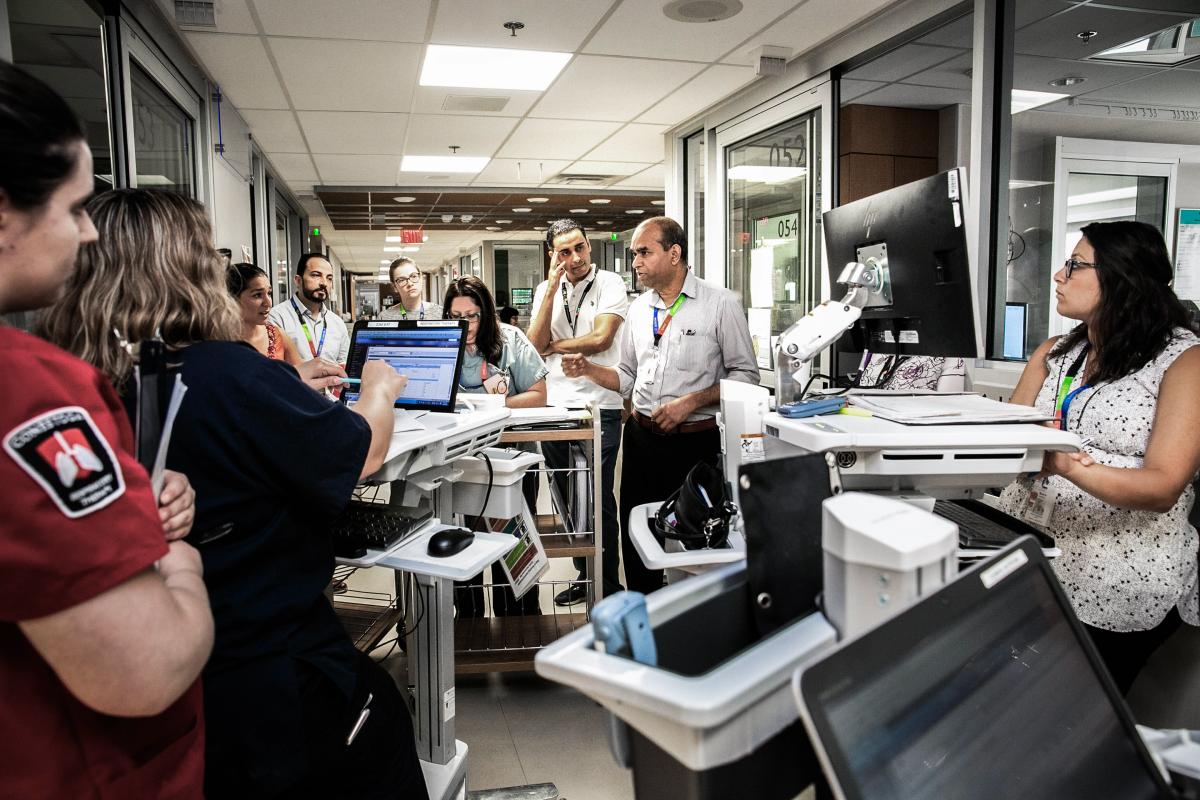
By 2012, 31 NICUs in Canada were sending data to the network. Its annual benchmarking reports anonymized hospitals except to themselves: Mount Sinai staff, for example, could identify their own entry and see how their results compared with those of other centres. Once a year, physicians and allied health workers who specialize in NICU care in Canada would come together at a conference, known as EPIQ (Evidence-Based Practice for Improving Quality), to discuss the findings.
“For the first three or four years when we presented the data and showed them the numbers, everybody was quiet. Nobody would speak up because they didn’t want to show that they were the worst,” recalls Shah.
After a few years, people started to reach out to ask how they could improve, he says. It helped that no single centre was the best or worst at everything. Everyone had room for improvement.
When one NICU was struggling with some aspect of care, the EPIQ team connected them with specialists from higher-performing centres, even sending teams abroad. The NICU team would tour another program and shadow their neonatology specialists for several days. They’d study what other teams do to lower rates of lung infection or what they do to help full-term babies born with birth asphyxia, a dangerous condition where a baby does not get enough oxygen at some point in the delivery.
The results were tremendous: in Canada, survival without major complications for babies born between 23 and 32 weeks’ gestation rose from 56 per cent in 2004 to 70 per cent by 2017.
Many of the changes that brought about this revolution in neonatal care are seemingly small things.
Hospitals increased the temperature of the operating room so that newborns don’t arrive into an air-conditioned environment tailored for the adults working in the room. Care teams now delay the clamping of the umbilical cord for a minute, giving the baby extra time to receive blood from its mother as it transitions into the world. NICUs prioritize skin-to-skin time between parent and child as soon as and as often as possible. Canadian NICU teams even have an annual competition, the Kangaroo-a-thon, to maximize skin-to-skin time between parents and babies.
Michael Narvey, vice-president of the Canadian Pediatric Society and a neonatologist at the University of Manitoba, calls CNN the biggest driver of change in Canadian neonatal history. The network’s data encouraged Narvey and his team in Winnipeg to reconsider what they defined as the edge of viability. In 2015, they’d set it at 24 weeks’ gestation and were not offering resuscitation to babies born any earlier.
“It became clear that we were starting to become a little outdated. Resuscitation at 23 weeks was not just a possibility, but was being done,” he says. Within a few years, they began offering resuscitation to mothers whose babies were at 22 weeks – again, because of the national data.
“It would not have come along, really, if it wasn’t for the innovative thinking on the part of people like [Shah] and [Lee],” says Narvey. “That was the spark.”
Even now, Shah continues to support other researchers as they look for ways to use data to advance care, Narvey adds. “In terms of quality improvement in Canada, it’s a passion of his, and I have a sense that he just wants to help.”
In Canada, Shah led a push to identify gaps in preemie care. Neonatologists were tracking what happened in the NICU, but there were important missing elements related to the care babies and mothers received outside the unit. In 2016, he helped launch the Canadian Preterm Birth Network, which tracks care before birth and during delivery, as well as outcomes for premature babies during their first years after leaving the hospital, looking at things like hearing, sight and neurodevelopmental impairment.
Shah also drove major change outside Canada by co-creating an international network similar to CNN, based on its model of quality improvement and collaboration. Known as iNEO, the international network now collects data from 13 countries and has improved care globally, as well as in Canada.
“The quality of Prakesh is to win over the respect of people. He gets people on board,” says Kei Lui, a pediatrician and chair of the Australian and New Zealand Neonatal Network. When the international network got off the ground, Lui remembers being impressed with Shah’s openness about the poor Canadian outcomes. By 2018, when Lui spearheaded a study of the countries contributing to iNeo, he found Canadian outcomes had improved faster than all other countries. Between 2007 and 2017, instances of severe complications and/or death among babies born at less than 32 weeks’ gestation dropped by 25 per cent.
“I took my whole group to Canada [to see] how they are improving so fast,” Lui says. “They’re overtaking us. Now, what are we going to do?”
In Canada, Shah and his colleagues used the experience of the Nordic countries to lobby the federal government for changes to extended care benefits for new parents. Parental leave benefits now begin when a parent goes home with a baby, instead of when a baby is born, and supplementary coverage is provided for the time that their child is in hospital.
Parents need to be with their baby in hospital because they are essential to medical care, Shah says. “Parents are our care partners, not visitors.” Family integration is now practised in NICUs across the country. Parents do things like lead the tube feedings of their babies (very premature babies cannot suckle), and when doctors do rounds on the ward, the parents are the first people asked to present details on the baby.
Family-integrated care helps infants – Shah likes to show parents how their babies’ heart rates will stabilize when they are holding them or singing to them – and it helps parents become more confident in taking care of these delicate humans who will eventually go home with them. CNN data shows that family-integrated care can reduce a baby’s length of stay in hospital by two days.
“You can imagine 4,000 babies across the country – that’s … 8,000 days of hospitalization saved,” Shah says.
But there are some things that figure into the life of a newborn that will never be wholly captured in data, acknowledges Shah. Above all, there is the question of what parents want for a baby who comes into the world earlier than planned. A pre-term baby with a gestational age of 22 weeks might survive but may face a lifetime of challenges.
“We can’t provide what mom can provide inside. We try to mimic it, but it’s still not possible,” says Shah. So when a pregnant person needs to deliver early, he and his team have frank discussions with them about their wishes.
“I go and talk to families: one family in one room wants Michael Jordan only, and another family says, ‘Give me a child. I don’t care. I will deal with whatever comes.’” Others are in between, he says. A premature baby affects the entire family, he adds. There is a high divorce rate among couples who have a pre-term baby.
He has seen that parents’ confidence in their children matters. It influences how the care team manages, and their belief in their kids is often borne out in the years that follow. That has changed how Shah considers the idea of viability. “[Health-care workers] err on the side of negativity more,” he says. “We think that this baby has a higher chance of disability, and then the baby surprises at three years, walking in your clinic and running around.”
He keeps that in mind in discussions with families. “We don’t know everything and the brain is resilient. It repairs itself; it cures. It generates new neurons that take over the function of the dead neurons. There isn’t a crystal ball that can tell me that this baby will have this, this, this.”
And that is the next challenge in neonatal medicine, he says. Survival has been improving in ways previously unimaginable, and he credits colleagues and families across Canada with driving change. But there’s more to be done.
“We don’t want to just save them,” he says. He wants to figure out ways to make the lives of all babies, but especially very premature babies, better. “That’s the work we still have to keep doing.”