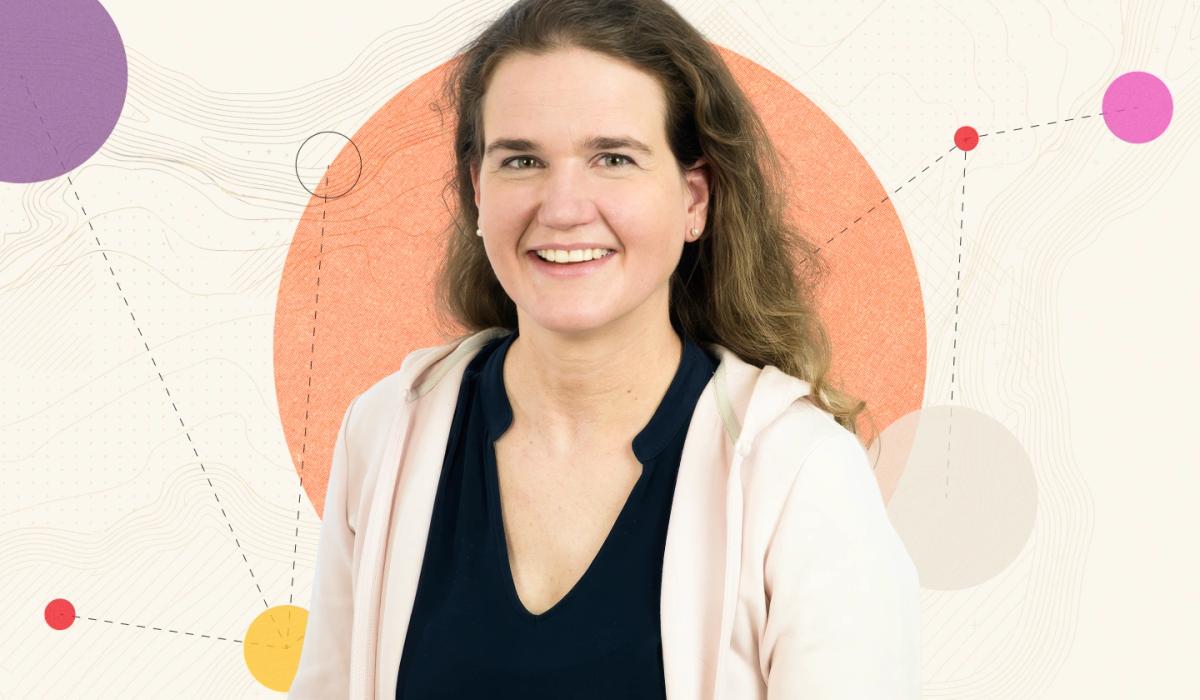
When Dr. Pia Wintermark meets parents in the neonatal intensive care unit
(NICU) at the Montreal Children's Hospital, they are usually in the worst moments of their lives. Hypoxic-ischemic encephalopathy, or HIE, is caused by lack of blood flow and oxygen to the brain at birth. The condition, which impacts about one to three per 1,000 births in developed nations, is among the leading causes of infant death as well as long-term brain damage. But what if a little blue pill could change everything?
Yes, that blue pill.
Wintermark was still a med student in her native Switzerland when she drew the hypothesis that would propel her to the forefront of global neonatal science: sildenafil, also known as Viagra – the drug that became a household name for treating erectile dysfunction – could also be used to treat HIE in newborns.
Wintermark’s once-unorthodox idea now sits at the centre of a broader push to improve outcomes in newborn brain injury, including a recent $1.7-million Brain Canada grant to build a pan-Canadian data network.
Here, Wintermark talks about the unlikely idea that shaped her career, why she’s chosen to build her life in Montreal and what comes next in her research.
Baby steps
I think my passion for neonatology comes from the chance to intervene in medical conditions at the earliest stages. When I was a student doctor, before my rotation in the NICU, a lot of other students told me, “It’s so boring, you’ll spend all your time recording how much fluid you have given to a baby.” It’s true, I still spend a lot of time recording that kind of data to this day, but I absolutely love working with newborns. When I did my rotation in neuropediatrics, which was with slightly older kids, I found that I was treating outcomes. I wanted to treat the causes.
Get our weekly newsletter – the people, places, and ideas revealing where Canada is headed.
The little blue breakthrough
Usually, when I explain to parents that I want to treat their baby with Viagra, their eyes get big. Everybody knows the drug, but not many know that its treatment for erectile dysfunction was an unexpected side effect. Sildenafil was actually developed as a treatment for angina and hypertension in the 1980s. When I was a medical student at the University of Lausanne in Switzerland, I read a research paper about its potential to treat several other conditions, like stroke, Alzheimer's and multiple sclerosis. Sildenafil was already being used in infants to treat lung conditions. I started thinking, “OK, well if it’s safe for babies and it can treat stroke in adults, then it could be a treatment for HIE.”
If at first you don’t fail…
In Switzerland, there’s still an old-school hierarchy in the medical field. I had a professor in Lausanne who had done his training in the U.S., and when I told him about my hypothesis for treating HIE, he warned me, “You won’t be able to pursue this if you stay here.” I would have had to spend years working under someone else to pay my dues.
In North America, there’s a mentality that a great idea is a great idea no matter who it comes from. That’s an especially valuable mindset when it comes to research. The fear of failure can be very limiting when it comes to breaking new ground. Trying and failing is part of progress.
The case for Canada
After my residency, I was accepted into the Harvard Neonatal-Perinatal Medicine Fellowship Training Program at Boston Children’s Hospital. When that ended, I had a choice to make: stay in the U.S. and continue my work there or go back to Switzerland. Neither felt like the right place for me.
I loved the work I was doing in Boston but didn’t think the quality of life in the U.S. was as good. A colleague suggested Canada, and the Montreal Children’s Hospital had an excellent reputation for neonatal neurology. It felt like an ideal compromise, although I had to get used to the winters.
It’s good to get cheesy
Montreal really does feel a lot like Europe: the food, the attitude, the language have all really helped me to feel at home. In Boston, I could not get good cheese or good bread anywhere. Here in Montreal, we can go to the Atwater Market and the selection is endless. I had never tried cheddar cheese before I came to Canada. Now it’s my daughter’s favourite – even over Swiss.
Still in its infancy
Most people don’t realize that newborn medicine is still a relatively new discipline. It was only in the 1960s, when President John F. Kennedy’s son died of a neonatal respiratory condition, that it got more attention. Suddenly there was greater investment in NICUs and neonatal care.
The Montreal Children’s Hospital has been a leader in this space for almost as long as it has existed, and particularly in the treatment of HIE. One of the things that I needed in order to do my research was capacity, and the MCH has been able to provide that.
Proof in progress
In 2024, we completed our Phase 1 research, which was designed to show safety and feasibility. Now we’re in trials and seeing encouraging early signs of efficacy. I had one little girl in my second trial whose brain injuries were so severe that doctors had previously told the family there was nothing they could do. The parents sent me an email asking if they could get into the study, and we accepted her. The little girl is now two and is starting to walk and talk.
We have these anecdotes; now we are working on the numbers to back them up.
What matters most
I have a nine-year-old daughter. When I speak with colleagues in the U.S., they tell me about how their children are running active-shooter drills at school. It’s a reminder that I am exactly where I want to be.
As a parent, I have definitely taken on some of the more North American “helicopter” tendencies, but in other ways I am focused on building my child’s independence, which is a more European approach. I have noticed that schools in Canada are very community oriented. There’s a strong focus on inclusivity and making sure every child’s voice is heard, which I really appreciate.
Sorry, not sorry
One Canadianism that I have definitely picked up is saying “sorry” far too often, for just about everything, even when it’s not necessary! It’s more like a reflex, which may have something to do with Canada’s overall politeness, so not entirely a bad thing.
Conversations with Dr. Pia Wintermark have been edited for length and clarity.