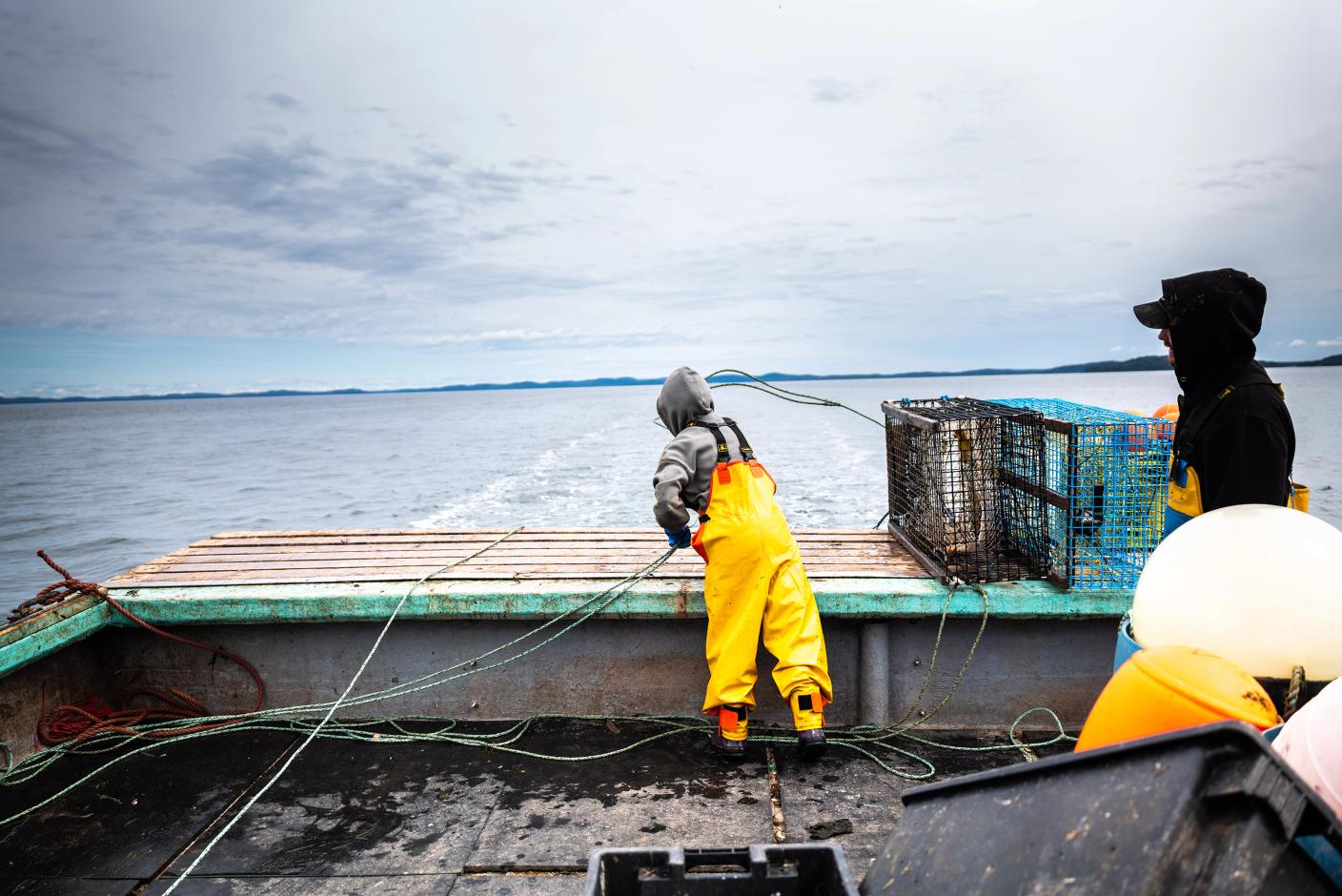
Alden Gaudet was gearing up for what he hoped would be a lucrative snow crab season when he got some unfortunate news. It was May 2022, and he and his crew were set to head out of Tignish, P.E.I., into the Gulf of St. Lawrence to some of the most bountiful lobster and snow crab fishing grounds on the East Coast, where Gaudet has fished for more than three decades. That’s when he got word that a North Atlantic right whale had been spotted near their destination – an unexpected deviation for the critically endangered mammals, which typically take a different route on their lengthy northern migration.
Its presence meant that a section of the 2,000-square-kilometre fishing zone where Gaudet was planning to drop his crab pots would now be closed under federal regulations that are intended to protect the whales from entanglements in fishing rope – one of the leading causes of death for the lumbering giants (vessels strikes being the other). The closure pushed Gaudet more than 100 km from his home port as he searched for open fishing grids, only to find each new zone shut down by another whale sighting.
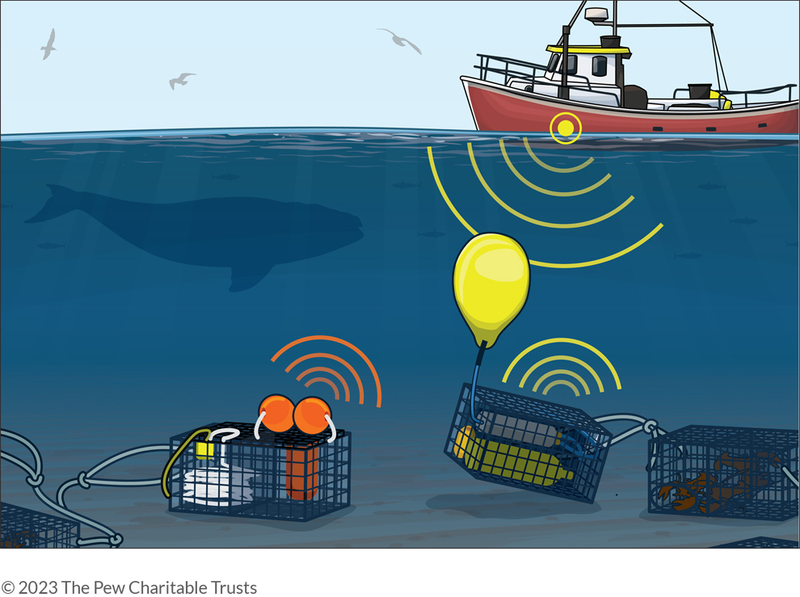
Frustrated, tired and catching little crab, he decided to look into a new type of fishing gear being promoted by conservation scientists. Called on-demand or ropeless fishing gear, it doesn’t use the traditional gear that raises the risk of ensnaring the animals: vertical lines that attach to each lobster or crab pot and hang from buoys in the water. Instead, the traps and pots are tethered to a mesh crate that sits on the ocean floor and floats to the surface only when triggered.
Initially, the new gear was a tough sell. “We had zero interest in it and [we] didn’t want to hear about it because we thought it was never going to work. You could say fishermen are reluctant to change,” Gaudet says with a chuckle from his home in Tignish, hours before heading out on his 45-foot boat, Bottom Dollar. But the gear allowed him to fish with a scientific permit in zones where right whales had been spotted. And at the time, he had 200,000 pounds of his crab quota still to catch. With the on-demand gear, he landed 150,000 pounds in about a month. “It was the only thing that saved our season,” he says. “Without this tool, we would have had nothing.”
Gaudet was the first harvester on the Island to use the on-demand gear; another 10 or so quickly sought it out after seeing his boat come into shore brimming with crab while they’d been largely sidelined due to a series of closures. For many of them, Gaudet says, it seemed like a revolutionary shift in the way the fishery could be done. For conservationists, it could be a critical tool in the effort to protect a species that for decades has teetered on the brink of extinction.
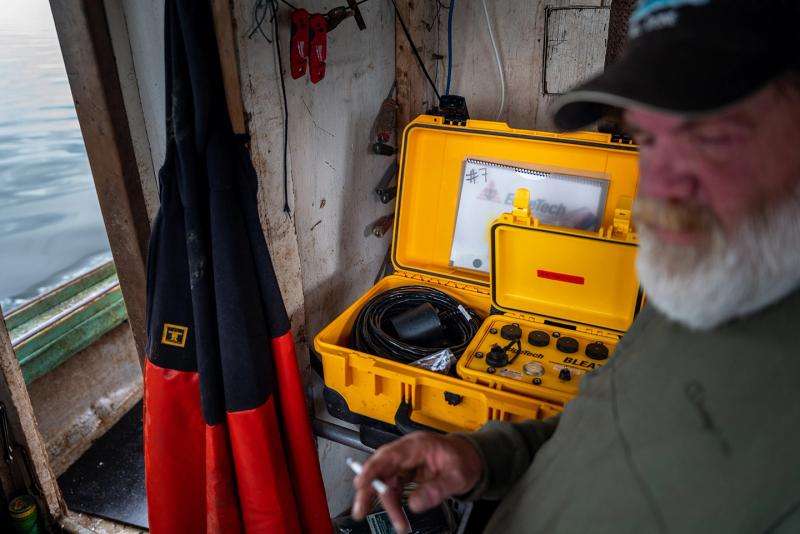
Only about 380 North Atlantic right whales are still swimming the oceans, and roughly 86 per cent of those have deep, pale scars etched into their black skin, the hallmarks of encounters with fishing rope that has become stronger and tougher to break free from. The effort to protect them took on a heartbreaking urgency in 2017, when 17 North Atlantic right whales were found dead in Canadian and U.S. waters, with some linked to gear they swam through on their way from calving grounds off the southeastern U.S. to critical feeding habitats in the Bay of Fundy, Gulf of St. Lawrence and the Roseway Basin. One of them, dubbed Starboard by researchers because of a gap in her right-side tail fin, was a 13-metre-long adult female that had just reached reproductive age. On June 21, 2017, fisheries officers spotted her body drifting in the gulf with weighted fishing lines twisted around her right flipper and caught in her mouth, a common occurrence for animals that cruise through the water with their mouths open, ready for food. Experts who examined her carcass suspected she had been ensnarled in crab gear for days, her thin blubber suggesting she wasn’t able to eat properly.
U.S. officials declared the spike in deaths an Unusual Mortality Event. In Canada, the Department of Fisheries and Oceans (DFO) rolled out a suite of protective measures, including vessel slowdowns and the first closure of crab fishing areas in the gulf that July. Higher than usual death rates in the following years resulted in a succession of costly fisheries closures, which take effect almost immediately after a right whale is seen or heard through acoustic monitoring and can last for weeks. If harvesters already have conventional gear in the water, they must pull it almost immediately.
Get our weekly newsletter – the people, places, and ideas revealing where Canada is headed.
Soon after that initial closure, companies manufacturing sustainable gear started to pop up in the U.S. and Canada, and on-demand gear trials began.
Gaudet got his gear from CanFISH, a small Halifax-based team of marine scientists and technologists who have been leading Canada’s only on-demand fishing gear lending program since 2022. It’s run by the Canadian Wildlife Federation (CWF), with some funding support from the federal government. Tucked amid a string of nondescript offices in an industrial park outside the city, CanFISH has eight different on-demand fishing systems on hand with dozens of sets of gear, all operating on similar principles to the gear Gaudet used. Staff members are continually testing and tweaking the systems in the hopes of finding a way for harvesters and right whales to coexist.
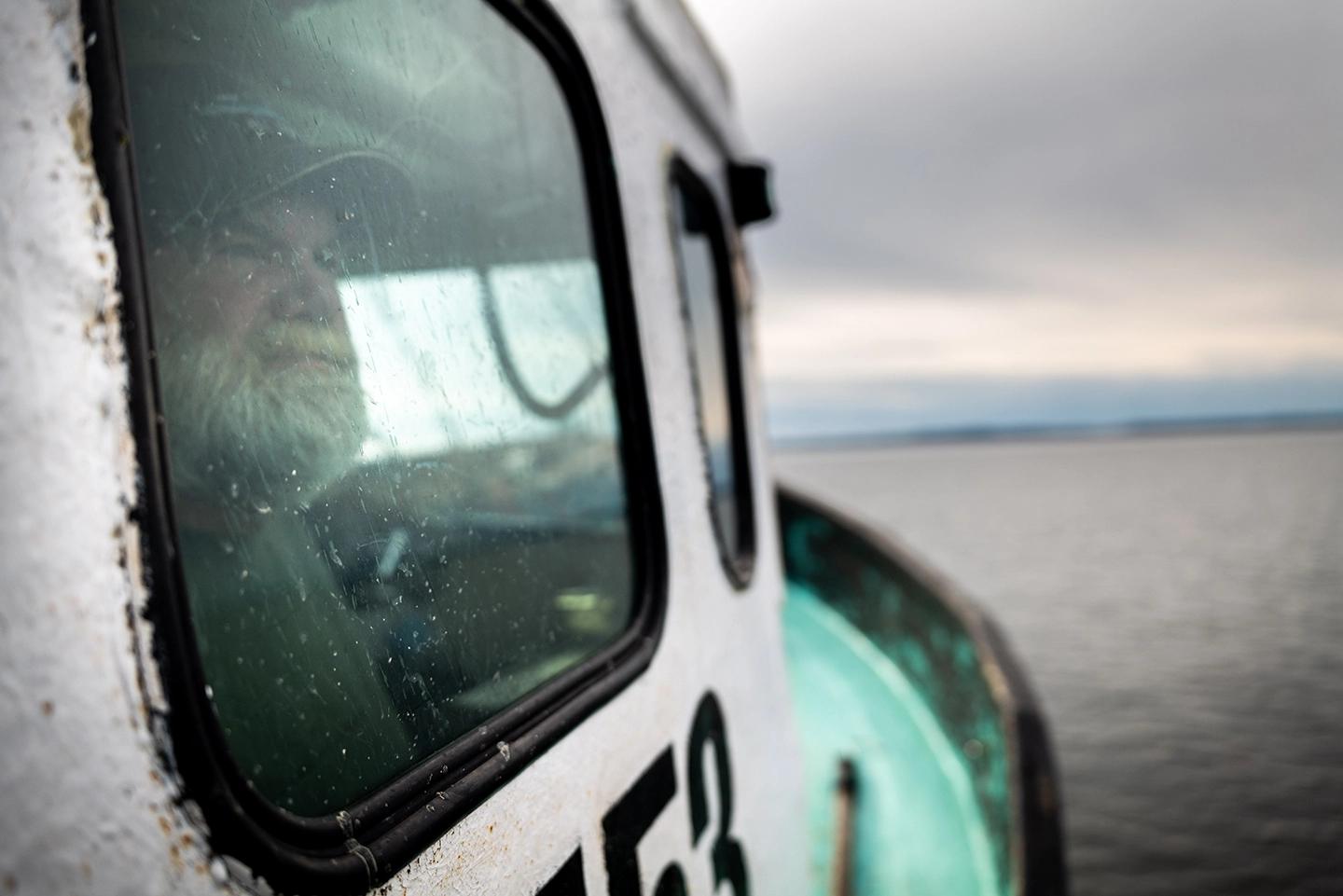
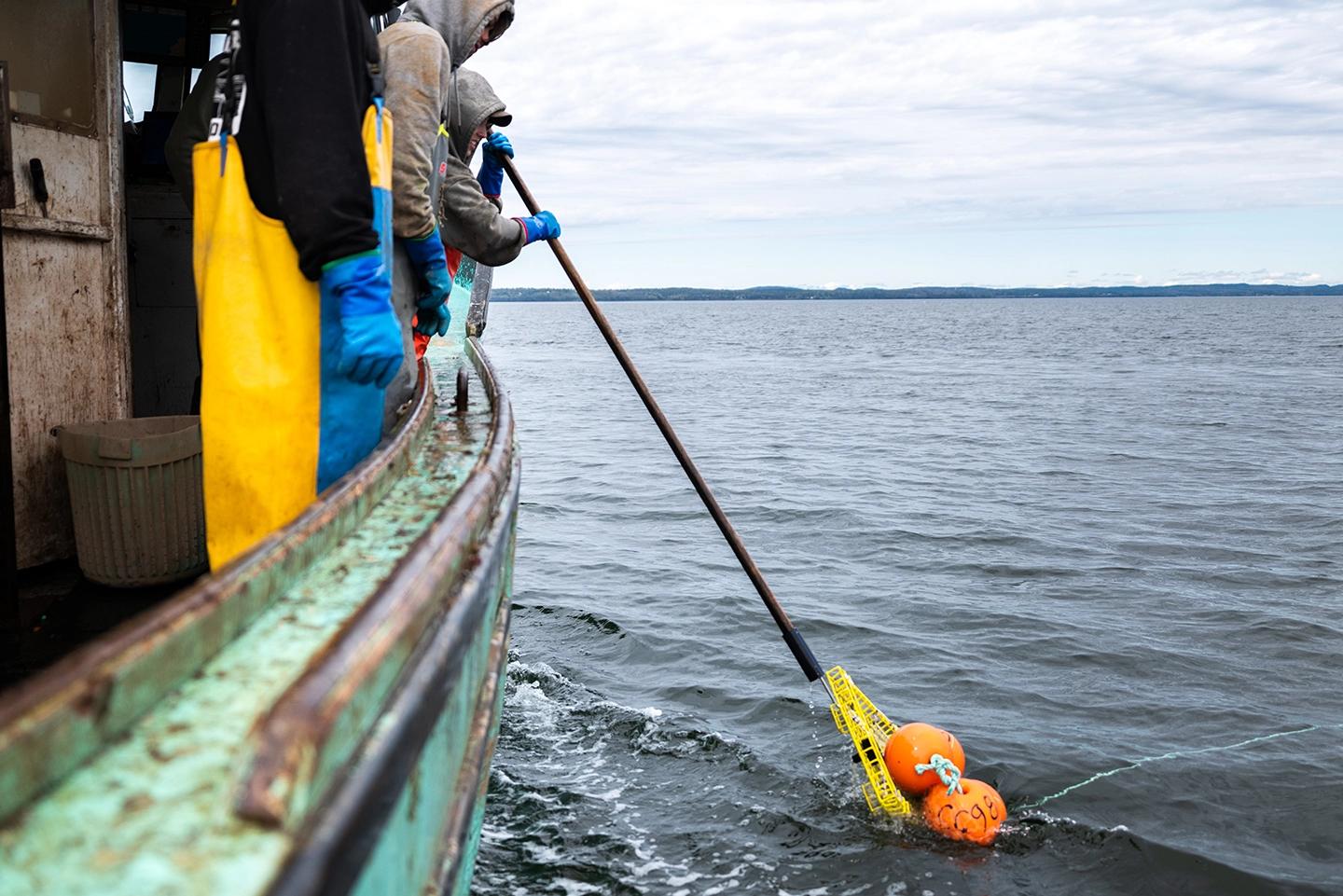
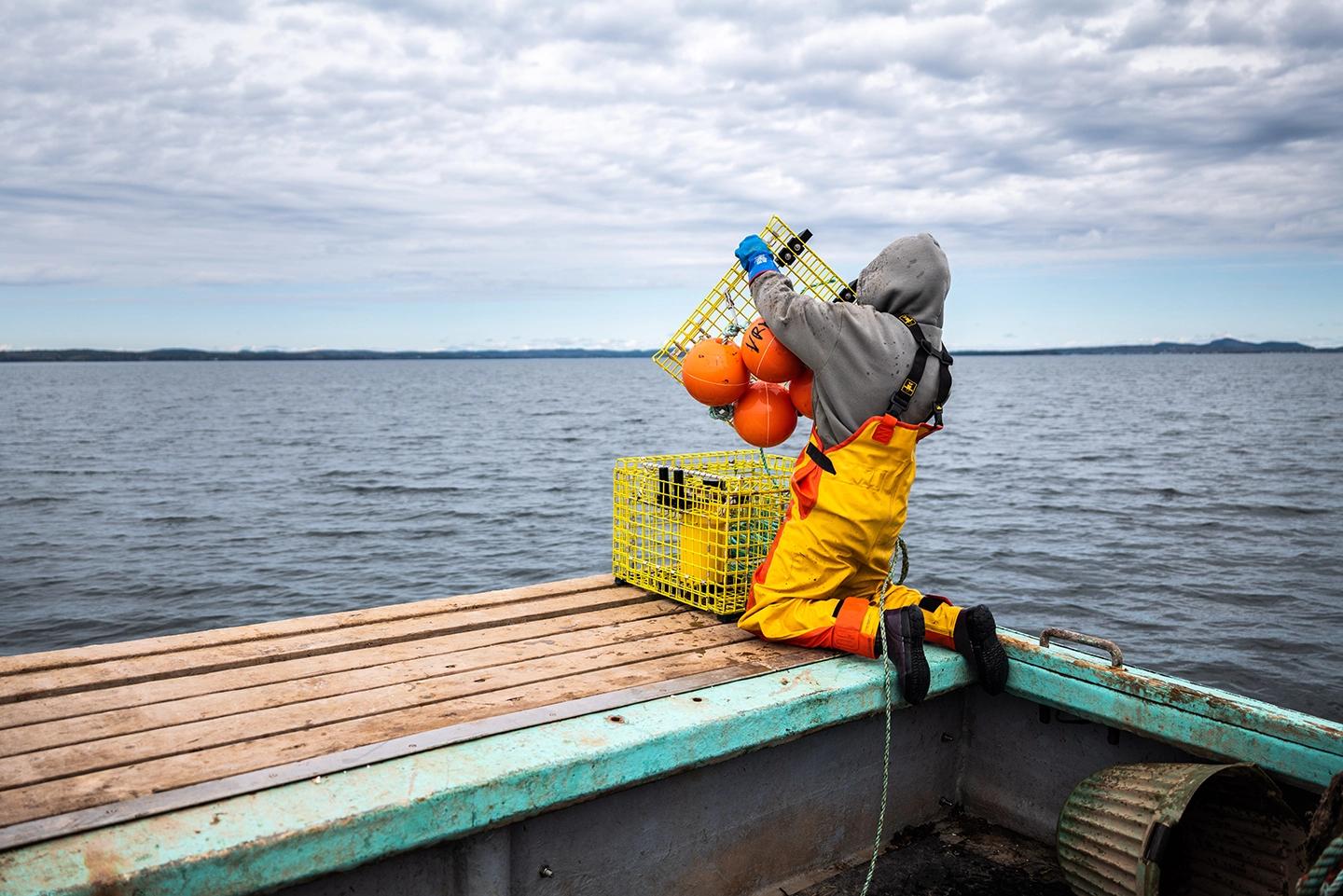
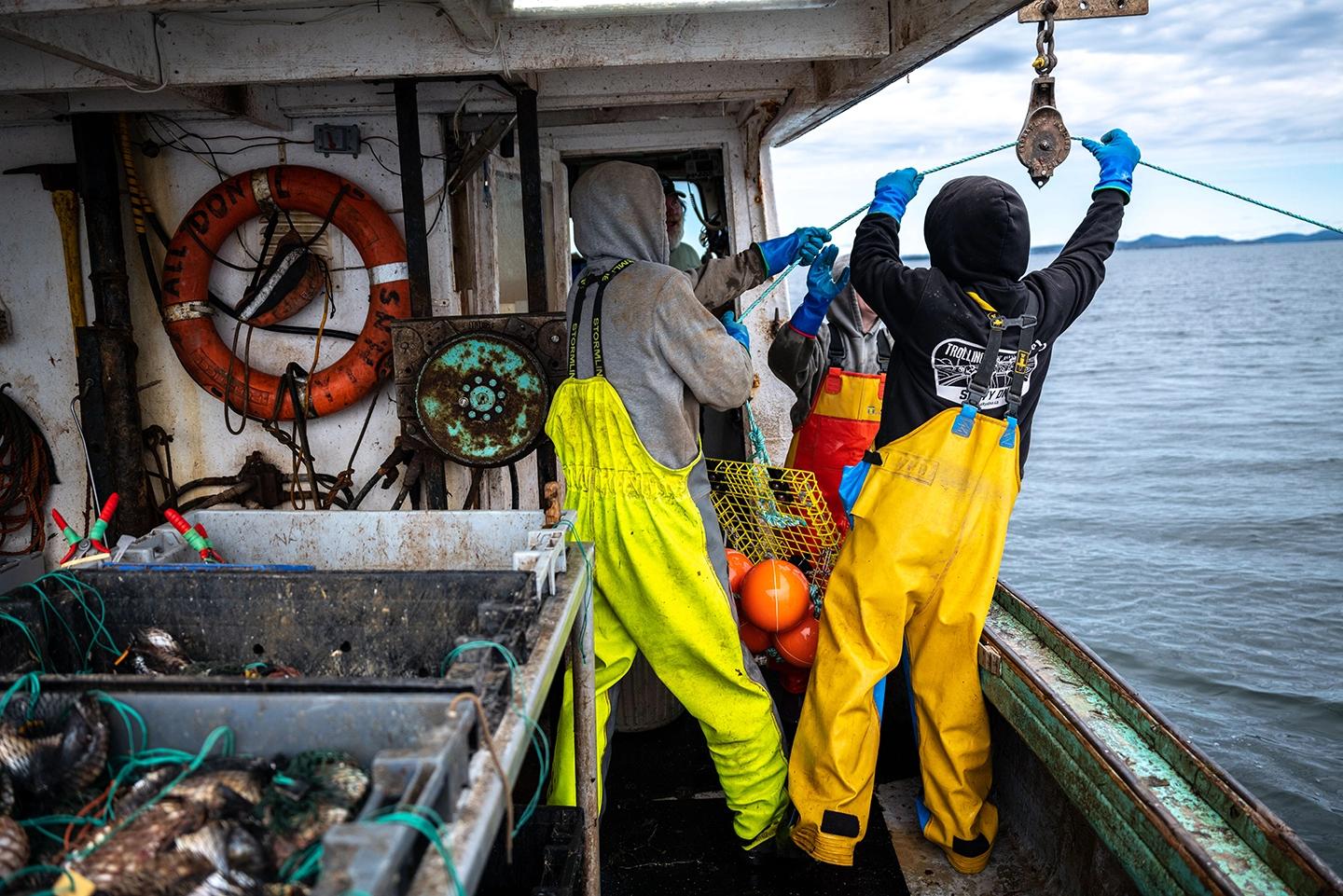
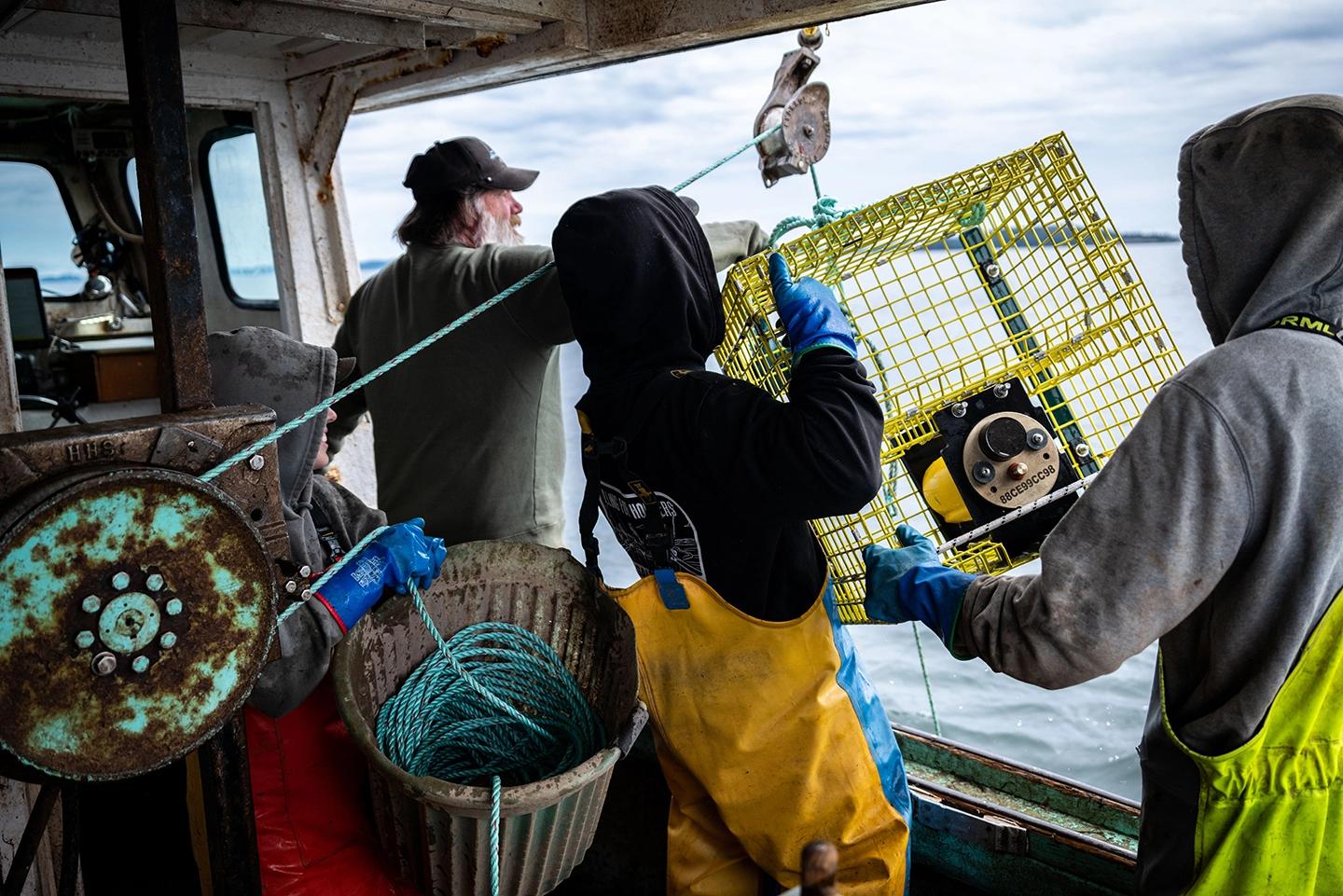
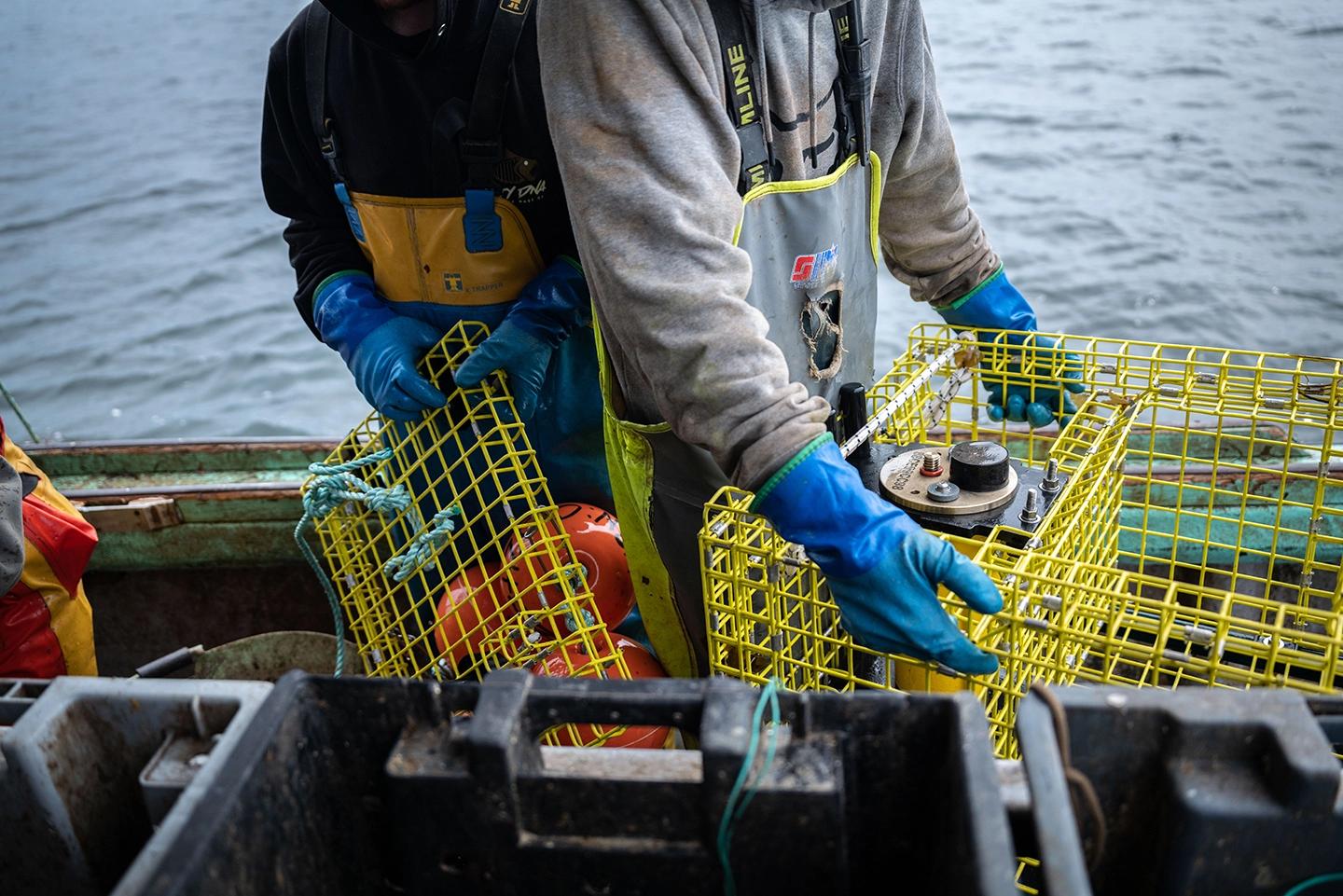
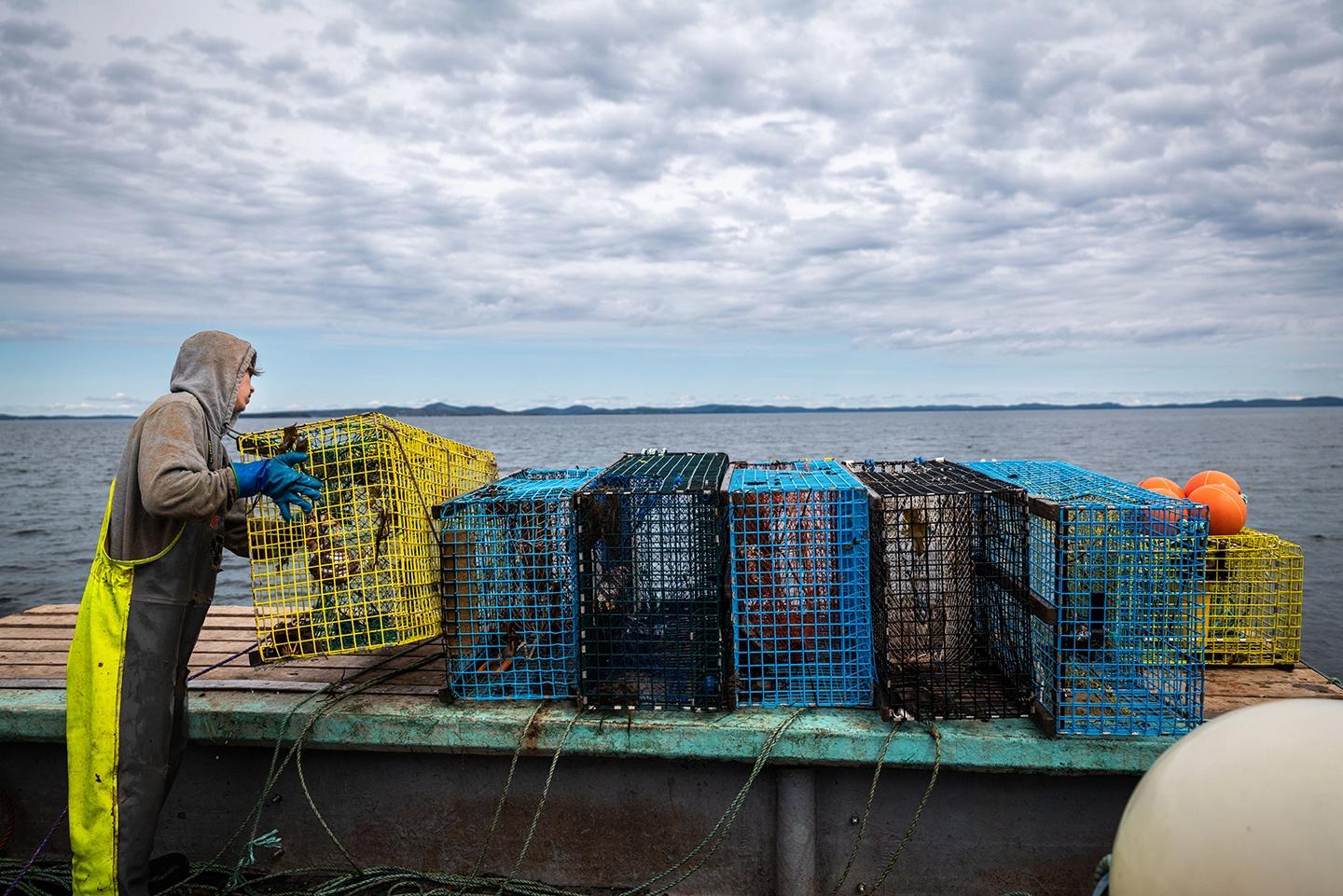
Elizabeth Vézina, fisheries engagement specialist and field program lead with the CWF, remembers some of the initial trials and the prevailing doubt she faced on wharves throughout Atlantic Canada. “I’m from a fishing community myself, so I was a little hesitant, too,” she says, standing in a warehouse lined with shelves of neatly stacked on-demand wire cages. “But we knew that rope was the problem and that we had to get it out of the water, and I was impressed that it was working. I remember thinking this could actually be a solution that we can use.”
A ropeless gear system removes the long stands of vertical buoy lines that typically hang in the water. Instead, the line is stored in the mesh crate, or rope containment system, that rests on the seafloor and is connected to a string of traps. When harvesters drop their traps in the water, they mark the location on a smartphone app and recover them by lowering a fist-sized transducer into the water and sending an acoustic signal to the crate. The simple clicking sound prompts the crate to release its lid in some models, letting the coiled rope and buoys rise to the ocean surface and allowing crews to begin hauling up their traps. Some systems use bright yellow or orange bags and balloons that can be remotely triggered to inflate underwater, causing the crate to float to the surface.
“It’s the cutting edge of technology meets conservation, and that is so cool – that we’re encouraging harvesters to be stewards,” says Hannah Drake, a marine fishing gear technician with CWF who helps manage the CanFISH program.
CanFISH has tested a range of different gear types in about 20 locations in the Maritimes, done more than 1,600 deployments since 2019 and created waitlists for harvesters interested in getting the free gear during zone closures. Vézina had about 100 available units in 2022 when the Atlantic region experienced a particularly high number of fisheries closures due to whale sightings, and all units were used at the time. One zone has seen more than a million pounds of snow crab pulled out via on-demand gear between 2022 and 2024. Vézina has doubled her inventory since 2022 but still has only enough to supply 40 or so harvesters.
Devocean Inc., based in Rimouski, Que., is one Canadian company manufacturing on-demand gear. Co-founder Carl-Philippe Cyr Mercier was studying robotic engineering at the Université de Sherbrooke and working in maritime technology startups when he heard about a funding initiative the federal government was launching to support the development of so-called whalesafe fishing systems. Familiar with the tragedy playing out in the Gulf of St. Lawrence, he began brainstorming with university professors, and within two years he and his partners had developed a spool system to hold fishing rope that, like other systems, rises to the surface when the harvester triggers an acoustic signal.
“There really is a need for this and there is a solution,” says Cyr Mercier, whose system is being piloted in Canada and the U.S. “We see places where there are real successes, particularly with seafood buyers who may be willing to pay extra for lobster or crab fished with sustainable methods.”
On-demand gear is the centrepiece of the DFO’s long-awaited Whalesafe Fishing Gear Strategy, aimed at reducing the risk of right whale entanglements while allowing harvesters to continue fishing. The five-year plan has several objectives, including assessing on-demand gear, working with harvesters on modifications and determining exactly where right whales are most at risk of entanglements. It also stresses the importance of rope with a low breaking strength to allow whales to break free from entanglements more easily.
The strategy outlines how pilot areas will be established by the end of 2027, with the goal of identifying areas where on-demand fishing gear may be required for part of a season if right whales are found to regularly congregate there. The strategy was released in early February, just days after the emaciated carcass of a four-year-old male right whale, known as Division, was found off North Carolina with a mess of fishing lines snarled across his mouth and head.
Brett Gilchrist, director of national programs at DFO, insists Canada is a leader in protective measures. No other country shuts down fishing activity within 24 hours of a right whale sighting, he points out, or orders harvesters to haul up their gear when just one of the mammals is present. “The closure protocols are the foundation of how we protect right whales and they are unique,” he says. On-demand gear is a promising next step.
“We’re leading the way in looking at how fisheries and whales can coexist,” Gilchrist says. “We just need to get people to the point where they’re comfortable, [the gear] is efficient to use and it’s not considered so drastic a change.”
Greg Beckerton was one of the first crab harvesters to try the on-demand gear when he set out from St. Andrews, N.B., in 2019, doubtful it would withstand the Bay of Fundy’s powerful tides. If the system failed, Beckerton worried his crab pots – worth about $300 each – would be lost. “It was quite nerve-racking because it was something completely new to everybody and you worry that you won't get your gear back,” he says of the initial trials. “A lot of mistakes were made at first, but I was surprised at how well it did work because I was like everybody else and couldn’t see it working at all.”
However, he acknowledges that “there are still some things to work out.” For conservation groups and harvesters, those bugs include a lack of universal or interoperable technology to identify where the different types of on-demand gear are located on the seafloor, making it invisible to other fishing vessels that may pull their nets over fixed bottom gear. Both also say current technology doesn’t adequately identify exactly where a trap is on the ocean floor since it can drift as it descends through the water.
![‘It was quite nerve-racking [using the new ropeless gear] because it was something completely new to everybody and you worry that you won't get your gear back,’ Beckerton says.](https://cdn.sanity.io/images/l3tzmu37/production/b8d567029a40bf3a713059eb965da4f724dfcd91-2880x1922.webp?auto=format&fit=max&q=75&w=1408)
The gear can be a little fussy, too, if the ropes inside the crate aren’t properly coiled, according to Beckerton, and can be slow to rise to the surface, adding hours to the day. “It is kind of hard to use in rough weather because everything you’re doing has to be pretty precise to make sure that everything works right and that the rope isn’t kinked up,” he says soon after coming into port from trialing on-demand gear.
It is also expensive. The underwater crates that contain the rope and acoustic mechanics can range in price from $1,500 to $12,000 each, while the onboard operating systems can cost up to $10,000. CanFISH was able to buy its units after receiving about $4 million through the federal government’s Whalesafe Gear Adoption Fund in 2021 but now relies on small amounts of federal funding and private donations, limiting its ability to acquire more gear.
Vézina would like to see reliable funding from the federal government, as well as regulations on what kind of on-demand gear will eventually be approved so harvesters know what they will be using in the future. CanFISH is continuing trials of different gear types to see what works best for the region’s different fisheries and sending feedback from harvesters to DFO to help guide the development of standards for the gear.
“The release of the whalesafe gear strategy is positive,” says Vézina, just days after a fishing zone in the gulf closed due to the arrival of a right whale. “It does put words on paper that there is an intention to continue making progress on this. But we need to see the action behind it and the funding to get us there.”
For Gaudet and Beckerton, the gear not only provides a reprieve from closures that can wipe out a large chunk of their income, it also allows them to maintain a tradition they hope will be carried on long into the future. “I have a young fella who’s 16 years old, I have a stepson who’s 32 and I’ve got three grandkids, and we need to have this fishery for whatever they’re going to want to do,” says Gaudet, before heading to the fishing grounds with his teenage son. “We’ve got to look after the younger generation. It’s all in their blood.”