What it is
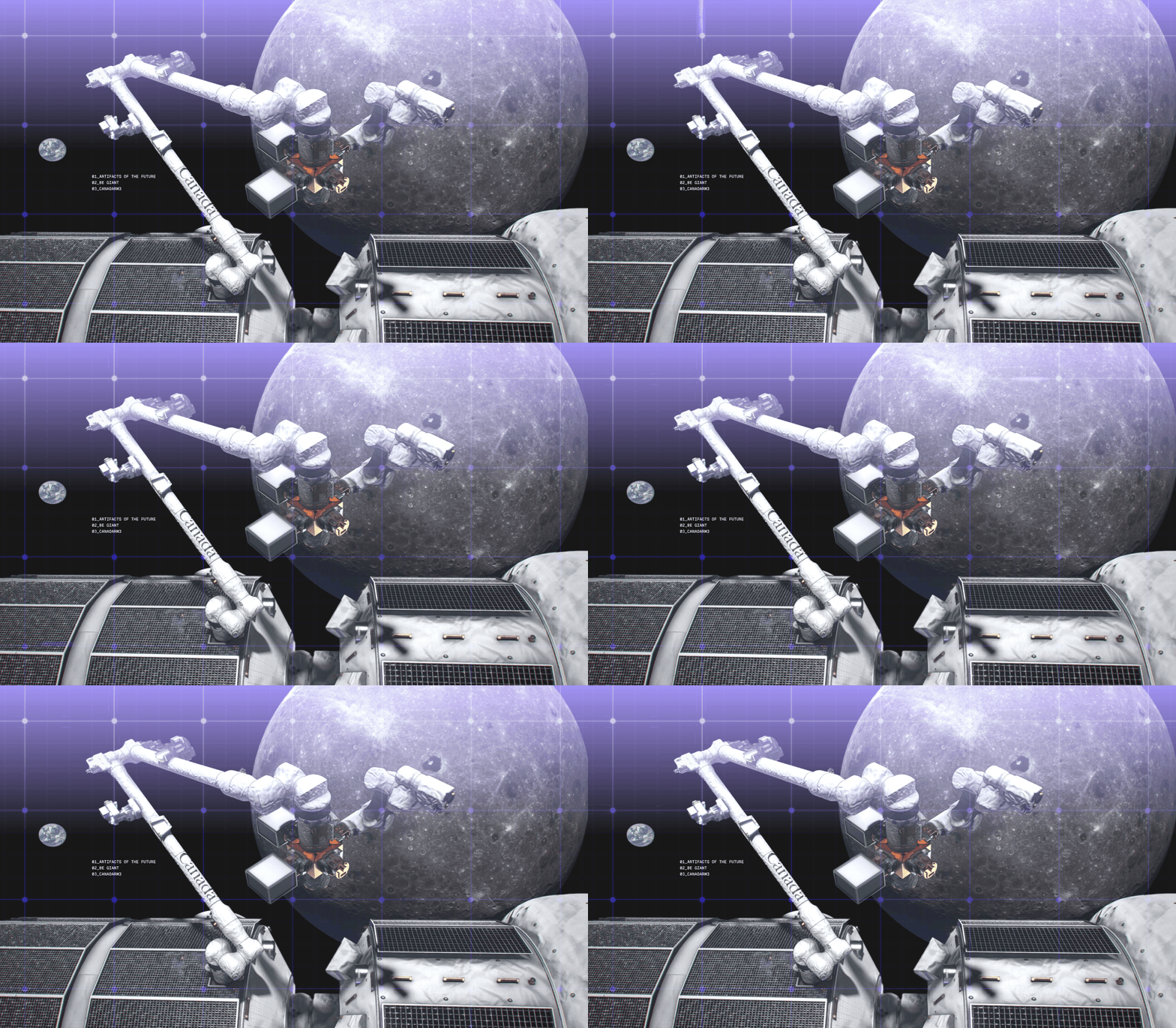
Canadarm3, the third-generation robotic space arm, following Canadarm2 (2001) and the original Canadarm (1981), is an 8.5-metre “arm” with a smaller, more dexterous “arm” at the end. The robot can be manoeuvred by ground control on Earth, astronauts in a space station and/or advanced artificial intelligence.
Like its predecessors, Canadarm3 will be a remote-controllable robot that helps with inspecting, maintaining, building and repairing spacecraft and structures. After the success of Artemis II, and in keeping with the Artemis Accords, which outline the principles and guidelines for lunar exploration, Canadarm3 would be instrumental in building a base camp on the moon where humans might live and work for long periods of time – or indefinitely.
Get our weekly newsletter – the people, places, and ideas revealing where Canada is headed.
Who’s behind it
In December 2020, the Canadian Space Agency awarded a $22.8-million Canadarm3 contract to Brampton-based MDA Space. (MDA is the acronym for MacDonald, Dettwiler & Associates, named for founders John MacDonald and Vern Dettwiler, who established the Canadian space technology company in 1969.) In 1972, MDA helped make Canada the first country with a domestic communications satellite in orbit. They deployed the Hubble Space Telescope in 1990 and discovered snow on Mars via the space probe Phoenix in 2008.
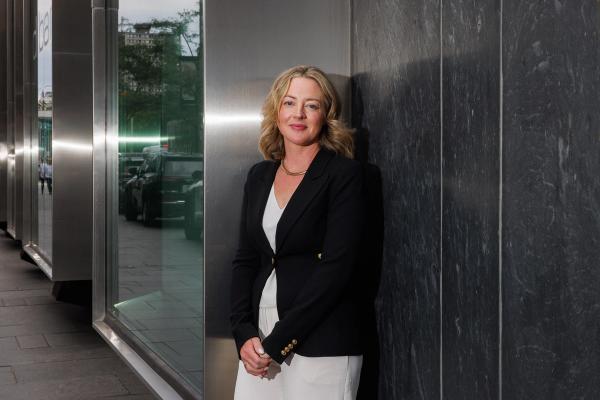
Headed by CEO Mike Greenley, MDA employs about 4,000 people across Canada, the U.S. and the U.K. Their “Team Canada” includes Holly Johnson, who worked her way up over 18 years from intern to VP of robotics and space operations and now oversees the team working on Canadarm3.
What problem is it trying to solve?
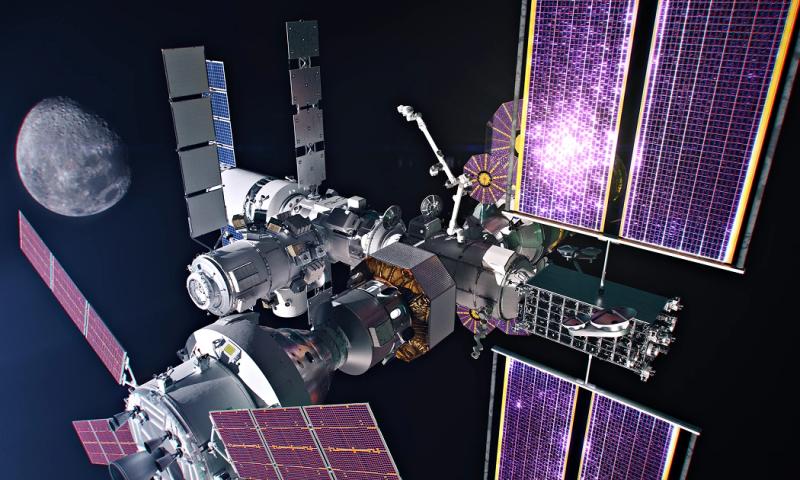
Humans can’t stay long on the moon without a shielded base habitat, a.k.a. the “moon base,” since the moon doesn’t have an atmosphere (for humans to breathe) or a magnetic field (to protect us from harmful radiation). Temperatures can fluctuate from over 100°C to more than 200°C below. Astronauts will need a base ready upon arrival – and Canadarm3 will help build it in advance.
NASA’s upcoming Artemis Moon Base – which will replace the original lunar Gateway project, a space station that would have orbited the moon – is scheduled to host four astronauts by the late 2020s, and time is ticking.
“If we relied on humans to build the base without the help of robotics, we’d need so many launches and so many humans,” says Johnson. Humans in turn would need food, water and air while they worked on the moon; robots do not. “Robots can chart and clear the land, assemble infrastructure, connect power lines, deploy structures and prepare the moon base for humans when they come.”
How it works
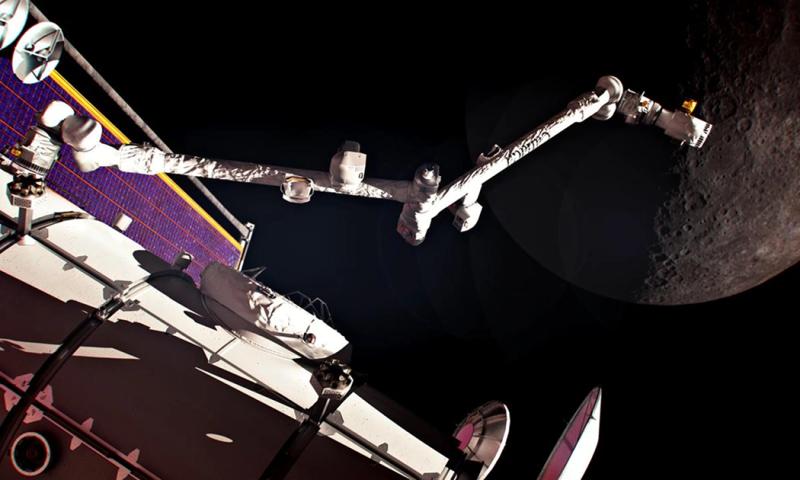
While the original Canadarm measured about 15 metres long and Canadarm2 was two metres longer, Canadarm3 will be about half that size in order to perform more detailed, intricate tasks. “We imagine it to basically perform the same functions as a human arm,” says Johnson.
Much like your arm, Canadarm has a “large arm” and a “dexterous arm” – that is, a hand. Like your arm, it can move in seven distinct ways from three shoulder joints, three wrist joints and an elbow.
But unlike your arm, this one is a carbon-fibre composite filled with electronic cables that will likely be deployed on a wheeled, mobile lander vehicle capable of navigating the moon’s rocky terrain. Because of the extreme swings in temperature on the moon, Canadarm3 will be wrapped in a thermal blanket for protection.
Like its predecessors, Canadarm3 will be operated remotely via joysticks and computers both from Earth and in space. Canadarm2 is currently on the International Space Station doing the heavy lifting and the reach-out-and-grabbing for deliveries to come aboard.
The third-generation arm is the first to incorporate AI and operates for the most part autonomously. It has “an increased level of self-awareness and decision-making because it can’t always rely on an astronaut or a ground control member to be able to make that decision in real time,” says Johnson.
How that helps
As it goes about clearing landing sites or mapping roadways on the moon, Canadarm3 won’t need to await a human some 400,000 kilometres away to tell it what to do next. “It needs to be able to understand its surroundings, which include things like boulders and hills and craters and rocks,” says Johnson. “Then it needs to be able to chart its path and use that information to make decisions and execute them locally in real time – without relying on humans back on Earth.”
The robot arm can work far faster and more efficiently than humans ever could, which is important if NASA’s Moon Base is to be ready in a few short years. Once it is operational, the base will store supplies that will make other moon landings and visits easier to manage. “Going to the moon right now is like camping – you have to bring everything you might possibly need,” says Johnson. Future infrastructure could include different facilities for different purposes, like extracting water from the surface or growing food in a greenhouse – tasks for which Canadarm3 could be a helpful assistant. “There’s no single application but a wide range of uses that a robotic arm can serve,” says Johnson.
What’s next?
The recent crewed flyby of Artemis II renewed excitement and enthusiasm for the space industry. “Launch costs are going down and it’s become much easier to get to space,” Johnson says. As the Earth’s closest celestial body, the moon is an obvious pick of spots to land in space, and more than 60 countries have signed on to NASA’s Artemis Accords to come visit.
Humans on the moon will need an energy source. Johnson says solar power will be used initially, but “eventually we’ll need to transition to something more efficient, like nuclear power.”
Robots will certainly be needed for that, and Canadarm3 will be there to unload and assemble supplies, upgrade technology and infrastructure and “basically be a multipurpose tool that both ground control and astronauts will start to rely on as more and more moon landings happen.”
MDA’s official target delivery date for Canadarm3 was 2029, though NASA’s accelerated plans for the new Moon Base have changed the timelines. “We’re working with the [Canadian] government in order to meet NASA’s aggressive timelines, and I think everyone realized we need to do this very quickly,” she says.
The moon race is on again, and Canada’s keen to be a leading contributor – again. Johnson thinks it’s very doable: “I’m optimistic that Canada will be a leading contributor and positive enabler of this moon base, and that we’ll know lots more in a very short time."