Mike Greenley joined MDA Space in 2018 and has served as CEO since 2020, guiding its evolution from a company best known for the Canadarm to one increasingly focused on satellite systems, defence programs and autonomous space technologies. That shift is unfolding as Canada launches a more robust agenda around space sovereignty and Arctic security, and as the country considers its role in U.S.-led defence initiatives.
Greenley is appearing at the US-Canada Summit, hosted by The Royal Bank of Canada and Eurasia Group in Toronto this week and Be Giant, a media partner for the event, spoke to him on the eve of the Summit to discuss how MDA Space is navigating a more complex and contested space environment.
Get our weekly newsletter—the people, places, and ideas revealing where Canada is headed.
We’re hearing a lot more about ‘space sovereignty’ in Canada lately. What does that actually mean in practical terms for MDA Space? What is space sovereignty to you?
It’s the ability for a nation to be able to take care of itself from a space perspective, which means the ability to design, build, launch and operate assets in space. Typically, countries are interested in earth observation satellites to be able to observe their territory and the approaches to their territory, and in communications [satellites] to be able to have broadband data communications and direct-to-cell phone communications – so all citizens and businesses have the ability to communicate, get an education, own and operate businesses. Increasingly, basic sovereignty is the ability to design and build the satellites and then launch and operate them.
An additional kind of enhancement that’s coming is for space control. That’s for the defence department of a country to have spacecraft that can protect and defend satellites from threats in space. That’s a second level of sovereignty to also protect those assets when they’re operating in space as critical infrastructure for the nation.
That's something new for Canada…
All this is incredibly new, and for Canada, especially launch [capacity]. We have the benefits of geography, because we have such large coastal approaches that we can launch from a spaceport in Canada. We’re leaning into that now. We’ve got a 50-, 60-year history in this country of designing and building satellites and operating them. Now we’re going to move towards the ability to launch them.
MDA Space has invested in Maritime Launch Services and the development of Spaceport Nova Scotia, which launched a test rocket this week with their Dutch partners. How does building domestic launch capability change Canada’s position in space?
From a sovereignty perspective, it’s extremely powerful and important. Nobody can mess with Canada in terms of any decision to design, build, launch and operate spacecraft, because we can do it completely on our own, under our own steam. In addition, a launch capability like this gives Canada an incredible soft-power bartering tool, whereby I can buy certain assets from your country, but you can come to my country for space launch. That’s a great, unique Canadian capability that we’ll be able to horse trade within the international trade market.
A lot of the conversation about Canadian defence has been focused on protecting the Arctic. How does space technology, and specifically satellite communications and surveillance, fit into Canada's ability to assert that sovereignty in the north?
In order to be able to have sovereignty over an area like the Arctic, you first have to have awareness of what’s going on at all times. With a piece of territory that broad in scope, space is a key tool. With that monitoring capability, we can then interject if there are threats in the Arctic. We detect from space, and then vector land, sea, or air assets to intercept anything in the Arctic. It is an important, powerful capability.
To do this, you need to know exactly where to go to be efficient, and you need communication networks in the Arctic to be able to do that. That only logically comes from space, and for MDA Space, we have for 40, 50 years been world leaders in earth observation, in space-based communications, and now delivering satellite constellations. Being able to provide those for the Arctic will be important.
And with the new space control product we’ve announced, MDA Midnight, we’ll be able to launch and operate spacecraft that can protect and defend those earth observation satellites and those communication satellites to make sure those capabilities are maintained.
What exactly is MDA Midnight?
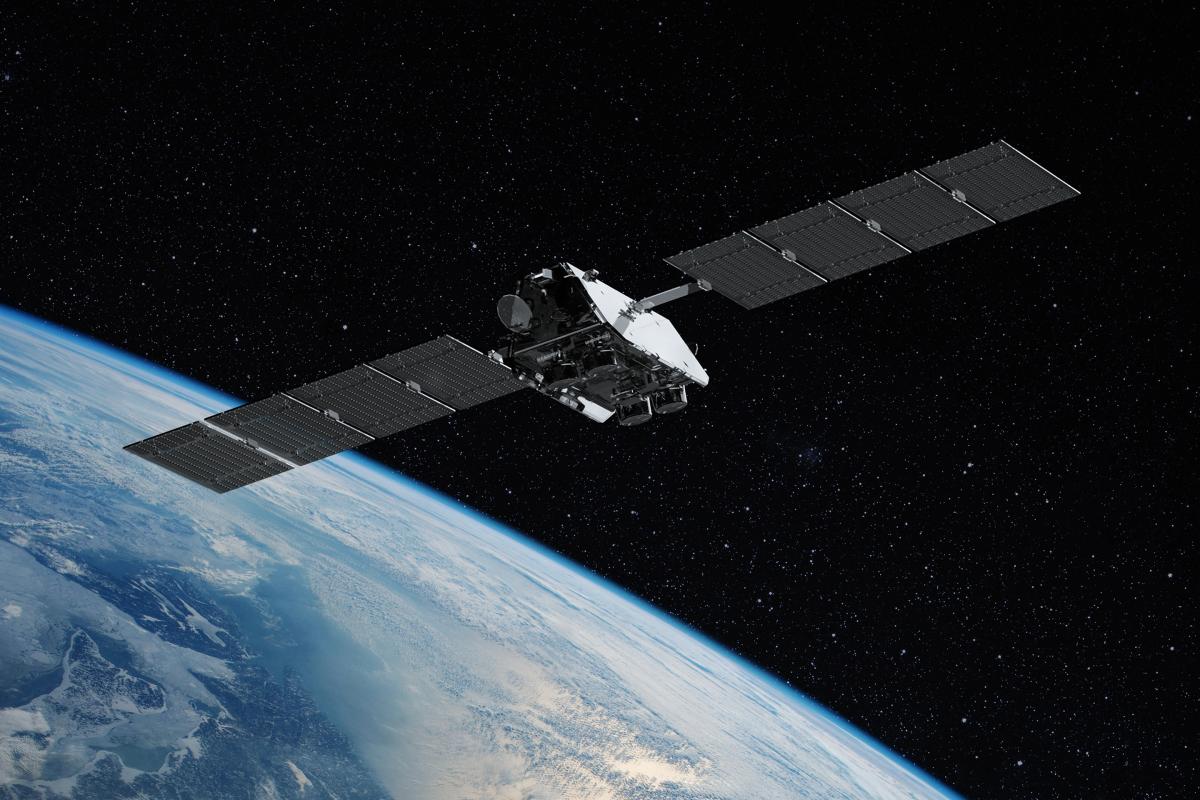
MDA Midnight is a spacecraft that has sensors that can detect, approach and interact with other spacecraft. It also includes electronic warfare capability that allows you to deter another spacecraft from its ability to approach you or operate in your area. You can use active and passive means to be able to detect and deter a threat spacecraft from coming near your spacecraft.

So you’re building off the robotics expertise of the Canadarm into Midnight and into that idea of uncrewed defence systems. That sounds like we’re opening the door for MDA, and by extension Canada, to play a bigger role in things like interceptor or AI-driven defence systems. Can you talk about this new world we’re entering?
We talk a lot about this in the space community, and increasingly I find them one of the most interesting things in sessions like the Canada-US Summit [because] you get the broader business communities together, our banks, our financial institutions and our business associations that are increasingly recognizing the role of space in the economy.
The extent to which space is interwoven into the daily lives of Canadians is extraordinary, and if we were to lose access to space, if it was disrupted, the impact on the Canadian economy could be up to $1 billion a day. As a result, we need to develop systems like MDA Midnight. Canada will increasingly have the opportunity to play a role in protecting the North American continent from space-based threats, especially those coming over the over the top of the earth.
For Canada to collaborate with the United States on SHIELD programs [Scalable Homeland Innovative Enterprise Layered Defense] like the Golden Dome will be, I think, an increasing conversation, and it’s going to be important for Canadians to recognize that this is a critical part of our lives. It’s a bit trickier, a bit more abstract for people, because if tanks were rolling into Canada, people would see there was a threat. If ships were invading our shores, people would see that. If there was a threat in space, people don’t get to see it every day. It’s not on YouTube, or CBC News, but there’s an increasingly busy, contested environment in space, and the safety and security and prosperity of Canadians requires us to have strong space-based awareness of our country, communications across our country and protection systems for our country.

As a Canadian company, how do you navigate the interplay between national sovereignty and how a lot of Canadians are feeling right now, with potential Canadian participation and growth opportunities driven by U.S. defence spending?
Going forward, it’s going to be important for Canada to have its own sovereign space-based detection systems, its own sovereign space-based tracking systems, and that it is then using those capabilities to contribute to an allied relationship with the United States for North American defence.
I think Canada can have very solid investments in space-based capability, to design, develop, and operate those systems from Canada, and contribute that capability to the collective defence of North America with the United States. Canada can also use those same systems to be able to partner with other countries for collective defence capabilities and systems because satellites travel around the earth every day, so they can be used for multiple purposes to collaborate with others. It’s just another strong investment for Canada. We increase our defence spending in space-based defence, and do that with Canadian firms, according to the new defence industrial strategy.
MDA Space has been doing business with NASA and Americans for decades. Have you seen that relationship shift in any way, given the current climate?
We still have very strong relationships globally with U.S. commercial firms, with NASA and the U.S. government, and then with firms in countries all over the world. In the Canada-U.S. relationship, in things like space and defence, these are very strong historical foundational relationships where we have world-leading capabilities.
We’re finding that strong technical capability and decades of proven experience can sustain and expand business, even though there are all kinds of critical turns above us, the business continues apace.
Finally, what is the big message you want to leave with the Canada-U.S. Summit audience?
In the case of space or space and defence, there is strong industrial capability in Canada. Canada can lean on that to build sovereign capability for Canada and then leverage that for collaborative defence and space activities with the United States. That is a very important dynamic that needs to be in play here.
This interview has been edited for length and clarity.