![“I get an inbound [email] every day asking can you get me into this meeting or that, and I’m just a small fry,” Frank McKenna says of the summit.](https://cdn.sanity.io/images/l3tzmu37/production/7faa2d5cc965d0933bd7c5a13e6fc6096ebca145-2880x1918.jpg?auto=format&fit=max&q=75&w=1200)
Some of the world’s biggest investment managers – who oversee more than $100 trillion in assets – are gathering in Toronto next week for the inaugural Canada Investment Summit. They’ll pore over a dealbook of Canadian projects and meet CEOs, premiers and other proponents looking for capital. It’s all part of Prime Minister Mark Carney’s plan to unlock a trillion dollars of new investment in the Canadian economy.
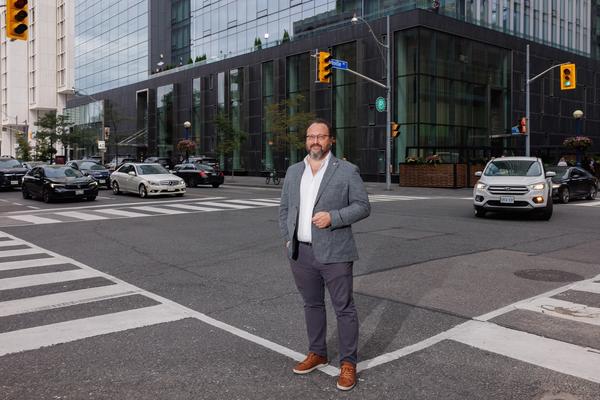
Frank McKenna will be there too. As deputy chair of TD Securities and chair of Brookfield Corporation, not to mention a former premier of New Brunswick and ambassador to the U.S., he knows something about negotiating big deals. A self-described “interested observer” of the main summit, he helped arrange two of its side events – the Milken Institute’s first-ever Global Dialogues event in Canada and the Canadian Venture Capital and Private Equity Association’s Global Growth Forum.
Be Giant talked with McKenna to get an inside look at how the world’s biggest investors are sizing up Canada – and what might be on the table at the conference.
There’s certainly been a lot of interest in this summit. What are you expecting to see next week?
It’s really the most interesting event that I’ve been part of in decades in Canada. I’ve never seen anything like this. I was just talking to a [cabinet] minister who’s got a bunch of bilateral [meetings] and things going on that I didn’t even know about. This is like a Super Bowl with hundreds of tailgate parties. At Brookfield we’ve got a dinner Tuesday night that’s got more money in the room than I knew was on the planet. I just got asked to host a dinner with the richest guy in Africa, who’s coming here.
Get our weekly newsletter – the people, places, and ideas revealing where Canada is headed.
Who is that?
[Nigerian businessman] Aliko Dangote. I was just talking to [industry minister] Mélanie Joly. She’s hosting one of [Sweden’s] Wallenberg family for breakfast, introducing them to some people. All the premiers are there. I’m doing an event Sunday night, interviewing Danielle Smith and Scott Moe and Doug Ford. All of this to say, it’s crazy.
The other thing I can’t help but mention because I never thought this possible is the FOMO going on around this. I know there’s some huge funds that have asked to be brought in, but unless you’ve got a specific set of criteria that you meet, you can’t get there. Or similarly, projects are wanting to get into the dealbook, and they’re desperately trying to, but unless it’s ready [for investment], it’s not there. I get an inbound [email] every day asking, “Can you get me into this meeting or that,” and I’m just a small fry. I know one CEO says he’s got five large sovereign funds around the world that contacted him about trying to get in.
How would you characterize the idea behind it?
I was actually reflecting on this. This is a static Team Canada. We did Team Canada for half a dozen years. We would fill the plane with 300 CEOs, all the premiers, prime minister. We flew to India. We flew to Malaysia. We did that year after year, and it was an amazing way to bring people together and get them to know Canada. This is the same thing. Only it’s static; it gets everyone in one spot. People are coming to us.
Why now?
There’s a constellation of things taking place. [There’s] the fact that Canada is really opening itself up for business investment at a scale that nobody else on the planet is right now. And we have a prime minister who knows all of these people around the world and has this credibility.
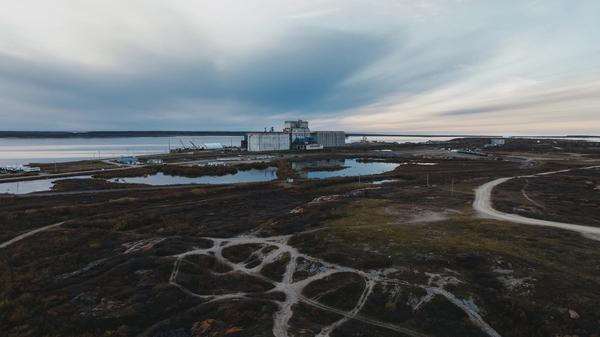
Remember, we’ve got the second largest country in the world, and it’s highly blessed with resources. Just to give you some sense of the magnitude, there are 160 projects [in the summit’s dealbook] that are ripe [for investment] and there are hundreds more that are in the queue. That includes data centres – hundreds of billions there. LNG – there’s at least four or five proposals on the West Coast. There’s as many as a dozen mines, and under the renewables file, you’ve got probably $50, $60 billion [of potential investment] in wind energy. You’ve got Churchill Falls at $35 or $40 billion. A massive oil pipeline. Oilsands expansion. The Port of Churchill.
You’ve got advanced manufacturing, big battery plants, ports, fibre optic lines, quantum computing, carbon capture. It’s just a massive diversity of projects from coast to coast in various stages of evolution.
It’s been noted that international asset managers, sovereign wealth funds and so on are generally underinvested in Canada. Why has that been?
Well, not just FDI [foreign direct investment]. Canadian pension funds have been underinvested. We have the most credible pension funds in the world, the Maple 8, with $2.5 to $3 trillion in assets, and then you add Brookfield, which is about $1.5 trillion invested all over the world but underweighted in Canada.
[Canada] has been slow-moving in terms of opening up new projects, and we’ve been hostile to privatizations, and so people with money haven’t seen us as an attractive place to do business. We haven’t been agile and particularly welcoming. That’s changed. We’ve got an extraordinarily high number of really attractive investible assets and things are speeding up dramatically. Part of it is people see us as uncoupling somewhat from the United States and, to my surprise, that was an attractive feature for some foreign investors.
How so?
There’s huge respect for the United States of America as an economy, but people don’t want to put all their eggs in that basket. They like the idea of having some diversity. On something like oil, the world is pretty smart. They see the United States as having more rapid depletion rates, and Canada has an endless supply of oil. As long as oil is a fuel, we’ll have it. And people realize we’ve got unexploited LNG that’s closer to markets in Asia, and everybody now is looking for diversity. They don’t want to be tied to a big single supplier. Europe paid the price for that, being tied to Russia, and now you’ve got Asian countries really yearning to get access to Canadian energy. Europe would absolutely love to have more of Canada’s energy.
Some reports about the dealbook have noted there is a lot of oil and gas, and mining – a lot of what might be thought of as old-economy projects. Is that fair?
No, it’s not. On balance, there’s an oil pipeline, but there’s probably $60 billion in wind power. Churchill Falls is a massive renewable project. Electrification is usually considered to be an environmentally friendly thing to be doing. Quantum computing, that’s futuristic. The mining is usually around critical minerals, which are needed. [There’s] data centres. I would say that even though there are some traditional industries, a vast amount of this is around renewables and new-economy stuff.
There have been indications that this could become an annual event. How do you see it evolving?
I think everything will be more mature. I think the deals will be further along, and people may be asked to fund the next phase of something, rather than go in at the front end. There’s going to be a lot of defence stuff coming in here, and a lot of them are around new technologies, around cyber capabilities and drones. I’d love to see something around fire suppression planes. We make the best in the world, we make them in Alberta and they’re backordered for years. We desperately need to double and triple the capabilities. So there’s all kinds of things like that that could be interesting.
Are Canadian businesses ready for this scale of investment? Have we got enough deals ready?
This has been very carefully curated; you’re not allowed into the bazaar unless you have got a fully baked deal. I talked to project proponents who’ve just been working their ass off for the last weeks and months, putting together the partnership, the financing model, et cetera, around their proposal. These will not be flights of fancy.
That doesn’t mean that they’ll be shovel-ready tomorrow, but the government of Canada is also fast-tracking approval processes, and they’ve got the Major Projects Office, which is really speeding things up. The permitting and consultation process is speeding up. I talked to Dawn Farrell (Major Projects Office CEO) recently, and she’s got to do a hundred First Nations consultations in a month around the West Coast pipeline. Everything is sped up across the country, except at the provincial level, where I still think they need their asses kicked, but at the federal level, it’s really in speed-up mode. We need economic activity. If we’re going to replace some of the GDP lost to trade south of the border and do it quickly, it’s got to be through large investment projects.
This transcript has been edited for length and clarity.