In Terry Sheehan’s memory, he hadn’t even been sworn in yet.
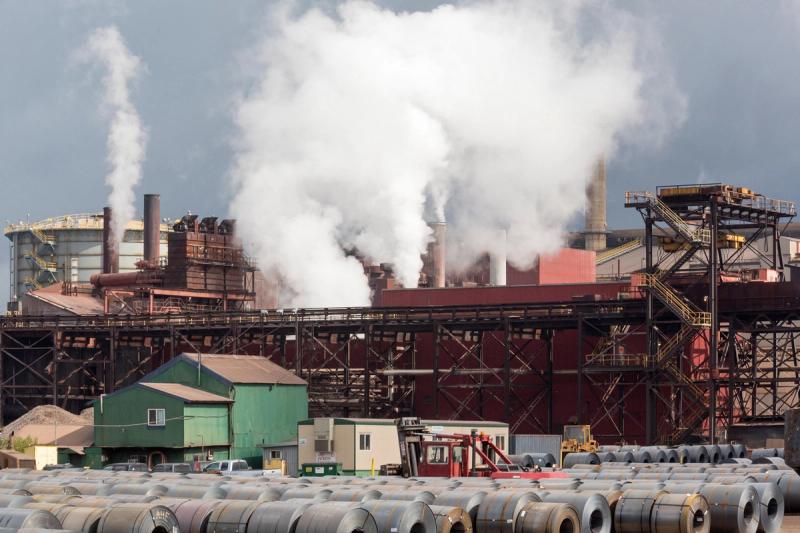
The newly elected member of Parliament for Sault Ste. Marie–Algoma was riding the wave of red-coated Liberal optimism that spread throughout the land in the autumn of 2015. Maybe 10 days had passed – not much of a honeymoon phase – when he was called into a meeting. The steelmaker Algoma – then known as Essar Steel Algoma – was filing for bankruptcy protection. Again.
Sheehan recounts that newbie MP moment as he revisits another round of meetings held last winter. A decade had passed. Algoma had carried on, shedding its foreign ownership in the intervening years and becoming the country’s sole independent steelmaker. But again, corporate misery. “They were bleeding about $300 million,” Sheehan says, referring to the final fiscal quarter of 2025. “About a billion a year. That’s billion, with a ‘B,’ ” he makes clear.
Layoff notices had been issued; 1,000 jobs would be chopped, roughly 40 per cent of the company’s workforce. Sheehan met in Ottawa with Prime Minister Mark Carney and members of caucus. Federal Industry Minister Mélanie Joly packed her parka and headed for the Soo.
Absent a helping hand and a new vision, the steelmaker was facing the end of days. “They were going to close,” says Sheehan. “They told us that.” Ontario Premier Doug Ford phrased it more colourfully: “The Titanic was sinking.”
But a plan for reinvention was in the works. The federal government had committed $400 million through its Large Enterprise Tariff Loan fund. The Ontario government pledged a $100-million top-up. And Joly was optimistic that half of the scheduled layoffs could be brought back once a new Algoma, with a Canada-first focus, had found its footing.
The new gambit:
• Capitalize on the federal government’s Buy Canadian/Build Defence industrial sovereignty agenda. Algoma’s existing expertise in producing steel plate meant contract opportunities, from ice breakers to armoured vehicles. So build on that.
• Emphasize the greener technology brought about by burying, at long last, Algoma’s carbon-spewing blast furnace in favour of greener electric arc furnaces.
• Start producing steel beams, which would make Algoma the only Canadian steelmaker to do so. Wide-flange beams, which laymen often refer to as I-beams, are synonymous with structural steel construction, with sky-breaching skyscrapers, with modernity, with corporate triumphalism. Recall the image of 11 flat-capped ironworkers seated shoulder to shoulder on a beam 260 metres in the air above Depression-era Manhattan. Then consider what many in government started quickly asking: don’t we already make those things? Beams, that is?
No, we do not.
Not for a long while.
“But we make all that steel!” might be the exclamatory response given Algoma’s own steelmaking history, dating back to 1901, not to mention other giant domestic players. Yet, as the country’s sole steelmaker in beam manufacture, Algoma ceased production of that product line in 1999, ceding the market to imports, with the U.S. being the number 1 provider by a wide margin. The seemingly supportable thesis: a free-trade environment premised on a fully integrated cross-border supply chain. Focus on your strengths. Export steel; import beams. Win-win. No wonder the end of made-in-Canada structural steel beams drew little notice.
The current chaotic and catastrophic tariff environment forces a different perspective. Escalating tariffs on steel and aluminum introduced by U.S. President Trump – a 25 per cent tariff on the imports of Canadian steel in the spring of 2025, later raised to 50 per cent – upended what has traditionally been the largest market for Canadian steel. Trump’s mechanism: Section 232 of the ’60s-era Trade Expansion Act, a security provision designed to “deny the benefits of trade agreement concessions to the U.S.S.R.” and to restrict imports that “threaten to impair the national security.” Safe to say that, at the time, President Kennedy – alarmed by Communist economic penetration and eager to strengthen market ties with Europe – didn’t have northern Ontario top of mind.
In a conference call with analysts in late July, Algoma CEO Rajat Marwah said the Section 232 tariff “fundamentally altered and disrupted the company’s historical cross-border business model, effectively foreclosing its traditional access to the U.S. market.”
The remedy: grow at home. Marwah’s repeated pitch: industrial sovereignty requires domestic steelmaking capability. “We are Canada’s only independent steelmaker, and that reality has made Sault Ste. Marie a focal point of the trade disruption that has reshaped the industry over the past year.”
A shipment last winter of Algoma steel armour plate to Davie Shipbuilding in Quebec for construction of its Polar Max icebreaker is one example of nation building. The company hopes that beams will be another.
Questions must be asked. What’s the economic case? “We’ve looked at the market and we’ve studied the market. That market is there, and the investment that’s going to happen in Canada over the next many years will only increase that demand,” Marwah insisted in investor presentations. Yet, while Algoma is working hard in continuous conversations with the government – Marwah and Terry Sheehan have both made this clear – the company would not comment for this story. What market analysis has it presented to Ottawa? We can’t say.
Here’s a number: 552,153 tonnes of wide-flange beams were imported to Canada in 2024 at a value of $690.2 million. Of that, American steel claimed the largest share, at roughly 222,000 tonnes, valued at $320.7 million. As of March 2025, steel beams of U.S. origin have been subject to Canadian counter-tariffs of 25 per cent. “U.S. beam exports to Canada have fallen substantially in recent years,” says Chris Jackson, the lead steel-market analyst at the U.K.-based industrial consultancy MEPS International, adding that current exports are primarily due to the fulfillment of long-term contracts. The data for 2025 proves the point, with U.S. shipments to Canada falling by almost half, to about 120,000 tonnes.
Whether ongoing talks in Washington this week will lead to any change, or any lasting solution to the cross-border trade chaos, is an open question. In any case, if industrial sovereignty is the tariff-stressed federal government’s long-term mission, then the absence of structural beam manufacture would seem to leave a gaping hole in the plan.
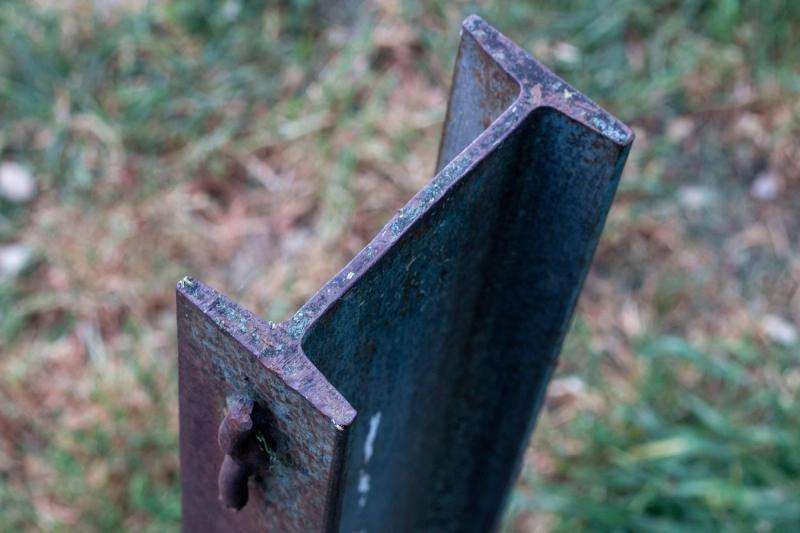
That wasn’t always the case.
“They got rid of so many products that are in high demand now,” Sheehan says of the once mighty steel company synonymous with Sault Ste. Marie. Algoma-stamped steel rails are long gone. Ditto structural steel tubing. Ditto beams.
In the spring of 1960, the corporate mood was starkly different, even exultant. Algoma had recorded a banner year – $17.6 million in profit on revenues of $162.7 million – and was taking a big, bold step to grab market share dominated by U.S. steel.
Following months of study, the company had committed to building a so-called universal beam mill, which would, executives told shareholders that spring, produce wide-flange beams up to a maximum depth of 24 inches. That detail might not have meant much to most residents of the Sault – or Canadians at large, for that matter – but the commitment meant the company was going all in on a plan to build Canadian capacity in structural steel. “The product is not made in Canada, and imports of wide flange beams have averaged over 200,000 tonnes annually during the last four years,” the company explained in its 1959 annual report.
Building this core competency late was better than never. “This is one more step in the corporation’s efforts to secure wider markets and develop a greater range of products for market swings,” Algoma stated. The Canadian government, predictably, was an industry champion. “Steel is one of the best barometers of a nation’s industrial growth,” noted Statistics Canada in its mines and minerals overview in 1961. Yet Canadian steelmakers supplied only about 70 per cent of the steel mill products consumed domestically.
The market – then, as now – was there.
Get our weekly newsletter – the people, places, and ideas revealing where Canada is headed.
Beams weren’t initially made of steel. Sara Wermiel, who holds a doctorate in the history of technology from the Massachusetts Institute of Technology, explains that early production was in cast iron, followed by wrought iron, followed by steel. “Everybody assumed that the metals were strong and that that was the goal,” she says. “But it wasn’t. It was fire protection.”
Wermiel’s book The Fireproof Building tells that tale comprehensively, from fireproofing the floors of apartment buildings in Europe to a broad adoption in government buildings in the U.S. “The U.S. government had a lot to do with getting this rolling off the ground. It was decided that all government buildings after 1853 were going to be fireproof using the system of rolled beams,” she says.
By “rolled,” she means the process through which hot iron is squeezed between two horizontal rollers. The compressed iron in the middle forms the beam’s flat section, or web, with the excess material being forced into the cavities on either side of the web to form two continuous flanges. “This rolling technology gave rise to the I-beam,” says Wermiel. In cross-section, the I-beam takes the perfectly symmetrical shape of a capital “I.” “It’s a rational shape, it’s a practical shape and it works for the material.”
And it became the common nomenclature for steel beams, which is quite wrong.
Writing this spring in Informed Infrastructure, Chris Urtz, a senior technical sales engineer with ArcelorMittal North America, describes the limitations of I-beams. “A structural steel beam or column needs strong, reliable flanges to resist flexural forces,” he writes. In other words, the rolled I-beam, with its narrow flanges, doesn’t have the strength profile for highrise and industrial structures.
The introduction of the universal rolling mill in 1902 solved the problem, combining vertical and horizontal rollers and thus the ability to alter the thickness of both the web and the flanges. These wide-flange beams in cross-section take an “H” profile. But an upended “H” looks a lot like an “I.” “Since wide-flange beams are I-shaped, people who are not in the industry will often call them an ‘I-beam,’ ” Urtz explains by email to the uneducated journalist.
Then, as now, fabricated beams, where steel plates are riveted or welded to the flanges, continue to play a custom-ordered role in industrial construction. The rolled beam is meant to claim an advantage in speed of production and efficiency of cost.
Decades passed. Algoma didn’t unveil its universal wide-flange beam mill until the spring of 1961. “Up to that point, we had to import them either from British Steel or from the American mills, U.S. Steel or Bethlehem Steel,” says Mike Gilmor, an engineer and past president of the Canadian Institute of Steel Construction. It felt like a new dawn in Canadian industry. Algoma was positioned to “chew into the country’s annual imports … of large structurals,” the Toronto Star reported.
There wasn’t a singular economic turning point in the years that followed but, rather, the never-ending roiling swells of the Canadian steel industry. Dofasco buys Algoma. Dofasco sells Algoma. Boom times. Recessions. Swings in steel demand. Cheap imports (dumping). Bedlam in the auto sector. Arcelor buys Dofasco. U.S. Steel buys Stelco. U.S. Steel sells Stelco.
Algoma announced it was getting out of the structural steel business in February 1999, axing 800 jobs and streamlining its operations exclusively to sheet and plate steel products.
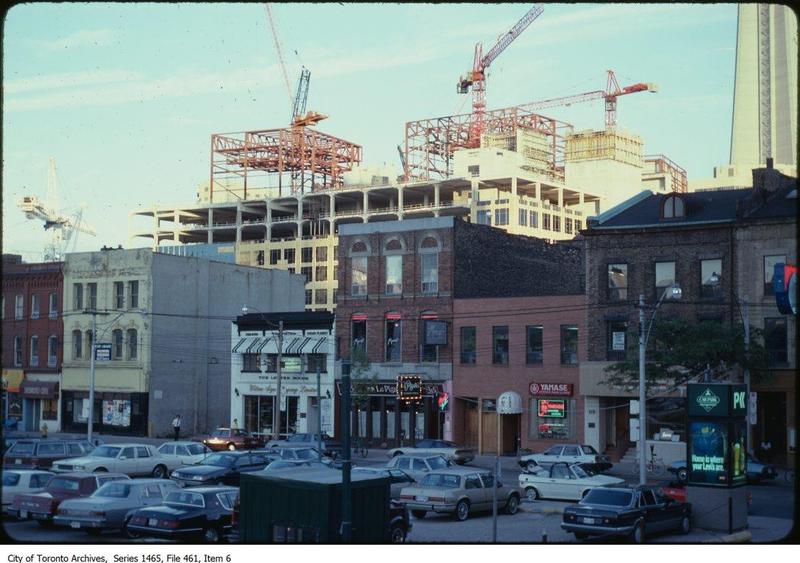
What’s the cost of bringing that back? Algoma won’t say. “The demand profile is in place in Canada to support a beam mill and to reduce imports from international jurisdictions,” says Ian Gillies, the managing director of equity research at Stifel Canada. “However, the economic viability of the project remains in flux without a total project cost being known and financing not being in place.”
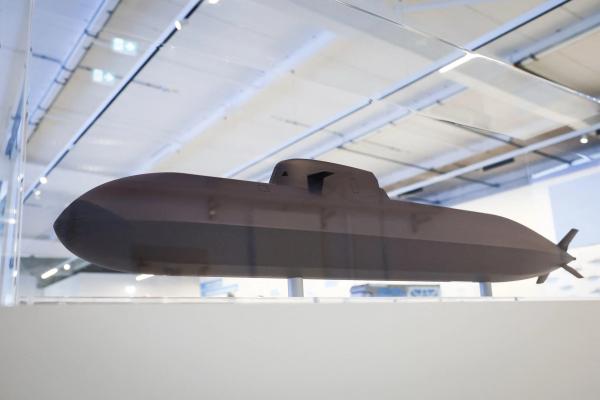
There was some financial clarity, briefly and somewhat oddly, when the proposed mill was named as a sweetener in Hanwha Ocean’s pitch for the federal government’s multibillion-dollar defence contract to build as many as 12 submarines. The South Korean company signed a memorandum of understanding pledging US$200 million toward the potential development of a new beam mill at Algoma, contingent on Hanwha being awarded the submarine contract. Germany’s ThyssenKrupp Marine Systems won the bid. Marwah insists Algoma is undeterred: “The strategy to pivot into beams is not changing.”
The world of steel has. Changed, that is. When Algoma first announced its beam mill intent, back in the ’50s, South Korea didn’t even have a steel industry. “It was the first industry that Korea developed back in the 1960s and ’70s,” says Tom Klassen, a professor of public policy at Toronto’s York University with a research focus on South Korea. “At that point, it was thought to be a big mistake that here was this small, still-poor country trying to create a steel industry.”
The World Steel Association ranks South Korea as the globe’s sixth-largest steel producer. Canada, with its storied century-plus history in steelmaking, placed 17th. In the midst of tariff disruption, South Korea has supplanted the U.S. as Canada’s top beam provider.
Chris Jackson of MEPS points out that a new made-in-Canada mill would offer the advantage of continuity of supply, “especially through winter months, whereby the purchasing of steel from overseas is acknowledged to be logistically difficult.” Plus, Algoma “will be ideally positioned to satisfy any federal government plans to ramp up infrastructure and defence spending,” he says.
Federal MP Sheehan says he met with Algoma recently and heard the company’s continuing determination to make a beam mill a reality. “We’re committed regardless,” he says of the federal government’s position. “We’re going to fight tooth and nail to bring back steel jobs to the Sault.” When can we expect an update? “Hopefully soon.”