If all goes to plan, the private jets carrying the world’s richest asset managers into Toronto on Sunday night will be returning next year for another such event.
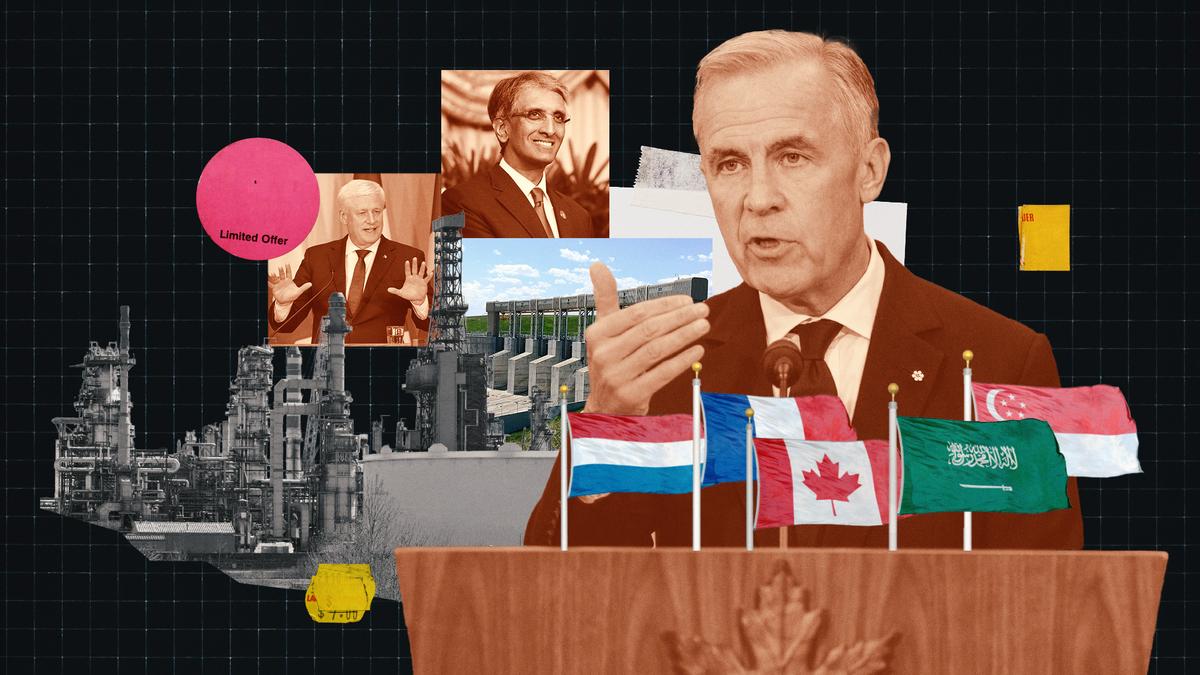
The Canada Investment Summit – a two-day pitch fest at the luxurious Four Seasons Hotel – is a crucial step in Prime Minister Mark Carney’s plan to unlock a trillion dollars of new investment in the Canadian economy.
It’s a “mechanism for us to build those relationships to create greater exposure for Canada, and there will be another investment summit similar to it next year,” says a senior official. Carney announced the summit in April, but has been working toward this moment since he became prime minister. As former governor of the Bank of Canada and the Bank of England, and former chair of Brookfield Asset Management, he’s been a frequent guest at conferences where the world’s biggest money managers gather.
This time, he will be the host.
Next week’s event is modelled on Choose France and Saudi Arabia’s Future Investment Initiative, events where global asset managers meet to put their money to work. It aims to “emulate some of the highest standards of these types of events,” says the official. “Everything from the cutlery to how guests are being greeted when they land in Canada. We’re really trying to step up our game in general.”
It’s become a hot ticket and some big names had to be turned away, the official adds, because they weren’t big enough to make the cut.
Be Giant spoke to more than a dozen sources to put together a definitive account of how the event came together; we’ve granted anonymity to several who were not authorized to speak publicly about it.
Get our weekly newsletter – the people, places, and ideas revealing where Canada is headed.
The event is built on the belief that sovereign wealth funds and other large institutional investors were underinvested in Canada, that they could be made to see opportunity, and that waves of money will pour in to build roads, mines, pipelines, defence factories, AI initiatives and infrastructure projects across the country.
Finding foreign direct investment “is wired into everything we're doing,” says the senior official. “We're diversifying our security relationships, our trading relationships and our investment relationships, and we're doing that so we can build at home. So it's hardwired.” Media outlets have managed to learn the names of many of the attendees, but few outside the prime minister’s circle know what deals are in the works. They’ve spent months working up a dealbook of prospective investments that will be at the centre of the effort.
“It's really tightly held, right?” says Mary Ng, who was trade minister until last year. “He wants to attract a trillion dollars worth of capital, whatever that time frame is. He's very very focused on that, and … everything that I've heard from everybody is that unless you are in that wheelhouse, in other words, unless you're the investor … he is not opening up.”
(Ng will participate in a related gathering of investors on Monday organized by the Milken Institute. The Canadian Venture Capital and Private Equity Association will also hold an event on Monday.)
If the money flows at the scale the PMO hopes, economists say it would significantly boost Canadian productivity and prosperity. A TD report late last month suggested it could set up an “investment supercycle” that could raise the average income by $12,000 a year after a decade.
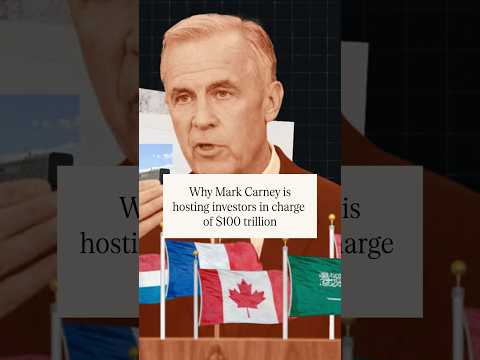
It is never difficult to get insiders to rave about the brilliant plans of the leaders who employ them, and it is wise to be skeptical about political promises, but there is no doubt that the team Carney has assembled has serious experience around boardroom tables: Natural Resources Minister Tim Hodgson (Goldman Sachs); U.S. ambassador Mark Wiseman (BlackRock), Finance Minister François-Philippe Champagne (Amec Foster Wheeler), chief of staff Marc-André Blanchard (Caisse de dépôt) and Clerk of the Privy Council Michael Sabia (Hydro-Québec).
“We haven't had five people as accomplished with respect to capital markets and investment criteria that drive success,” says Rick Anderson, a veteran consultant who is working with companies involved in the summit. Anderson, a former strategist for parties across the political spectrum, is impressed.
“Maybe in the days of C.D. Howe in World War II there was something similar, but I don't think we've had such an investment-savvy, economic-savvy group of Canadian leaders in the Canadian government in my lifetime.”
Two more team members were added in late August, both of them to the organization leading the quest for foreign capital. After The Globe and Mail broke the story of the departure of the head of Invest in Canada, which is handling logistics for the summit, her replacement was named – Gurinder Grewal, a Canadian with 25 years of experience at the top of private equity investment, including Bain Capital and Advent International.
The headlines focused on the new chair of the organization’s board – Rio Tinto chairman Dominic Barton – but he will be engaged “a few days a month at best,” the senior official says. Grewal has “the more important job.”
“We spent a year going around the world trying to recruit the right person for that job,” the official says. “The world's sovereign wealth funds are filled with Canadians … and it's because we have such a good reputation for our financial managers here that they always end up in places like Singapore and Abu Dhabi and Doha. So we were specifically going out to recruit somebody from that talent pool, and it took us a year to find the right person.”
The PMO now intends to “retool” Invest in Canada from being largely focused on marketing to “focusing on the sovereign wealth funds, focusing on the big investors, trying to work directly with them to connect them with the right Canadian deals and bring them to Canada.”
The PMO believes this will work because the large institutional investors – sovereign wealth funds and pension funds – want to invest in Canada.
“These large investors frequently lump Canada into their North American portfolio, so to speak, and when you break down where that portfolio is investing, it's overwhelmingly in the United States,” says the official. “The prime minister anticipated that many of these investors were simply underinvested in Canada and didn't really realize it, and that there is going to probably be a global shift toward greater diversification of portfolios. And that, as Canada is trying to diversify trade investment relationships around the world, investors are realizing that maybe they put too many chips on the same roulette number.”
To make the pitch, Carney has used Wiseman, even before he became U.S. ambassador, principal secretary Scott Gilmore, Champagne, Hodgson and ambassadors and other diplomats – a sales team pitching to the largest investors in the world.
The most important salesman has been Carney himself, a Davos darling who has long had effortless access to the world’s top money managers.
Carney has made 23 trips to 29 countries since taking office, travelling much more than his predecessors did.
Benjamin Bergen, CEO of Canadian Venture Capital & Private Equity Association, was with Carney when he led a trade delegation to Saudi Arabia, where “O Canada” was played for the first time since Jean Chrétien visited in 2000.
“He created this beautiful speech about the opportunity, and then he left and there was a conversation between the people in that room that I wanted to speak with, who were investors,” Bergen says. “I had a great conversation with Aramco Ventures about opportunities.”
Bergen thinks all this will pay off for Canada.
“We're in an attention economy, and he got the world's attention, and now it's up to us as Canadians, as private capital associations, to figure out how we draw that attention and we turn it into deals, we turn it into jobs, we turn it into prosperity and we turn it into economic strength.”
It appears to be working.
CTV has reported that more than 100 investor groups will attend from Asia, Australia, Europe, the Middle East and the United States. The PMO sent out about 120 invitations, insisting that only principals, and not their deputies, could attend. The names that have leaked read like a who’s who of international finance, including Berkshire Hathaway, Abu Dhabi National Oil Co. and Saudi Arabia’s Public Investment Fund. Bloomberg reported attendees would include Larry Fink, the CEO of BlackRock, Dilhan Pillay, the CEO of Singapore’s state-owned Temasek Holdings, and Annette Mosman, CEO of Dutch pension manager APG.
The senior official says they had to turn down some very wealthy people.
“There's limited capacity,” the official says. “We wanted to make sure that we were inviting the most important investors in the world at the CEO level, and we weren't anticipating the overwhelmingly positive response that we got, and so we have turned down household names. We've had to say no to [them] because they simply don't have enough assets under management to make the cut. We had to prioritize.”
Some important Canadian CEOs also did not make the cut because the PMO insisted that attendees “had to have significantly large deals that were investment-ready, and so if you don't, we're not giving you a seat.”
Carney and his team have also been pushing Canadian CEOs to be more ambitious. At the Dock in July, a private gathering of Canadian business heavyweights, Carney was blunt in urging them to be more aggressive, according to a business owner who was there.
“It was in your face. It was healthy conflict,” the business owner says.
“He was all up in their grill about how they weren't doing enough … which was kind of wild, but in a polished way.”
That has been Carney’s message to Canadian business, says the senior official.
“We're already planning the second summit because we anticipate that a lot of those CEOs in the room are going to realize, ‘Holy crap, if I had come here with a more developed deal, I would have closed it here,’ and so next year we'll make sure that we've got something more on the table.”
The key problem is not finding capital, the official adds.
“There's more money that wants into Canada than deals that are ready in Canada.”
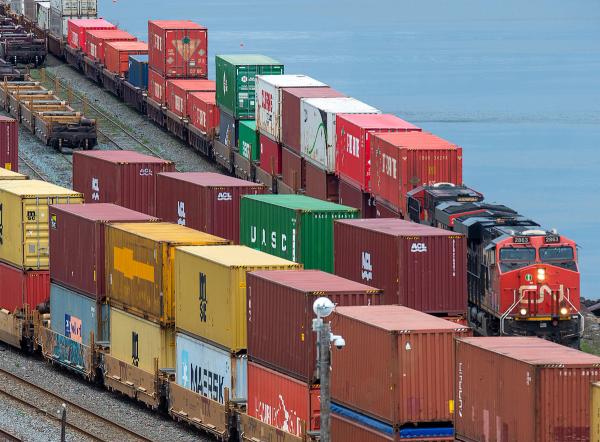
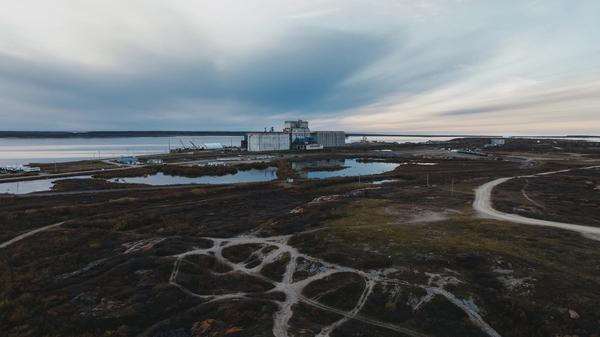
At the heart of the whole summit is the dealbook – a secret prospectus of projects that want capital. Possibilities include massive infrastructure projects like the road to Grays Bay on the Northwest Passage, the Churchill Falls hydro development and associated energy and mining projects, but also AI investments, defence projects, renewable energy, transit, ports and potentially the privatization of airports, although the form that might take is as yet undetermined.
Carney and his team have been working on the dealbook, sorting through proposals from provincial governments and the private sector, getting them ready for presentation to the world’s biggest investors.
“That's what he's been constantly up to for almost a year and a half now,” says Anderson. “And this meeting, this conference, is another big step.”
If it works, it could have a huge impact on the Canadian economy.
A report from TD last month found that Canada could be headed for an “investment supercycle lasting for a decade or longer,” which could lead to an “extra $12,000 in real output per capita.” TD scanned more than 300 projects in five key sectors – energy, resources, AI, defence and transportation – and found more than $1 trillion in estimated spending that could roll out in the next decade.
“If everything were to go right and these projects were to go ahead, it could set up a very long-term positive feedback loop for investment in Canada,” says TD economist Leslie Preston.
That in turn depends, says Preston, on cutting red tape that slows project development and making sure Canada has a competitive tax regime for investors and enough skilled labour to do all the work.
Everyone will be watching for announcements, both at the summit and after it.
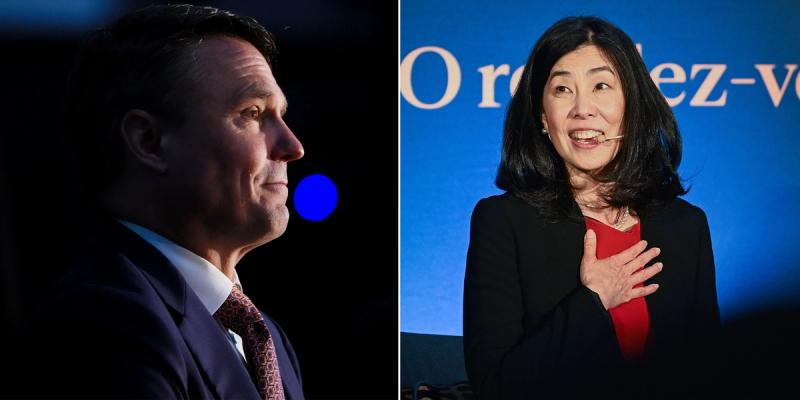
In a keynote dinner speech at the Art Gallery of Ontario on Monday night, Carney will be telling the world’s investors a story about Canada’s potential, and throughout the event he will be joined by a serious sales force – all the premiers, John Graham, CEO of the CPP Investments, Deborah Orida, CEO of PSP Investments, and former prime minister Stephen Harper, who is expected to give the closing address. (CPP and PSP are listed as co-hosts of the event.)
All of this will be taking place in a time of mounting uncertainty in the relationship with the United States, but that is not expected to dampen enthusiasm for Canadian investment for most projects. For one thing, the time horizons for big infrastructure projects are measured in decades, and the trade uncertainty is a short-term concern.
Diversification should create the appetite for investment, says Preston.
“It's all well and good for Carney to travel around the world and say we want to trade more with country X, Y and Z. But do we have the roads and ports to get our goods there? And so a lot of this infrastructure investment is about that sort of trade-diversifying and -enabling infrastructure.”
There have been no noteworthy cancellations as a result of the trade war with the United States, says the senior official.
The arrival of the investors’ jets will demonstrate that the strategy is sound, the official says: “They believe that Canada has what the world wants in the sense that at this particular moment in history, a lot of the big macro trends, whether they're AI or critical minerals or defence diversification, all those roads lead to Canada. We've got a good story to sell and a lot of things to sell.”