It’s 2028, and the U.S. president has just issued an executive order directing Google, Amazon, X, Facebook and Instagram to cut off Canadians who use their platforms and services because the Canadian prime minister has rebuffed his latest attempt to make Canada the 51st U.S. state. Afraid of what might happen if they refuse, the largest search engine and email provider, the largest cloud storage provider and several of the most popular social networks obey, going dark for anyone living in Canada.
This scenario may seem implausible, but it is far from impossible. Over the past few decades, the vast majority of our essential communications infrastructure has become entirely American. From the Slack messages we send at work to our X posts and our Instagram stories and Facebook Reels to the search engines and shopping platforms we use: all American. Even the undersea cables over which our digital communications flow were built by U.S. companies.
Get our weekly newsletter – the people, places, and ideas revealing where Canada is headed.
That reality has become a lot more uncomfortable of late, and many Canadians are now thinking about what’s come to be called “digital sovereignty.” Should we have our own homegrown services? Is that even possible at this point? And if we had Canadian alternatives, would anyone use them?
Ben Waldman is aiming to find out. A former marketing executive, he is trying to create a Canadian social media network and has put together a team of like-minded Canadians to build an app called Gander Social, which he is expecting to launch later this year. The app would be owned and controlled by Canadians, and all the content will be kept on servers located in Canada.
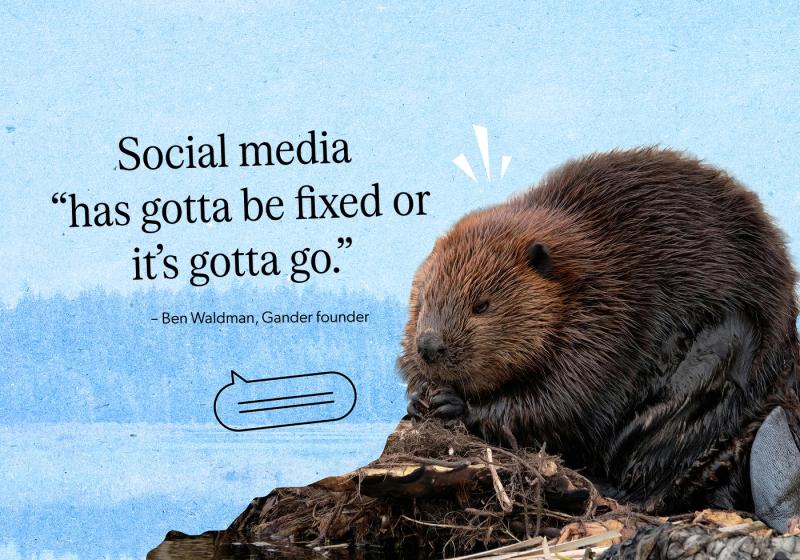
Waldman says the new app is aimed at social media users who are tired of using and/or are suspicious of American services, and are eager to try what he says will be a kinder, safer social network. After watching trolls multiply on X, he decided social media “has gotta be fixed or it’s gotta go.” “Social media sucks,” reads Gander’s pitch on its website. “The platforms we rely on are run by foreign giants, driven by surveillance ads and algorithms that reward outrage. Gander is different.”
Waldman was working with Canadian Indigenous groups on issues related to digital sovereignty when Elbows Up started early last year. He designed a logo for the movement but then started thinking a little more broadly. “Here’s the way I envisioned it,” he recalls. “If you were going to annex another country and you needed a quick win, you could go in militarily right away, but if you had the option of just shutting social media and everything else down, wouldn’t you do that?”
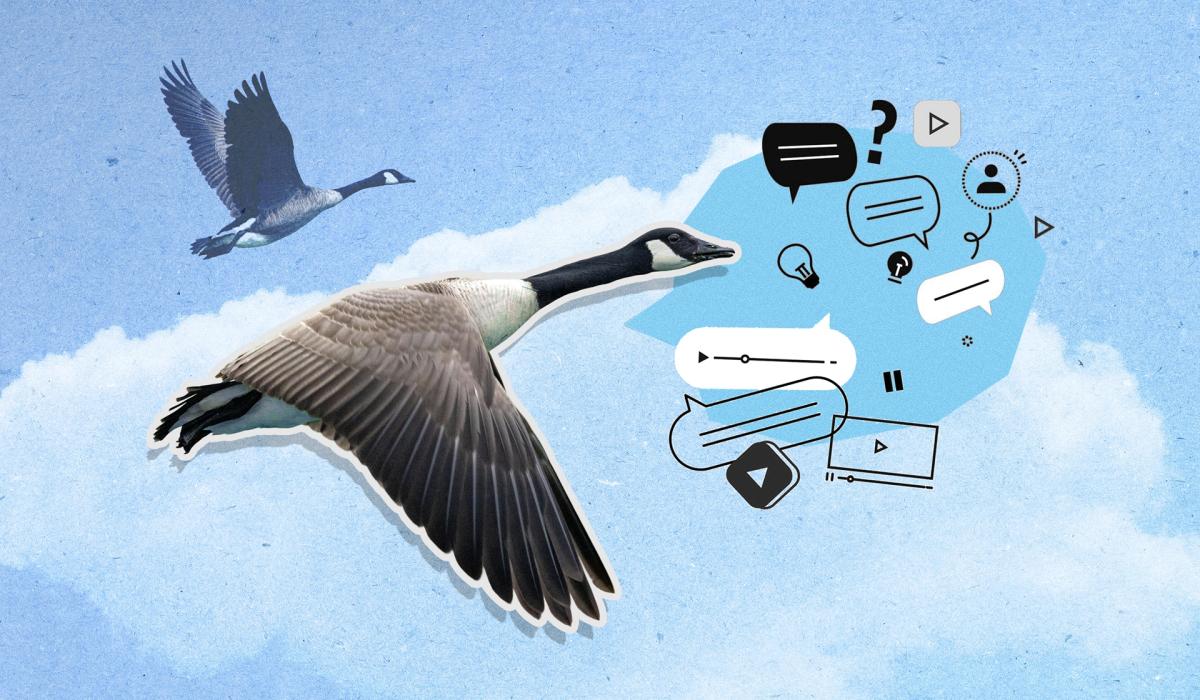
Waldman came up with the idea for Gander, a name that refers to the iconic Canada goose but also the axiom “what’s good for the goose is good for the gander.” He knew that the Bluesky network (an X alternative) and its app were open-source (software that can be used and modified without the developer’s permission), “so I spent a few days putting together a proof of concept for a Canadian social media platform,” he says. “And then I put up a website asking if anyone was interested, and it turned out everyone was.” A month and a half later, more than 6,000 people had signed up or expressed interest in being beta testers.
A number of Canadian developers and technology experts joined the effort. Blaine Cook, one of the original developers behind Twitter, is one of the company’s advisers. Arlene Dickinson, a venture investor famous for the TV show Dragons’ Den, was an early adviser and a potential investor, but she and Amber MacArthur – a well-respected technology commentator – stepped away from the startup after what Waldman says was a misunderstanding about what form their involvement would take. Dickinson said that “it became clear that my involvement was being treated as an endorsement more than a substantive advisory role," and MacArthur expressed a similar sentiment.
Waldman says the plan is for Gander to be free to users and generate revenue by charging corporate or business users extra for additional features, such as branding and added data protection. For data storage, the startup is using the Canadian subsidiary of a French company called OVHcloud. But he adds that Gander plans to work with a Canadian provider called ThinkOn.
Gander didn’t just ask Canadians to sign up early to become users of the new app; it also relied on Canadians to help fund it by using a crowdfunding site called FrontFundr, which allowed them to buy shares. The funding drive closed at the beginning of February 2026, with more than 2,500 investors and just over $2 million, or twice the company’s original goal, Waldman says. “Getting to $2 million was just amazing. I think it really reflects just how much people want to support something like this.” He adds that the company thought about using venture capital, but “most of them were like, ‘Where’s my exit?’ And we don’t have an answer, because it’s not a growth-at-all-costs model. This is just a guy who said, ‘You know, it would be really good for Canada to have this.’”
Because Gander is based on the software behind Bluesky, Waldman says, users of the Canadian app will be able to see posts from users in the Bluesky universe and, if they choose to, will also be able to share their own posts outside Gander. (There are no official estimates of how many Canadians use existing American social networks, but the numbers are obviously huge: research from Toronto Metropolitan University’s Social Media Lab suggests 77 per cent of adults use Facebook at least monthly, and Waldman says more than one million use Bluesky.) Anyone from anywhere will be able to see Gander content, but they won’t be able to post or interact with it unless they verify their identity, to ensure that they are Canadian and also that they are not a bot.
One of the things that makes today’s current online culture toxic, of course, is its lack of accountability: slander, hate speech, harassment and worse abound (relatively unchecked) on many of the mainstream platforms, particularly X. In one of the site’s Ask Me Anything discussions in late 2025, Gander’s founders responded, “Change doesn’t come without friction, and we need genuine change to make it very difficult for bots and disinformation to take hold on Gander.” Waldman says Gander is hoping to use crowdsourcing of fact-checking and harassment as well as artificial intelligence software to handle moderation on the platform.
Waldman is hoping Canadians will see the value in a social platform that adheres to the Canadian Charter of Rights and Freedoms and protects users from many of the ills of social media. One of those ills is rampant disinformation, Waldman says, and Meta didn’t help this problem by pulling all news for Canadian users off Facebook and Instagram in 2023 over a dispute about having to pay for it, which allowed disinformation to flourish with little real news to counter it. “It’s clear that none of these companies is going to obey our laws, and we are almost powerless against them. So having alternative solutions like decentralized platforms allows the public to actually take back social media and make it into something that can be more of a civic space that’s owned by the community.” Gander is incorporated in British Columbia as a Benefit Company, which means that profit is not its only motive.
Gander may be a Canadian creation, but the idea behind it is similar to initiatives in other parts of the world – especially Europe. A group of technology entrepreneurs has unveiled the Eurosky project, with four European countries expressing interest in backing it, according to one of the project’s co-leads. The aim is to create data-storage servers and other infrastructure for social media offerings and reduce reliance on U.S. tech giants. It was spurred partly by polling data showing strong demand in Europe for locally based social media.
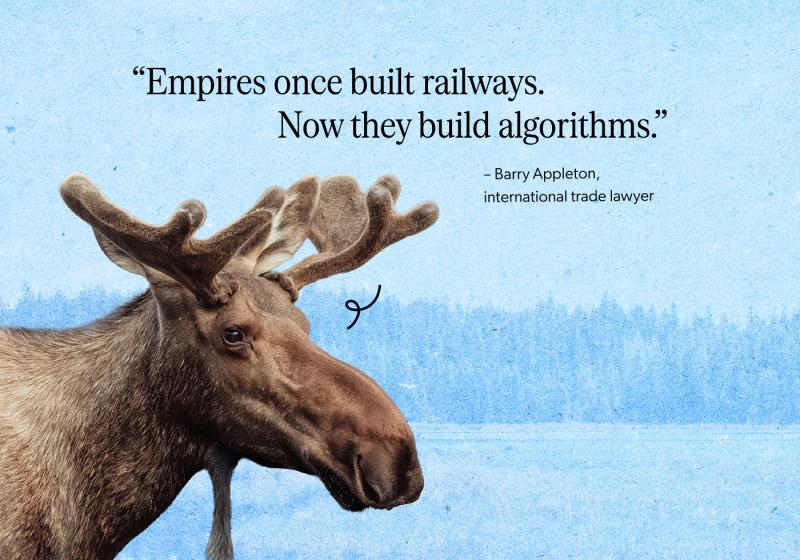
Control – and related security concerns around where user data is stored and who has access to it – is at the heart of the social media sovereignty discussion and, to an even larger degree, of digital sovereignty itself. Last September, dozens of experts and organizations sent an open letter to Prime Minister Mark Carney urging him to “defend Canada’s digital sovereignty” and protect the country from the Trump administration. Carney has argued that Canada must become an energy superpower, the letter said, but has not talked enough about securing Canada’s digital economy. “Empires once built railways,” Barry Appleton, an international trade lawyer, told the CBC. “Now they build algorithms. If Canada cannot govern the code that governs Canadians, then we are no longer a sovereign democracy.”
The letter also noted that foreign social media platforms such as TikTok, YouTube, Instagram and Facebook play a big role in shaping Canadian political discussion without domestic oversight. In September, Carney challenged the Major Projects Office to develop a sovereign cloud to give Canada “independent control over advanced computing power” for new areas like homegrown artificial intelligence, as well as the data storage that would give Canadians control over their own information.
Michael Geist, the Canada Research Chair in Internet and E-commerce Law at the University of Ottawa, says he’s “a bit of a skeptic” about the frenzy of interest in digital sovereignty, because those terms are often used by vested interests like large telecom conglomerates that have extensive operations in the U.S. and therefore could be more subject to its laws. So is digital sovereignty a pipe dream? It depends on the rationale for doing so, says Geist. “If you’re doing it because you think there’s a value to having Canadian alternatives . . . then that’s fine, I agree that it would be good to have alternatives. As long as it’s not being sold as some kind of silver bullet for data security.”
Many in Europe are also concerned about a digital infrastructure that relies too heavily on the U.S.: The European Commission appears to be uneasy with Elon Musk’s control over Starlink, the SpaceX satellite internet service; a global outage at the security company Cloudflare in November also sparked concerns. “There’s this perception in Europe that somebody else is controlling the light switch when it comes to the platforms and the types of information infrastructure we are using,” Martin Hullin, tech sovereignty director at Bertelsmann Stiftung, a non-profit foundation, told Politico.
One of the most ambitious efforts to advance European data sovereignty is a project known as Gaia-X, envisioned as not just a European data cloud provider but as a federated ecosystem, so that data could flow among different providers. The project began with much fanfare in 2020, but after several years of work it almost collapsed due to severe criticism from EU members, in large part because the project opted to include Google, Microsoft and Amazon Web Services (AWS) as members. There are also discussions underway for an alternative attempt to build an EU-specific digital service called EuroStack, which includes cloud storage, data centres and connectivity.
Smaller steps have already been taken: France and Germany have collaborated on their own version of Google Docs. And there is a European citizen-led initiative seeking government support for a publicly funded social media platform that would not be pushed by any government official. In an interview with Atmos, a non-profit media outlet, author and freedom-of-information activist Cory Doctorow noted that there are ways for a government to support a domestic social media infrastructure without the platform having to be controlled by the government, which is often cited as a concern. For example, he said, legislation could make it possible for public and private players alike to build their own social media outfits on top of state-owned servers or other infrastructure.
A significant number of social media users in Europe and Canada as well as the U.S. have already moved away from X and Facebook towards a decentralized kind of model, joining networks such as Bluesky and Mastodon, both of which are based on open-source software. Mastodon is part of the “fediverse” – a loose affiliation of services that use open-source software and allow their data to be intermingled. A Swedish group is reportedly close to launching a beta app called W Social because, it says, “We believe in the need for a global, trusted social media platform owned, run and hosted in Europe.”
By the end of last summer, Waldman says, Gander had close to 30,000 people on a waiting list, and that number is now over 50,000. “We’d get interest from media outlets and then we’d see numbers go up,” he says. “So, we’d put up a post about how we were doing and then we’d see numbers go up. And more often than not, whenever Trump said or did something, we would see our numbers go up some more.” About 7,000 people are currently testing the app, which Waldman says will go live later in 2026.
There have been some major hurdles along the way, he concedes, which helps explain why Gander didn’t meet its initial goal of launching last October. One challenge was the idea of verifying users. It was suggested that they be asked to send a toonie to the company via the Interac network, but there was a risk that Apple might not approve the new app if payments were made outside its App Store. So the current plan is to have users verify their identity using Interac or Canada Post, both of which allow you to do so without sending your personal information over the internet.
The very idea of identity verification has been somewhat controversial, judging by some of the comments made about the app on Reddit. “Ever since I heard they would require ID checks . . . I stopped caring about it,” a user called shimoheihei2 posted on one thread. “It’s never going to go anywhere with that high barrier to entry.” The same thing that can make social media toxic – its anonymity – is one of the features that many users like about it and may be unwilling to give up.
Gander is not the first social media alternative to be pitched to Canadians. One early attempt was called Identi.ca, which launched in 2008 but failed to attract many users. There is also a Canadian-based version of Mastodon at mstdn.ca, and Canadian open-source versions of Reddit and Instagram. As well, there’s an app called EH!, launched in early 2025 by Jessica Glowacki, a former product manager with Reddit. The EH! app promises that “your data lives in Canada. Your feed is yours to control.” The company says it has close to 30,000 users.
Is the fact that a new social network is Canadian-owned and operated enough to bring in new users? Gander’s crowdfunding campaign suggests that’s the case. However, the history of social media shows that even the best of intentions are no guarantee of success. Bluesky, which many see as a more progressive alternative to X, experienced a big surge after launching in 2024 and quickly reached 20 million users. But user growth since then has slowed, and CEO and co-founder Jay Graber recently announced she was stepping down.
Mastodon, an open-source social network originally launched in 2016, also got a large surge of new users after Musk acquired Twitter and now has more than nine million registered accounts. By contrast, X claims to have 600 million monthly active users (although a significant number are believed to be bots), while Threads, a Twitter alternative that Meta launched in 2023 as an offshoot of Instagram, has more than 400 million active users. One of the biggest deterrents to switching social networks is what is known as the “network effect” – social apps are useful because all of our friends or people we want to follow are there.
A broader problem for would-be alternatives like Gander Social is that, according to some experts, the use of social media overall is on the decline. A Financial Times study of more than 250,000 adults in 50 countries found that social media use by adults in 2024 was almost 10 per cent lower than its peak in 2022, and the decline was most pronounced among teens and twentysomethings. The number of people who report using social platforms to stay in touch with their friends and express themselves has fallen by more than 25 per cent since 2014.
Of course, a decline in usage of massive, globe-spanning social networks might mean more people using smaller, more local or personal services, such as private groups on WhatsApp or discussion forums on apps like Discord. Noah Smith, a former Bloomberg economics columnist, has written that humanity “isn’t meant to be thrown all together in one or two big rooms; we evolved to thrive in small groups and self-selected communities.”
There are clearly a number of existing users of networks like Facebook or X who are eager for a homegrown alternative, based on comments on Reddit threads and forums where Gander Social has been promoted or discussed. “This is brilliant. Can’t wait!” said milkcratebasket. Some, however, question whether being Canadian will be enough. “I love the idea,” said Nic727, “but unfortunately, like all new social media platforms, it will attract a lot of people [in] the first months, then people will realize that their communities are still on Facebook and leave Gander.”
It may be a flip comment by an anonymous user on Reddit, but there’s a lot of truth in it – just because there is a Canadian cloud company, or a Canadian alternative to Twitter, doesn’t mean that people are going to use it (or that enough people will sign on to make it a viable business). Whether we like it or not, social networks and other digital services gain their power from their users, and the more there are, the more power they have. Gander Social’s launch will be a test not only of Waldman’s ability to create a new app, but also of just how far Canadians are willing to go to pursue digital sovereignty.