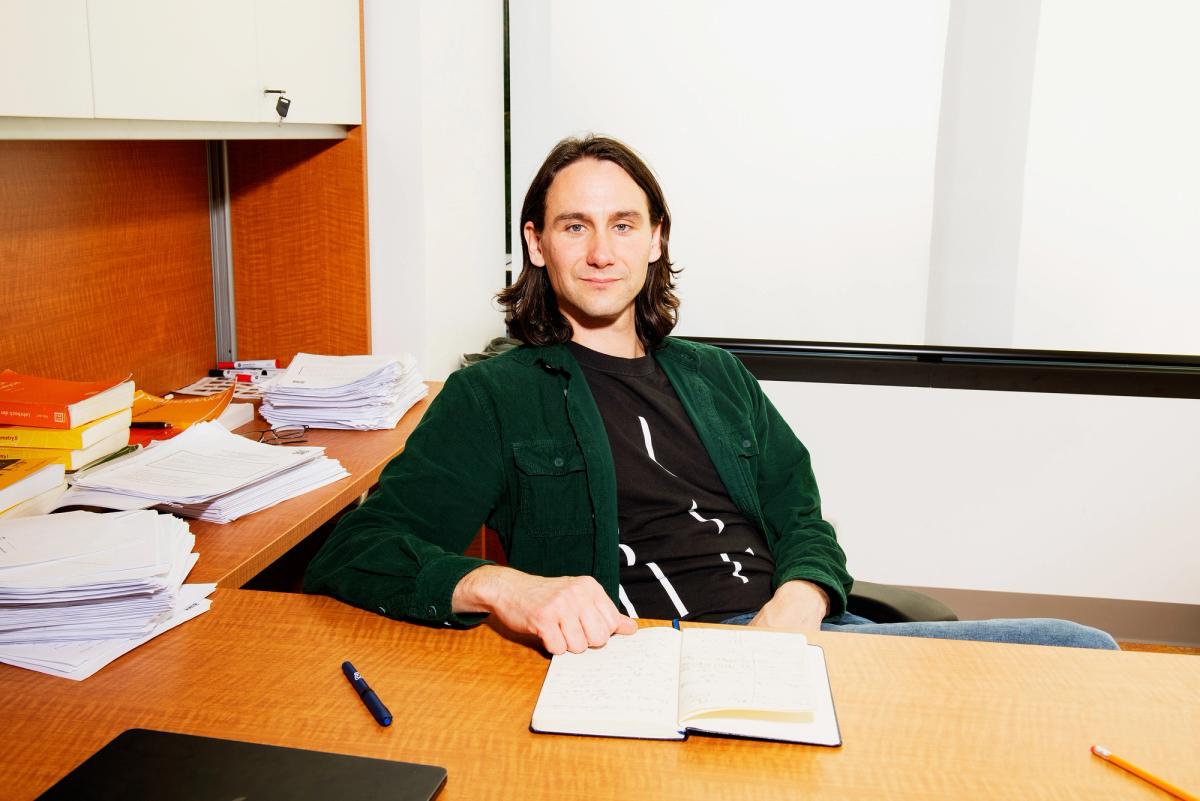
On October 6, OpenAI released a raft of documents that shook the math world – 372 results that claim to resolve well-known open questions in mathematics and theoretical computer science that researchers have been studying for years. Mathematicians told The New York Times that the release was “breathtaking” and ”devastating,” adding that “until very recently, it would have been impossible to imagine that the frontiers of mathematics could move so far in one day.” According to OpenAI, the results were achieved with a single prompt to a single AI agent. Be Giant asked Michael Groechenig, vice-chair at U of T Mississauga’s department of mathematical and computational sciences and a winner of the New Horizons Prize in Mathematics, what this development means for the field — and whether the result is a canary in the coal mine.
Was October 6 Judgment Day for the field of mathematics?
It was not. The mathematical landscape is vast. There are so many problems out there. The ones that OpenAI tackled are problems that people have actively worked on, so they come with a certain prestige – that’s what companies like Anthropic and OpenAI are piggybacking on. I think they’re betting that a lot of people will conflate being good at mathematics with intelligence.
Get our weekly newsletter – the people, places, and ideas revealing where Canada is headed.
To non-mathematicians reading the headlines, it sounds like OpenAI has accomplished something groundbreaking. Is there reason to be skeptical of the results?
I take a very critical point of view of the recent announcement. For 42 per cent of the main results, they provided complementary Lean formalizations of the arguments. Lean is a programming language that allows you to explain a proof, a mathematical argument, to a computer, and then the computer can check whether it’s complete and rigorous.
So the rest of the results haven’t been formally guaranteed yet?
That’s correct. I think it’s very important not to abandon the usual precautions, because when a colleague of mine releases a new paper, no matter how famous he is, I don’t instantly say, “Oh, this is probably true or wrong.” I say, "Time will tell.”
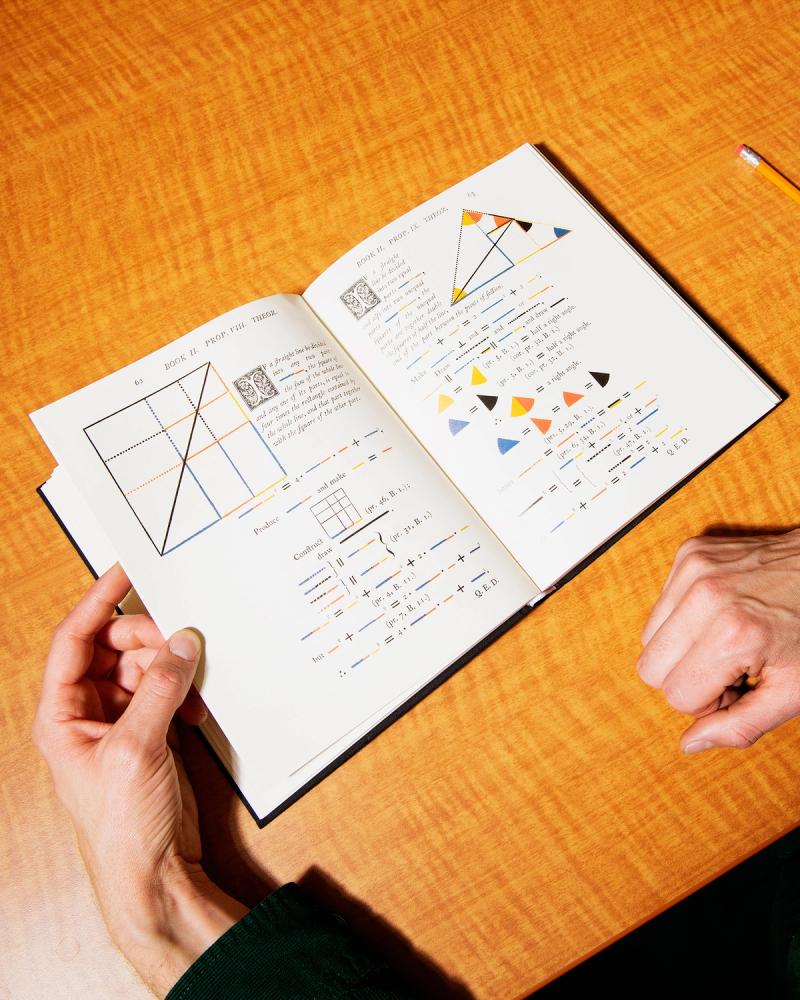
In the papers you’ve written, and with your New Horizons Prize, you credit other people’s work, because pure mathematics can be very collaborative. It’s been described as each of you being a link in a chain.
Absolutely, yes. Prior to AI, people would just share ideas openly, sometimes years in advance of the actual release of their papers. Nowadays, people have more reserve with respect to sharing ideas openly because sometimes just the term of a good idea, a single prompt, can be enough for an AI system to complete a reasonable-looking preprint, and so then that idea is gone out of the window.
Meaning you lose the opportunity to work on it.
Yes. In the case of this particular release, the problems that OpenAI claims to have solved could have made a career for a young and upcoming researcher; this could have been a way to recognize a new rising star, or graduate students could have contributed to small portions that would have become a part of the solution or maybe even solved one of these problems. The way we nurture new talent in the community is by having researchers work on open problems and see whether they can solve them. It’s not so much the successful resolution that counts; it’s more the intellectual watershed or undercurrent that is created by humans deliberately [working on] these big open questions.
I can understand that. I like solving puzzles, so I like reading murder mysteries, but I never flip to the end of the book to find out who’s the murderer. No spoilers. Did OpenAI just release 372 spoilers?
That’s exactly what it is. And it’s not just spoilers. Many mathematicians feel threatened by the capabilities of AI systems and also by the behaviour of these AI companies. It’s ironic, because AI wouldn’t exist without a large body of mathematical knowledge that mathematicians have maintained over generations.
You’re a researcher, but you’re also a teacher. In a field like mathematics, where an apprentice-master relationship has always been the learning model, what happens now?
That’s an excellent question. That’s what I and many of my colleagues want to fight for, because without that relationship and without a collaborative community, there’s no point in mathematics. The problems that OpenAI has claimed to have resolved, those are important questions, but they’re not urgent. It’s not urgent for humanity to know the answer to these problems, and having open problems can be a good thing. We don’t have to understand absolutely everything. But urgent questions – we have many of those. Everyone would like to see a remedy for cancer, climate change and many other open problems that require urgent solutions. I think it’s important to emphasize that AI currently can’t propose any reasonable solutions to those.
What do we lose if AI takes over advanced math work?
I think there’s always been a benefit to society maintaining a community of people who are capable of reasoning mathematically and passing that knowledge on to future generations, because otherwise we wouldn’t have seen things like GPS or even AI itself.
You have colleagues who have gone to work for OpenAI recently. You must have some interesting debates in the faculty lounge.
Oh, absolutely. There’s a very diverse set of opinions with respect to AI use in mathematics. I’ve decided, at least for the time being, to just continue doing math the way I was trained because I think it’s important to maintain that knowledge, but I don’t force this sort of vision onto my students. I want them to make their own decision because I know as little as them what the future is going to be like.
It’s the next generation of researchers who should have the bigger say in what the future looks like. We should listen to post-docs and graduate students and even undergrads. Some colleagues have decided to interact with AI systems in a legitimate and meaningful way, and then other colleagues on the far end of the AI-adaptation spectrum have become complete button pushers, sort of fully automated mathematicians. There’s a whole spectrum of opinions, and I think that’s what academia should be like. It’s an example of peaceful coexistence of sometimes conflicting opinions.
My personal slogan is just to keep calm and carry on. Also try to talk to junior mathematicians who seem to be in distress about the situation. That should be a responsibility for everyone – to actually make sure that people don’t feel threatened by what AI is doing.
That’s interesting, because most of us can’t wrap our heads around advanced mathematics, so we think people like you who can, are, by definition, geniuses. What’s your definition of intelligence?
Honestly, I feel it’s a very difficult question to answer. The study of mathematics mostly requires resilience; it’s a painstaking process. You repetitively think about the same problem until you understand it. It’s filled with moments of frustration but also incredible insight. Mathematicians are mostly just people who take joy in solving problems. It is related to a particular aspect of human intelligence, but it’s definitely not all of it.
To give an example, something that AI labs find very difficult is to build a robot and tell it to go to a person’s house and make a cup of tea. This is a task you could assign to any 10-year-old, and they’ll probably succeed. That requires intelligence, right? You need to go to a house you’ve never been to, locate the kitchen, then locate the drawers with the tea bags and the cups and so on and get the kettle to work, which could be a different model from any you’ve seen before. It’s the kind of intelligence that is ubiquitous in everyday life. We constantly rely on it, and it’s just very difficult to reproduce artificially because it’s the sort of training that people don’t record. I think the hardest part of intelligence to emulate is the part we simply take for granted.