Update (July 23, 2026): Jacob Tsimerman was announced as one of the winners of the Fields Medal.
When Jacob Tsimerman was a child, his grandfather, a Russian physicist, gave him a riddle about a broken toaster. “Suppose you have three slices of bread,” his grandpa proposed, “and a toaster with two slots that toast on only one side. How many times do you need to use it to fully toast all three slices of bread?”
The first answer most people come up with – four – is also the wrong one. The correct response is three. (First, toast two slices; second, swap one out for the third slice; last, finish off the two half-toasted slices.) Tsimerman was spellbound by the solution. “I found it so beautiful and elegant,” he says. While other kids were playing with plushies and plastic trucks, he was asking his grandfather for more puzzles. “I really fell in love with it.”
By grade school, it was clear that little Jacob would become a mathematician. His mother, a high school math teacher, and father, a computer scientist, relocated the family to Toronto when he was eight, in part to grant him easier access to North America’s best schools. He started studying math at the University of Toronto at 16 and zipped through a bachelor’s degree in two years, meaning he graduated before most kids his age began orientation.
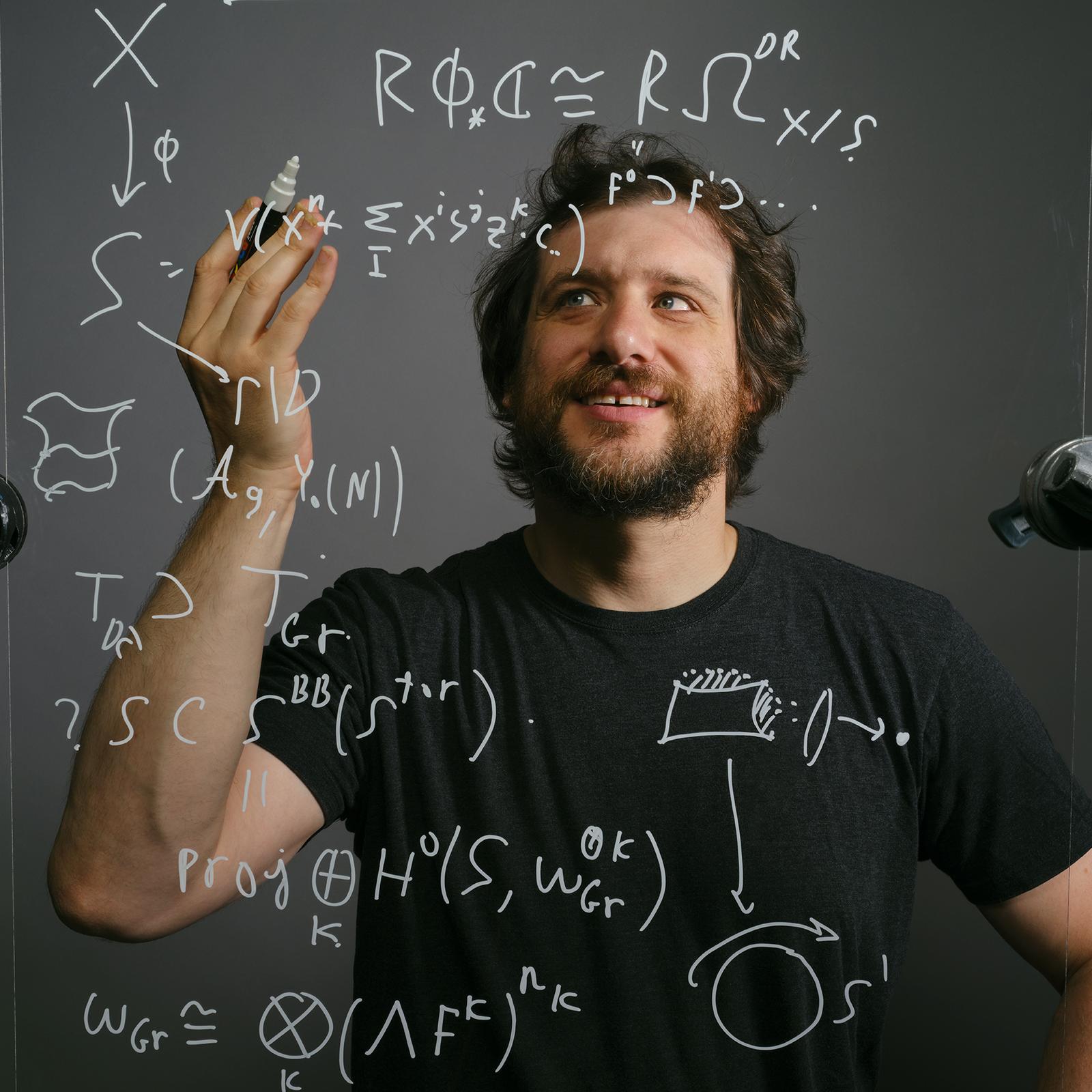
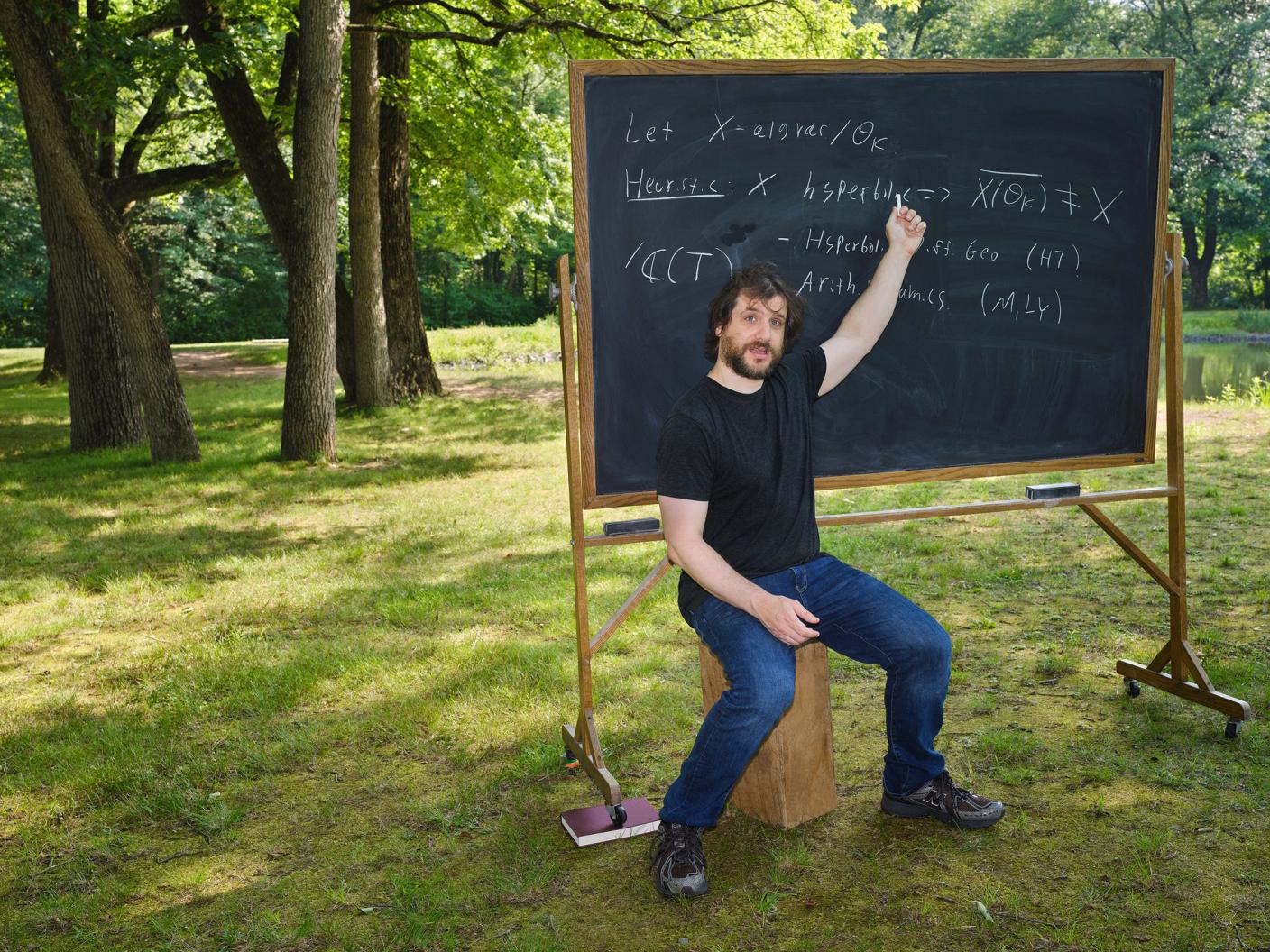
As Tsimerman climbed the academic ladder – a PhD from Princeton, a professorship back at U of T – his puzzles of choice became increasingly sophisticated. He delved into number theory, the study of integers, and algebraic geometry, a branch of math that uses geometric objects to represent solutions to polynomials. At their most complex, these disciplines are so impenetrable to laypeople that it’s practically pointless to describe them here.
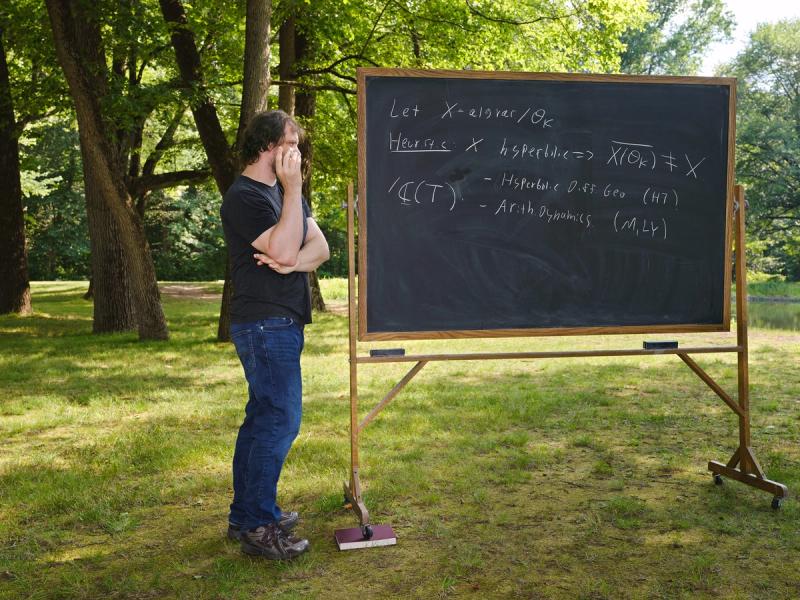
What matters is that while in grad school, Tsimerman had become captivated by a number theory puzzle called the André-Oort conjecture. Higher mathematics is full of conjectures – propositions that appear to be true but lack rigorous proof – and mathematicians like Tsimerman revel in trying to prove them. André-Oort, which concerns phenomena known as special points within geometric objects called Shimura varieties, was first proposed almost 40 years ago. Many mathematicians have tried to crack it, and some have made progress, but for decades the conjecture remained stubbornly unproven.
That is until 2021, when Tsimerman and two collaborators published a paper that fully proved André-Oort. The proof may not have made many headlines, but, within certain mathematical communities, the breakthrough was earth-shattering.
It didn’t just solve one of math’s great mysteries, but also shed light on methods that other mathematicians might use to prove other conjectures. In other words, Tsimerman and his co-authors didn’t close a chapter of mathematics; they began writing a new one.
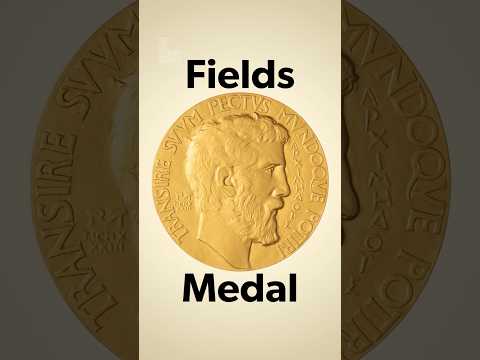
This accomplishment has positioned Tsimerman as one of the frontrunners for the Fields Medal, one of the highest honours a mathematician can earn. Often called the Nobel Prize of mathematics, the Fields is awarded to as many as four mathematicians under 40 every four years. The list of past recipients, which includes UCLA mastermind Terence Tao and the late Maryam Mirzakhani, is the closest thing math has to a hall of fame. Tsimerman will find out whether he joins those ranks when the International Mathematical Union convenes in Philadelphia in late July.
That Tsimerman is a favourite carries special weight. The Fields Medal is named after John Charles Fields, a U of T professor who promoted international co-operation among mathematicians during the interwar period, and the medal itself is struck by the Royal Canadian Mint. But the only Canadian to ever win it was Princeton professor Manjul Bhargava, who was born in Hamilton but relocated to the U.S. as a boy. Though Tsimerman was born in Russia, he would, if he wins, be the first Fields recipient to call Canada home.
The victory would also be a coup for U of T. “It’s very rare for anyone at a public university in North America to win a Fields Medal,” says Robert Jerrard, a former chair of U of T’s math department. “By the time they’re a plausible candidate, they’ve usually been vacuumed off by one of the richest universities in the world.”
Even if Tsimerman brings home the gold, most Canadians, myself included, will never understand what he does, nor what a Shimura variety is. And so I thought, to better understand Tsimerman – not how his math works, but the way his mind works – maybe I ought to start the way he did: with a puzzle.
Jacob Tsimerman loves escape rooms. He’s done dozens of them, including one of North America’s first in San Francisco, another inside Casa Loma in Toronto and a particularly memorable one in Mississauga, Ont., where the staff tried to handcuff him to make the experience more realistic (he said no thanks). He and his wife, Pia, a lawyer from Toronto, did an escape room on their second date.
After reading approximately three sentences of Tsimerman’s seminal paper proving André-Oort (sample: “Given a ℤ-local system 𝕍 arising from an algebraic representation 𝕍 of 𝔾Q, we may form an associated flat vector bundle dR 𝕍 via the Riemann-Hilbert correspondence”), I admit defeat and make a suggestion to Tsimerman: what if, instead of talking about … that, we attempt an escape room together? He cheerfully accepts, albeit with a disclaimer: “I promise you my math abilities do not at all translate one-to-one to this format.”
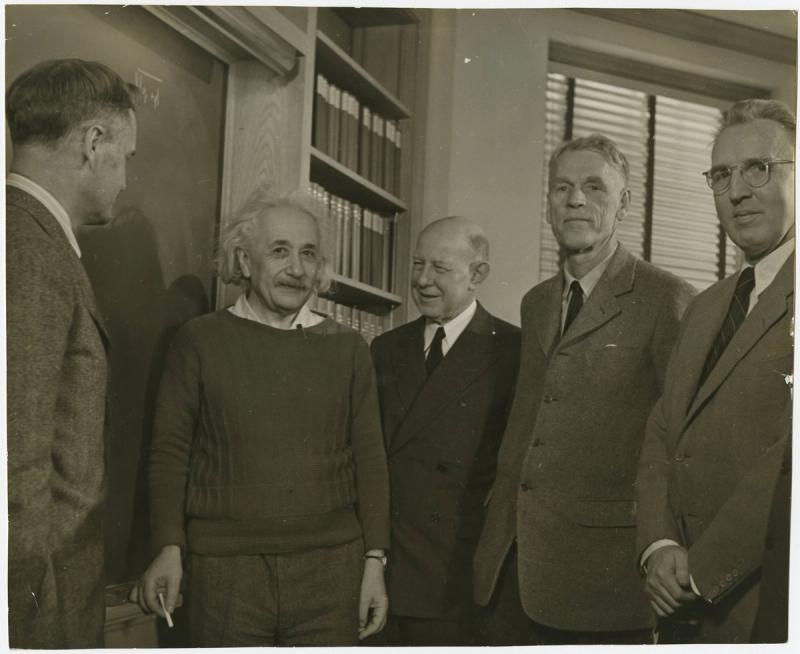
T-minus two hours to our escape, I meet Tsimerman at the Institute for Advanced Study, the storied research centre in Princeton, N.J., where he’s been stationed for the past year. If you’ve seen Oppenheimer, you know the institute as the place where Robert Oppenheimer, its longest-serving director, worked alongside Albert Einstein, a founding faculty member.
The institute itself exudes import, all historic buildings and manicured lawns. Tsimerman, by contrast, seems allergic to ostentation. Inside the academy’s august common room, he greets me with a toothy smile amid a shaggy beard, wearing a grey T-shirt, red shorts and dark New Balance runners. During our interview, he lies on the floor of his sparse office to stretch.
Tsimerman’s lack of pretence is part of what’s made him a popular prof at U of T, where he’s earned a reputation as a kind, caring and funny instructor. (When he’s not teaching math, he leads improv comedy classes, and he recently finished co-writing a musical comedy called The Sombrero Detective.) “He’s very charismatic,” says Jerrard. “Despite having this stellar reputation, he has volunteered to teach large first-year courses, and he teaches them well.” Poke your head into the grad student lounge, he adds, and it’s not unusual to find an off-duty Tsimerman crowded around the blackboard with postdocs, getting lost in equations together. “He’s very open and accessible,” says Jerrard. “He connects with everyone.”
In the early afternoon, Tsimerman and I pick up Pia, who’ll be escaping with us. Thanks to a babysitting snafu, so will their six-month-old daughter. (That neither Tsimerman nor his wife suggests cancelling betrays their enthusiasm for escaping.) When we enter the room – a Game of Thrones-themed sanctum with faux-stone walls – a low-budget video explains our mission: find the golden dragon egg in 60 minutes or less. The video ends, the door closes and a timer starts to tick.
We start strong, quickly cracking a coat-of-arms puzzle. But then we hit a wall. We have some tiles and mismatched pieces of a 3D map but no idea what to do with them. I inspect a tray of golden goblets for clues while Pia, cradling the baby, tries to activate a dormant constellation of lights. We’ve been locked up for less than 10 minutes when Tsimerman addresses the elephant in the escape room: we’re stuck. As his daughter starts to fuss, I start to consider the possibility that this was a terrible idea.
Tsimerman, however, keeps his cool. He’s no stranger to being stumped. As a kid, he competed twice in the International Mathematical Olympiad, a competition that pitted him against some of the world’s brightest teens in Tokyo and Athens. To hear him tell it, he nearly blew the second olympiad. “The night before, I couldn’t sleep,” he says. Worse, when he saw the last question, he had no idea how to solve it. After a brief panic, he steadied himself and focused. Just before his time was up, he figured it out and finished with a rare perfect score.
Now, he looks back on those olympiads as formative. “The skill of sitting there for several hours, repeatedly banging your head against the wall, trying new things while you’re stuck, is a super difficult and important skill to learn for research math,” he says. His proof of André-Oort is evidence. He first encountered the conjecture in 2009, but it wasn’t until 2021 that he and his collaborators proved it – that’s 12 years of pushing a boulder up a hill. “One thing you learn as a mathematician, more so than in other professions, is that rewards come very rarely,” he says. “Even if you’re doing really well, you’re probably getting at most a couple of results a year.”
Which is why, back in the escape room, while I’m starting to sweat, Tsimerman is calmly surveying the scene. To someone who mulls math problems for years, a 10-minute snag is nothing to stress over. In the end, however, there’s no eureka moment. Instead, an escape room staffer who’s been watching us struggle over CCTV offers us a tip, leading us to a trap door containing the pieces we need to proceed. Whatever math olympiads and escape rooms might have in common, there’s at least one big difference: in an escape room, you can ask for a hint.
It’s not long before I hit another roadblock: a sliding-tile puzzle I just can’t iron out. Seeing me flounder, Tsimerman politely offers to help and solves it in seconds. This, too, bears some resemblance to the process that proved André-Oort: it was made possible by collaboration.
Tsimerman may have never worked on the conjecture, much less proved it, had it not been for Peter Sarnak, a professor at Princeton and the Institute for Advanced Study, who introduced Tsimerman to the problem. And it was another former student of Sarnak’s, Oxford University mathematician Jonathan Pila, who laid much of the groundwork that led to the eventual proof.
In 2010, Tsimerman flew to the U.K. to pick Pila’s brain. “He spent two weeks explaining to me what he was doing, which took me a long time to understand,” says Tsimerman. Once he got it, they realized they possessed complementary strengths. “He was unfamiliar with a bunch of the ingredients,” he says. “And those were the ingredients I could supply.”
Years later, when the proof was in sight, the pair sought assistance from a third mathematician, Northwestern University’s Ananth Shankar, who had the final ingredients they needed to complete the recipe. As Pila sees it, the three of them are links in a chain that reaches back decades, tying together years of work by mathematicians from all over the world. “Everybody gets some help from the next people along,” he says.
Case in point: not long after Tsimerman solves the sliding-tile puzzle, we discover a cipher that matches runes to letters on a grid. Here, I take the lead. Numbers and tiles may be Tsimerman’s wheelhouse, but letters and words are mine. I quickly crack the code, and we’re one step closer to the finish line.
Two minutes left on the clock; one puzzle left to solve. By this point, we’ve collected four dragon eggs, none of them gold. It’s clear we need to arrange them inside a chest with four slots, but the order isn’t obvious.
“Try every combination!” Tsimerman instructs, baby in tow. Pia and I grab the four eggs and place them in the chest randomly. To our surprise, our first guess happens to be right. What are the chances? (One in 24, to be precise.) A trumpet blares through the room’s speakers, and the doors of a cabinet in the corner of the room swing open, revealing a shining golden egg. By dumb luck, we’ve done it.
On our way back to the institute, Tsimerman tells me that he sometimes applies trial and error to math problems, too. Occasionally, a random guess actually works, at which point he works backward to figure out why. (In the case of the eggs, we only later realized we needed to sort the dragon eggs by age.) Earlier in his career, Tsimerman was sheepish about this approach; mathematicians tend to prefer elegant, carefully constructed solutions, not slapdash experimentation. But then he learned that Stephen Sondheim – the composer, lyricist and noted puzzle enthusiast – often employed a similar strategy while writing accompaniments, sometimes playing every single note until he found the one that sounded right. If it was good enough for Sondheim, Tsimerman figured, it was good enough for him – and good enough to get us the golden egg.
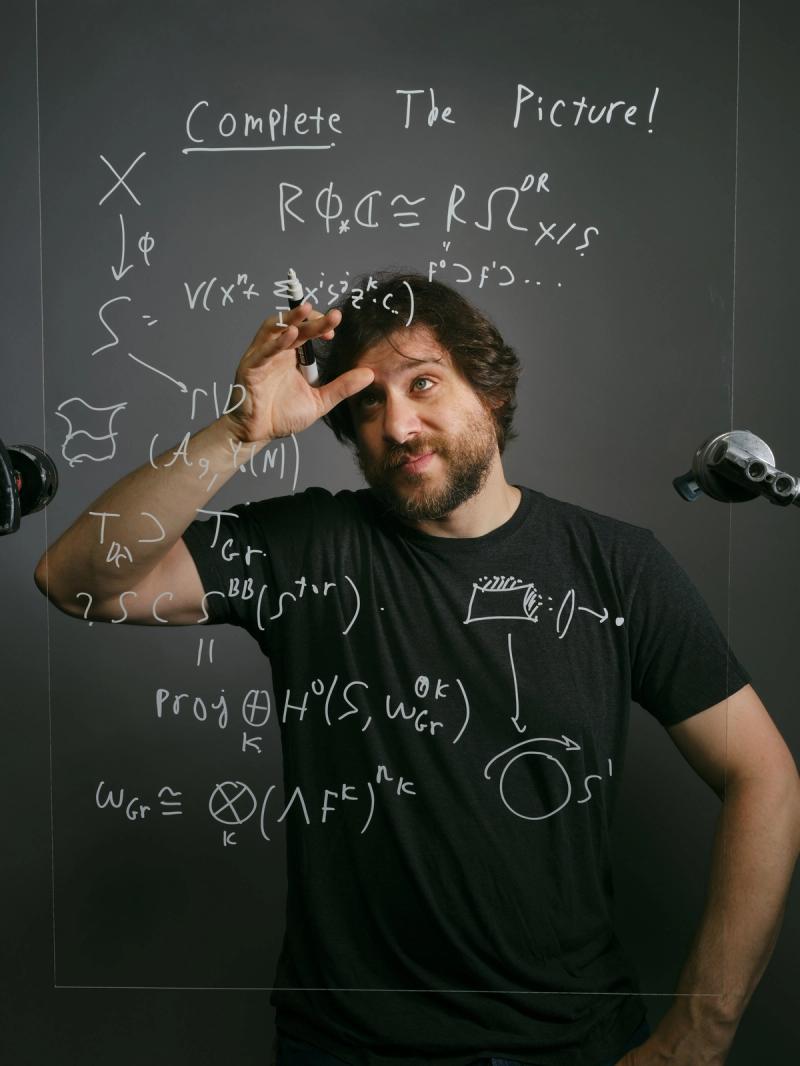
Eggs, medals, trophies – for Tsimerman, these prizes are beside the point. Whether he’s solving a math problem or escaping a puzzle-filled room, he’s usually doing so for a purer reason: because it’s fun. He doesn’t give much thought to where his work might lead. When I ask him what his proof of André-Oort might achieve outside the confines of abstract math, he says, “Nothing comes to mind.” Pila, his collaborator, puts it a little more poetically: “Obviously, we’re not building bridges. We’re not doctors doing surgery or making medicines. Mathematics is part of the human enterprise. We study fundamental objects, and I believe that understanding them will ultimately find its place.”
Indeed, breakthroughs in pure math often form the foundation of major technological and scientific advances – sometimes decades down the line. Nineteenth-century number theory underpins today’s cryptography. We wouldn’t have Google Maps had pre-modern mathematicians not worked on non-Euclidean geometry. The same goes for computer science and machine learning; they are the unforeseen products of mathematicians pursuing math for its own sake.
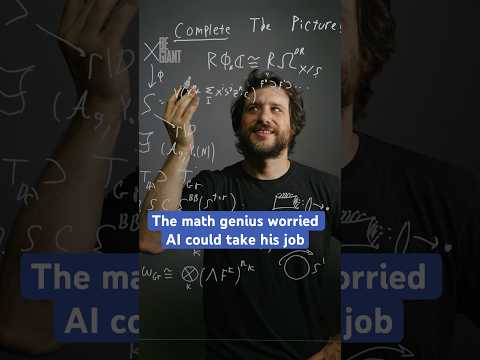
And yet, at the height of his mathematical career, Tsimerman confesses that his days pursuing pure math may be numbered. Like practically everyone else, he worries that artificial intelligence may soon come for his job. This past May, an OpenAI model disproved a famous 80-year-old conjecture known as the Erdös unit distance problem, which deals with the placement of points on a plane. According to OpenAI, it was the first time an AI model had solved an open mathematical problem of such prominence. “I actually briefly worked on this problem … but failed to make progress,” Tsimerman wrote in an OpenAI blog post in response to the disproof. “This is a really impressive piece of work.”
Rather unnerving, too. If a general-purpose AI model can resolve conjectures that have flummoxed humans for decades, what does that mean for the academics who spend their days conferring with other mathematicians and contemplating abstract problems? Tsimerman expects AI to be better than humans at math within a few years, and admits that his job as he knows it will soon become untenable. “The social implications of this are complicated, but many of us, myself included, identify strongly with the activity of doing mathematics as it is today,” he says. “There’s something to grieve in that, and I want our community to face this moment with honesty and compassion.”
What’s next, if not more math? Tsimerman tells me that he’s interested in using his brainpower to help stave off some of the most catastrophic risks posed by AI. Last year, he co-authored a paper outlining a series of potentially omnicidal events – “scenarios where all or almost all humans are killed.” Among the ghastly possibilities: rogue AI systems murder us; AI-assisted warfare yields mutually assured destruction; solar farms replace agricultural farms, leaving us to starve. Tsimerman isn’t sure how to solve these puzzles yet – but that’s never stopped him from trying.
Get our weekly newsletter – the people, places, and ideas revealing where Canada is headed.