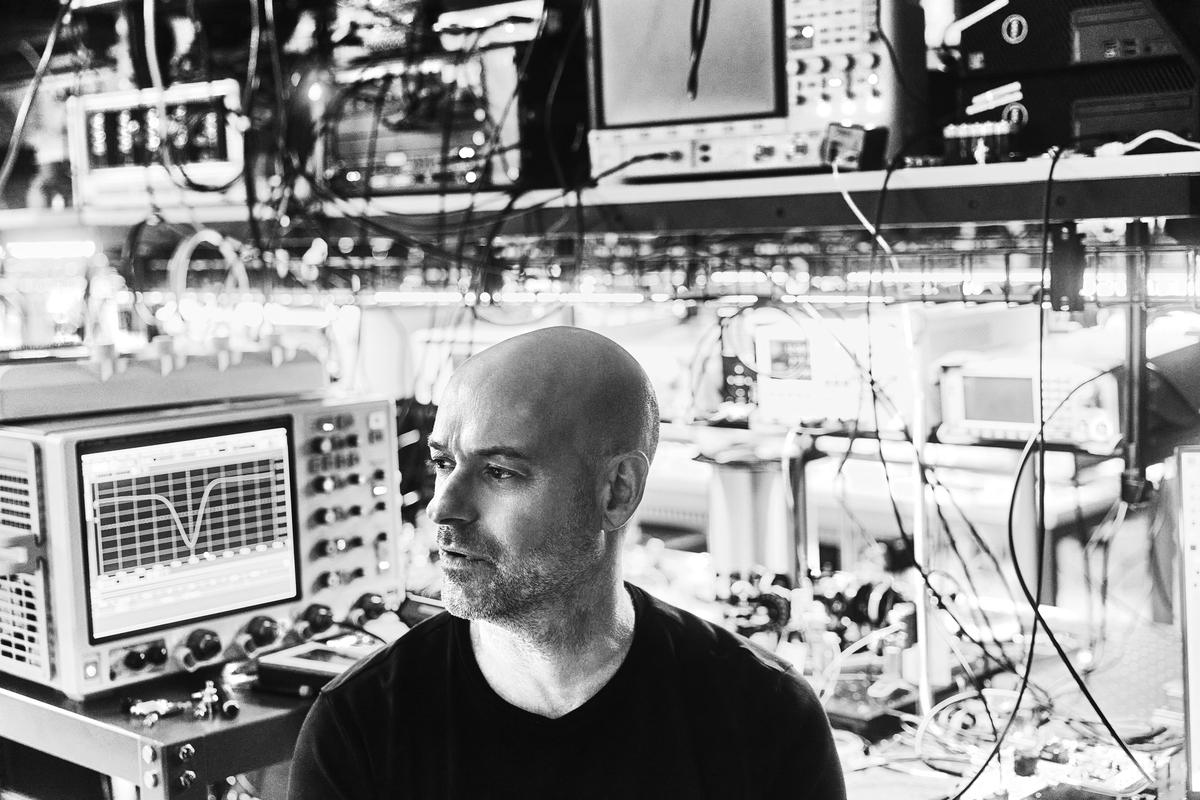
Christian Weedbrook is Canada’s unlikely quantum king. He grew up in Australia, flunked out of film school twice and then, through a series of academic twists and turns, ended up studying quantum computing at the University of Toronto. In 2016, he founded Xanadu, a company that is now one of Canada’s foremost quantum firms.
Xanadu has 300 employees, more than US$250-million worth of private investment and plenty of plans to keep growing. It went public this past March at a value of US$3.1 billion and recently won $195 million from the federal government to build an advanced photonics research, development and manufacturing facility inside the former Campbell’s Soup factory in Etobicoke, Ont.
Those are eye-popping numbers for a field that, by Weedbrook’s admission, isn’t quite ready for prime time. Though quantum computers exist today, Xanadu’s customers and partners, including Volkswagen and Lockheed Martin, are merely experimenting with the technology, not deploying it at scale. It’s quantum’s potential, not its current capabilities, that has everyone excited. Unlike classical computing, which relies on binary ones and zeros, quantum uses qubits, which can exist in three states: on, off or a combination of both, a phenomenon known as superposition. This quirk, among others, allows for previously unimaginable speeds of computation.
The trouble is that existing quantum computers aren’t large or stable enough to be universally useful. Weedbrook is hoping to change that using photonics, a branch of quantum computing that performs calculations using particles of light. Unlike other approaches to quantum – which include using superconducting circuits or trapping ions in electromagnetic fields – photonics doesn’t require extremely low temperatures to work properly and can use the same hardware that the telecommunications industry has relied on for decades.
There may be years of work ahead before quantum delivers on its promises, but that hasn’t stopped Weedbrook from thinking big. He has loudly and repeatedly stated his ambition to build the world’s first quantum computing data centre by 2030, and Xanadu recently partnered with Telus to help make it happen.
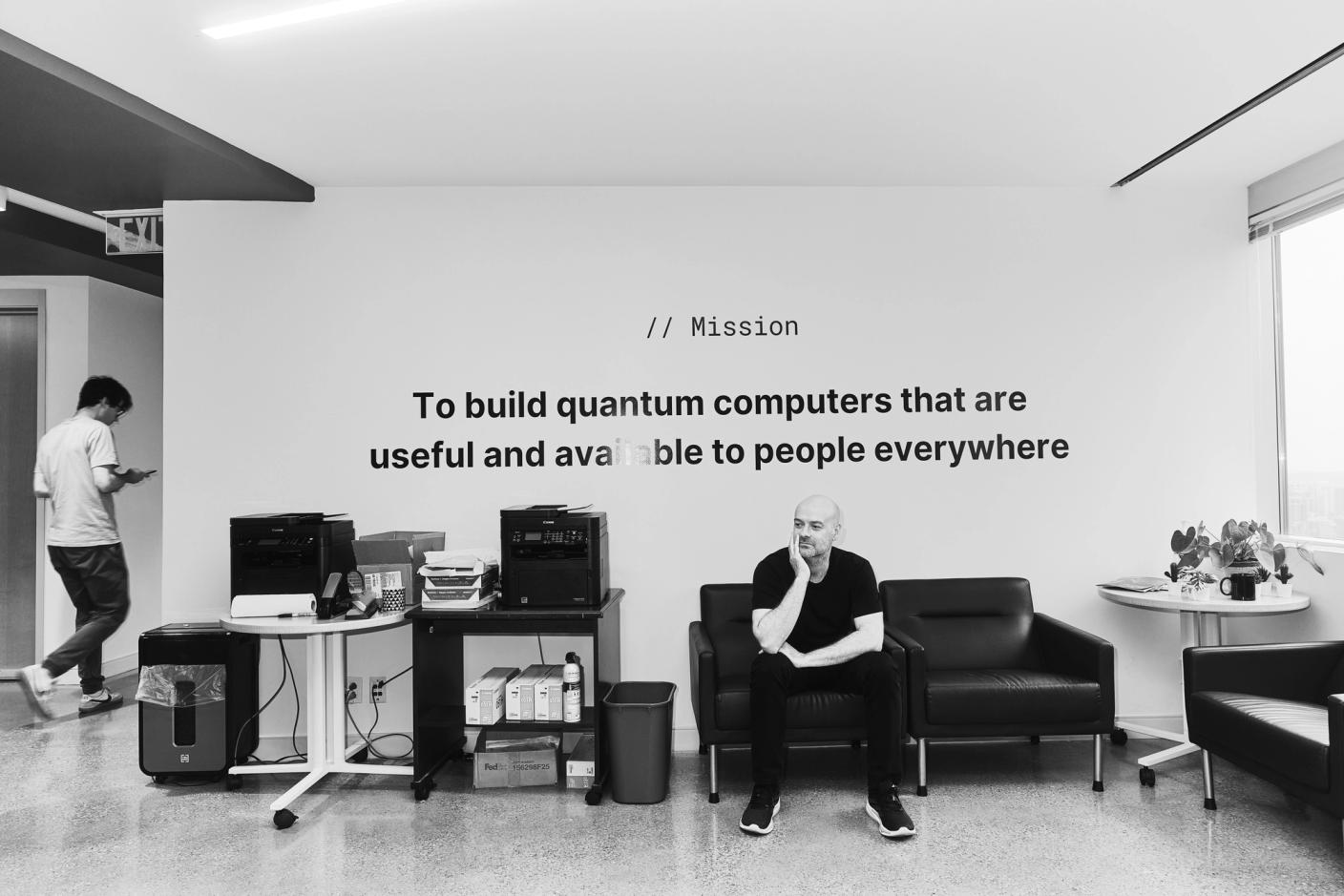
He knows what you’re thinking: “Data centres? Doesn’t everyone hate those things?” That may be true of AI data centres, but a photonic quantum data centre is a different, less ravenous breed. Because quantum computers would be exponentially more powerful than classical computers, Weedbrook says Xanadu’s data centre would use far less energy, water and space.
This would-be data centre is part of Weedbrook’s plan to help Canada win the quantum race – and the stakes are high. Quantum computers may be able to break modern encryption standards by the 2030s, which means that if Canada doesn’t wield this technology for good, bad actors might use it to hack into our bank accounts, voting systems and medical records.
Ahead of his keynote speech at Toronto’s Elevate Festival this September, Be Giant spoke to Weedbrook about why Canada needs a quantum data centre, what feats of science it might achieve and the roadblocks that still stand in his way.
Get our weekly newsletter – the people, places, and ideas revealing where Canada is headed.
You’ve been vocal about your desire to build a quantum computing data centre. Why?
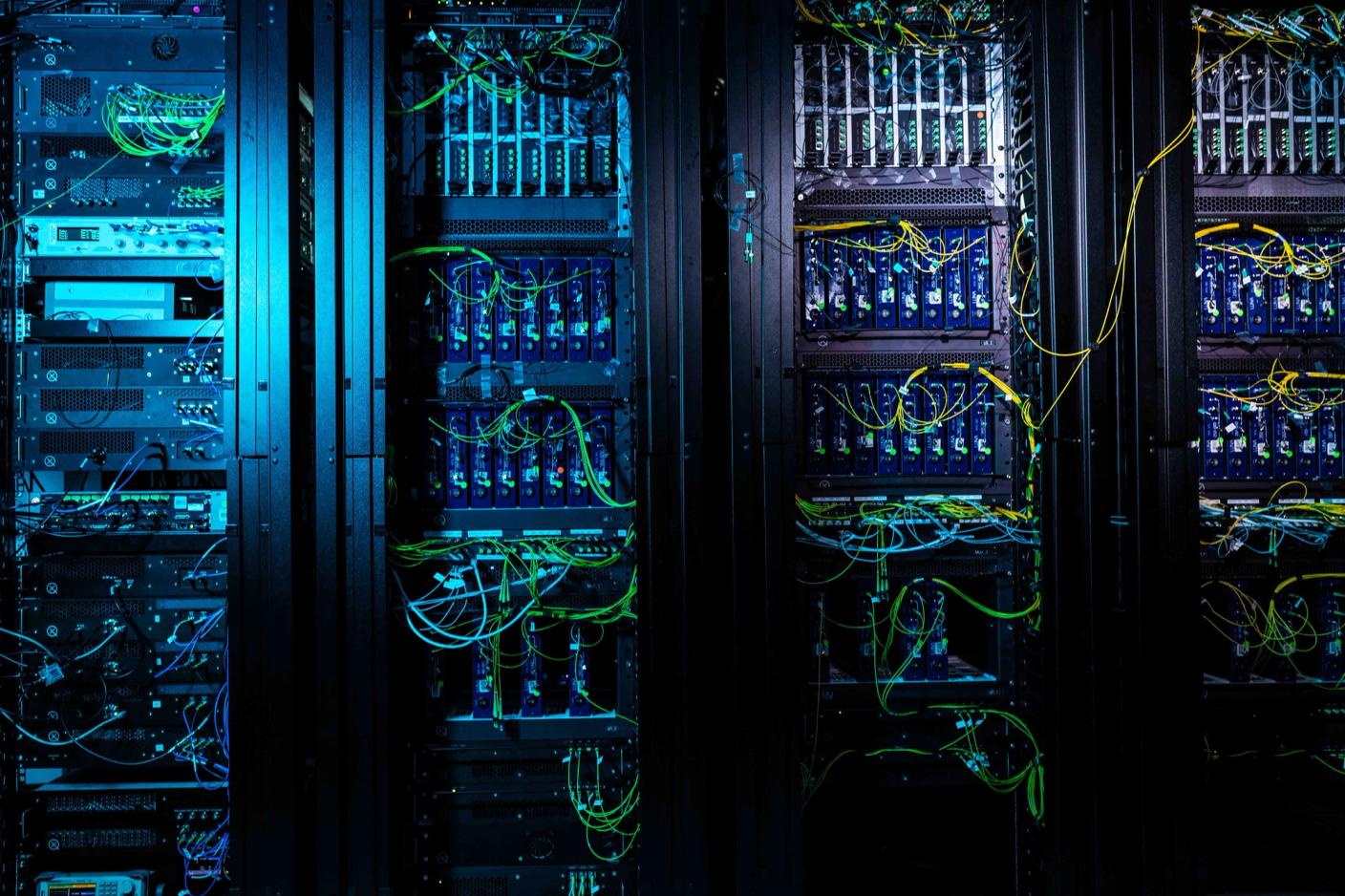
It represents the final initial stage of a large-scale quantum computer. We already have quantum computers today. So do others around the world. But they need to be bigger, more powerful. A couple of years ago, one of our quantum computers, Borealis, solved an esoteric math problem that would have taken the world’s fastest supercomputer seven million years. Borealis solved it in two minutes. That’s impressive, but it wasn’t a business problem. Today, our customers aren’t using the most powerful version of a quantum computer. They’re just playing around, understanding it, getting ahead of the curve. A quantum data centre – think of it as taking up as much space as three or four tennis courts and having hundreds of server racks – represents true customer revenue and potentially changes the world. That’s why we’re really excited about it.
You’ve called another one of your quantum computers, Aurora, a baby version of what you’re hoping to build. What was that project, and what did it prove?
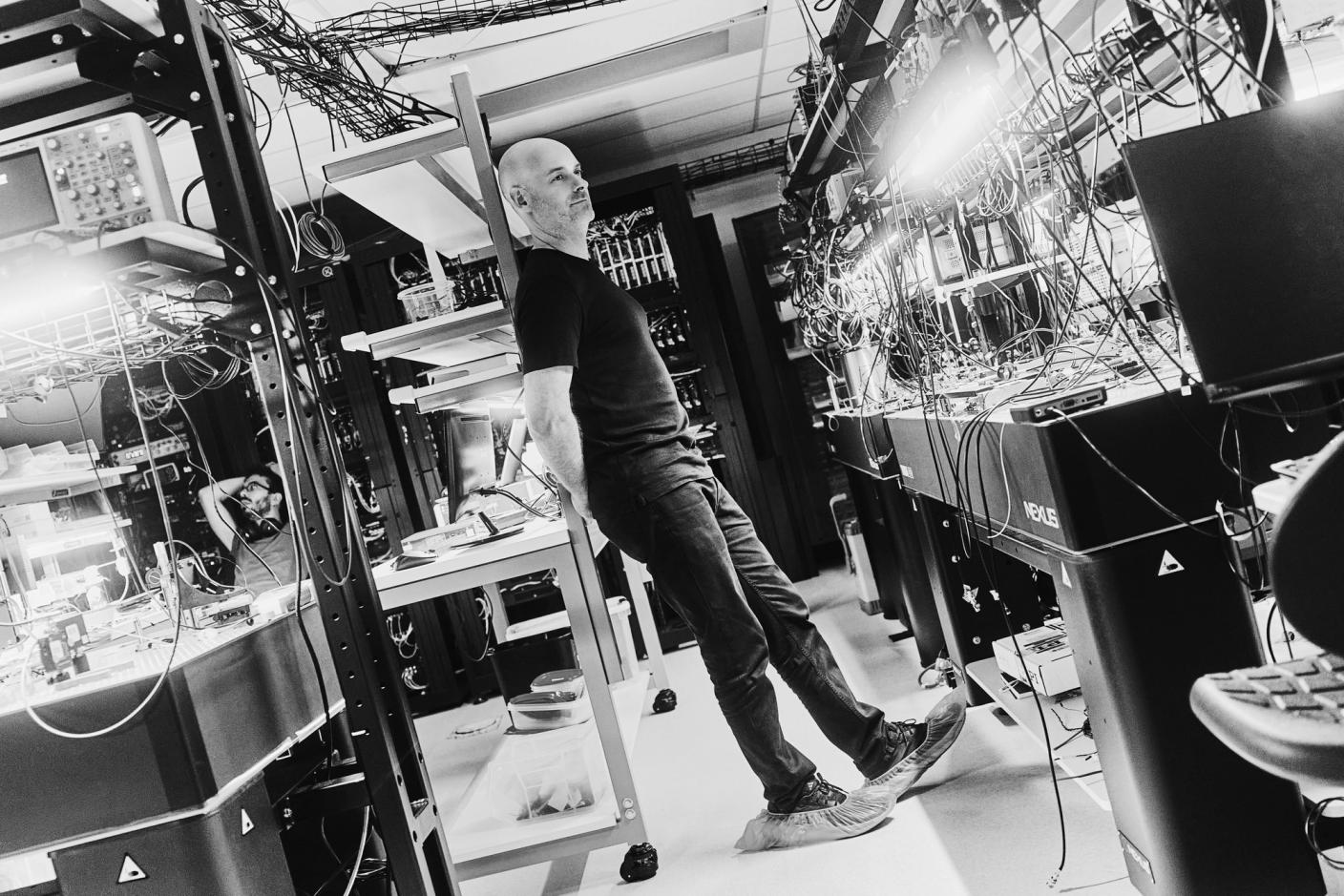
In 2024, we gave ourselves a year, starting on January 1, to network four separate quantum computers together. The project was codenamed “Feel the Burn” because it felt like we were in the hot seat, trying to solve such a challenging problem on such a tight timeline. We weren’t sure whether we could do it. But two weeks before the end of the year, we succeeded. It was the first time anyone anywhere in the world had networked separate quantum computers together in a scalable way. Aurora had only four server racks, but it really showed us the path toward having hundreds networked together.
If you can network four quantum computers, what’s stopping you from linking thousands?
The performance isn’t there yet. When you work with photonics, photons get lost, and that causes errors. This year, we’re focusing on reducing those errors by improving the performance of our components. It’s an iterative process. We do all the designs ourselves here in Toronto and then we send them off to different foundries around the world. They fabricate the chips and send them back to us. We test them, learn how to improve them and then send new designs back to the foundries for another iteration.
At the risk of getting overly technical, how exactly do you prevent photon loss?
The dominant form of loss in our integrated photonic chips is scattering loss – light scattering off the microscopic raggedness of a waveguide’s sidewall. A surprising amount of the remaining loss-reduction work is nanoscale surface engineering and attacking roughness at its source by optimizing the waveguide patterning processes.
Let’s pretend I understood what that meant. If photon loss is one of the downsides of working with light, what are the upsides?
What’s good about our photonics-based approach is that foundries, from the very small to the very large, have been servicing the telecommunications industry – i.e., the photonics industry – for decades. They already have all the processes, tools, materials and wafers. We can actually use the same chip designs. Photonic quantum computers also work at room temperature, whereas other types require extremely cold temperatures to function properly.
Let’s assume you solve the problem of photon loss and build a quantum data centre. In lay terms, what might that achieve?
It won’t mean anything for us to build this machine unless it solves real problems. And it will. The fields quantum will impact include cybersecurity, artificial intelligence, logistics, finance, material design and pharmaceuticals – very, very big areas. I’m excited about all of them, but I’m especially excited about pharmaceuticals and material design. We think they’re the lowest-hanging fruit.
Right now, designing new drugs – from computational simulations to phased trials to ultimately selling tablets – can take 10 years and up to $2 billion. Ninety per cent of drug candidates fail because we still can’t reliably predict how a molecule will behave in the body before we make it. Molecules are governed by quantum interactions that don’t break down into independent pieces – the electrons are entangled, so changing one affects the others. Classical computers can only approximate these interactions, and those approximations get less accurate as molecules grow more complex. Quantum computers, by contrast, simulate molecular behaviour natively rather than approximating. That’s why we think it shifts the odds across the whole discovery pipeline.
When you’re working on technology that’s not really there yet, how do you strike a balance between optimism and the uncertainty of trying to do something no one else has done before?
It can be very daunting when you’re trying something that seems impossible, especially if it’s your main goal. But we have other things that fuel us: let’s try to do the best we can, let’s work extremely hard, let’s work on something we love that gives us meaning and purpose, let’s make sure we’re learning every day. If it works out, it works out. If it doesn’t, it doesn’t. We obviously think it will work out, but that philosophy takes away the pressure of doing something challenging. It’s boring if you don’t swing for the fences, but you can’t let it be a weight on your shoulders. I’ve lived my life that way, and Xanadu as a whole tries to live by that philosophy as well.
If Xanadu does in fact build a quantum computing data centre, what will it mean for Canada to possess these kinds of capabilities?
It’s really important. Quantum, along with AI and a few other fields, are really the poster children for sovereign technology. You want to rely on and work with other countries, of course, but you want to make sure you’re onshoring a lot as well. We’ve seen the reasons why over the last couple of years, as our relationships with certain countries have deteriorated. That has benefited our defence industry – there are so many defence startups in Canada now, which is something I thought I would never see. This focus on sovereignty has been great for us and other quantum companies in Canada, too. Last year, to rival the [Defense Advanced Research Projects Agency’s] Quantum Benchmarking Initiative – a program that will award over US$300 million in pursuit of a fault-tolerant quantum computer – the federal government launched the competing Canadian Quantum Champions Program. I don’t think that would have happened without this push for sovereign technology and defence.
One of the conditions of that program is that you remain headquartered in Canada. You’ve already announced your intention to build your quantum data centre in Toronto. Why this city in particular?
I love Toronto. It’s nothing more or less than that. I’m originally from Australia, lived in Boston for a bit and then, through a postdoc at the University of Toronto, I landed here over 15 years ago. It’s home now, and hopefully it will be for a long time, perhaps forever.