Canadian AI sovereignty depends on both the rapid deployment of infrastructure and on using the country’s leadership in safe AI models to allay fears surrounding the technology.
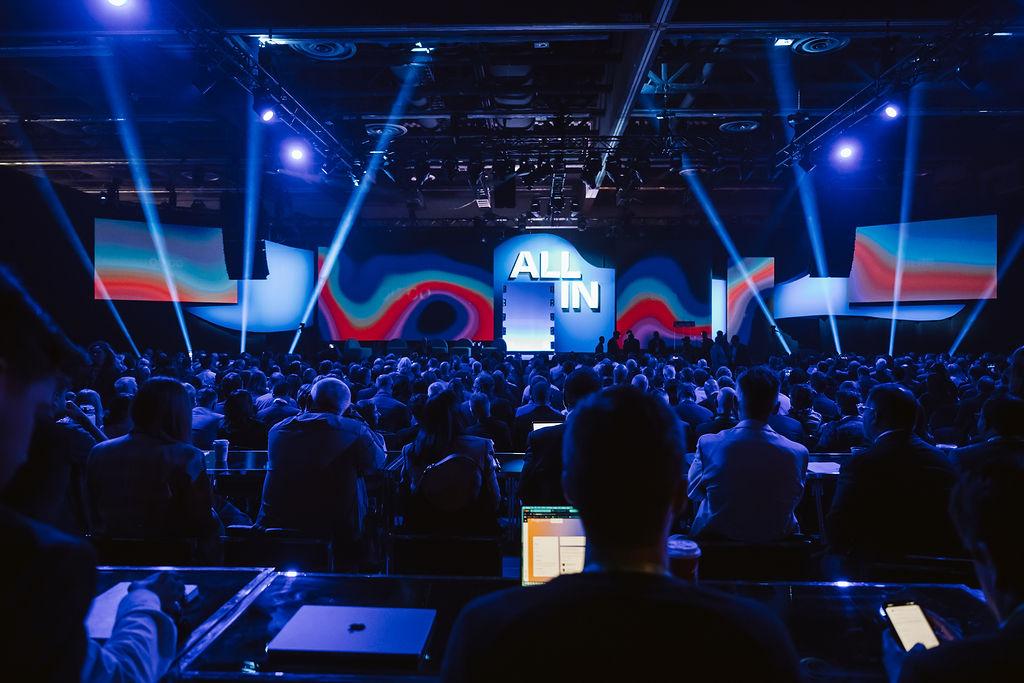
That was the message from several industry leaders on Wednesday at All In, Canada’s biggest annual AI conference. Held in Montreal since 2023 as a way to promote Canadian AI, this year’s edition comes as environmental and existential concerns over the technology have spilled out into the open. On the eve of the conference, vandals defaced the Mila Institute building, shattering windows and spraying anti-AI graffiti on the walls of the Montreal AI research centre. Protests continued on Wednesday outside the conference centre.
As compelling as doomsday narratives may be, they are misplaced – and actually mask some real threats the technology does present, said Aidan Gomez, co-founder of Toronto-based Cohere, the biggest AI company in the country.
“People throw out numbers, like a 10 per cent chance that there's going to be extinction of our species due to this technology. That's not a mathematical result, and it's extremely misleading to the public to throw out these numbers that are just like your gut vibe check on what might be coming,” Gomez said. He said he was “more focused on the less sci-fi risks,” though the ones he cited were hardly benign: “Cyber threats [and] the ability for these models to contribute to the development of bioweapons are real, tangible, measurable things.”
Cohere’s merger with Berlin-based Aleph Alpha, announced at the conference Wednesday, is part of the company’s strategy to counter these threats. By scaling up with a like-minded (read: safety-focused) company, Cohere is looking to broaden its customer base and otherwise reduce reliance on enterprise AI tech from the U.S. and China – the two dominant actors in the field, both seen as increasingly unreliable. The merger, which will increase Cohere’s employee headcount to more than 1,000 in Canada and Europe, will create the largest AI company outside of the U.S. and China, said federal Minister of Artificial Intelligence and Digital Innovation Evan Solomon.
Get our weekly newsletter – the people, places, and ideas revealing where Canada is headed.
There is a huge market for safe, open and reliable AI models of the sort produced by Cohere and Aleph Alpha, said Karsten Wildberger, Germany’s digitization and government modernization minister. Such models would not only help to dampen fears, but open up business opportunities. “I can think of billions of people on this planet who would love to have this version of AI,” Wildberger said.
Canada is also home to LawZero, a research organization dedicated to producing safe AI. A spinoff of Mila, LawZero is developing Scientist AI, a model built on true and false statements that isn’t geared to maximizing user engagement. As such, it isn’t interested in placating users – one of the reasons AI models sometimes go rogue – only in giving real, verifiable information.
“The goal here is for this technology not just to be safe, but to leapfrog the frontier models that are currently being developed in other countries, so that we would get systems that are reasoning coherently and according to our instructions,” said Yoshua Bengio, LawZero’s co-president and scientific director. “That is something that would be extremely valuable to the world, something that would give cards in the deck of middle powers like Canada and Germany, and hopefully many others.”
Building out infrastructure on this side of the border is the other crucial piece of Canadian sovereignty in the AI sphere. Canada’s reputation as a hewer of wood and drawer of water has extended into the AI field, Bell CEO Mirko Bibic said during a panel discussion, in the sense that the country has tended to export resources and talent to the U.S. and abroad, only to buy them back as finished products.
Bell’s recent announcement of a 1.2-gigawatt Canadian AI infrastructure hub in Saskatchewan is an attempt to buck the cliché. “What we're trying to do here is create a completely sovereign ecosystem, a full stack, so that we can not only create IP here, [but also] process the IP here, develop IP here, and then turn that into commercialized use cases that benefit the ecosystem, the Canadian ecosystem,” Bibic said.
Canada, the birthplace of AI, has among the lowest rates of AI adoption in the world. Yet there are few places better placed to benefit from the deployment and safeguarding of the technology – as well as the resulting sovereignty this would afford. “We have the world's second-largest landmass, a small population, a cold climate, a grid that is majority clean energy, and so we have the opportunity to become the global superpower in computing infrastructure, and that is an incredible resource for the world that Canadians would control,” Gomez said. “That's a massive leverage point for us on the world stage, and Canada needs to understand that.”