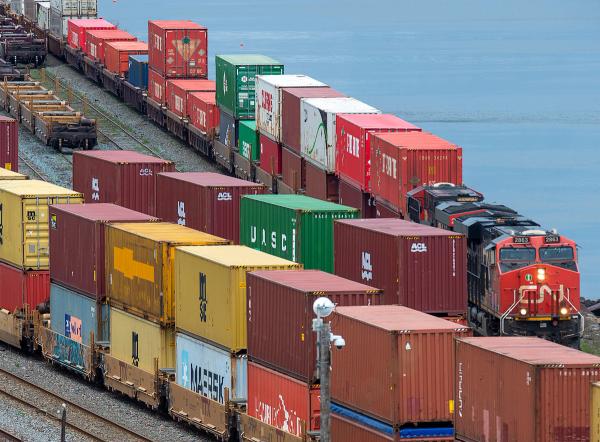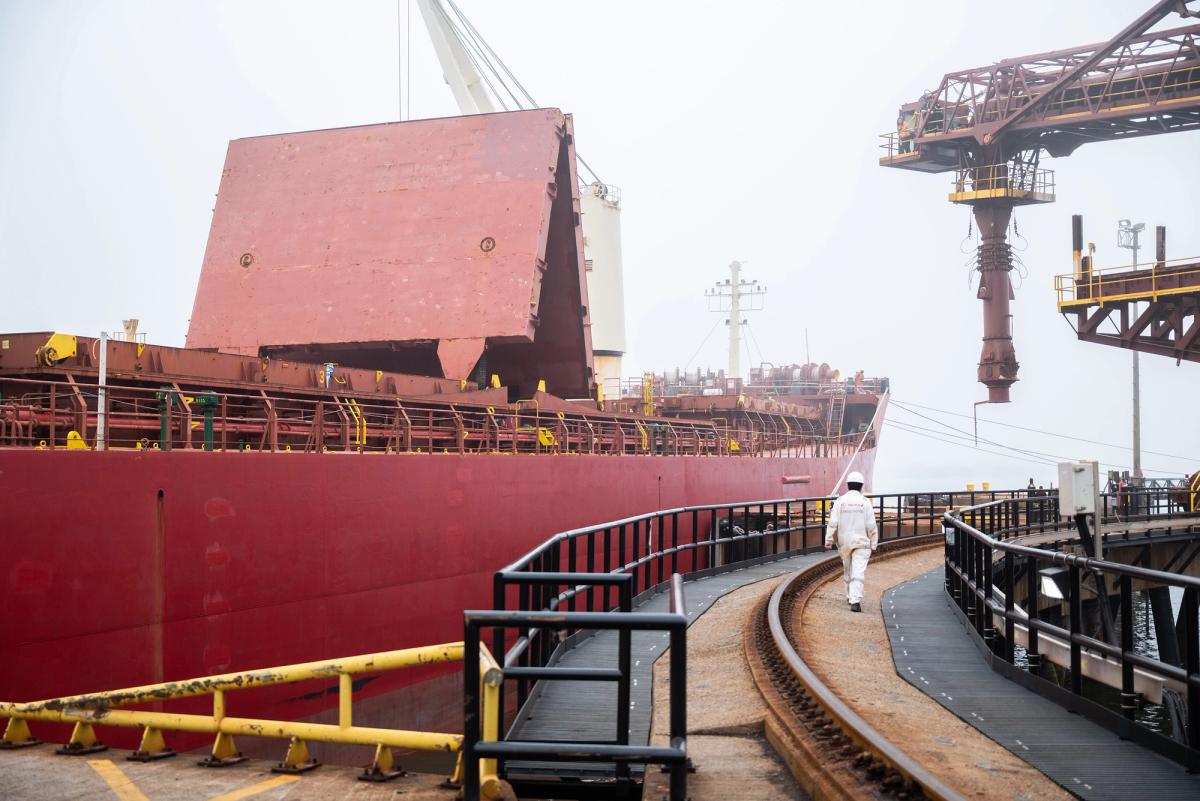
Canada has been pushing hard to build its export economy over the last few years. As last week’s federal budget noted, new trade agreements have been signed in Europe and Asia, governments and businesses are courting global investors and billions of dollars have been earmarked for trade infrastructure. It’s working – exports are up – but it’s a bit of a mixed picture. While Canadian exports to non-U.S. markets jumped 17 per cent between 2024 and 2025, the actual number of companies exporting increased by just six per cent. Be Giant talked to Patrick Gill, the vice-president of the Business Data Lab at the Canadian Chamber of Commerce, about why more Canadian companies aren’t looking further afield, and what can be done about it.
You’ve done research that shows Canada’s exports growing, but the number of companies exporting, not so much. What’s going on?
We are doing more trade, but it's basically from the same base of traders. And we don't just need more trade, we need more traders doing it. There are green shoots happening, and that's helped to offset some of the reduced trade with America this past year, but if you look at the sort of markets that Canadian companies can compete in, Europe is by far the biggest opportunity. It's a trillion-dollar opportunity, and we can leverage CETA [the Canada-European Union Comprehensive Economic and Trade Agreement]. In 2025, Canadian goods exports to Europe grew by 33 per cent, but the number of exporting establishments only increased by one per cent.
Overall, there were about 53,000 Canadian goods exporters in 2025. That's only five per cent higher than it was before the pandemic, when it was around 50,000.

Get our new book for free.
Subscribe to our newsletter and we’ll mail you a printed copy.
Is that because it’s just easier for a company that already trades to ramp up, as opposed to a company starting from scratch?
It helps to look at the archetype of who a Canadian exporter is. It’s usually a large company. Large companies are large because they are productive, they are diversified and they have economies of scale because they trade internationally. It’s a lot easier [for existing traders] to trade to another place than for a company to get over that threshold for the first time.
The other important factor is that we are a country of small businesses. When you look at the small businesses that are exporting, most of them are service providers. About 53 per cent of businesses with one to four employees are exporting services, and service exports increased 3.7 per cent between 2024 and 2025. When we think about opportunities to bring more businesses into exporting, services are a clear pathway. The great thing with services is you don’t have to worry about logistics so much, you don’t need a warehouse. You need customers, and this is where the obstacles come into play.
How so?
It’s a mindset thing first and foremost. About 90 per cent of non-exporting SMEs [small and medium-sized enterprises], according to StatsCan data, say that they’re not exporting because they view themselves as being local businesses. It doesn’t matter if [they have] one to four employees or one to 99 employees, the local nature of the business is the biggest feature [in our research]. And we see this with other business levers, whether it’s helping scale businesses, drive competitiveness or productivity. I mean, how long have we been telling businesses to think globally? How long have we been telling businesses to adopt technology?
What else is at play?
The research shows that most get into exporting reactively, not proactively. They’ve gotten a call from someone and that’s why they're doing it. And they’re most likely doing it in the U.S., so in just one market. I mean, small business owners wear many hats, and they don’t often have the time to think, “Let me sit down with my team and build a plan to take what I'm doing and go global.”
But you can be rooted in your community while not being limited to your community. Many businesses that are export viable just haven't looked up and asked “how do I start.” I think a lot of that comes down to not knowing where to look.
What can be done to help?
The Government of Canada has done a great job with creating free trade agreements, and providing a basket of trade service supports. Free trade agreements have created the door, but businesses need to start walking through it themselves. We have a fantastic ecosystem of exports service providers that are willing to take your hand, build a plan with you and walk you through it. The Canadian Chamber of Commerce has our free Trade Explorer. It helps Canadian businesses see what they could export, where the opportunities are and which markets they might consider next.
When I’ve talked with immigrant entrepreneurs, they often refer to their experience in their home countries. Are immigrant entrepreneurs more predisposed to be exporters?
They are. Immigrant entrepreneurs are more likely than the average Canadian entrepreneur to be an importer or exporter. There’s been a lot of research done on the benefits of diaspora networks, and it’s also because you have a different mindset, a different reference point. They can see beyond the main-street opportunity.
What can, or should, government be doing? Last week’s federal budget included a planned merger of the Business Development Bank of Canada (BDC), which provides capital, and the Export Development Corporation (EDC), which helps businesses export. What did you think of that move?
The merger of the BDC and the EDC is a great signal. It makes a lot of sense to connect startups and entrepreneurs to an organization that is more globally oriented. Connecting those pieces provides wraparound support. On the investment side, if it helps provide an access point for businesses to get into global procurement and supply chains, great.
When I talk to tech founders and tech startups, they often seem more export-oriented, but even then they’re often talking primarily about the U.S. Are they being aggressive enough pursuing Europe, for example?
The U.S. will continue to be an important customer, our main customer. That applies to startups as well as to established businesses. But at the same time, we should have other customers as well, like Europe. And we should be our own best customer. Many Canadian businesses don't actually sell interprovincially; they’re very locally focused.
I agree that tech startups are by default more globally oriented. Because they are digital, they can go anywhere. They’re focused on the U.S. in part because a lot of the funding comes from the U.S., and when they look to get a return on their investment in three to five years, they're often going to sell to another U.S. company.
What else should we be trying?
When we're thinking about exporting, the traditional thinking is, “Okay, I'm going to get bigger and scale one customer at a time.” Well, instead of trying to get one customer at a time, what about buying a whole set of customers by acquiring a business internationally? A lot of the same public funding mechanisms that Canadian businesses can tap into to go to another market can also be used to acquire businesses in another market. And when you create a beachhead that way, you are exporting, but it’s a different mechanism.
When you look toward 2027, what signals are you going to be watching to see if that mindset shift is starting to happen?
We know trade negotiations [with the U.S.] have picked up again, that in the next couple of years we'll have a more stable trade framework. Once that happens, the key signal will be, do we continue to diversify, or is everyone just going to shift back to the historic pattern of trade with the U.S.? Will the share of our trade profile diversify? Will more businesses be exporting?
And what are we exporting? Is it still very heavily weighted to commodities, or are we shifting away from commodities and merchandise to more services? That’s really our sweet spot with capabilities.