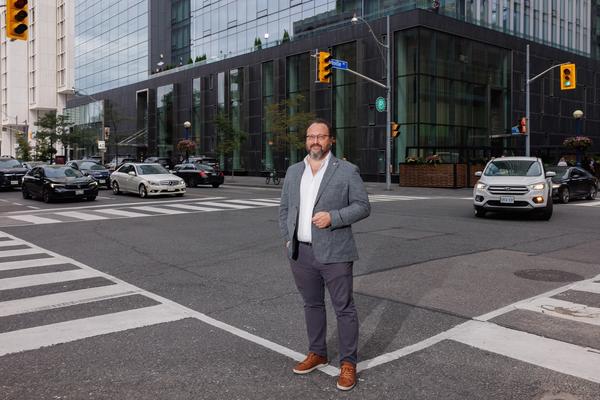
“I sleep well at night,” Mike Spence says over breakfast at the Seaport Hotel, which he co-owns. The mayor of Churchill, Man., he also co-owns Wat’chee Expeditions, which has a lodge near Wapusk National Park, and he’s the chair of Arctic Gateway Group, a private company that owns the Port of Churchill, the site of a proposed new multibillion-dollar megaproject.
The Seaport is a good place to stay: unfussy. Men in orange overalls eat breakfast here. The lobby has murals of polar bears, a cash machine for people playing the VLTs in the bar. Bee and Denise at the front desk operate a train station shuttle, a three-minute trip. The station is about 200 metres from the Seaport. Around 800 people live in Churchill.
“Everything’s a work in progress. I’m not one to worry,” Spence says, spreading Cheez Whiz on rye toast. “There’s going to be a process. They’ll be involved.” They are the people of Churchill, some of whom I’ve met since arriving here, after two days on the train. There’s no road to Churchill. There’s an airport, a big airstrip built in 1942 by a U.S. military now long gone, with a paved runway big enough for commercial jets.
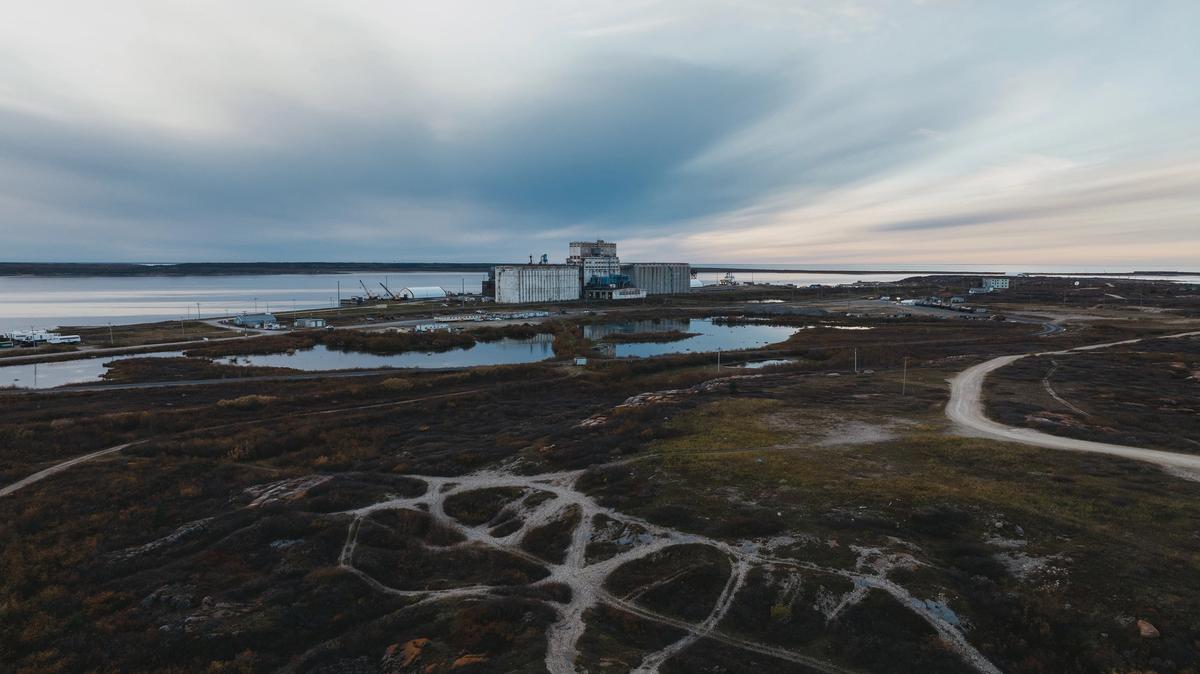
Then there’s the port, the only deepwater port in the Canadian North connected by a railway, opened in 1931, a relic of the busy Canadian Wheat Board years when western grain was shipped through Hudson Bay. It’s been mostly idle for the past six years. But then, last year, the federal government labelled the Port of Churchill expansion a “transformative” project, and Ottawa and the Province of Manitoba have put more than $460 million combined into upgrading the port and the railway that serves it, also owned by Arctic Gateway Group (AGG). According to Ottawa’s Major Projects Office, “transformative” means: an early-stage initiative that could “significantly strengthen Canada’s economy” but still needs a lot more work.

“Everything’s a work in progress. I’m not one to worry.”
– Mike Spence, mayor of Churchill, Man.
Now, Manitoba Premier Wab Kinew wants to build an $80-billion energy corridor, including a liquefied natural gas (LNG) plant offshore and an all-weather road. Kinew calls this expanded vision the Port of Churchill Plus. “LNG Canada on the West Coast is the largest private investment in Canadian history to date,” he told reporters in August, “and in order for Churchill to move energy products and to be economically viable, we basically have to build a project of that scale. So that’s the target.” AGG, meanwhile, says $2 to $3 billion would be a good start to ship goods such as grain, potash and minerals.
What happened that a nearly 100-year-old port suddenly became a multibillion-dollar megaproject? In short: Trump happened, climate change happened. When American tariffs and bad-faith bargaining became the new North American normal, Prime Minister Mark Carney started looking to alternative markets. The shipping route from Churchill through Hudson Bay, the Hudson Strait and the North Atlantic past Labrador to western Europe is 1,400 kilometres shorter than the route from Thunder Bay, Ont., through the St. Lawrence. It takes 10 days to sail from Churchill to Bruges, Belgium, compared to 13 or 14 days from Thunder Bay, according to AGG. The problem in the past has been ice on Hudson Bay and, therefore, a short shipping season: roughly four ice-free months. That is, until recently: Canada’s North is warming up three times faster than the global average due to anthropogenic climate change, and the ice on Hudson Bay is receding.
Get our weekly newsletter – the people, places, and ideas revealing where Canada is headed.
In August, three reports – by the University of Manitoba, the Arctic Research Foundation (a non-profit group founded by Jim Balsillie, who has also advised Kinew on technology and productivity) and ocean shipping company Fednav (which owns 130 dry-bulk ships and has a memorandum of understanding with AGG) – said that year-round shipping through Hudson Bay and the Hudson Strait was “achievable using existing ice-class vessel technology,” meaning that even in winter, ships could sail from Churchill to the Atlantic without the help of expensive icebreakers.
“We need to diversify our trade,” says Chris Avery, the CEO of AGG. Avery is originally from northern Vancouver Island. He’s the former president and CEO of Canadian North airlines and a former senior executive of WestJet. He now lives in Winnipeg. “Our partners are also looking for what Canada has. They’re looking for critical minerals. They’re looking for energy products from trusted and reliable partners. They don’t want to be reliant on Russia or China or even the United States. So, we’re providing something for our partners, and we’re also diversifying our trade away from the U.S., especially when we’re under economic attack.”
This is the business plan: an alternative to busy ports at Vancouver, Montreal and Saint John, N.B.; a shorter route to Europe, South America and Africa; and, crucially, a symbol of Canadian sovereignty in the North, a working base of maritime operations. Russia has 13 Arctic ports. China is bragging about a Polar Silk Road, its own Arctic shipping strategy. Canada has just this one northern deepwater port: Churchill (although Ottawa wants to build a new one at Grays Bay, in Nunavut).
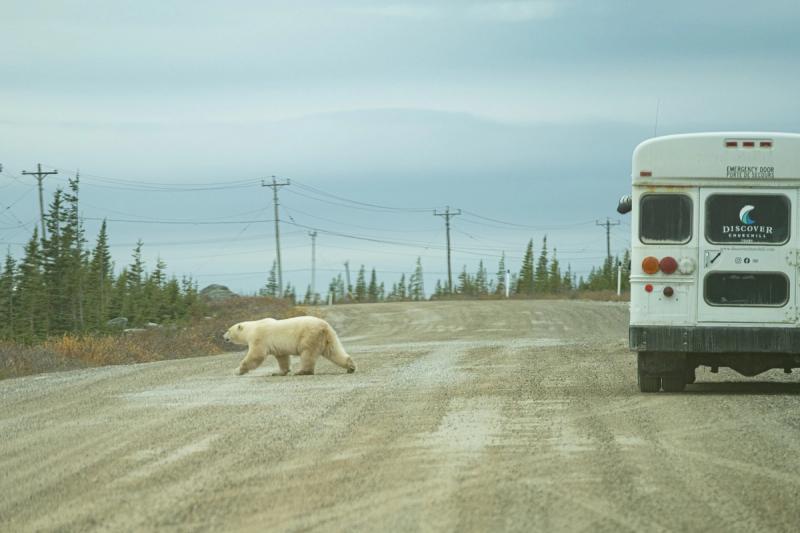
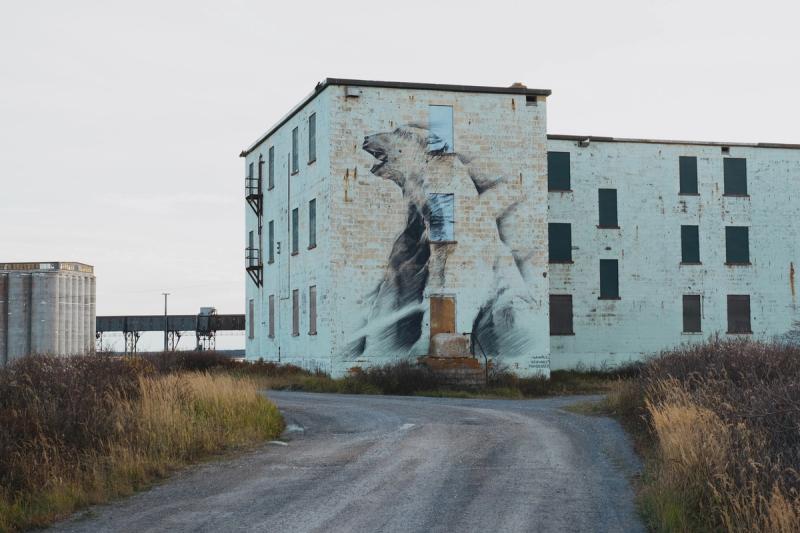
Churchill is a place of intersecting timelines: polar bears have used the peninsula as a migratory track to the winter ice on Hudson Bay, where they catch seals, for as long as there’ve been polar bears, seals and ice. Beluga whales live in the river estuary. Nomadic Dorset people, and later the Dene and Cree, hunted caribou here. Samuel Hearne landed here in 1766. The American military came and went, leaving behind a Cold War missile-testing range that’s still rusting about 25 minutes east of town. Whaling came and went, lasting until 1968 (the meat was used to feed farmed minks, among other things), and grain shipments at the port came and went, lasting until the Wheat Board closed in 2012.
Now that there’s talk of refitting the port, you could forgive the people of Churchill for being ambivalent, given their experience with boom and bust. They aren’t sleeping as well as the mayor, or, to be fair, since vocal opposition is rare, they still have a lot of questions for Mike Spence, AGG and Premier Wab Kinew about what’s going down at the water’s edge.
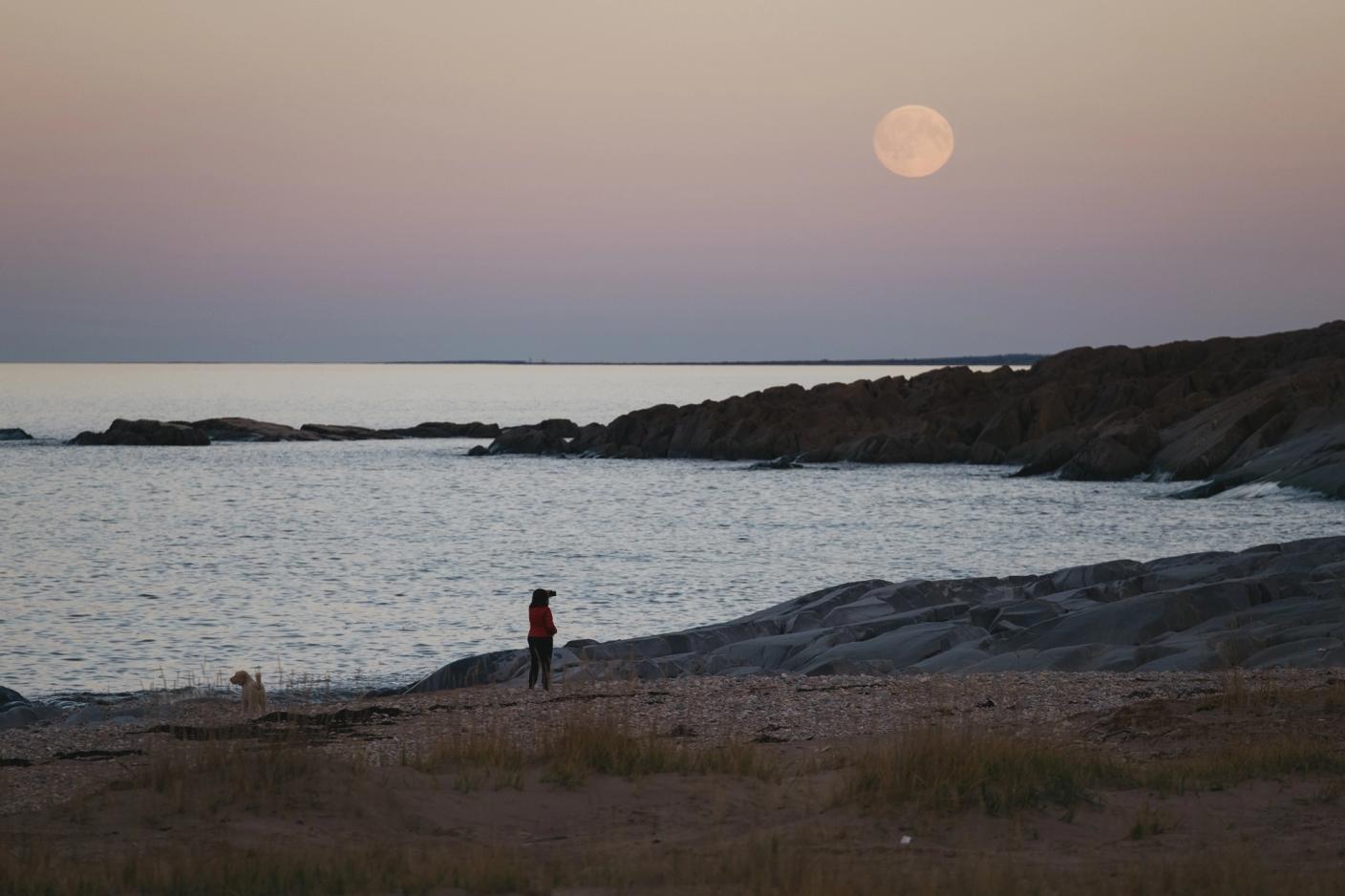
“You can always feel the town kind of start to vibrate once something’s about to happen,” says Courtney Hooper, who owns the Traders Table restaurant with her husband, Caleb, “and it’s definitely buzzing [now].” Courtney is from Winnipeg. She sold men’s suits at Moores on Regent Avenue West. She had ideas about moving to Nova Scotia and living off grid, then met her future husband, who proposed living in the North in a yurt, and they wound up in Churchill. She fell in love with the place. “It was about this time of year [September],” she says, “when grey kind of meets the rocks versus sky versus water. Nothing like I’ve ever seen before.” The couple has two children, 12 and 10. She’s a member of the volunteer fire department.
“I heard a siren last night,” I tell her over coffee at the Traders Table. “Was it a fire alarm?”
“At 10 o’clock?” she asks.
“Yeah.”
“No, that’s just a 10 o’clock alarm.”
It’s to tell people it’s a good idea to go home, before it gets too dark, the time for bears. Polar bears do wander into town. They are to Churchill as raccoons are to Toronto, with considerably higher stakes and way more value to the tourism industry.
As for the Port of Churchill Plus, “Where is everybody going to stay when they get here?” Courtney asks. “You’re going to increase [the number of] people coming into town, but there’s no place for them to stay. Everything’s booked a year in advance. There’s no housing market for people to buy family homes.”
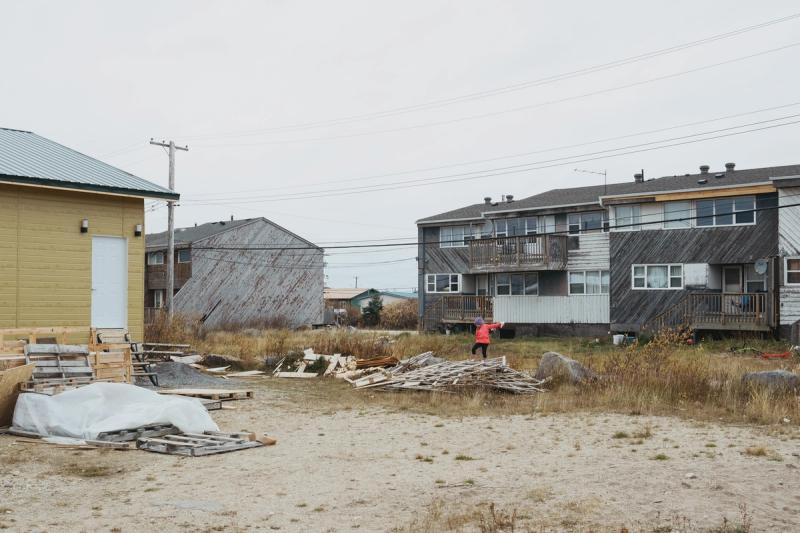
Drew Hamilton co-owns Discover Churchill, one of several tourism companies in town. He’s from Alaska. In his view, a working port would be welcome: back to grain and ore. When AGG shipped 30,000 tonnes of durum wheat from the Saskatchewan company AGT Food and Ingredients this past summer – the first wheat shipment in six years – “this town got fired up,” he says. “You know the grain’s back, and to drive by the port and actually hear it working, as it’s been silent for a few years now, there was definitely an extra energy about the town.” But his line in the sand is the energy corridor: oil and gas. “It’s the ‘Plus’ that scares me.” He grew up, he says, in the shadow of the Exxon Valdez. For Drew, oil and ecotourism don’t mix.
“Crude might be one thing,” Wab Kinew said at the September press conference, referring to public opinion in the North, “but on LNG, people think about it like propane that we all use in our backyards … so the idea of a leak or a spill, it’s not really the same level of concern.”
But for Max Burke, a 22-year-old driver for a tourism operator, and a member of Peguis First Nation, who I met on the train, gas plants “are a death sentence – for the bears, the whales, for us.” He’s on board with AGG refitting the port for grain and ore. He’s on board with jobs for his town. But an LNG plant would be too much. “If I were to describe our community, I would say we are adaptive and pragmatic. We’ve been through changes. We are also people who know that we have very little say in what happens to us,” he says. “We are a dependent population. You can’t negotiate freely with people you are dependent on.”
“We’ve got to make sure that the environment, wildlife, all of that is all part of the picture as we move forward,” Mike Spence told me. “We’re doing it in a format that doesn’t devastate the area in terms of the environment and Aboriginal [sic] needs that are required.” The premier’s office did not return emails from Be Giant asking for comment on local concerns, but Kinew told a Churchill town hall in February that “we’re not going to do the next round of investments or that big, big megaproject unless it works for the people in this room.”

“You can always feel the town kind of start to vibrate once something’s about to happen, and it’s definitely buzzing [now].”
– Courtney Hooper, co-owner of Traders Table restaurant.
Arctic Gateway Group is owned by 41 Indigenous and bayside communities, including 29 First Nations. Mike Spence is from York Factory First Nation. He grew up in the “flats,” the informal settlement near the Churchill River estuary. He remembers the U.S. military fort, the sound of the whalers, the bang of the harpoon guns.
It was Spence who worked the phones, gathering support from northern Manitoba First Nations to buy the railway and port from the previous owner, Omnitrax, an American rail and infrastructure company, after a flood in 2017 washed out the track and stranded Churchill and other communities on the line for 18 months. “I said, ‘Fuck that, we’ve got to change the way things are done,’” he says. Omnitrax didn’t reinvest in its assets. That left Churchill and the First Nations and towns on the track line in limbo, so the idea of taking control, with an Indigenous-owned corporation, made sense as an example of what’s been called ”economic reconciliation”: participating in Canada’s economy as a response to past injustices.
First Nation leadership has been quiet about development. It’s a mistake to make assumptions about who is or isn’t in favour of increased shipping, of oil and gas, based on nationhood, although Morris Beardy, chief of Fox Lake First Nation, one of the partners in AGG, wrote last month in the Winnipeg Free Press, “If we are going to build the North, we must build it together in full and meaningful partnership and in a way that protects both the environment and the social well-being of our communities,” an early sign of corporate-Indigenous entente.
“As much as I love how peaceful and tranquil it can be, you need economic drivers here, and tourism is a huge industry here. But it can’t be the only industry.” Joe Stover was born in Brandon, Man., but he’s been in Churchill since he was five. He’s running for local council. He started work at the Port of Churchill in 2007 as a grain weigher and inspector, then after government downsizing, he took a job moving grain from the elevators to the vessels and was finally laid off when Omnitrax stopped shipping grain altogether in 2016. After that, he worked fuelling airplanes. Now he’s an administrator with one of the tourism companies, plays guitar in the band Days on Land and calls musical bingo on infrequent Saturday nights at the legion.
“We could get [rail] cars in and out of here quicker than we could get cars from the Prairies to Thunder Bay and back, and the same for shipping,” he says. “We could get vessels from here to Europe and back far quicker than you can from Thunder Bay.” Look at a map, he says: this should be simple. But grain and potash companies prefer their own terminals in the east and west, and they prefer to work with the Canadian National Railway on the southern line rather than the Hudson Bay Railway, which still has problems carrying the weight of modern freight.
As for the so-called energy corridor, “I think we need to know more about what [they’re] talking about,” Joe says after some thought. “And I think we’re sort of getting ‘No, no, it’s going to be good. LNG is going to be great.’ OK, awesome. Tell us more.”

“As much as I love how peaceful and tranquil it can be, you need economic drivers here, and tourism is a huge industry here. But it can’t be the only industry.”
– Joe Stover, town council candidate
Trevor Heaver of the UBC Sauder School of Business says, “There’s a whole variety of reasons that, as society, we might make investments in this logistics corridor, and I distinguish those values from the commercial value that may exist now. My argument is that the commercial value is not great enough to carry the day.” A federal market sounding study hasn’t yet been released, “[t]o protect commercially sensitive information,” according to an email from the Privy Council.
Barry Prentice, who teaches supply line economics at the University of Manitoba, calculates that moving just 10 per cent of Canada’s annual 20 million tonnes of potash exports through Churchill would make the railway viable. Volumes like that don’t look likely, for now. Canpotex, the global potash marketer based in Saskatoon that handles much of Canada’s exports, says in an email: “Port of Churchill isn’t a suitable option for potash exports. This is in large part because the rail line to Churchill cannot safely accommodate our potash trains, which are among the heaviest in North America.”
Crucially, Manitoba does not yet have an LNG partner.
In the meantime, Avery says the company is seeking corporate investment. “Ports and railways … are great investments for long-term investors like pension funds. They deliver great returns,” he says. AGG says it’s “actively working” with Hudbay, a Manitoba mining company, and Eldorado Gold of Saskatchewan to ship critical minerals. PADCOM, a small Manitoba potash company, has shipped its product through Churchill.

At the Seaport on my last night, I watched a Days on Land video on YouTube, for their song “Bear 33,” a folk-rock tale about a polar bear that keeps wandering into town despite repeated attempts to tranquilize and airlift him away to the north. Much of it is shot at the Traders Table. It’s a riot. It’s based on a true story. These days, bears that come too close to town are trapped and sent to Polar Bear Jail, as it’s colloquially called, near the airport. After 30 days, they’re tranquillized and airlifted north, where they wake up stoned and confused about where they are. The question of who is the dominant species in Churchill hangs darkly overhead.
Days on Land (the name comes from a metric for climate change, for the increasing number of days the bears have to spend on land given the receding ice) have a new single called “Wide Open Land,” written by the band’s singer, Roy Mexted.
They’re shaking hands, making all kinds of big plans…
Icebreakers, deal makers
We used to be about climate change
Now we’re about shipping lanes
Who’s gonna save our town?
Me and you
Wab Kinew.
At 10 o’clock, the siren wails. Looking out the window, my eyes are drawn to the imminent Port of Churchill, a landmark. Especially at sundown, it looks vaguely Soviet: old, tired, industrial. There’s a heaviness to it that runs counter to the lightness of disposition in town, despite the anxieties about change. Mike Spence says there’ll be a “process,” but in fairness, this revamp, if it goes ahead, will take years. Closing the curtains, I figure Mike Spence is sleeping well, at least for now.
This story is part of a series on Churchill, Manitoba. Sign up to our newsletter for upcoming stories.