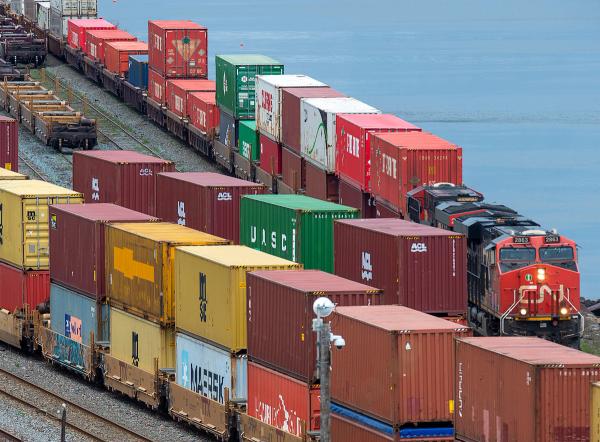
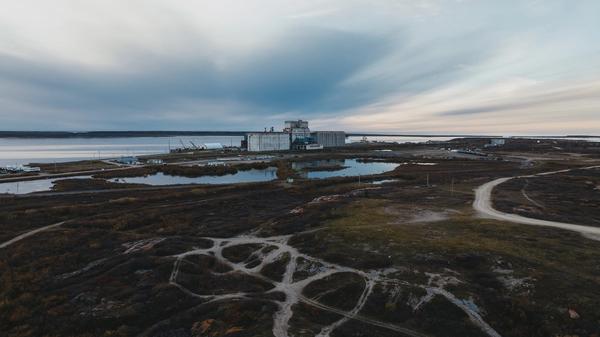
There’s no road to Churchill, Man. Other than flying in, the only way to get there is by train, on the Hudson Bay Railway (HBR), a roughly 800-kilometre line that runs from The Pas to the deepwater port at Churchill.
The line’s passenger service, operated by Via Rail, is a lifeline for the small communities along the way, many of them First Nations: Thicket Portage, Cormorant, Atikameg Lake, Pit Siding, Pikwitonei and Wabowden, named for W.A. Bowden, an Ottawa bureaucrat from the early 20th century, when this railroad was built.
HBR’s freight service is a critical part of a proposed multibillion-dollar megaproject aimed at making Churchill a major energy and transport hub – a plan that could see a massive port expansion and the development of an energy corridor. But the company that owns HBR, Arctic Gateway Group (AGG), has a major problem on its hands: climate change. The railway is facing “stability and drainage issues” made worse by changes that “increase maintenance costs and threaten user safety,” according to a paper from PermaRail, a group of Canadian scientists led by the University of Calgary’s Jocelyn Hayley who’ve been tasked with figuring out how to fix the problem. PermaRail is now partway through a multi-year study with AGG to understand and map the conditions under the track and make it stable enough for the increase in commercial traffic that’s expected if the megaproject becomes a reality.
Get our weekly newsletter - the people, places, and ideas revealing where Canada is headed.
The northern branch of the railway is built on thawing permafrost. That means, in places, the track is in danger of sinking – ironic, given that climate change is the main reason development of the port is happening in the first place: ice is receding on Hudson Bay, making it possible to increase shipping. One hand gives, one hand takes away.
In September, I rode the train from Winnipeg through The Pas to Churchill, a two-day trip. The five Via Rail cars are more than 70 years old, put into service in 1978, when the line was called the Muskeg Express. The pianist Glenn Gould took an older CN train on this route in June 1965 to produce The Idea of North, his CBC Radio documentary about solitude and the search for a mythical and mystical subarctic Canada.
I’d been told that on the last 250 kilometres, from Gillam to Churchill, I might feel the effects of a not-so-permanent permafrost, like sailing on the sea. Permafrost can be anywhere from a metre to 1,500 metres thick, made of frozen soil and rock, with boggy organic matter on top. On a route as long as HBR’s, the conditions can change rapidly, freezing here, thawing there, refreezing somewhere else. Peatlands can collapse.
I’d been on the train for 36 hours, watching a lot of trees pass the window, waiting for this final stretch. When we reached Gillam at night, the train began to rock like a boat in bad weather.
The first signs of permafrost are the telegraph poles that line the track. Instead of upright poles, cedar trunks are lashed together to make tripods, so they don’t sink. Many still have glass insulators but no wires: relics. They’re a sign, too, that the permafrost has been unstable for decades. In the 1980s, an Alberta engineer named Don Hayley (Jocelyn’s father) identified a problem for the railroad north of Gillam: freight trains were getting heavier and the line was susceptible to sinkholes. Some caused small dips in the track, some were complex and covered up to 300 metres of the route. The best a train could do was to creep slowly over problem spots to avoid derailing. This was no way to run a commercial railroad. So Don suggested using “heat pipes” on the track.
These were remarkably simple heat exchangers designed to keep the permafrost frozen and therefore solid. The pipe is sunk vertically into the ground. The upper section is charged with carbon dioxide under pressure. When the air is cold, the carbon dioxide turns to liquid and sinks to the bottom of the pipe, where the warmer earth heats it back to gas, and it cycles around and around, condensing and evaporating, carrying cold from the air to the earth.
There are no moving parts. The heat pipe cools the earth during the winter, when the air is colder than the ground below, so it stays frozen in the summer, when the heat pipes aren’t operating. It’s, in essence, a technology that refrigerates a melting North. In a 1987 test, 400 heat pipes were installed along select stretches of HBR in 26 days using a rail-mounted drilling rig.
Modern thermo-siphons look like slender vertical tubes. They’re sunk into the ground like flagpoles. The United States has installed 124,000 thermo-siphons to keep the Trans-Alaska Pipeline from sinking. The Alaska Highway uses thermo-siphons in a section near Beaver Creek, Yukon, to keep the highway from sinking. But “it’s very expensive to go and install thermo-siphons everywhere along the way [of the HBR],” says Pascale Roy-Léveillée of Quebec’s Laval University, who’s also a member of PermaRail. “So we need to find solutions that are effective, affordable and realistic, too.” What that means is: let nature take its course. Use thermo-siphons on the worst stretches, then beef up inspection and maintenance so you can quickly fix problems on the rest of the line.
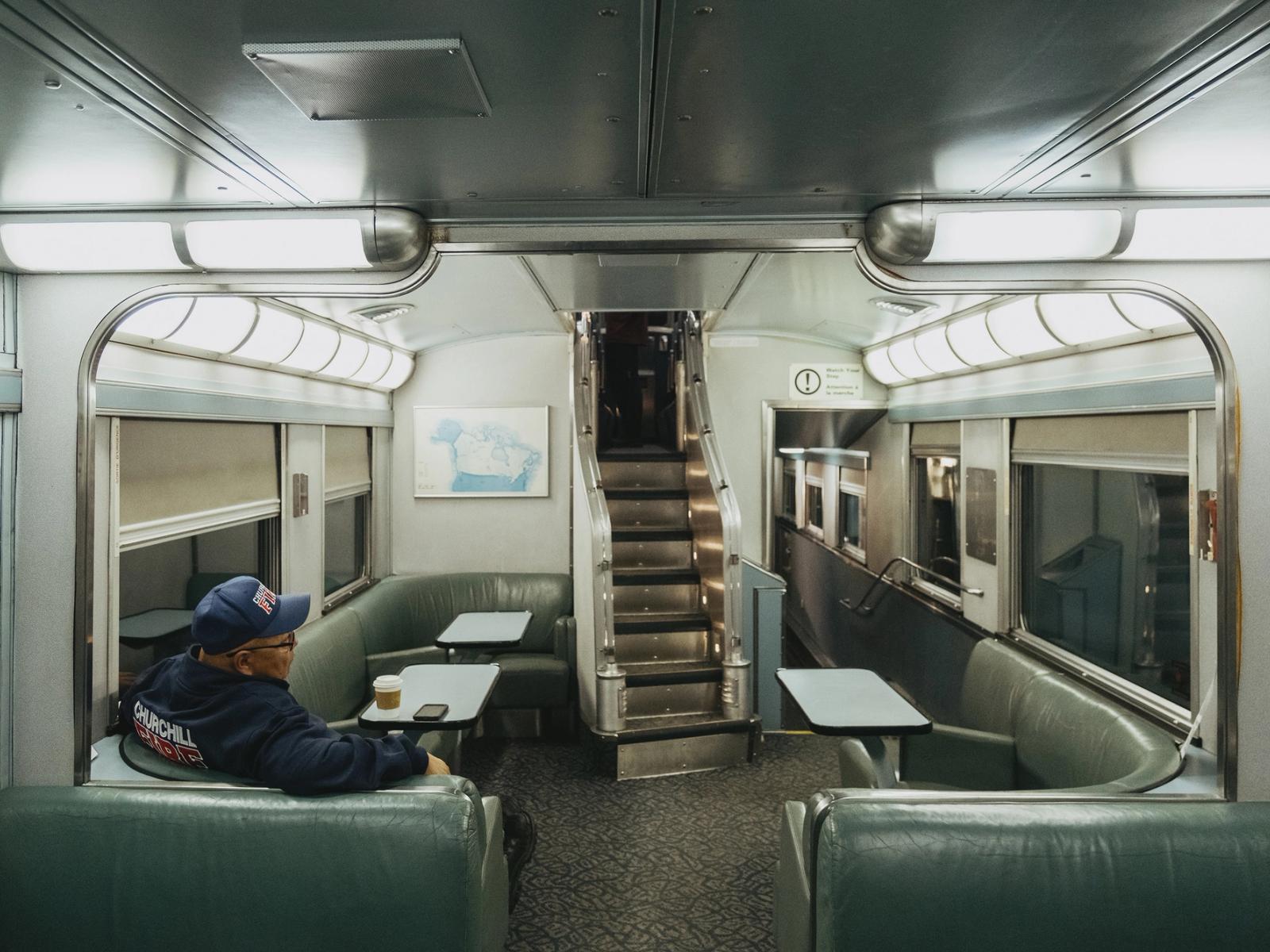
Inside the train from Winnipeg to Churchill.
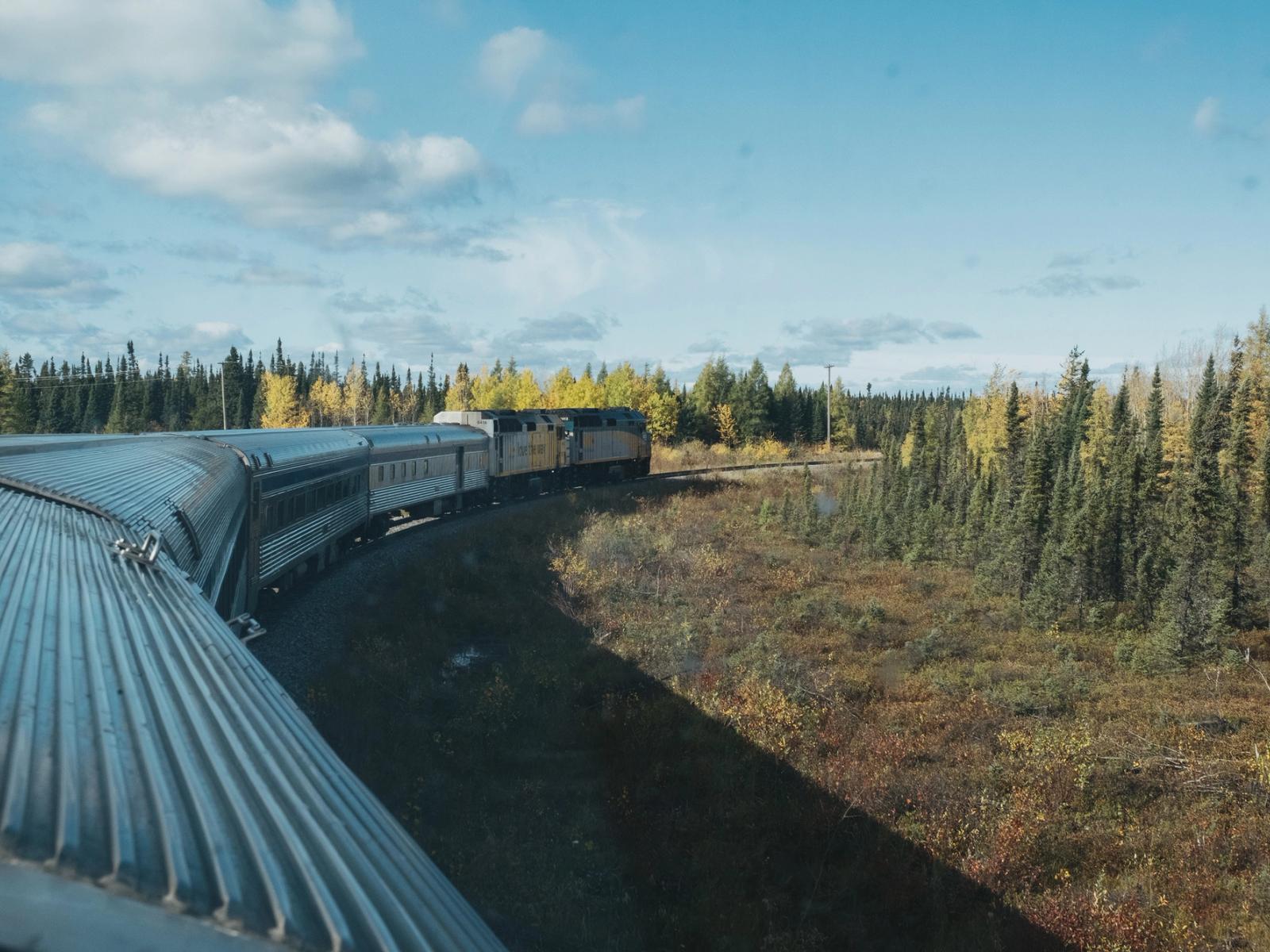
The train ride from Winnipeg to Churchill through the Pas is a two-day trip.
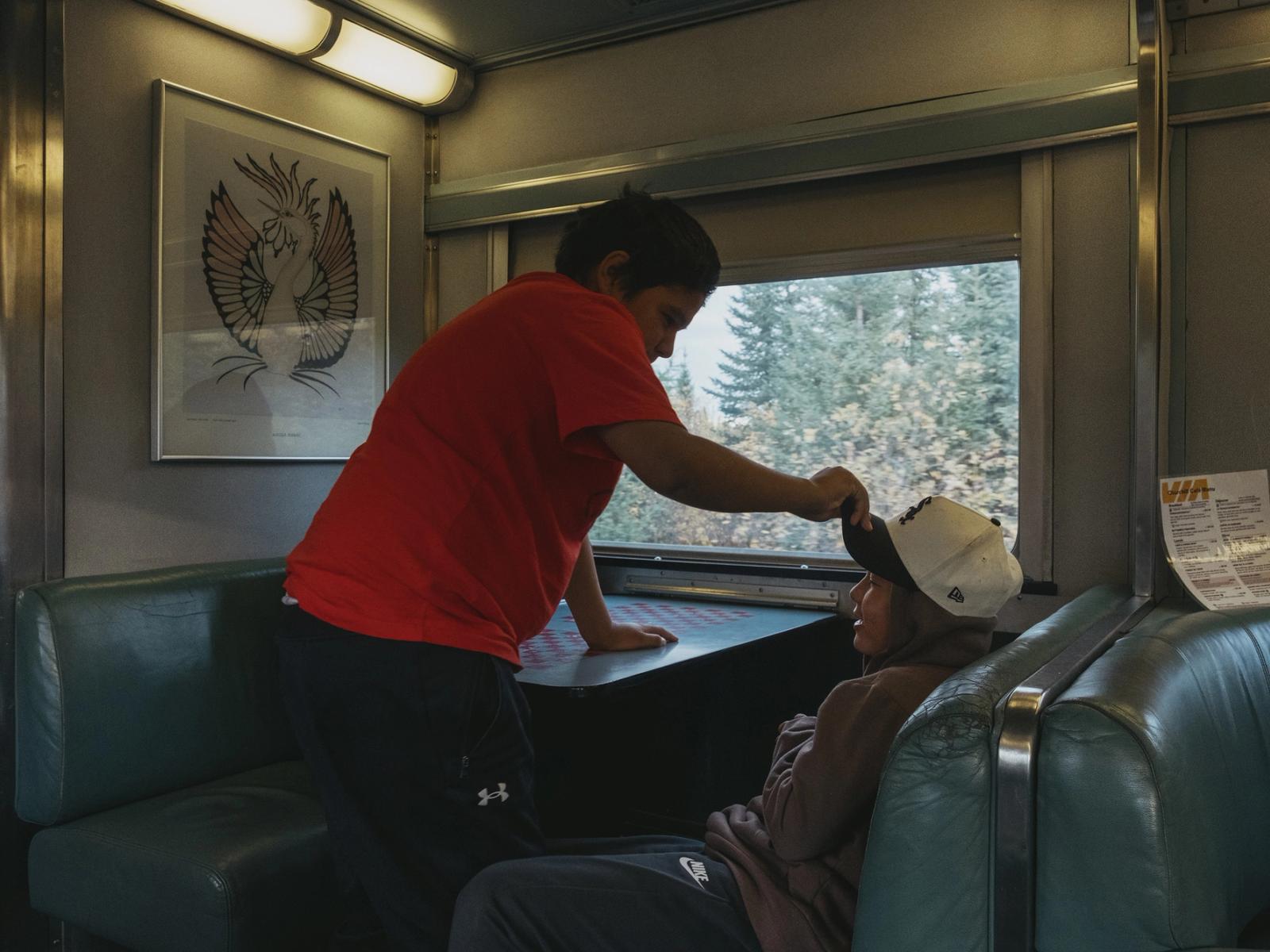
Kids play in the dining car on the train.
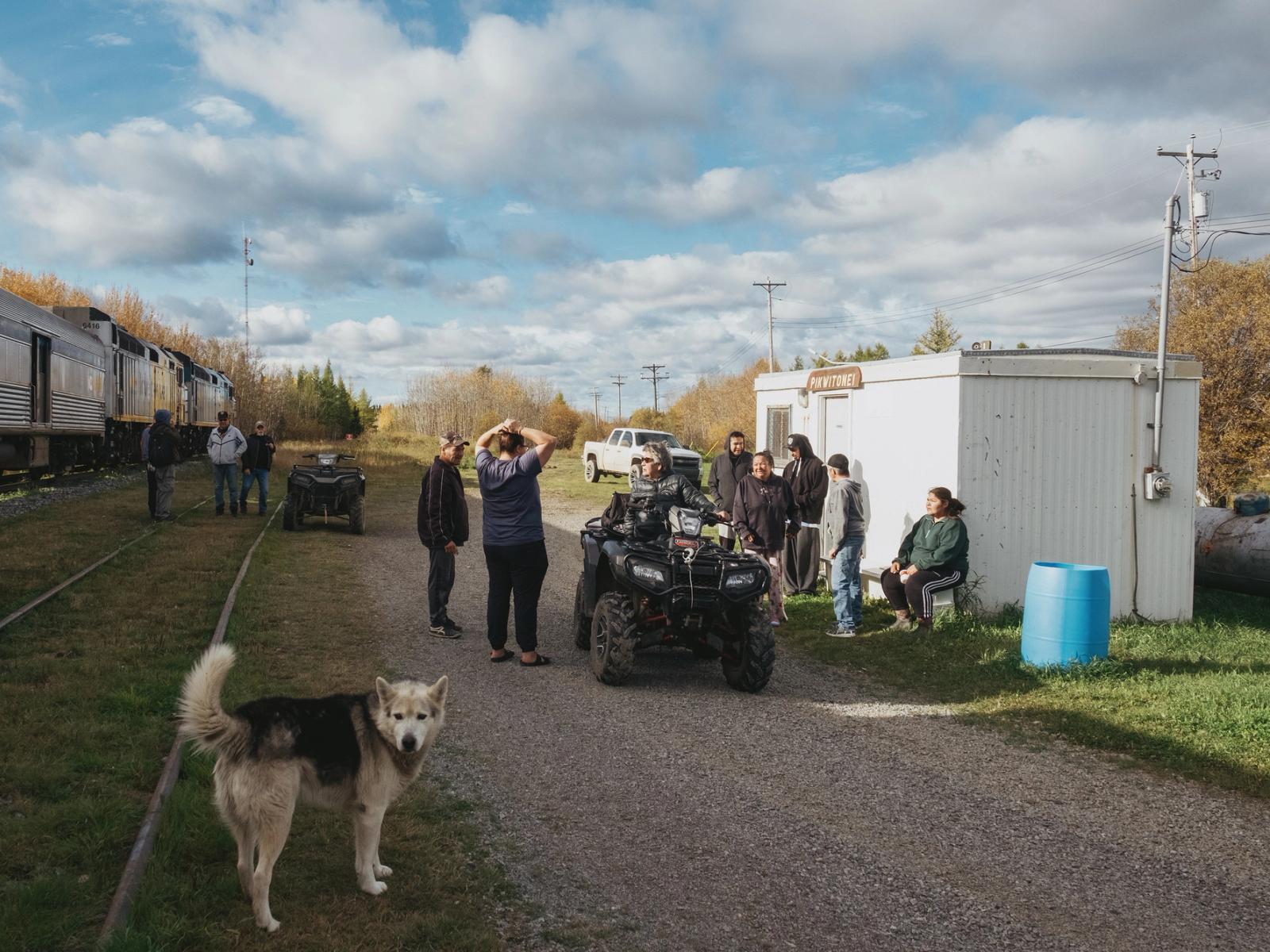
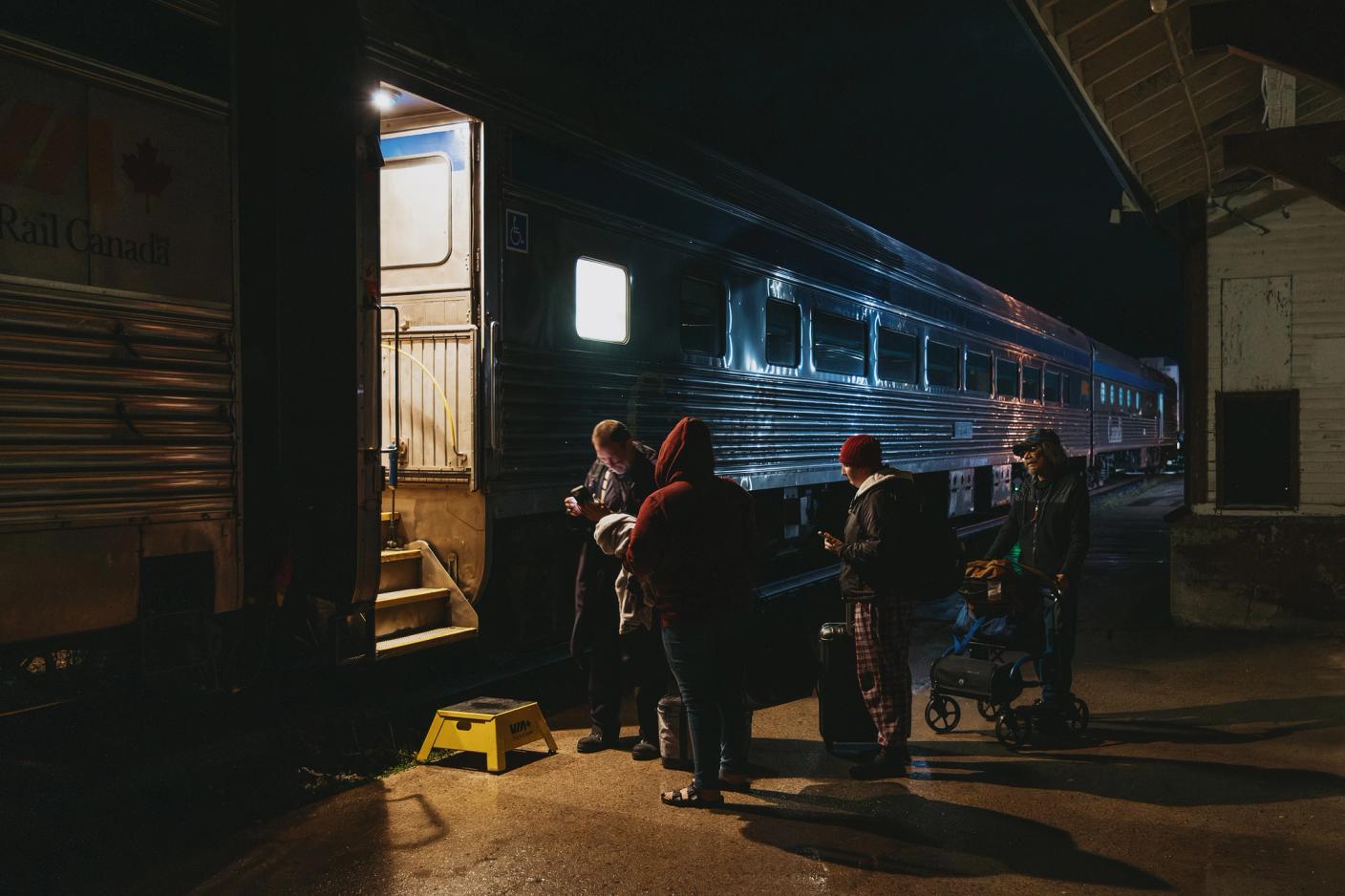
Passengers wait to board the train in Pikwitonei, Man.
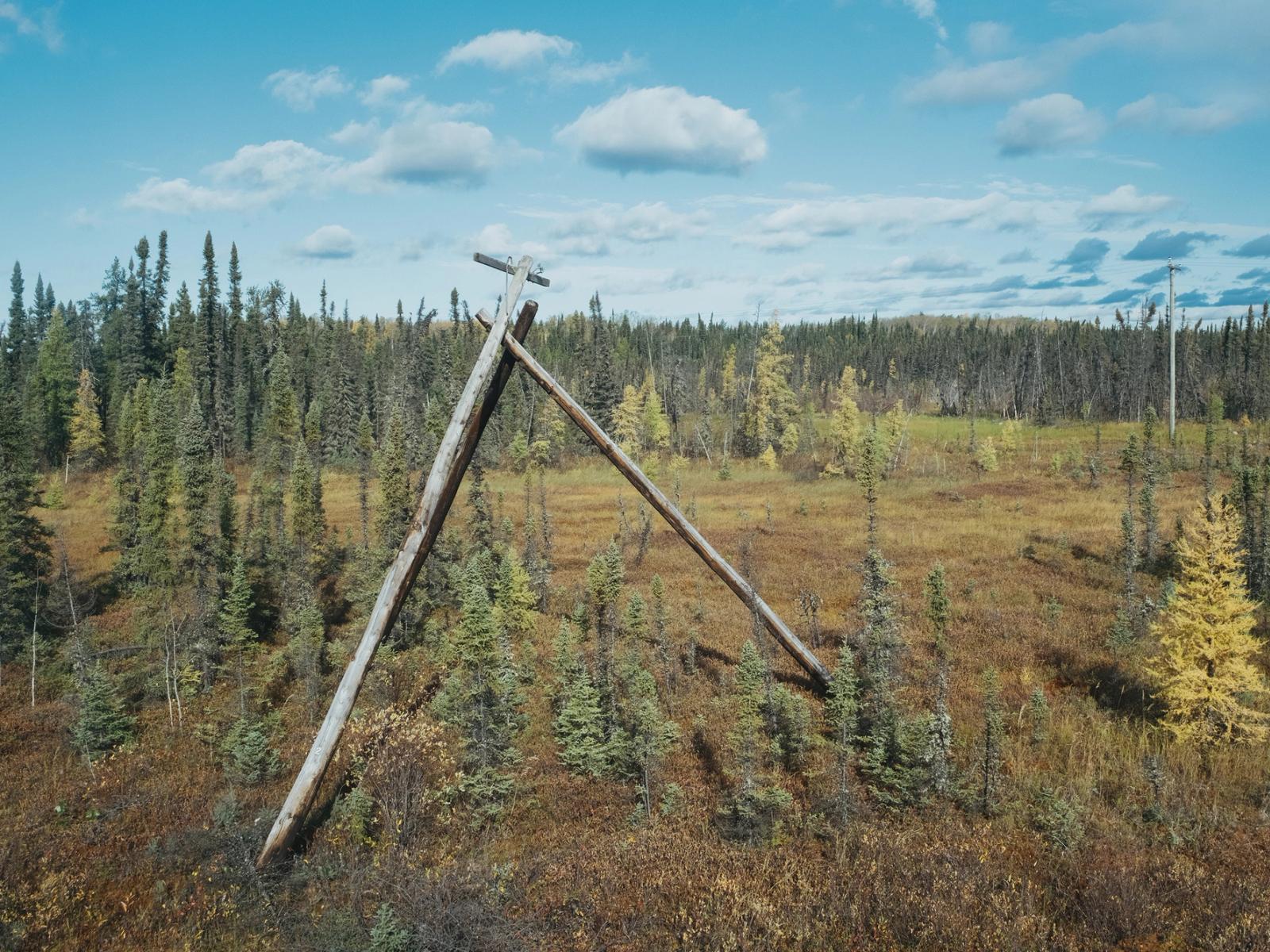
Telegraph poles line the track, made of cedar trunks lashed together to make tripods so they don’t sink.
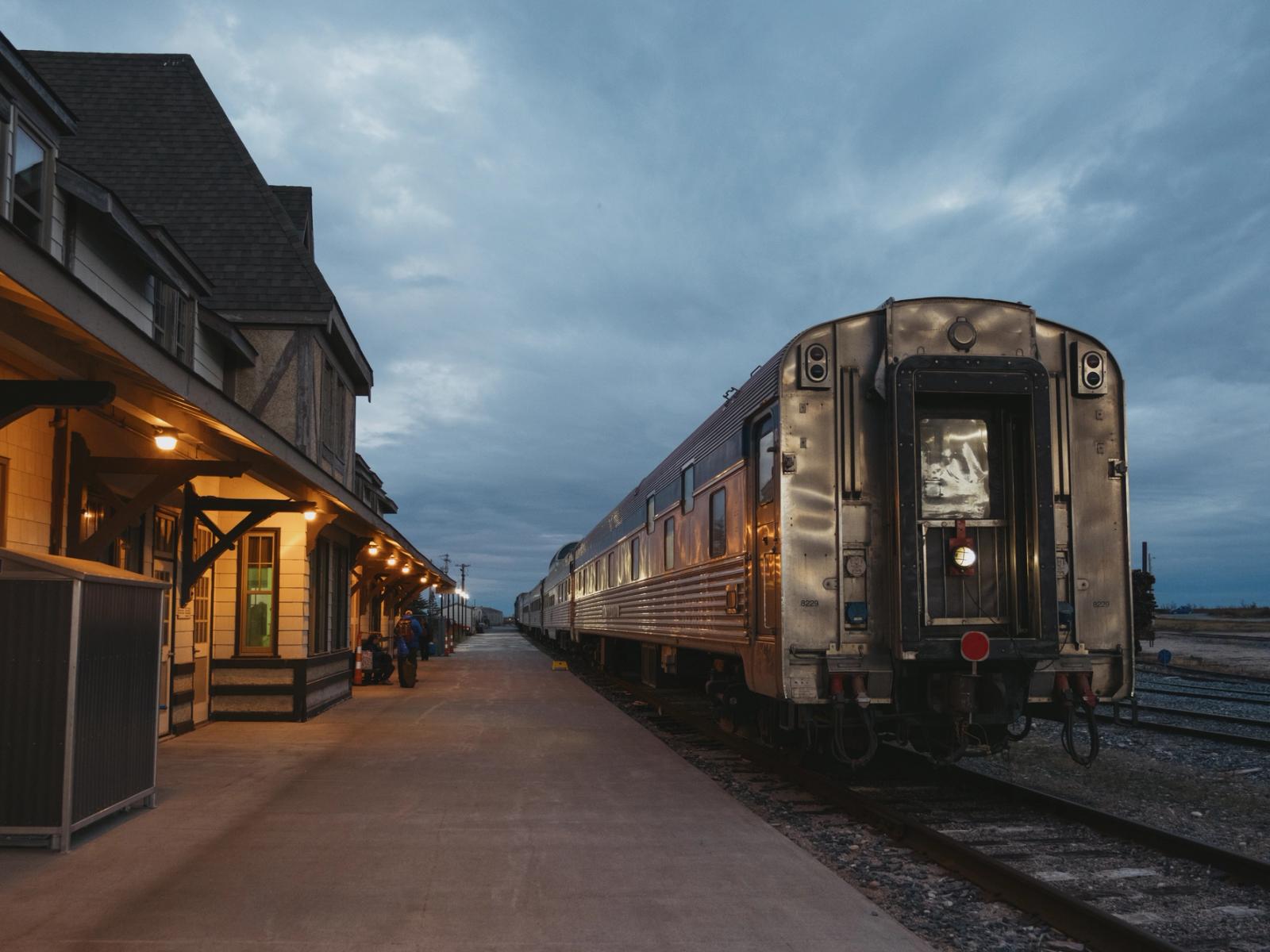
The Via Rail cars are more than 70 years old.
When it comes to day-to-day inspection of the railway, there are different challenges: most of the HBR is remote, so it’s difficult for crews to access it regularly, especially in winter. TrackSense, a Manitoba company that uses drone-mounted cameras and sensors, provides analysis to AGG on problems along the track from The Pas to Churchill. AI is used to crunch data from drones and satellite imagery. TrackSense runs simulations on AI using past data to predict where floods and fires might happen along the railway line. This is crucial: a flood washed out the track in 2017, before AGG owned it, and the town of Churchill was stranded for 18 months.
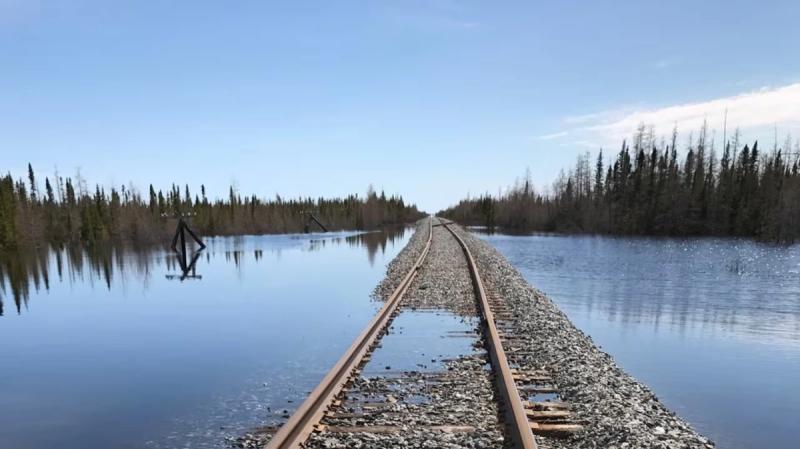
Drone pictures can also show vegetation that’s growing on the track, which may spark fires. For now, Transport Canada’s rules and technological constraints limit how far drones can fly, but Grant Barkman, the CEO of TrackSense developer DecisionWorks, hopes that, at some point, the inspection system can be run remotely, since solar-powered drones can, in theory, fly indefinitely. “It’s a much more efficient way of doing the inspections,” says Barkman. “And because of that, you can inspect more often.”
ApoSys, a Toronto-based company, has been working with AGG since 2023, using what it calls a “compact plug-and-play sensing unit” that mounts underneath locomotives on the HBR line for continuous track inspection. It looks like a small dishwasher bolted to the undercarriage. Using sensors such as lidar, cameras and ground-penetrating radar, it generates data for AI to analyze. Lidar uses laser pulses to create high-resolution maps of the ground at track level, including vegetation, obstructions and cracked rails. “We are able to let them know ahead of time which areas of interest might be more unstable,” says Pragya Saxena, marketing manager at ApoSys, “and this gives HBR more time to adapt and be ready in case the railway track is unstable,” as it already is north of Gillam.
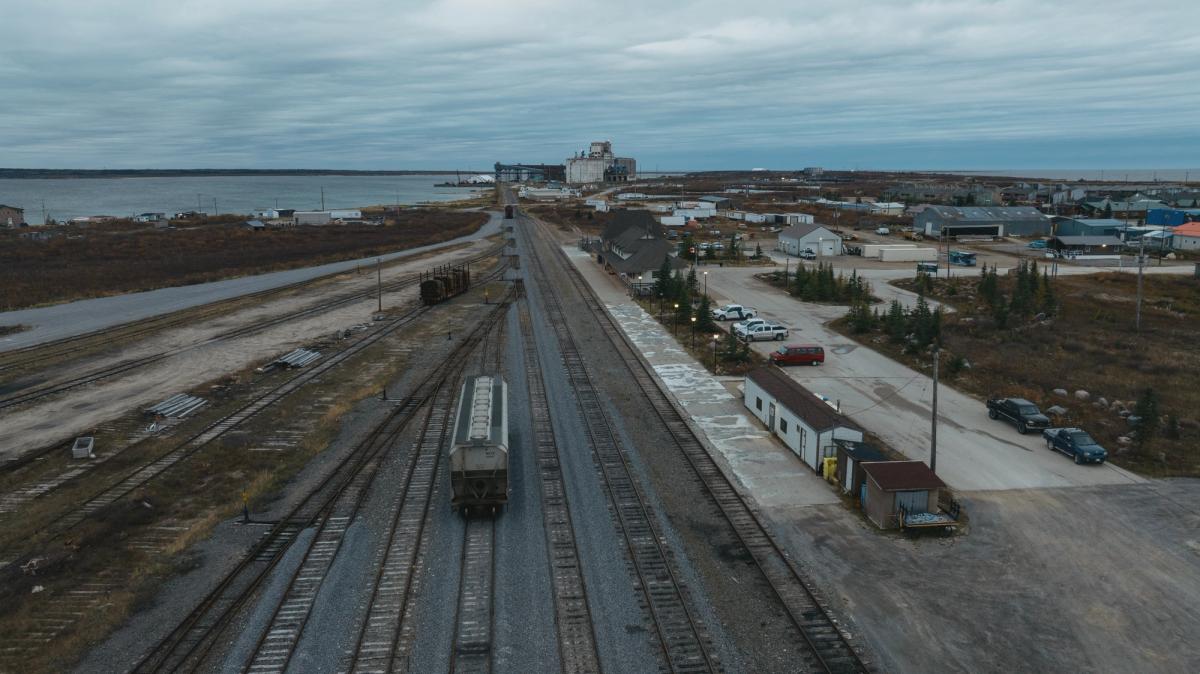
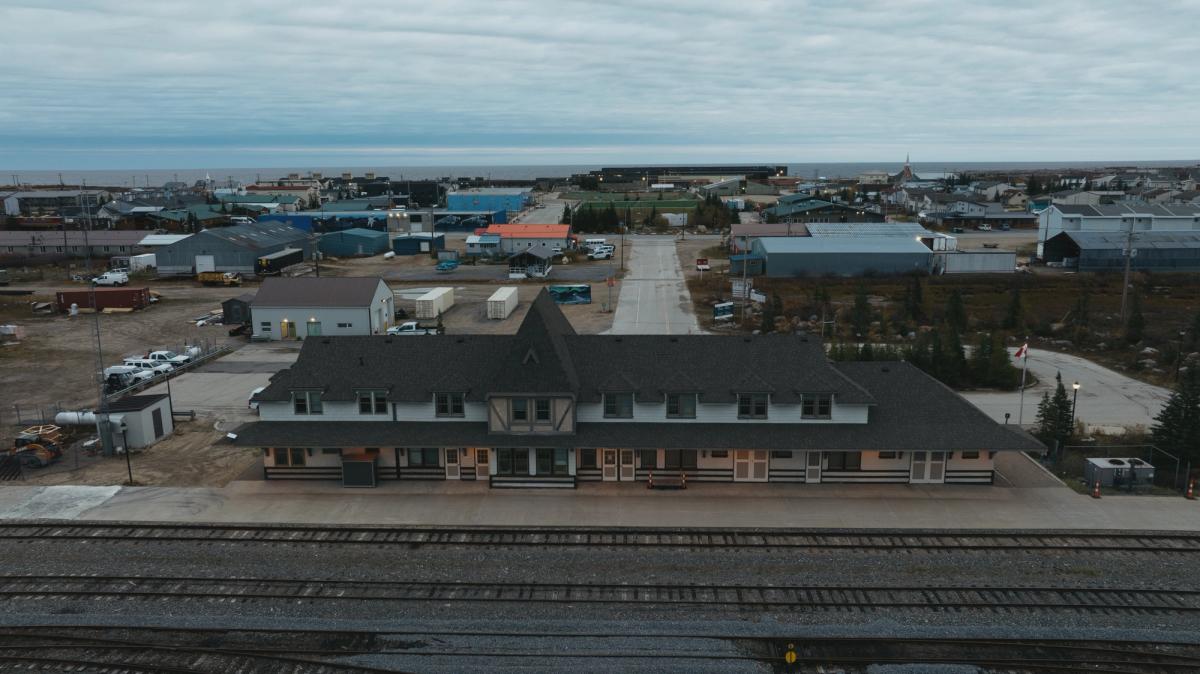
The motion of the train is enough to make walking the corridor from the sleeper car to the observation car moderately clumsy but not treacherous. On my September trip, I sat and watched the tundra: reindeer lichen, some Arctic willows, clubmoss, Labrador tea and crowberry. Three ptarmigans flew up from the barrens. It’s possible to imagine the huge task of understanding this place, not just the way Glenn Gould tried to do it, as an existential mystery, but as an engineering puzzle.
“I think all of Northern Canada should be interested in seeing what’s happening along the Hudson Bay Railway,” says Roy-Léveillée, “because the railway is going through it [thawing] first.” The answers to building a railway on permafrost come down to data and decisions. PermaRail will wrap its research in 2028.
After the train cleared Gillam, we passed piles of discarded, rotted rail ties. Here was a sign that AGG was making progress, upgrading its railway line. In 2024, AGG installed 119,965 new ties, put down 1,600 railcars of gravel ballast to build up the railbed and lifted 700 kilometres of track to smooth out any warps (called “spot surfacing”). The company claims an overall 10 per cent reduction in travel time from The Pas to Churchill, or a saving of three hours. One of the Via employees on board tells me it’s much better than it used to be. Early surveyors of the HBR route set out in 1913: less than two dozen men with tents, canoes and instruments. It took them 15 months. Two days of travel, plus or minus a few hours, is a substantial improvement.
This story is the third in a series on Churchill, Manitoba. Read the first story, on the town's multibillion-dollar megaproject ambitions, and the second, on protecting a little industry when a big one comes to town.