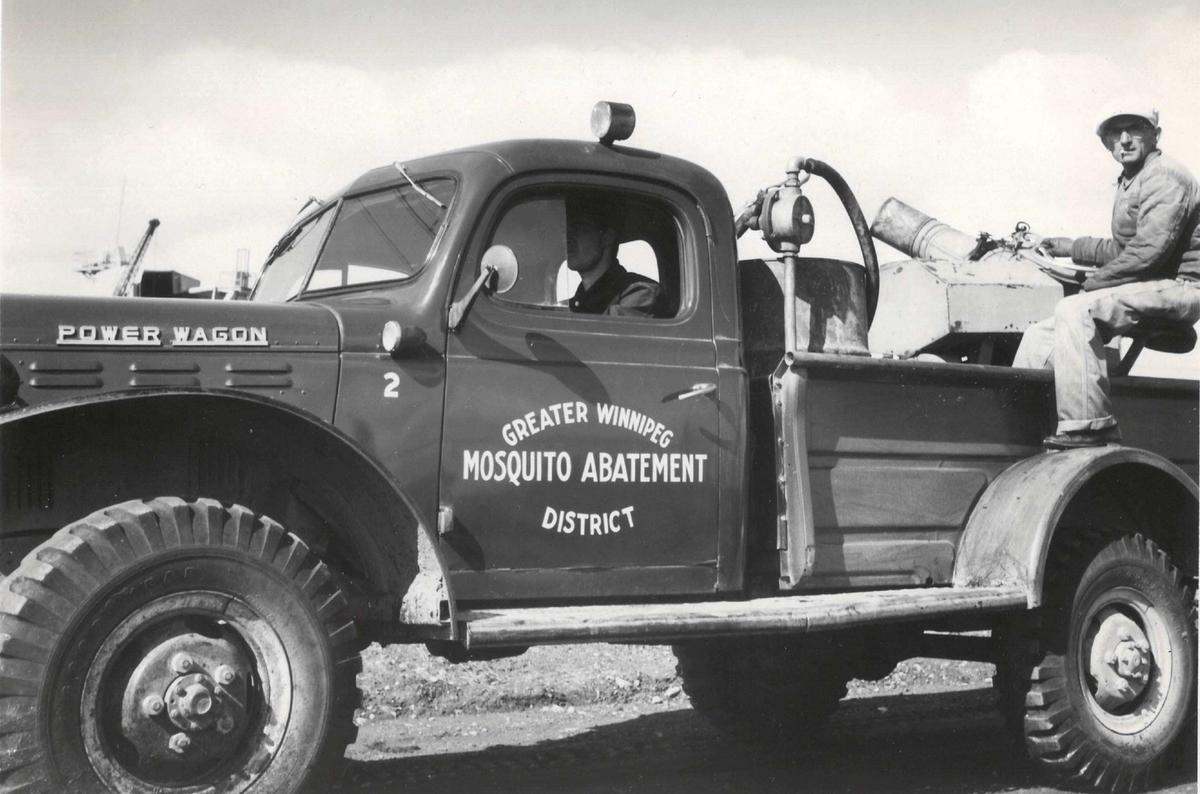
Winnipeg is home to the country’s oldest and largest mosquito-control program; the city’s first foray into mosquito control came in 1923, though the current iteration of the program has been running since 1927. Today, it covers the city’s outer boundaries and an 8-kilometre buffer, which works out to about 144,000 hectares of land that is divided into 37 discrete zones and dutifully monitored by an army of 150 employees in the city’s Insect Control division. From April to September, they inspect standing water for mosquito larvae, treating it when necessary as well as implementing a fogging protocol when the number of bugs exceeds nuisance level. It’s an intensive program that sets the city apart from other Canadian municipalities. With mosquito-borne illnesses on the rise in Canada, Be Giant spoke with David Wade, Winnipeg’s superintendent of Insect Control, about how the program works – and what lessons other municipalities can learn from the city’s century of fighting mosquitoes.
How did Winnipeg become the most anti-mosquito city in Canada?
Winnipeg began its mosquito-control program [because] we were experiencing an influx of nuisance mosquitoes.
It has been going since 1927, so it’s been almost 100 seasons. Our season usually lasts from mid-April until the end of September. We hire about 150 staff who go around to previously mapped-out sites where we know there’s sitting water. They check those sites every day, all summer long, looking for mosquito larvae, [and if they find any], we’ll treat them with either BTI-based larvicides [BTI stands for Bacillus thuringiensis subspecies israelensis, a naturally occurring soil bacterium] or methoprene-based larvicides. With BTI products, once the larvae eat it, it ruptures their guts and kills them. Methoprene is a growth-hormone mimic that prevents the larvae from becoming adults.
Winnipeg has heavy clay soils and flat topography, and the city is on a flood plain. The geography means a lot of standing water being created whenever there’s rainfall, which leads to a lot of mosquito development. And over the years, we’ve had disease-vector mosquitoes. In the ’70s, it was Western equine encephalitis. And for the last 20 to 25 years, it’s been West Nile virus. Other Prairie cities like Saskatoon, Regina, Calgary and Edmonton don’t have programs as large as ours because their problem is not as big or as recurrent.
What kind of mosquitoes are you going after?
Winnipeg has 42 species of mosquito. We target the ones that are a nuisance but don’t pose a threat to humans, like Aedes vexans, and species, like Culex tarsalis and Culex restuans, that are vectors for disease. We do vector control in collaboration with the province’s health department.
Why use larvicides instead of going after adult mosquitoes?
Larvicides are the most environmentally friendly option that we have available to us. Also, when the mosquitoes are in the larval stage, that’s when they’re in their most confined space – they’re confined to the water bodies. Once they become adults, they can fly anywhere. Then we have to apply pesticides into the air to control those mosquitoes, and it’s not as environmentally friendly.
Generally speaking, these products are safe. Our suite of BTI-based products is specific to mosquito species, so they won’t impact non-target insects that share the water with them. The methoprene products could impact other organisms, but we limit the use.
![Staff monitor sitting water for mosquito larvae, then treat any that's found with either BTI-based larvicides [BTI stands for Bacillus thuringiensis subspecies israelensis, a naturally occurring soil bacterium] or methoprene-based larvicides.](https://cdn.sanity.io/images/l3tzmu37/production/c6c0423f2e45a4a38c502f1b111b04423714b197-2880x2160.jpg?auto=format&fit=max&q=75&w=800)
How has the program changed over the past century?
Over the years, we’ve moved away from chemical-based insecticides to biological-based insecticides, which has a huge benefit to the non-targets and is much more environmentally friendly. Since we don’t eliminate all mosquitoes, the impact on the food chain and larger ecosystem is minimal. In the last few decades, we’ve also increased our use of helicopters, which allows us to treat areas a lot more quickly and cheaply. We try new larvacides and adulticides as they become available. We also try new spray equipment and new software whenever we can. We did experiment with drones, but technical difficulties early on in our pilot prevented us from using it for larviciding, [so] we have paused that program.
For the last 20 years or so, we’ve been using more computer- and GIS-based software, and now we’re moving into apps to digitize what we do and monitor things in real time, like inspection dates, treatment dates, what we found and what we did. The field app allows us to enter data directly into our computer system when we’re in the field, so there’s no lag.
How do you know that the program is working?
Our primary metric for success is the percentage of days in the season where the mosquito “biting pressure” is less than one bite per minute. Biting pressure could also be described as biting frequency – or, rather, the number of bites per minute someone could experience based on current mosquito numbers. We measure this based on counts in our network of 28 traps – an average of 25 adult mosquitoes collected per trap per night is equal to one bite per minute. This metric fluctuates from year to year based on weather, particularly rainfall. Last year, we had no days above one bite per minute.
Looking to the future, how might climate change impact mosquito behaviour?
It could potentially impact the mosquito population by introducing new species or extending the mosquito season.
What can other cities learn from Winnipeg’s program?
Always follow integrated pest-management protocols. For example, we have several pest-management protocols related to surveillance, identification, action thresholds, larviciding, adulticiding, communication and record-keeping. Ensuring these protocols are all integrated with each other helps keep our pesticide use to a minimum and reduces the impact on other organisms. A key part of that is surveillance – knowing where the mosquitoes are developing, where the habitats are and where they are present before any treatments. And then just keep it up whether it rains or not.
This interview has been edited and condensed.
Get our weekly newsletter – the people, places, and ideas revealing where Canada is headed.