Erin Greene says it was a “wrong time, wrong place situation.” Greene, from Montreal, was walking on Selkirk Street with friends, on Halloween night in Churchill, Man., 2013. What happened next happened fast – too fast for Greene to grab the bear banger in her pocket, a pyrotechnic noisemaker people in Churchill carry to scare away the polar bears that sometimes, in fall and winter, wander into town. “This bear came barrelling down the road,” she says. “It was already running, it was already agitated.” Piecing it all together afterward, she figures the bear, a young male, had been trying to get at the garbage outside the Seaport Hotel but ran into conflict with a mother bear and her cub, and wound up on Selkirk, two streets over.
“I had a very strange reaction,” she says, “like I knew this moment was coming.” The bear leaped on her, shook her by the neck in its jaws and lifted her off the ground, “so I wrapped my arms around my head,” she says, “tucked my chin because he had already ripped my scalp off. I wanted to protect my head. So he grabbed me by the arms instead, which probably saved my life.” As did the sudden appearance of 69-year-old William Ayotte from his home on Selkirk, in pyjamas and sweater, swinging a snow shovel. The bear pounced on Ayotte, clawing and mauling him. “At a certain point,” Greene says, “I saw the street, it was very calm, it had the glow of the street light, and the snow, it was all very pretty. And then Bill was there, and I ran.” Both Ayotte and Greene survived but had to be airlifted out for medical treatment. The bear was shot and killed by conservation officers.
Greene’s story is an extreme example of the relationship between the people and the wildlife in Churchill, a town of about 800 people roughly 1,000 kilometres north of Winnipeg on Hudson Bay. Polar bear attacks are rare, but they are apex predators: they will stalk and hunt humans. After the attack, Greene went home to Montreal but had difficulty processing what had happened. Friends and family were kind, but it was as if they couldn’t understand what she’d been through the way people in Churchill did, and so, to the surprise of those same friends and family, she moved there. It was, after all, a place where someone would risk their own life to save a stranger.
Get our weekly newsletter - the people, places, and ideas revealing where Canada is headed.
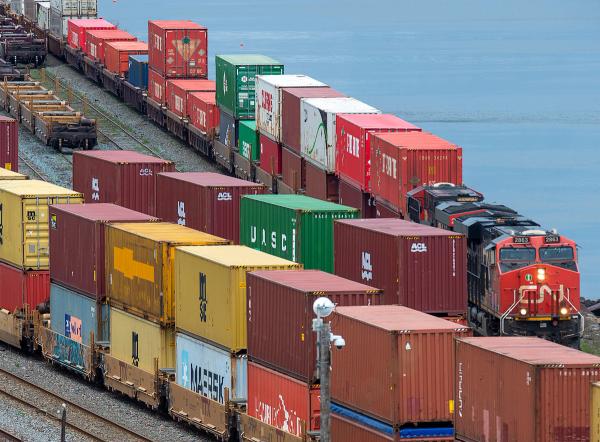
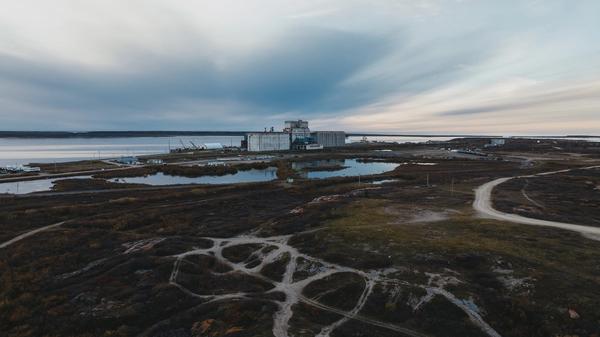
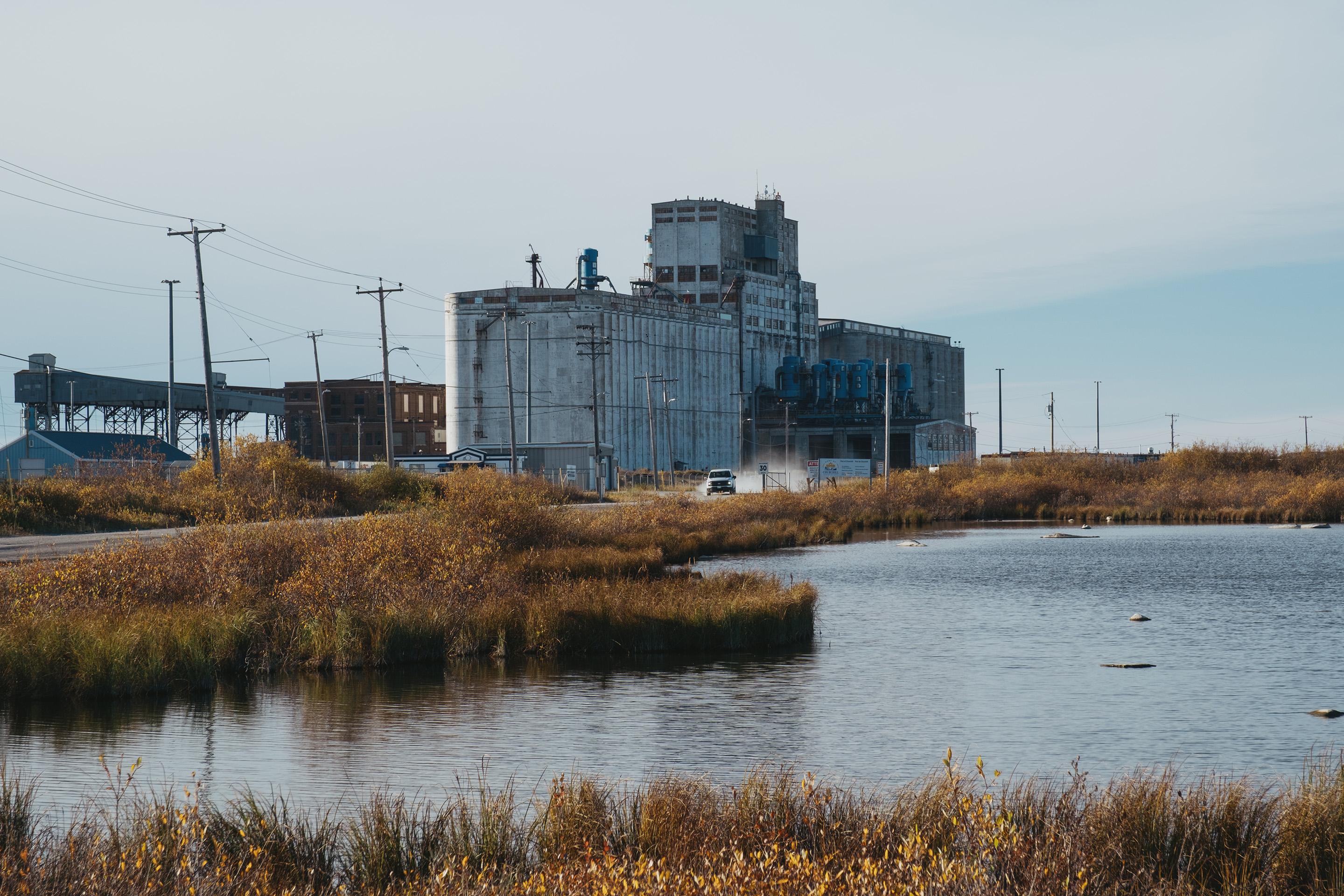
Now Greene runs a beluga whale-watching company called SUP North, works in a gift shop and teaches yoga at Discover Churchill, one of the local tourism companies. And she finds herself in the middle of a local debate about the future of the town: the Province of Manitoba wants to build a megaproject at the old Port of Churchill, increase shipping, maybe bring in oil and gas. But not everyone, including Erin Greene, thinks it’s a good idea, because of the impact development will have on the ecosystem, including the polar bears and the beluga whales that drive tourism, a $99-million annual business that sees 25,000 people a year visit the town.
“It’s the North,” says Drew Hamilton, who co-owns Discover Churchill, a small company that takes out-of-towners to the barrens to look for bears. We’re driving off-road, in ruts of dried mud, through a tundra populated by worn rocks and the strange spruce trees that grow branches on just one side of their trunks. “It’s different. Southern politicians are just itching to make the North like the south, and the North just doesn’t work like that.”
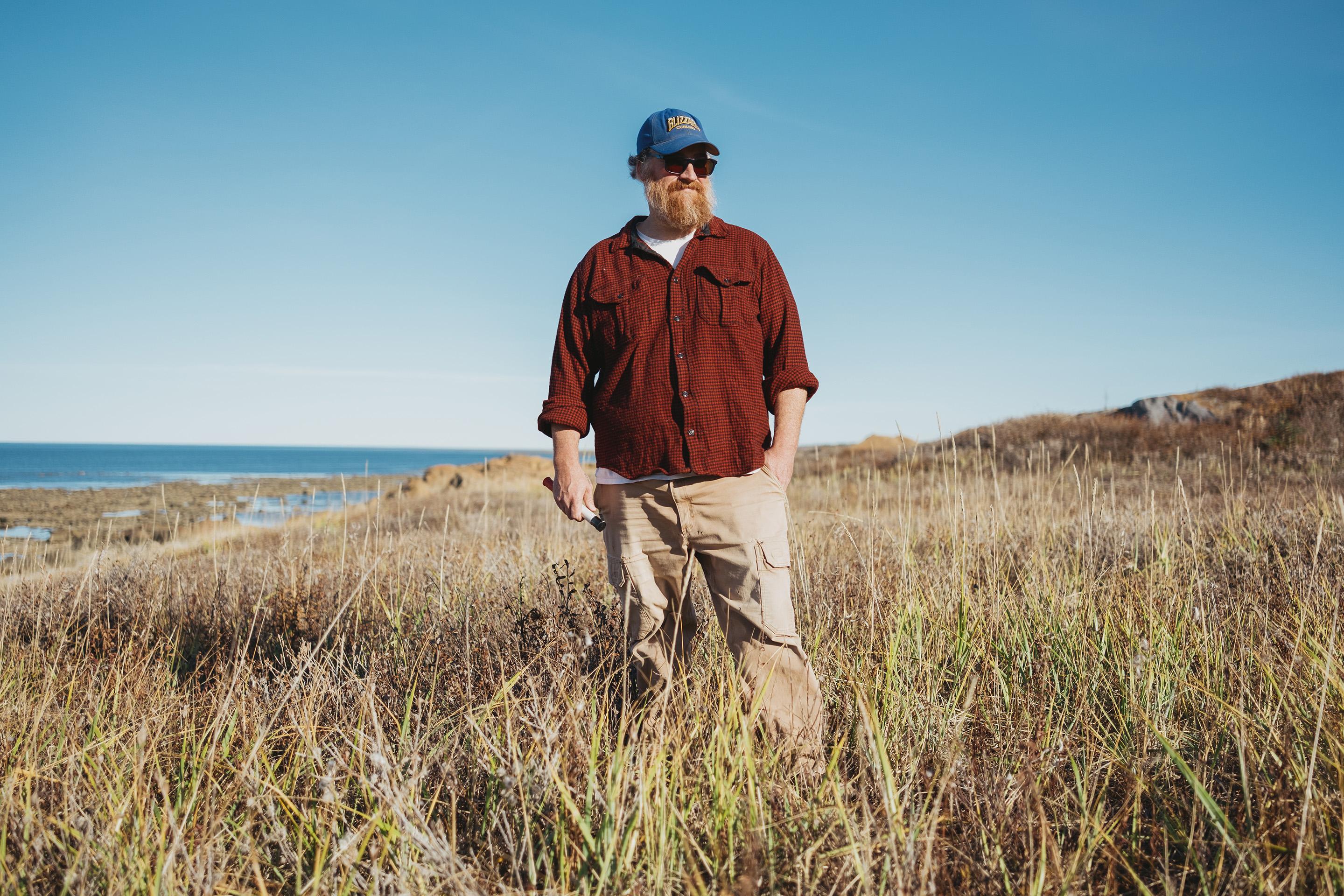
He pulls the van to a stop on the open tundra. A northern harrier flies overhead. He has a single word tattooed on his right wrist, the hand on the steering wheel. The word is “UNLESS” in caps. It’s from The Lorax by Dr. Seuss, a book his daughter likes. “Unless someone like you cares a whole awful lot,” goes the line, “nothing is going to get better. It’s not.”
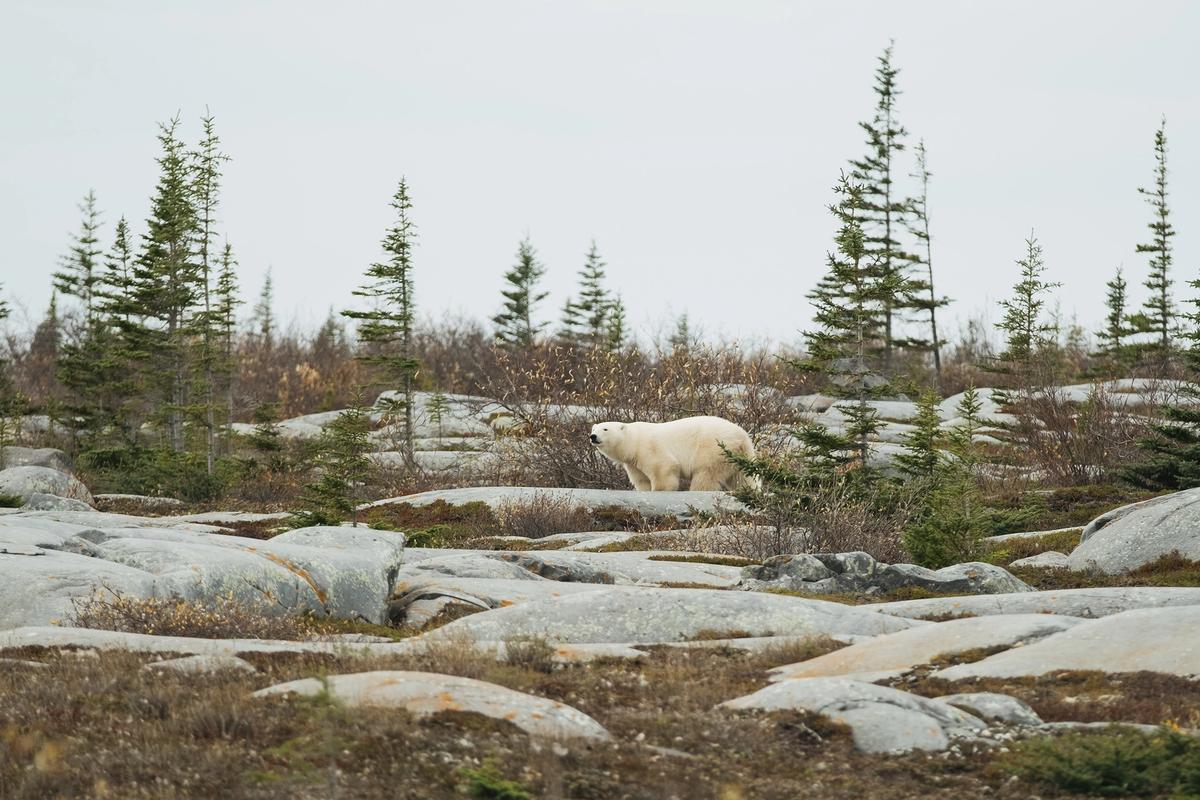
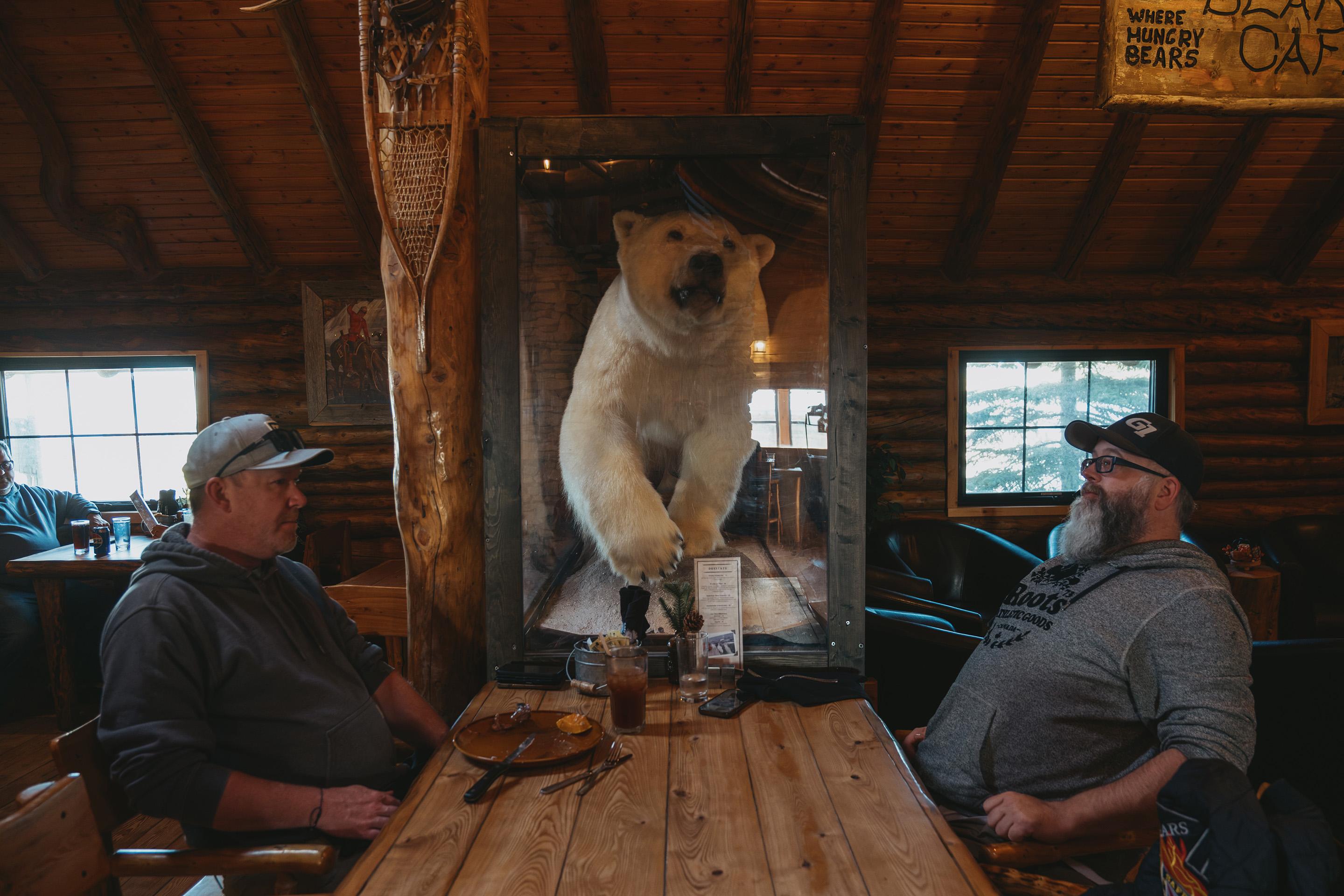
The ground underfoot crunches like Weetabix cereal, a mix of dried moss, lichen and red-berry plants. There’s a smell of low tide. Hamilton is carrying a Remington 12-gauge shotgun but also an Ikaros marine flare he uses as a bear deterrent. “There are bears that don’t mind being seen,” he says, “and bears that don’t want to be seen. It’s always amazing how a 1,200-pound animal can disappear behind a blade of grass. Poof!” Then he points to a spot, two or three hundred metres ahead, on the rocks: a mother polar bear nursing two cubs.
Geoff York is vice-president of Polar Bears International, a non-profit that promotes conservation and is partnered with one of the larger tour companies in Churchill, Frontiers North Adventures, which has contributed more than $5.7 million to PBI since 2001. He says there are between 600 and 700 polar bears in the vicinity of Churchill. Climate change, which is causing the ice on Hudson Bay to recede year by year, is seen as a boon for proponents of development at the port, as it means a longer shipping season. But for York, it means less hunting time for bears, and more time on land, with an increased likelihood of human-bear interactions or even, in the long run, their migration away from Churchill. As for development at the port, he says, “Bears are interesting. We see a pretty broad range of responses where some bears are incredibly tolerant and some bears are incredibly intolerant [of] human activities.” York says he’s even seen females den next to oil and gas infrastructure.
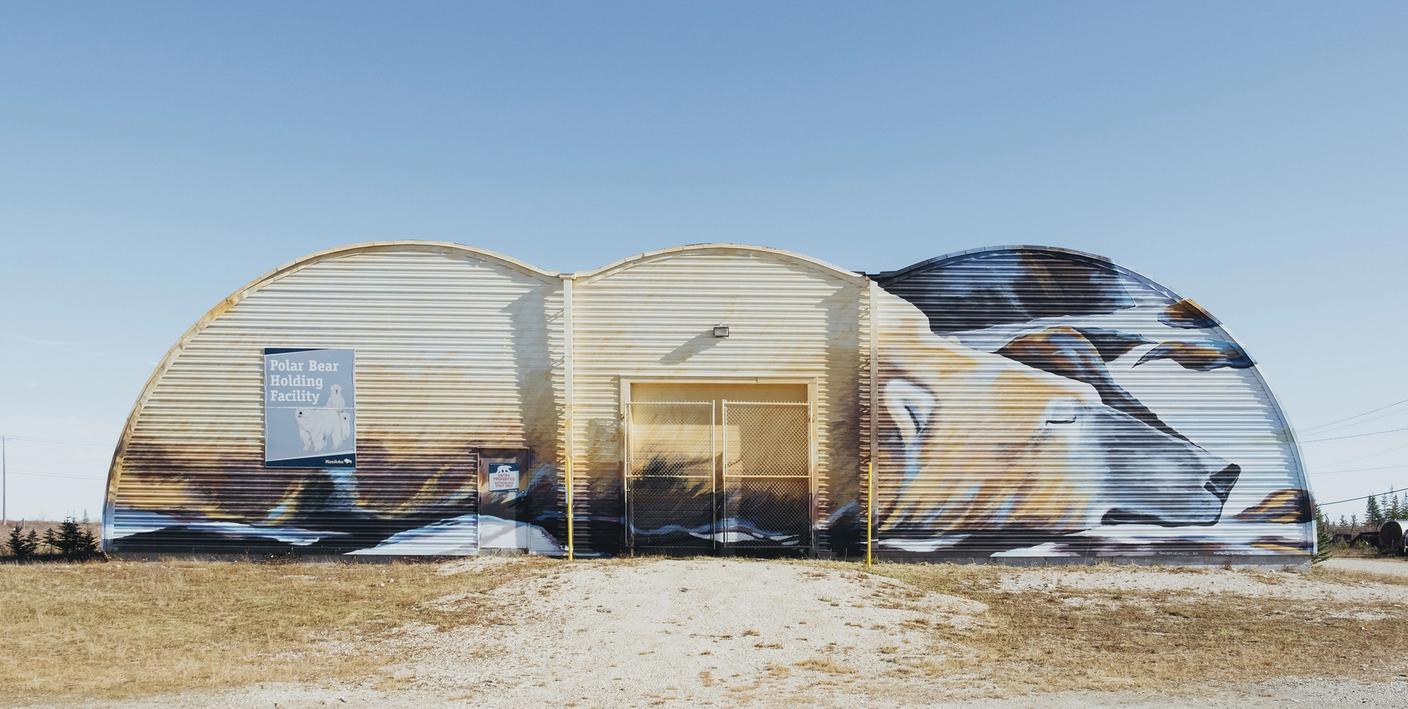
“There is a long history,” Premier Wab Kinew told the CBC in February, “of folks wanting to pursue opportunity while still being good to the land, good to the water.” He had just announced a $250,000 investment in a study, a word familiar to Churchillians, into establishing a marine conservation area off the coast of Hudson Bay. Also, the University of Manitoba recently opened the Marine Observatory, an outdoor lab consisting of two nine-by-nine-metre tanks meant to mimic Hudson Bay conditions, to test how oil spills behave in cold water and mitigate their effects on wildlife, for example, and to anticipate the impact of industrialization on sea life and the bears: for polar bears, the Bay is their cafeteria.
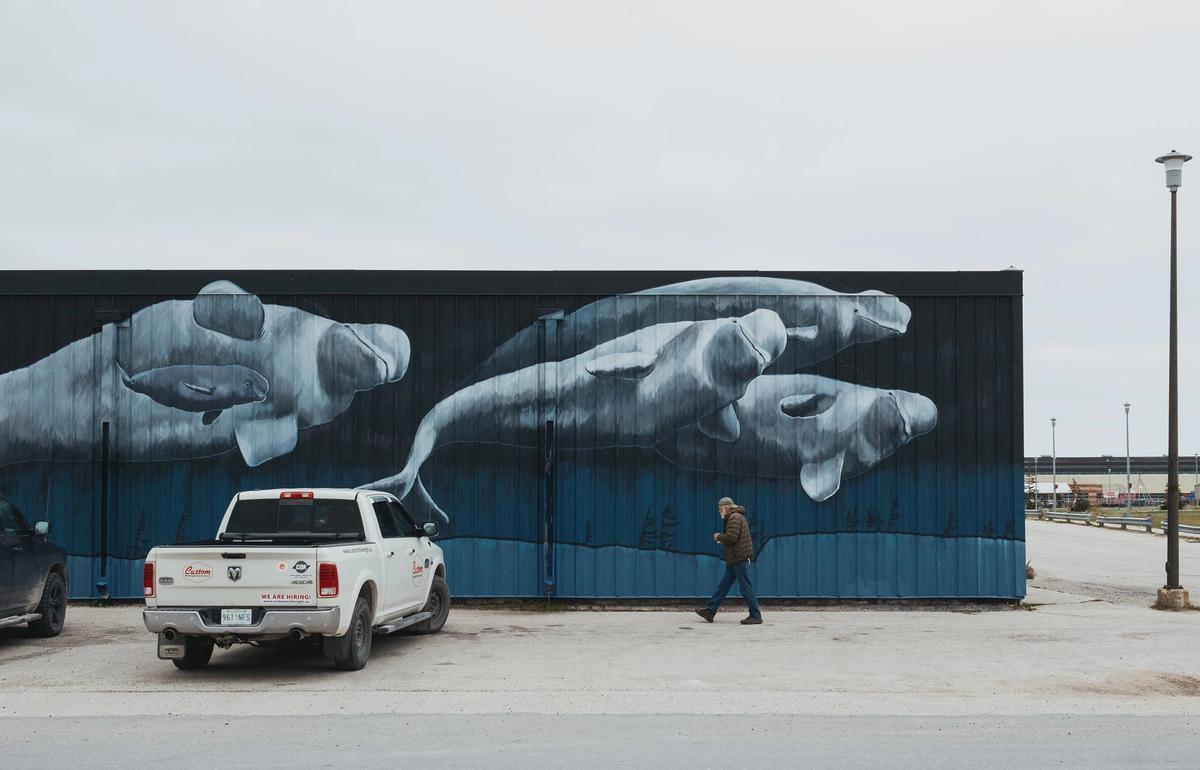
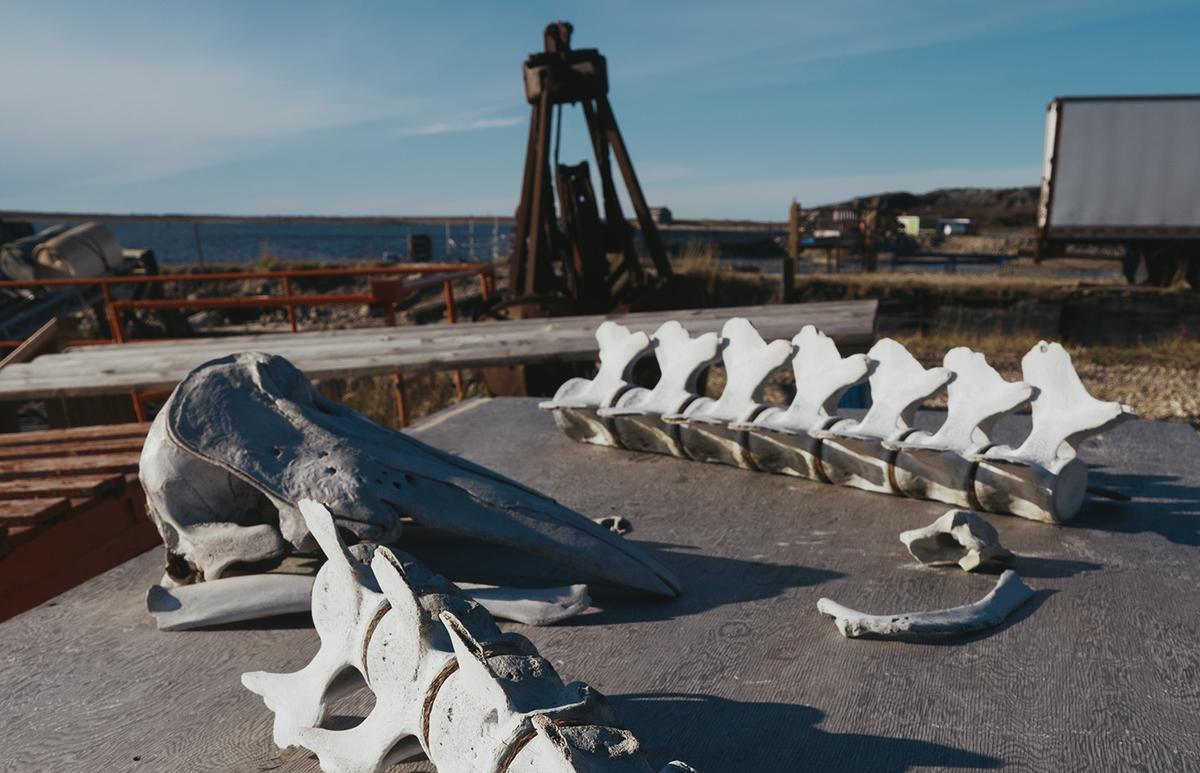
When it comes to beluga whales, which feed in the estuary near the port, there are worries that, even without a gas plant in Churchill, the increased shipping could put them in danger of collisions, or disrupt communications between mother whales and their calves, which rely on a range of whistles, clicks, trills and squeals to locate each other.
Erin Greene struggles with the idea of expanding operations at the port: good for jobs, therefore good for the community, but if pressed to choose a position, she’s against it. “The environment and the whales,” she says, “are far more important than me and my tiny [whale-watching] business. You know, everything that affects these animals in turn affects a multitude of other beings far beyond our shores.” Local people have criticized her on Facebook (as close as Churchill has to local media) for putting whales, as they see it, ahead of economic progress, but it’s a deeply complex issue. “Obviously, I care about the people,” she says. “Obviously, I care about the community.” What she wants is open, friendly conversation and debate, instead of flame wars on social media.
Meanwhile, the project Manitoba is spending $250,000 to study, a National Marine Conservation Area (NMCA), is effectively an underwater protected zone. There are five NMCAs in Canada already, including one in Lancaster Sound in Nunavut, between Baffin and Devon islands at the entrance to the Northwest Passage. The Tallurutiup Imanga National Marine Conservation Area covers 108,000 square kilometres and is co-managed by Parks Canada and the Qikiqtani Inuit Association. The target area for Hudson Bay, according to the Canadian Parks and Wilderness Society, an NGO backing the plan, is the bay near Churchill and the estuaries of the Nelson, Churchill and Seal rivers; the port would be smack in the middle. In the end, it could mean restrictions on shipping, keeping it to designated lanes, for example. The Province of Manitoba seems open to that. The question is: what about industry that is looking to invest in the port, in shipping or in natural gas?
“What I’ve heard from private-sector voices is a concern around risk [and] uncertainty, having to do with social licence,” Kinew told the CBC, “having to do with buy-in from local communities, from First Nations.… Hopefully, we’re showing a path to the big private dollars in Canada that there is a way to provide more certainty and more clarity.” That includes “taking stock of environmental issues at the outset,” he says, rather than building first and asking questions about whales later.
For Margaret Ballard, a Churchill social worker who is wary of the impact of development at the port, there are ways different worlds can meet. Ballard is a member of York Factory First Nation. When I was in Churchill, she was organizing a traditional sweat lodge for local women. We drove out toward Cape Merry, past the port. Before getting out of the truck, she told me to honk twice to shoo away any “wanderers,” polar bears who might be napping on the rocks. She recalled speaking with an elder in Thompson, Man., about a development project there. “We have to prepare the land,” the elder told her. “How did she word it? Sorry, it was so beautiful. She said, ‘We have to kind of prepare the land for the changes that are coming,’” through ceremony and ritual. Whether an NMCA is preparation enough, or a good start, is up to local First Nations, Inuit, Métis and the people of Churchill.
This story is the second in a series on Churchill, Manitoba. Read the first story, on the town's multibillion-dollar megaproject ambitions, and sign up to our newsletter for upcoming stories.