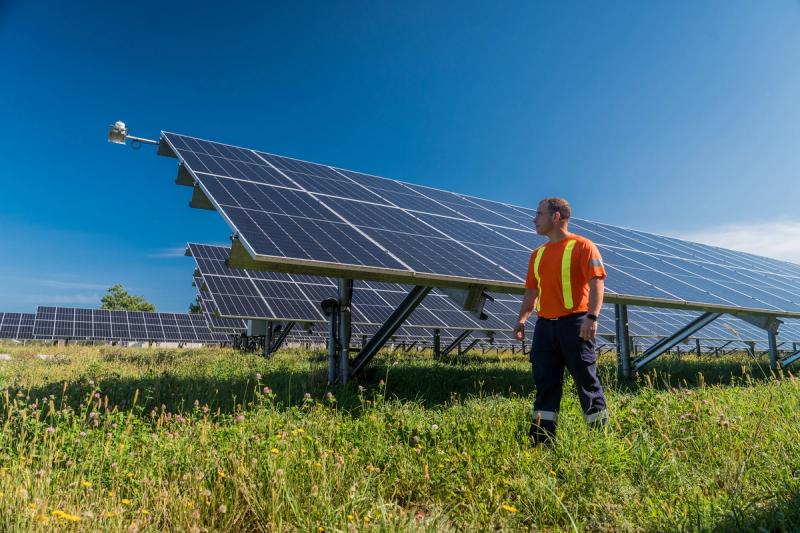
On a bright, breezy day in July, Sam Arsenault drives his electric-powered truck slowly down a gravel road hemmed in on both sides by endless stands of solar panels. Lined up one after another in a field on the edge of Summerside, P.E.I., the black checkered boards – facing south and tilted at exactly 30 degrees to maximize the amount of light they can take in – seem to go on forever.
There are 48,000 of them, spread over about 30 hectares, powering the ambitions of a small city determined to meet its electricity needs entirely with green energy. According to Arsenault, the city’s renewable energy production supervisor, it’s well on its way.
Annually, Summerside is meeting about 62 per cent of its energy needs with renewable sources, Arsenault tells me as we drive through the Sunbank solar farm, adding that the city has already recorded long stretches, sometimes up to 12 hours, when all of the electricity it used was generated by renewables. “Our goal is to grow our system and get it to 100 per cent renewable,” he says. “We have projects on the drawing board right now that will help with that, and we’re always looking for the right time to roll out the next one.”
The $68.8-million Sunbank project is funded by the city – including contributions from Samsung and the Federation of Canadian Municipalities – as well as the province and the federal government. It’s the centrepiece of a renewable energy initiative that’s attracting international attention and has its roots in the efforts of what Arsenault describes as a “forward-thinking” group of residents who recognized more than a century ago that electricity would be critical to the community’s growth – and that it could be a lucrative revenue stream. In 1896, local merchants formed the Summerside Electric Utility and used $25,000 in capital to build its first coal-fired power plant. The Town of Summerside bought the utility in 1920.
Those forward-thinking residents may not have known it at the time, but municipal ownership of the utility would allow the city to control decisions about its energy generation and the types of assets it wanted to develop in the future, explains Arsenault, a chatty mechanical engineer who was born and raised in Summerside. “That has really empowered us to be able to take on some of these initiatives,” he says. “It would be extremely difficult to do if we didn’t own the local electric utility.”
In the early 2000s, city councillors decided they wanted to become more self-reliant when it came to the municipal energy supply and make it as environmentally sustainable as possible, pledging in a 2005 strategic plan to eventually achieve 100 per cent green power.
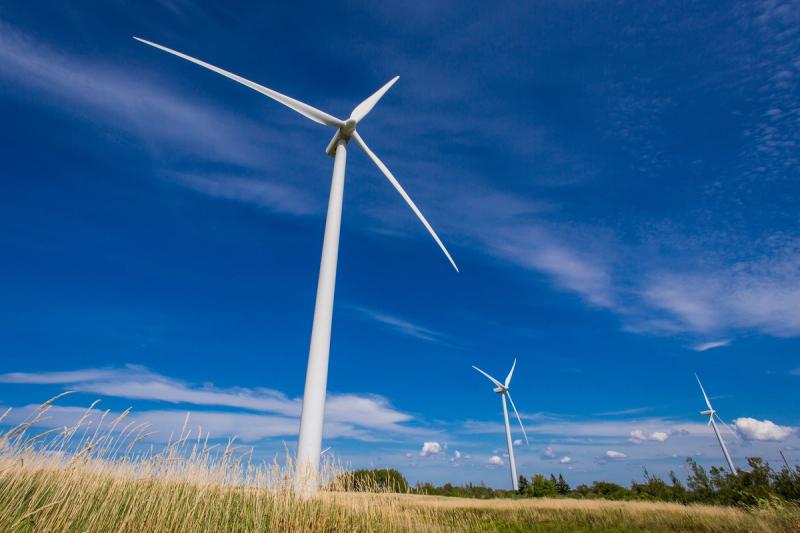
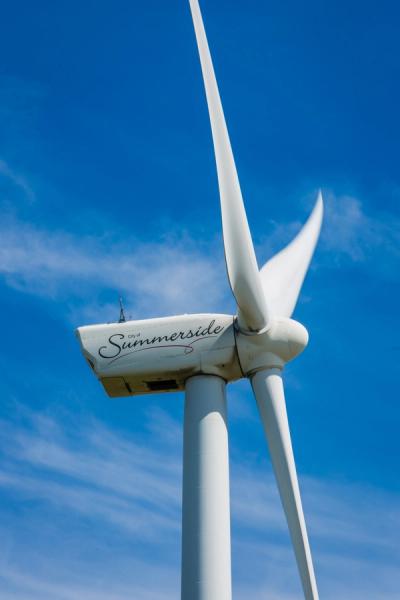
Greg Gaudet, the city’s director of municipal services, was part of a team leading the energy initiative and saw that wind power was gaining popularity as a way to add capacity to provincial energy grids. The city committed in 2005 to buy electricity from the 99-megawatt West Cape Wind Farm, which was setting up 55 wind turbines about an hour from Summerside. City officials soon concluded that instead of relying on another operator, they could build their own wind farm. In 2009, Summerside Electric started building four 80-metre-tall turbines in a field overlooking Malpeque Bay, which is now surrounded by a U-pick strawberry operation and golden fields of wheat, corn and canola. The $30-million project can generate 12 megawatts of power at full capacity, providing more than a third of the city’s required electricity. “We’re willing to push the envelope on technology,” says Gaudet.
Get our weekly newsletter – the people, places, and ideas revealing where Canada is headed.
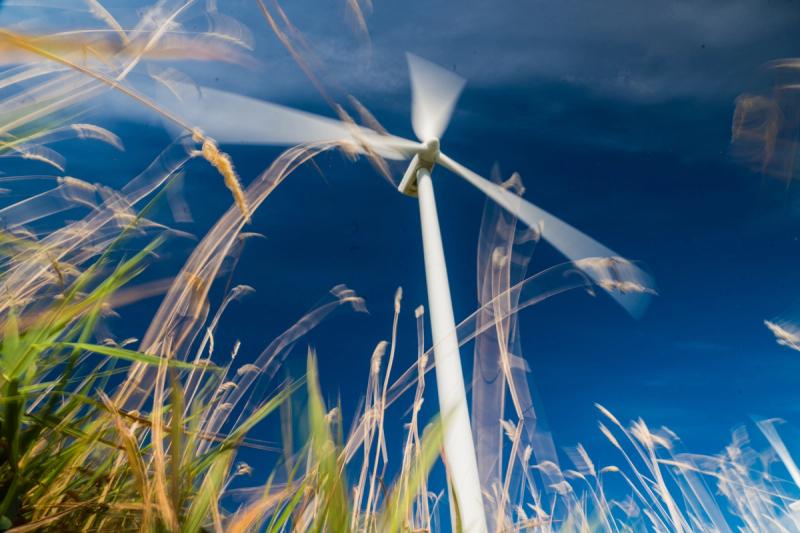
The project was one of the country’s first community-owned wind-energy initiatives and a meaningful addition to Summerside’s energy supply. But it wasn’t going to be enough. Capacity on the electricity grid wasn’t keeping pace with a local population that was rising sharply due to an influx of immigrants and a surge in Canadians leaving larger urban centres during the COVID-19 pandemic. City officials estimate that within the past five years, the population has risen by about 1,000 to roughly 17,000, putting a strain on the supply. They were also contending with a jump in electric vehicles and other electric devices, and the use of heat pumps in place of oil furnaces, ratcheting up the demand on the grid and pushing city officials to look at other energy options.
Arsenault estimates electricity demand has risen 46 per cent over the 17 years he has worked with the city. The Sunbank project, which began operations in 2024, is helping to meet that demand. Sunbank has a capacity of 21.6 megawatts of solar and a 10-megawatt battery storage system that can power more than 2,500 homes annually and remove roughly 8,120 tonnes of greenhouse gas emissions – the equivalent of about 1,700 cars. Any power generated by the solar panels that isn’t immediately used can be stored in the batteries and released at night when energy isn’t being generated.
The energy portfolio has reduced the city’s carbon emissions from conventional energy sources, making Summerside one of the lowest municipal emitters in the country, with an average rate of 2.7 tonnes per capita, compared with the national average of 17.7 tonnes per capita, according to a report done in 2022 before the Sunbank project came online. It has also provided a healthy source of revenue. The city says it had wind-energy sales of $3.6 million and solar-energy sales of just under $2 million for the 2024–25 fiscal year – revenue that stays in the community and can be reinvested, including in more green energy assets.
“We’ve been able to do things a little differently because we control the end-to-end, from the [energy] generation through the distribution to the customer. So we’ve been able to be a little more innovative,” says Summerside Mayor Dan Kutcher, who recently stepped down to run in the provincial Liberal leadership race, but who was in office during the construction and launch of Sunbank.
The sale of wind energy helped finance a new sports and recreation facility in Summerside, says Kutcher, which served as a pilot project that enabled city officials to test solar and battery assets before building Sunbank. The facility, called Credit Union Place, has free EV charging stations, 1,400 ground-based solar panels and 144 carport panels engineered to produce 603,800 kilowatt hours of energy a year, offsetting greenhouse gas emissions. The facility saved roughly $100,000 in energy charges after 17 months in operation, according to a 2019 report from the city. In a first for North America, the city decided in 2022 to see if it could power a Bryan Adams concert at the facility using only solar-sourced energy. Because it was at night, they stored solar energy in the batteries and drew on it for the entire concert – with juice to spare.
The city also came up with the Heat for Less Now program, which stores excess wind and solar energy in thermal-storage water heaters, furnaces and room heaters equipped with ceramic bricks purchased by homeowners. The technology lowers heating costs by storing as heat wind power produced during the night, when electricity costs less, and releasing it through the day. By 2024, municipal officials had installed more than 580 of the energy-storing devices in Summerside, significantly reducing greenhouse gas emissions and the price of electricity for residents in the program. Under current pricing, participants pay eight cents per kilowatt hour versus 17.84 cents for consumers not in the program.
The transition, however successful, still poses challenges for Summerside officials seeking greater energy independence and security. The city buys about 40 per cent of its electricity from NB Power, which is transmitted through subsea cables owned by the P.E.I. government and operated by the regulated island utility, Maritime Electric. Kutcher would like to be able to access those cables directly by installing a transmission line, rather than rely on an outside utility for delivery. The mayor would also like to see the province’s regulatory framework loosened so the city could sell some of its energy to other areas of P.E.I., which is currently prevented by legislation. Yet he’s optimistic about the growth of Summerside’s renewable resources, which could include expanding their batteries to hold more energy, developing a hydrogen generation project and eventually replacing some of the aging wind turbines.
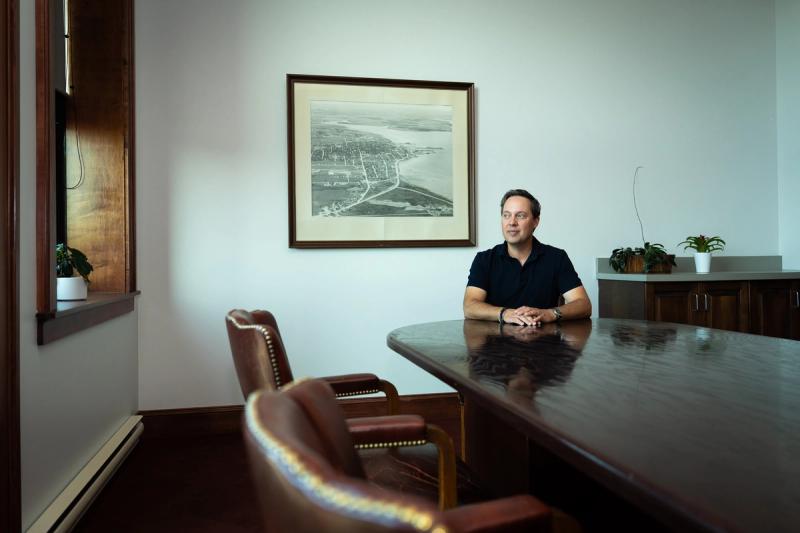
“We have a great model here, and it’s one that works,” says Kutcher. “You can replicate what we have – you don’t need to reinvent much. We’re always learning, too, and we’ve got room to grow.”
Summerside’s efforts have attracted the attention of a research group at Ottawa’s Carleton University that’s looking at how communities will navigate the transition from conventional heating and energy sources to renewables while managing increased electrification. Kristen Schell, an associate professor in the university’s mechanical and aerospace engineering department who specializes in wind-power modelling, has been collecting data from Summerside for the past five years.
“We know we need all of these technologies to electrify in order to reduce emissions, but the big question is, how do they operate together? Because if people all charge their cars when they get home at 7 p.m., the power grid is going to suffer brownouts,” says Schell, who’s working on models to figure out how to co-ordinate increased demand.
Schell hopes her research will illustrate how renewable sources can work together as demand for electricity rises and other communities aim to reach net zero. She notes, however, that Summerside is unusual in that it owns its utility, has a small population and controls both the generation and the distribution of power.
“I would say [Summerside] is the envy of a lot of utilities in North America,” she says. “It’s definitely an outlier. It’s kind of operating like a little islanded grid. Still, it’s definitely a model that everyone else is looking toward.”