The day Lambert Cobb became unmoored was a fine day, if memory serves. Let’s place it close to the beginning of June, likely trap berth day, symbolic to the fishers of Fogo Island as they dropped the buoys that marked their family fishing berths and thus the seasonal launch of the centuries-old inshore cod fishery.
Lambert’s daughter, Zita, might have been 10 or possibly older: the account bends itself to lore in her retelling. Still, the rock-hard core of the tale remains, immutable, as she recalls her father setting upon his white skiff with its red gunwales – gullins in the Newfoundland vernacular – dousing it with kerosene and lighting it ablaze.
It was lost on no one, least of all his only daughter, that Lambert Cobb would no longer be tethered, or held fast, to the subsistence economy of the cod fishery, which had fed, and then all but starved, the people of Fogo Island. It is very likely that Stella Cobb looked upon her husband and cried.
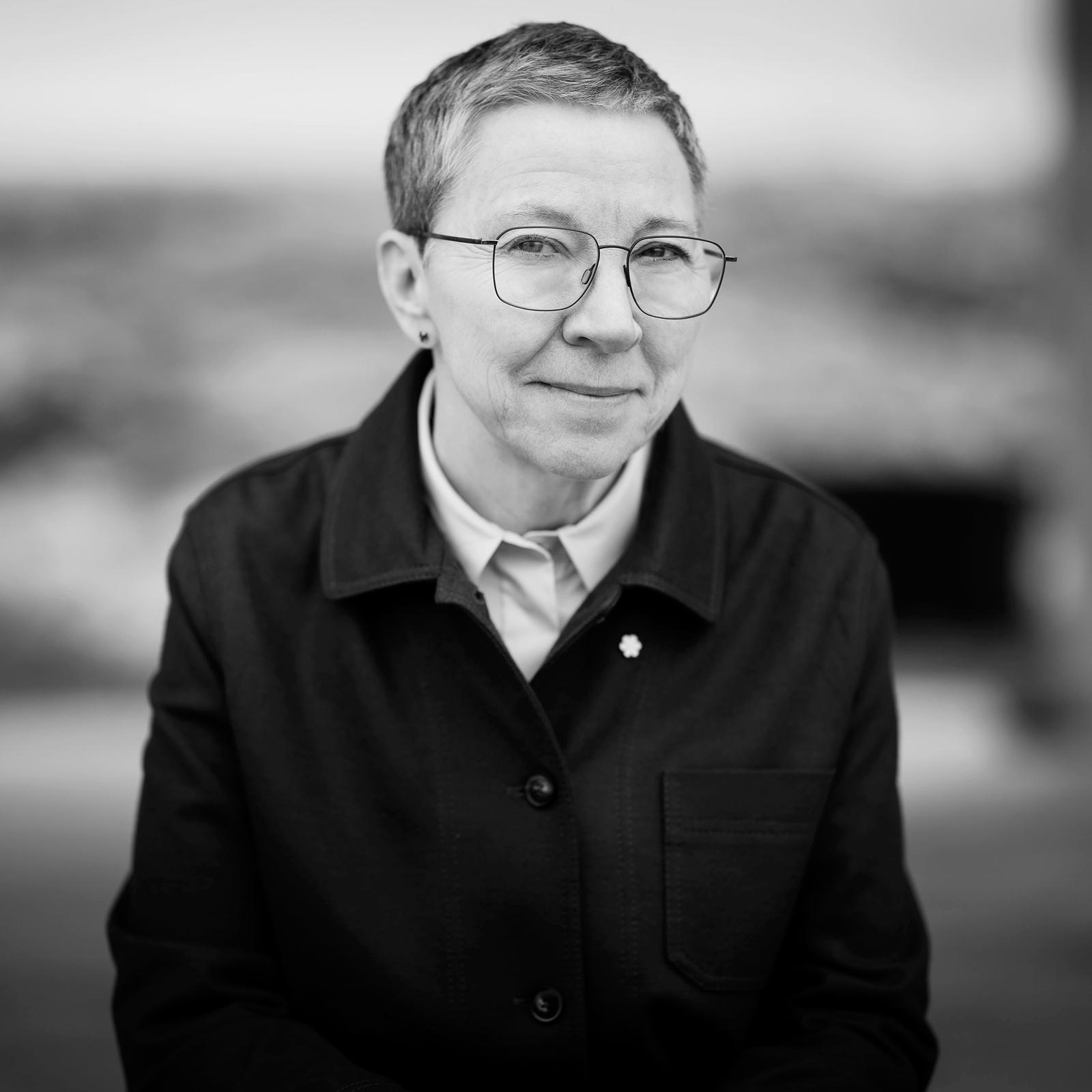
More than a half-century later, Zita Cobb, a woman elfin in physical presence but not in demeanour, sweeps her hand across a tabletop, tracing the shoreline geography of the harbour at Joe Batt’s Arm, with the Coffins to one side and the Harts to the other and the Cobbs at the bottom at deep water. “He hauled her up closer to the Coffins because there was a little cove up there,” she says of the skiff. “Easier to get her in.” The billowing smoke drew a running crowd, but Lambert was mute in the moment, apparently. “I don’t know what he was thinking. I think it was disgust. Like a big fuck you. It was never talked about.”
Get our weekly newsletter – the people, places, and ideas revealing where Canada is headed.
Zita Cobb is an avid talker and a nimble storyteller who will divert to an explanation of capelin mating – the males develop dorsal spawning ridges in the frisky season, making it easier to latch on to females before an epic roll in the surf – and then back to the central conversation. These are beguiling traits as she embarks on a nationwide campaign to promote an ambitious initiative, after announcing in December the creation of the Shorefast Institute for Place-Based Economies. (Be Giant is funded by the Weston family, who have also contributed to the Shorefast Institute.) The institute’s central thesis is that the country’s towns and cities, big and small, have too often missed out on their economic potential, or are experiencing economic decline, by neglecting the role of community or place. Economist Raghuram Rajan calls community “the third pillar,” left behind by pillars one and two – the state and the markets. The primacy of governments and finance has created a serious imbalance, as recent history attests. Rajan argues the pillars must be brought back into equilibrium because healthy communities are crucial for maintaining healthy market economies. Cobb is passionate about this: “The strength of our country is the strength of our ability to co-ordinate and work across these pillars.”
Cobb’s grand goal is to nurture a nationwide skein of communities working with Shorefast toward “uncovering and harnessing the power of place to build Canada’s economy.” The institute is already working in partnership with a number of communities, including Newmarket, Ont., and Battle River, Alta., with the goal of advancing local development by building on local assets, sustainable growth, entrepreneurship, accessing capital and leveraging unique cultural attributes. Appropriately, the hoped-for national network has been dubbed Shorenet.
This is certainly the right political moment for such a message, and Cobb won’t tire of the telling before a democracy conference in Toronto or a spring panel in Ottawa – or across three Be Giant interviews. Next stop: Estevan, Sask. The Shorefast Institute, she told her Ottawa audience, “will strengthen Canada’s economy by advancing place-based approaches to economic development and by building a working framework across governments, markets and communities of all sizes.”
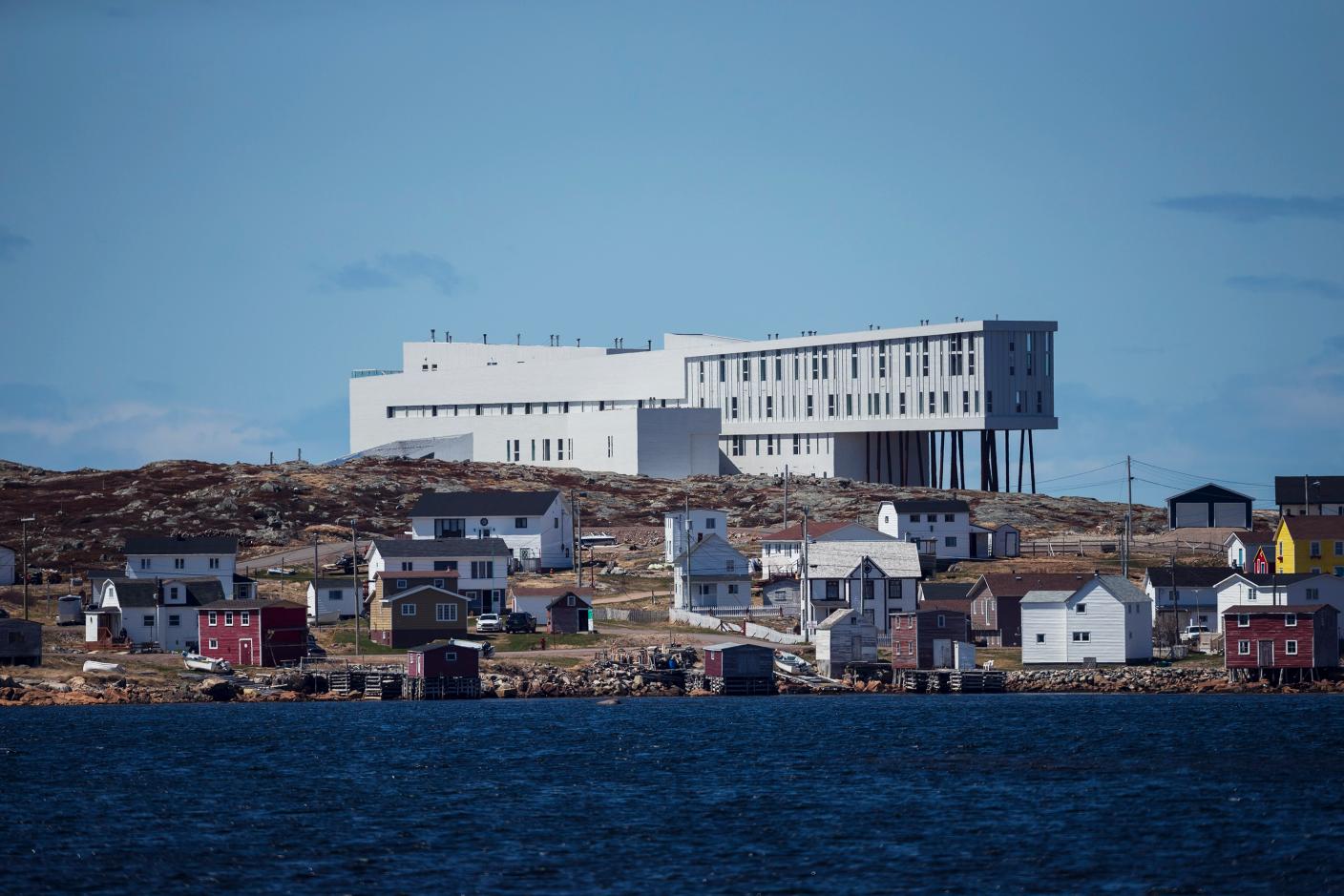
This could all sound overly academic on the one hand and crazily ambitious on the other were it not for Cobb’s personal success in precisely this arena. Cobb gained a national profile and drew international attention by imagining and improbably realizing the creation of the Fogo Island Inn. Opened in 2013, the inn’s design, on stilts, and its unlikely footing on the island’s rocky Atlantic coast has earned a Relais & Château designation, three Michelin Keys – Michelin’s top award, one shared by only one other Canadian hotel, the Clayoquot Wilderness Lodge – and the occasional raised eyebrow over the cost of a stay. (A weekend in May in the company of internationally acclaimed St. John’s author and poet Michael Crummey, including readings, would have set book lovers back $5,075 a night – three nights minimum.)
What might be lost on the Condé Nast Traveller crowd is that the inn – that is, the building itself – sits under the umbrella of the Shorefast Foundation, a charity launched in 2004 by Cobb and brothers Alan and Anthony to spur economic development on the island. The foundation also owns a for-profit venture, Shorefast Social Enterprises Inc., which operates the inn and a clutch of small businesses: Growlers Ice Cream, which churns seasonal flavours from such determinedly resilient local fruits as crowberries; Fogo Island Workshops, which crafts yellow birch chairs, quilts and We Sailed Away fabric and wallpaper; and Fogo Island Fish, a small-boat fishery created by Anthony Cobb and his spouse that sets out in May for the snow crab harvest – followed, of course, by North Atlantic cod. All operating surpluses are directed back to the foundation and reinvested for further economic development, thus underpinning its maxim: “May we always be shorefast to this place.”
Cobb herself wasn’t always so tied to Fogo. As family members left the island to seek opportunities elsewhere, she exited for Ottawa to pursue a university education, not least to figure out what her father called the “money thing.” The Fogo Island cod fishing economy that sustained the Cobbs, often marginally, was a truck system: the men caught the cod, and the merchant determined the value of the saltfish, cured by the women, and issued credit used to purchase goods in exchange. It would send Lambert Cobb round the twist when the merchant downgraded his fish from “merchantable” to the lowest export grade. “The greatest indignity,” Zita calls it.
So she figured out the money thing, working in the oil patch before ultimately flourishing in the world of wavelength division multiplexing – the explosion in fibre optic capacity – which led to her work on a suite of corporate mergers, which in turn led to a stock bonanza. In 2001, the year of her retirement from Silicon Valley North, Cobb exercised options worth $69.2 million.
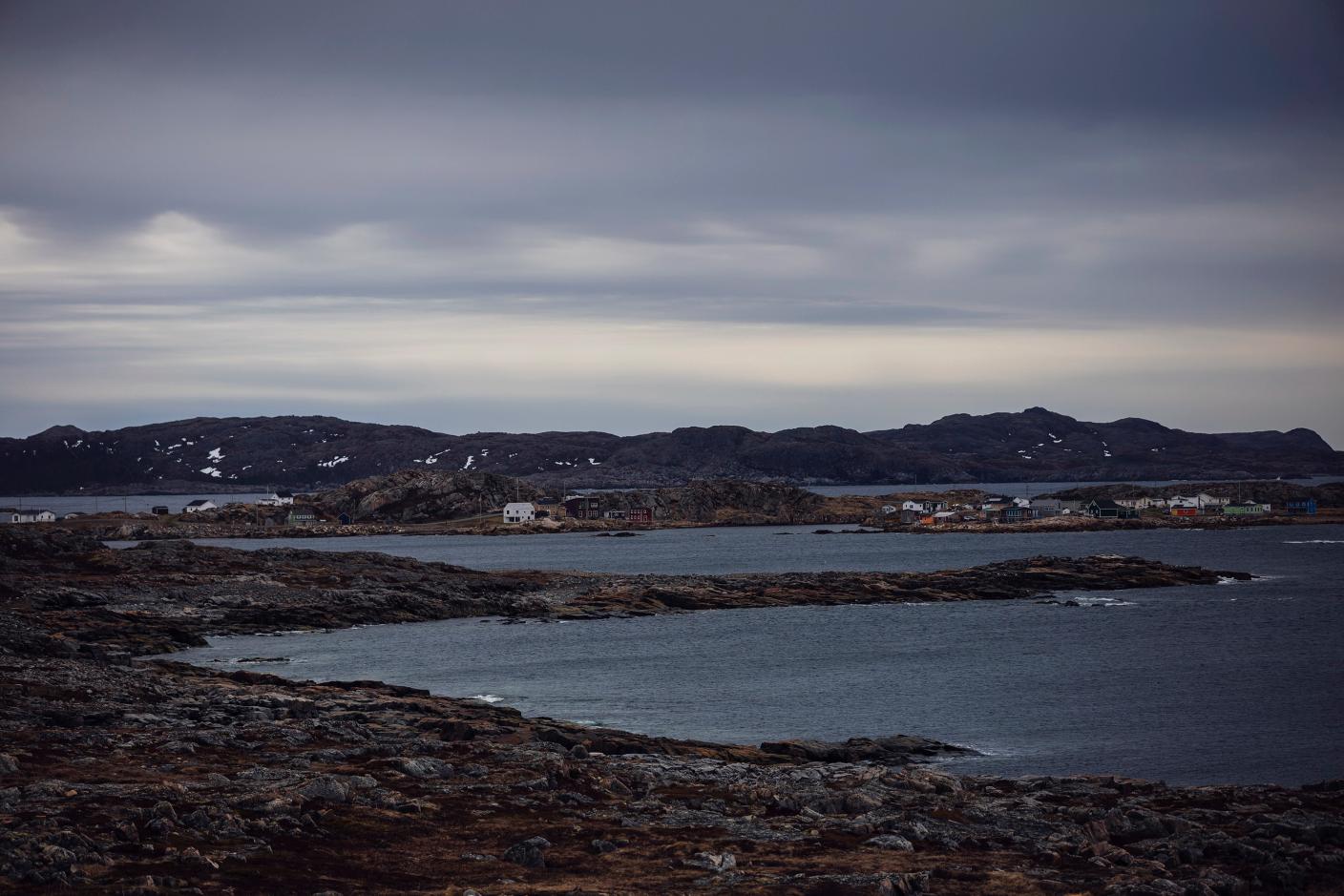
That’s a long way from what she has described as an 18th-century upbringing in a family of six brothers with, initially, no running water and no electricity. Yet she doesn’t make her childhood sound like hardship. She enjoyed life among the lichens, an image that resonates as another sort of metaphor for symbiotic growth, which Cobb appears to be very good at.
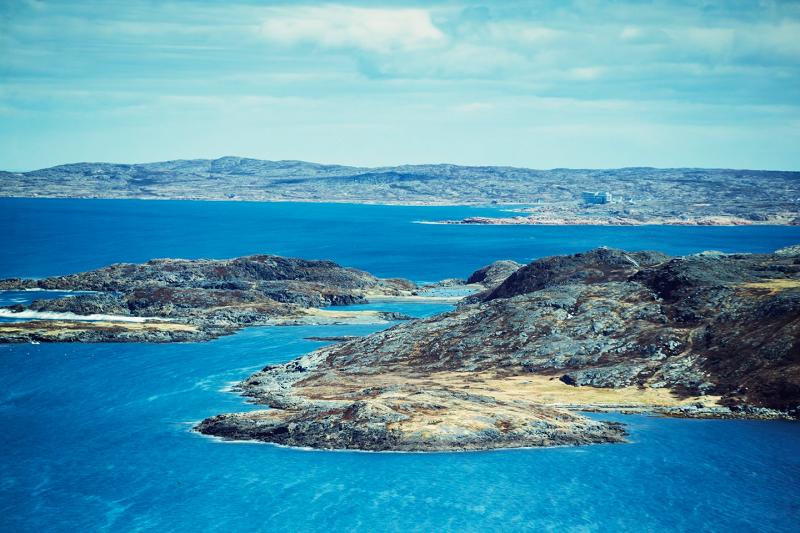
She was 42 when she left the tech industry to an unclear future. To see her now rooted in place seems surprising for someone who spent five years sailing the world. Yet at 47, she returned to Joe Batt’s Arm, population of close to 800. She says she suffers from an extreme form of topophilia, or love of place. Maybe, to steal from the Irish poet Seamus Heaney, she wanted to feel her heart blown open by a North Atlantic gale.
What she found was a community in crisis. And not for the first time.
Beginning in 1953, the Newfoundland government of Premier Joey Smallwood targeted 199 outport fishing communities for resettlement on the mainland, offering families $301 to leave. The inshore fishery was in decline, offshore trawlers were swamping small family-run operations and Smallwood was set on his idea of modernizing his province by moving residents to larger communities. Yet by 1959, just 29 had accepted. A provincial report the following year revealed that not a single family in Joe Batt’s Arm had, as yet, responded in favour of packing up and leaving, drawing the not very surprising conclusion that people have a preference to remain in situ.
Famously, the fishers of Fogo Island would go on to save themselves, at least temporarily. Voting to stay put, they launched the Fogo Island Co-Operative Society in 1967. Bigger boats were built and new markets sought as the species range of catch expanded. Abandoned processing plants were taken over and restarted. This collective effort – what became known as the Fogo Process – was filmed in real time by the National Film Board of Canada and Memorial University of Newfoundland. “This is the most important thing,” Cobb says, “when a community figures out how to build social capital.” Ask her to put her current thinking in the historical context of the Fogo Process, she adds, “I don’t think I’ve had a new idea in my life.”
Lambert Cobb, who had packed it in following a particularly meagre year, gained carpentry work in the shipyard for a time and later moved to Toronto before dying in 1988. His headstone reads: “Safe in the harbour.”
Zita remembers exactly when she was first set on the path to place-based economic development. Her commitment to the island had solidified. The how-to-help was unclear. It was Freeman Combden, then the mayor of Joe Batt’s Arm, who set her straight. “He said to me, ‘If you’re going at this you better get yourself educated because you come from the business world. That makes you a dangerous element because you business people think that as long as you’ve got a few dollars and you can organize people you can do anything.’ He was the first one who said to get informed about asset-based community development. And I said, ‘What the heck is that?’ And that’s how I started.”
That’s not where she ended up.
The ABCD movement, born in the ’80s, grew out of a U.S. door-knocking study of 300 struggling neighbourhoods. The lightbulb moment was the realization that policies and activities needed to be developed based on the capacities, skills and assets of people in their neighbourhoods – as opposed to delivering to residents, as if they were clients, top-down services. Barack Obama was a notable volunteer. The ABCD Institute was launched in 1995 and there is now a global network of practitioners.
Looking through her business lens, Cobb was dissatisfied. “The problem with it is that it’s been isolated, trapped in the community pillar. People know how to do it but they don’t have the linkages to markets, to government policies.”
So Cobb implemented the refined framework ABCD+E – asset-based community development for the economy. Take commercial borrowing. When Raghuram Rajan writes about the importance of devolving funding to the community level and when Cobb talks about the Canadian banking fraternity and lending, the disconnect in practice is obvious.
As of 2025, of the 1.1 million businesses in Canada, 1.08 million were categorized as small businesses, having fewer than 100 paid employees. Small businesses employ 47 per cent of the working population. Fold in medium-sized businesses (100 to 499 employees) and total employment by SMEs – small and medium-sized enterprises – rises to 64 per cent.
Are they being served?
The federal government asked the same question a decade ago with the first of a series of studies on the financial sector’s role in building the economy of the future. Managing $10 trillion in assets, the sector outpaced Canada’s GDP by more than five times. The Big Six banks had grown larger since the 2008 financial crisis, the sector overall had become more concentrated and Canadians in remote communities faced particular challenges, not the least of which was being unbanked.
“We have these giant banks on a world scale,” Cobb tells the democracy summit in Toronto. “And we’re proud of them.” A micro pause. “For reasons I don’t understand.” Laughter. “They don’t serve the country. The pace of banks closing is mind-boggling.”
Cobb uses the banking system to exemplify how our institutions are agnostic to place – or that the Canadian economy is optimized for institutions, not for places. “Our banking system proves the point,” she says, pointing out that of the 5,000 incorporated communities in Canada, only a small fraction of those have access to conventional commercial banking. “[The banks] just leave. Or never showed up.” A May 2026 report from Toronto-based Social Capital Partners found that between 2019 and 2024 only 11.5 per cent of outstanding business loans went to Canadian SMEs, compared with a 44 per cent average across the OECD.
“We are talking about banks, but we could be talking about any sector,” Cobb says later. “What is it we could do to reorganize or reorient our business models to be more present and more of service to communities?”
What she is doing is getting the message out to cities. Last June, Newmarket announced its partnership with Shorefast to work toward developing new opportunities for the town. A Shorefast team focused first on mapping the economy of the community. Adoption of the Shorefast economic nutrition label is one initiative, a clear and clever way to show where the money goes. Growlers Ice Cream is a Fogo example, with a label that breaks down the percentage of sales to salaries, ingredients, supplies, etc. But, says Newmarket Mayor John Taylor, “This isn’t just shop local. This is much more complex. Does the money stay in your community or fly out of your community but still nearby, or is it going far afield?” Cobb calls the goal “sticky money.”
Taylor sees Shorefast as a guide to keep moving forward, to keep pumping the entrepreneurial ethos, to keep swinging, as he describes it. Choice Properties Real Estate Investment Trust is funding the brainstorming project for a two-year period. (Choice is an operating company of George Weston Limited.) The obvious question emerges: what’s in it for them? Via email, Orit Sarfaty, vice-president, placemaking and social impact at Choice Properties, says that the real estate company shares Shorefast’s belief “that the key to economic development is embedded inside communities.” Choice pursues the goals of local economic development and social cohesion through “placemaking, grantmaking and supporting initiatives with partners like Shorefast.” The alliance is not, she clarifies, tied to a direct commercial purpose.
Last November, Taylor travelled to Fogo Island with community leaders from across the country who have signed on to work with Shorefast. Workshops were focused on place-based economic development generally and the Fogo experience specifically. “When you sit down and start to talk with Zita, you really understand how she’s pulled learnings and almost a philosophy out of the Fogo experience that is replicable.” He describes the Fogo landscape as both barren and stunning. “It was very raw. It made you feel very alive.” Straining against 100 km/h winds and trying to stay upright can do that to you.
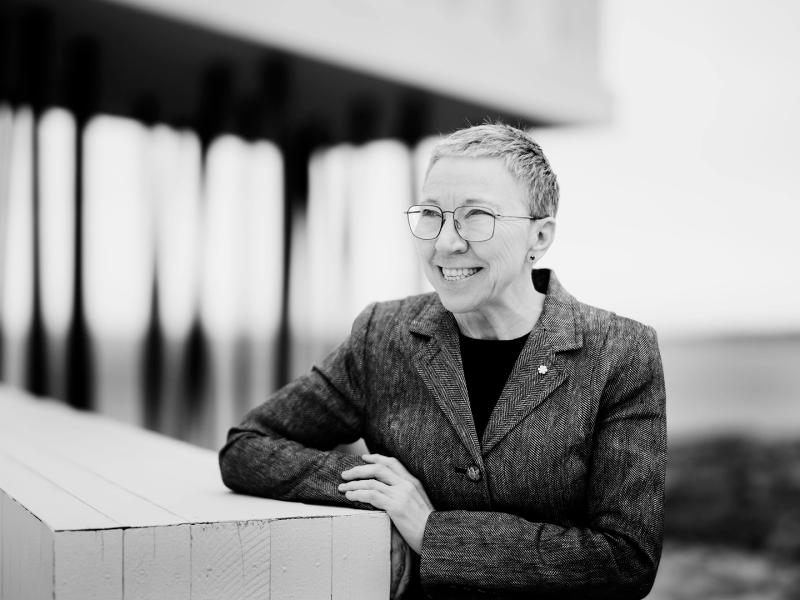
When I last saw Cobb, she was heading to the airport. I noted her shoes. Fluevog, she said, of the Vancouver-based footwear maker. Her trim tweedy jacket? The Toronto atelier Smythe. And, of course, an Order of Canada pin. All of it consonant with her pride and optimism for the future of this place. The giant place, that is. Canada.
In one of our conversations Cobb remembered a comment from an islander featured in the Fogo Process. “He said we have to hold fast. And not be contrary to one another.” It is, says Cobb, the most beautiful sentence.