The concept of Canadian Arctic sovereignty is rapidly becoming outdated as much of the world eyes the region as part of an intense global competition that will blur traditional lines and beliefs, a conference on Canada-U.S. relations was told this week.
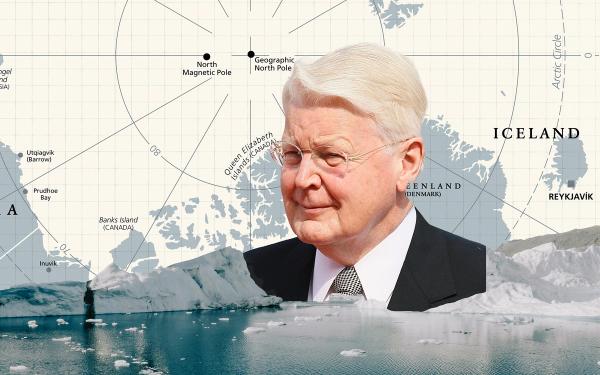
The wakeup call came from Ólafur Ragnar Grímsson, the former president of Iceland and now the chair of Arctic Circle, the world’s largest forum for dialogue on the future of the Arctic. He painted a picture of a global free-for-all in the region with a China-Russia nexus threatening to dwarf all others.
Get our weekly newsletter – the people, places, and ideas revealing where Canada is headed.
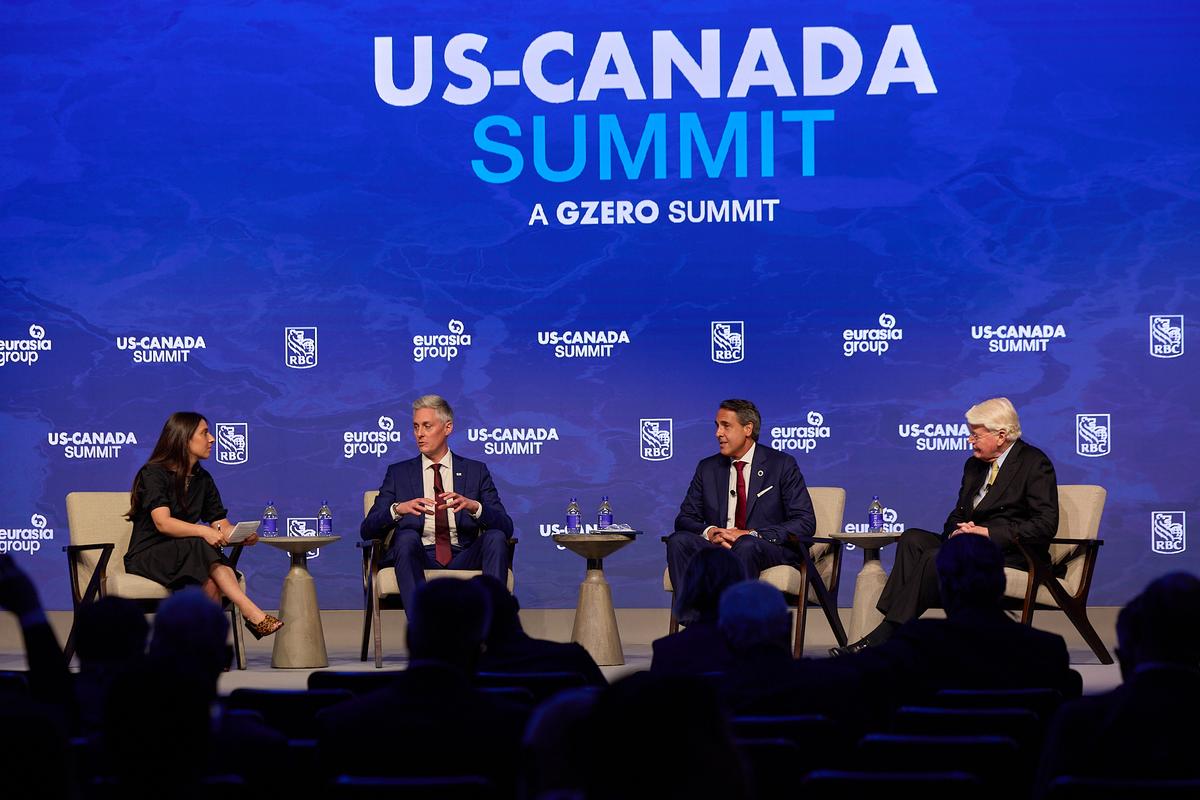
At the US-Canada Summit, hosted by the Eurasia Group and the Royal Bank of Canada in Toronto, Grímsson offered a long list of nations – including the likes of France, Germany and even Singapore – that are far from the Arctic Circle and that covet the region for its energy and strategic resources, its military value and its prime location for space monitoring installations.
“They are all positioning themselves as major Arctic players, not just in science, but in investment, in space and to some extent the notion that there is an American Arctic or a Canadian Arctic is kind of outdated,” he said. “Observing the Canadian and American dialogue on the Arctic, I’m not sure whether the leadership of the U.S. or Canada is aware that for the first time in your history you face a global competition for the Arctic.”
A large part of the Arctic is international waters where, according to law, shipping is not controlled by any nation’s sovereign rights, he said. And there are more ships sailing because the ice is melting. The question of where any nation has sovereignty in the Arctic has become very complex, he added. “It has become a crowded territory. There are a lot of new arrivals and many of them are very powerful.”
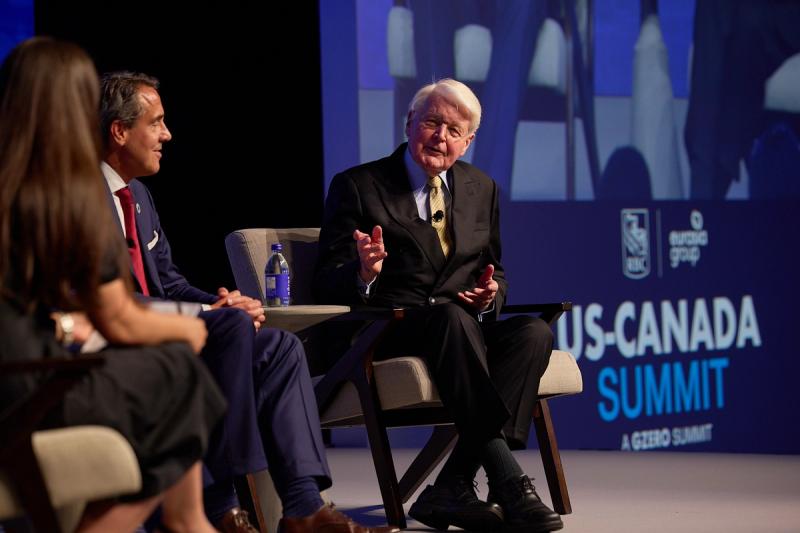
Grímsson was speaking on a panel with R.J. Simpson, the premier of the Northwest Territories and Thomas Dans, the chairman of the United States Arctic Research Commission. He said western nations are losing sight of what Russia is doing in the Arctic where, for example, the 8,000-kilometre Siberia 1 pipeline supplies China with 38 billion cubic metres of natural gas annually and talks have restarted on Siberia 2, a 2,600-kilometre natural gas pipeline. There are discussions about building a pipeline from the Russian Arctic to India, he said. The prohibitive costs and daunting geographical challenges have put that project on ice but the two countries have signed a memorandum of understanding.
Grímsson said he fears that if this trend continues the hold on the Arctic from Russia, China and India will become virtually unbreakable, and Canadian and American interests will become almost irrelevant in global terms.
“We in the west need to garner more information on what is happening in energy and mining and economic co-operation in Russia’s Asian Arctic.”
Simpson said people in the Arctic exercise their sovereignty every day.
“But we need eyes on the ground,” he said. He praised the Canadian Rangers, the literal eyes and ears of the Canadian North, who recently completed a 52-day winter trek by snowmobile, 5,200 kilometres across this country’s northern extremities from Inuvik to Churchill, Man. The Rangers, a 5,000-strong military reserve unit comprised of members born and raised in the North, show the world that Canada has a presence along the Arctic circle, but they also relay crucial information to Canadian military stationed in the south.
But Simpson said for far too long Canadian governments had deemed the North too expensive to properly protect, or saw it through the lens of the environment and conservation, leaving “half the country undeveloped.”
That is changing, he said. Prime Minister Mark Carney announced a $35 billion investment in military infrastructure in the North and he and his counterparts from five Arctic nations – Denmark, Finland, Iceland, Norway and Sweden – pledged to work together to protect security and stability in the region. The pact was signed by the middle powers, expressly excluding the United States and Russia.
Dans pointed out that 80 per cent of the Arctic is ice and water, but 75 per cent of its seafloor is unmapped. He said the United States was once an Arctic leader, but it has allowed that status to be lost. Both Canada and the U.S. were guilty of “letting things go and drift in the Arctic,” Dans said.