From a train leaving Toronto’s Union Station on a rainy spring afternoon, the east side of downtown unfolds as a work in progress. Since the turn of the millennium, a long-gestating waterfront revitalization has spurred a cluster of construction cranes, bringing new offices, campus buildings, apartment towers and green spaces to an emerging urban neighbourhood.
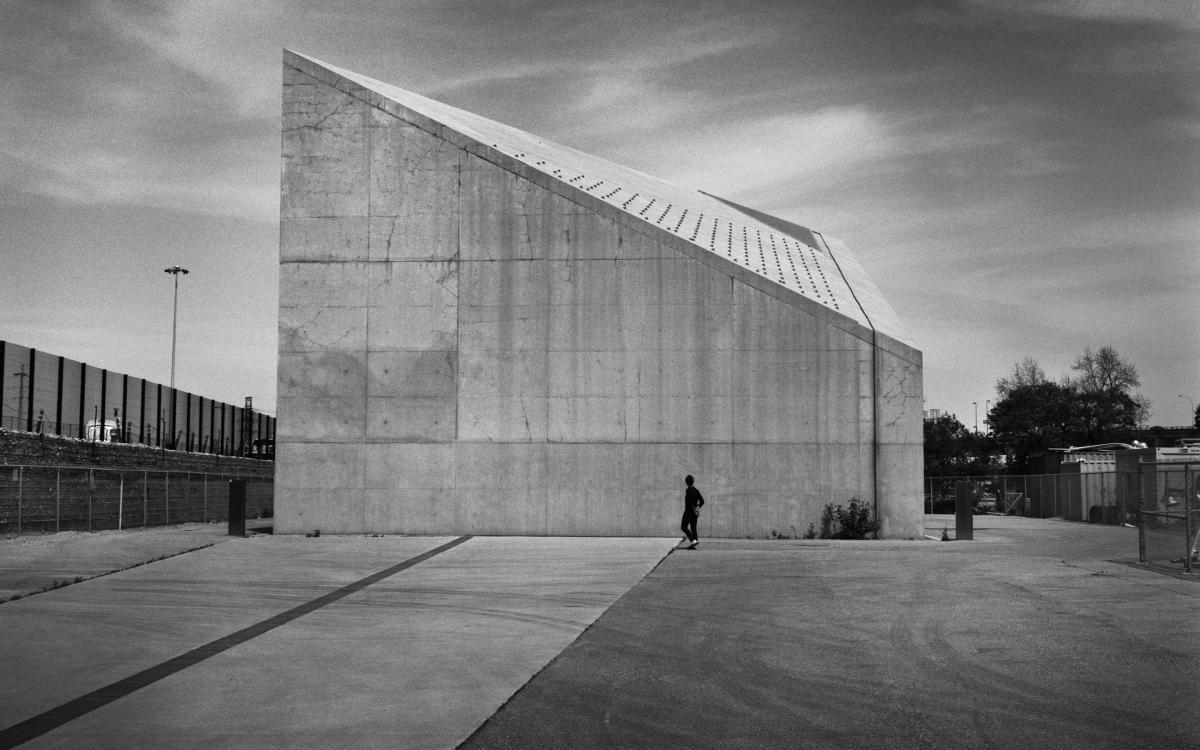
Amid the cacophony, a surprising form draws the eye. As the train begins to pick up speed, a crisp concrete monolith comes into view, topped by a sweeping roof that directs the rainfall into a poetic cascade; the sluicing water paints a sense of movement across the angular concrete.
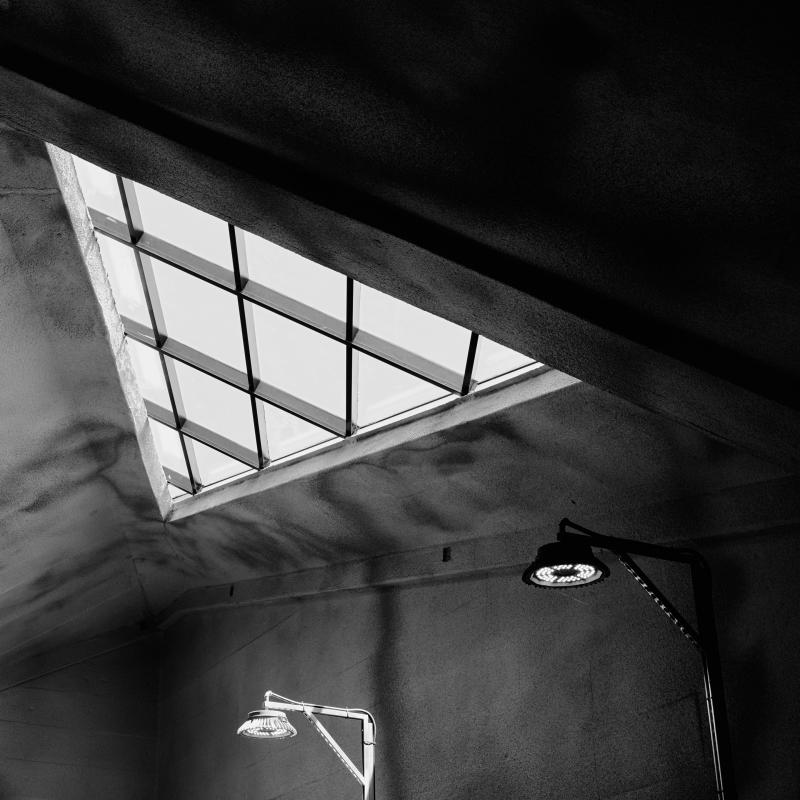
Inside, the movement of water is more science than art. Tucked into a triangular lot hemmed in by a sprawling rail corridor and an elevated expressway, the state-of-the-art Cherry Street Stormwater Management Facility plays a pivotal role in reducing urban flooding and pollution, all while alleviating the strain on surrounding civic infrastructure. Designed to manage runoff and stormwater, the purpose-built facility uses particle filters and ultraviolet light to clean water before returning it to nearby Lake Ontario.
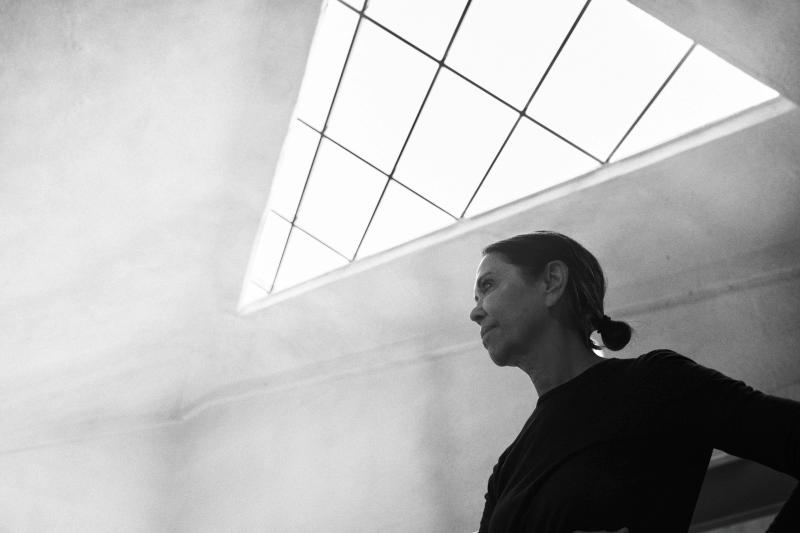
For architect Pat Hanson and her design firm, gh3*, the Cherry Street facility embodies a distinctive design philosophy that’s winning the Toronto-based studio a growing list of international plaudits. Over the past two decades, Hanson and gh3* – a firm she co-founded in 2005 – have transformed seemingly banal infrastructure projects into showcases of cutting-edge design and sustainable innovation. From bus garages and fire halls to power stations, public pools and stormwater facilities, the studio is bringing surprising grace, élan and technological sophistication to humble, hard-working civic buildings.
According to Hanson, the firm’s emphasis on civic infrastructure – which has historically held limited appeal for design-driven architects – emerged through constraints. “The challenge for smaller or emerging firms is always getting work. Doing the work, for me at least, is actually usually easier than getting it,” she explains. While growing a business is tough for any entrepreneur, Canada’s procurement policies mean public architecture is particularly difficult to break into.
Get our weekly newsletter – the people, places, and ideas revealing where Canada is headed.
Want to design a library in Regina? Or a federal office complex in Ottawa? Across Canada’s federal, provincial and municipal bureaucracies, architectural contracts are typically awarded based on a mix of prior experience and low fees. As Hanson puts it, “Even to design a fire hall, you have to have already designed a fire hall.”
In practice, it means that public buildings are typically the near-exclusive purview of large, institutional and often multinational firms. Design innovation – even when it yields tangible cost savings or ecological benefits – is reduced to a secondary factor. The integration of landscape, architecture and urbanism made gh3* stand out, Hanson says. “From the beginning, we had to distinguish ourselves – to do something that other firms aren’t doing.”

For Hanson, outsider status is nothing new. She was born in tiny Lajord, Saskatchewan, a farming village founded by Norwegian immigrants about 40 kilometres from Regina, and studied architecture at the University of Manitoba before entering a field heavily concentrated in major urban centres. After decades working for other practitioners, including famed Toronto architect Jack Diamond, Hanson started gh3* as a “later-in-life project,” bucking the entrepreneurial trend line. Hanson opened the studio with co-founder Diana Gerrard, a landscape architect who left the firm in 2017.
Throughout the 2000s and early 2010s, gh3*’s interest in landscape proved pivotal. “We were really interested in pushing new ideas about greenery and public spaces,” says Hanson. “At the time, soil cell systems were emerging as a way to keep urban trees alive.” The technology uses modular underground systems – resembling plastic milk crates – to prevent the soil compaction endemic to urban spaces, creating space for roots to grow.
Over the past decade, the technology has transformed urban forestry. Across North America, trees that were once left to wither in sidewalks and concrete planters are thriving, thanks to systems of underground cells. gh3*’s early embrace of soil cells shaped the 2007 revitalization of the University of Toronto’s Trinity College Quad, where majestic trees anchor a collegiate court re-invented as a sharp, contemporary geometry of paving patterns. “It has an architectural underpinning, but it’s primarily a landscape project, and it really started by thinking about these trees,” says Hanson.
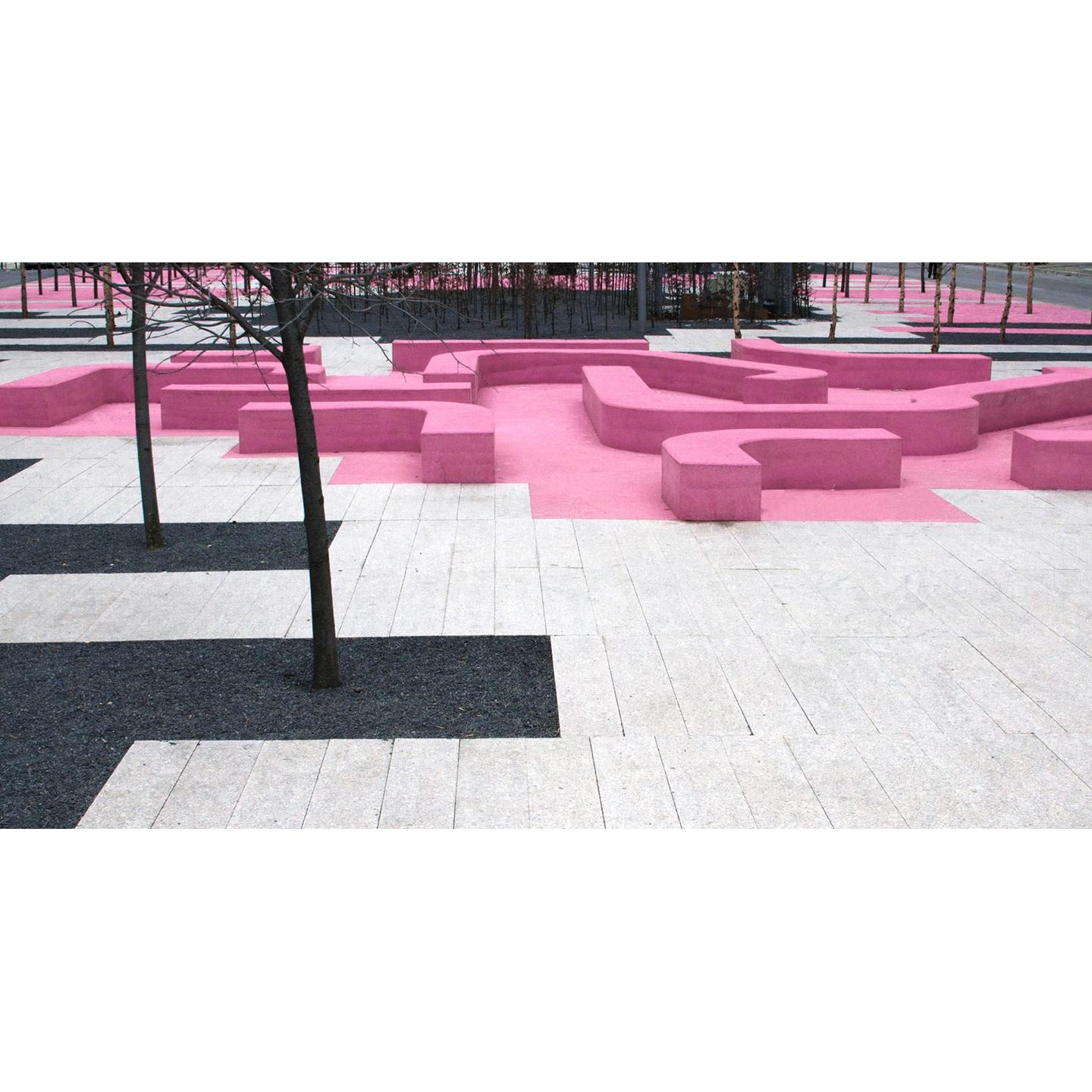
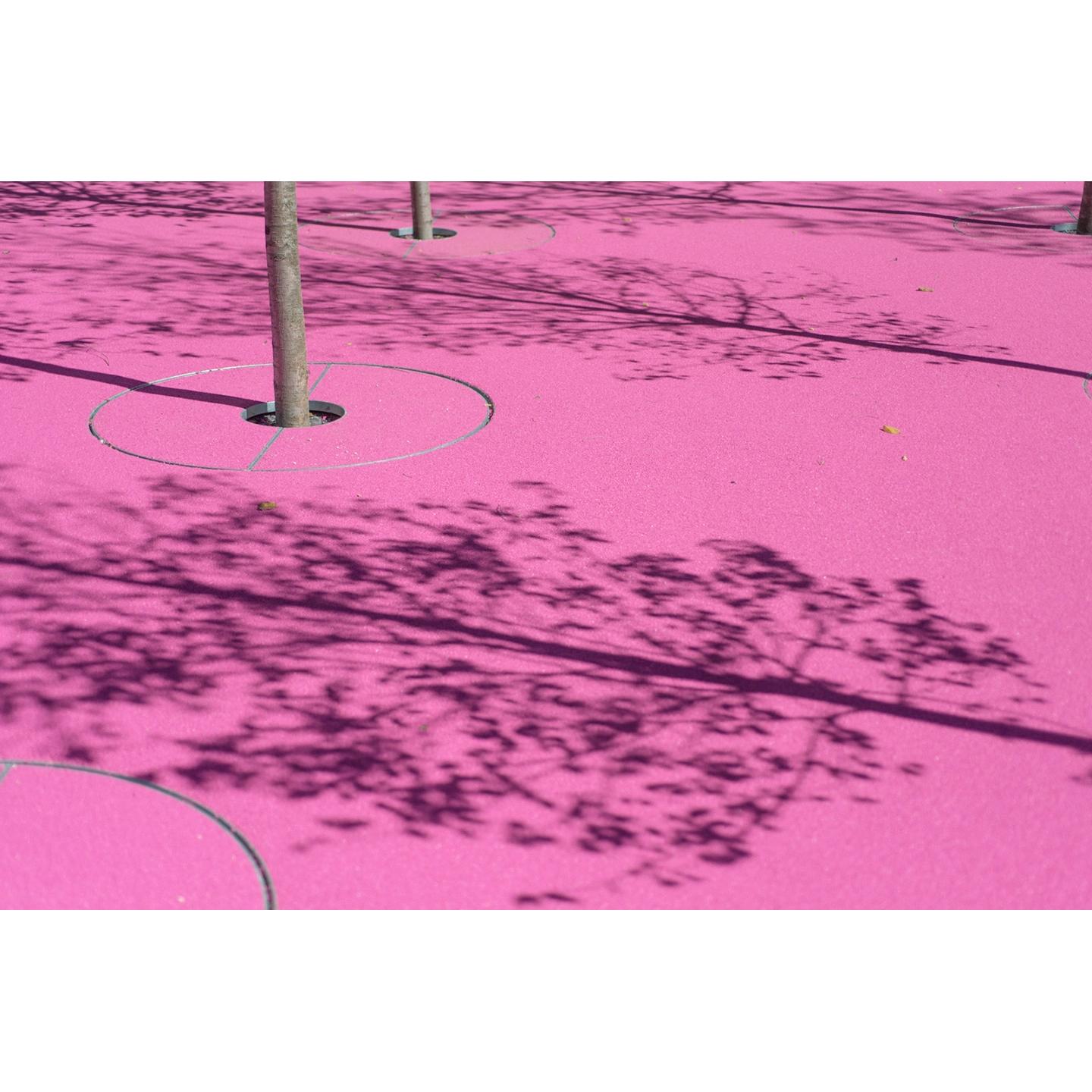
That design expression found a bolder manifestation at Toronto’s June Callwood Park, unveiled in 2014. The long, narrow park pays quiet homage to its namesake philanthropist and social justice activist. Accented by vivid pink rubber and black granite paving, its surface “is actually a digital voiceprint of a quote from June Callwood,” says Hanson. “It’s something she said in her last ever recorded interview: ‘I believe in kindness.’”
Here, too, Hanson and her team pushed the possibilities of urban greenery. Harnessing soil cells and careful drainage strategies, the park introduces a surprisingly dense thicket of trees. “It was all anchored in this idea of a ‘Super-Real Forest,’ where we planted as many trees as possible, without following established guidelines about tree spacing,” she says. In lieu of urban forestry norms, the designers looked to Canada’s natural heritage, reintroducing a tightly packed grove of native tree species that evoke the pre-colonial biodome of the Lake Ontario shoreline.
That commission came via an international competition won by the firm, which had been finding itself constrained by restrictive procurement bureaucracies and a largely risk-averse Canadian design culture. There was one exception: Edmonton. Back in 2005, then-mayor Stephen Mandel introduced a new mandate to promote design excellence in the city. “Our tolerance for crap is now zero,” he proclaimed. A few years later, Edmonton created the position of city architect, appointing architect Carol Bélanger, who immediately began reforming procurement.
Bélanger introduced new models for public architecture commissions, balancing past experience with a new emphasis on design excellence and removing the ability for architects to win work by lowering their fees. “In Edmonton, they also ask for different types of credentials; whether you’ve won awards or served on design review committees,” Hanson explains. “It’s a more progressive procurement model, which gives new designers a chance.”
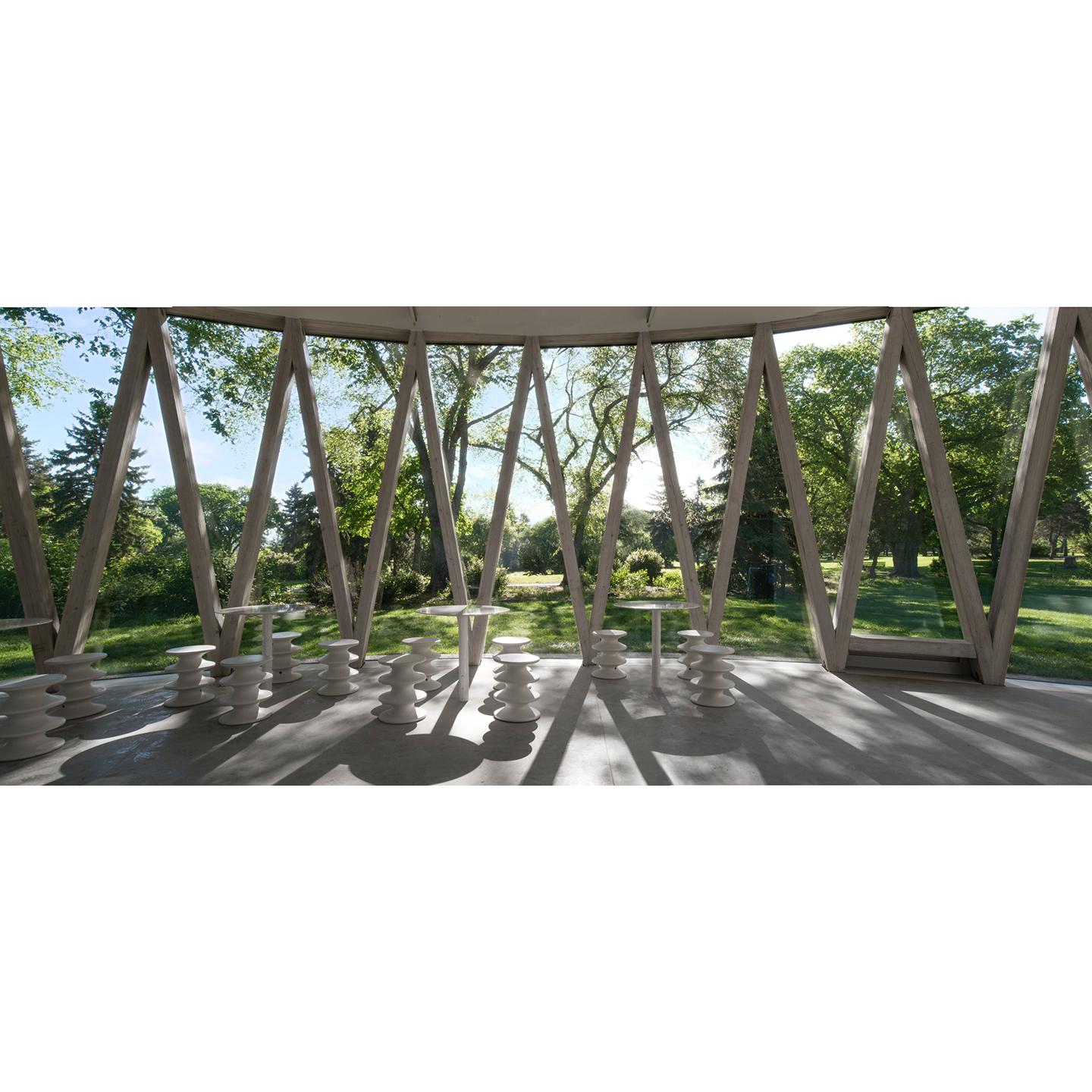
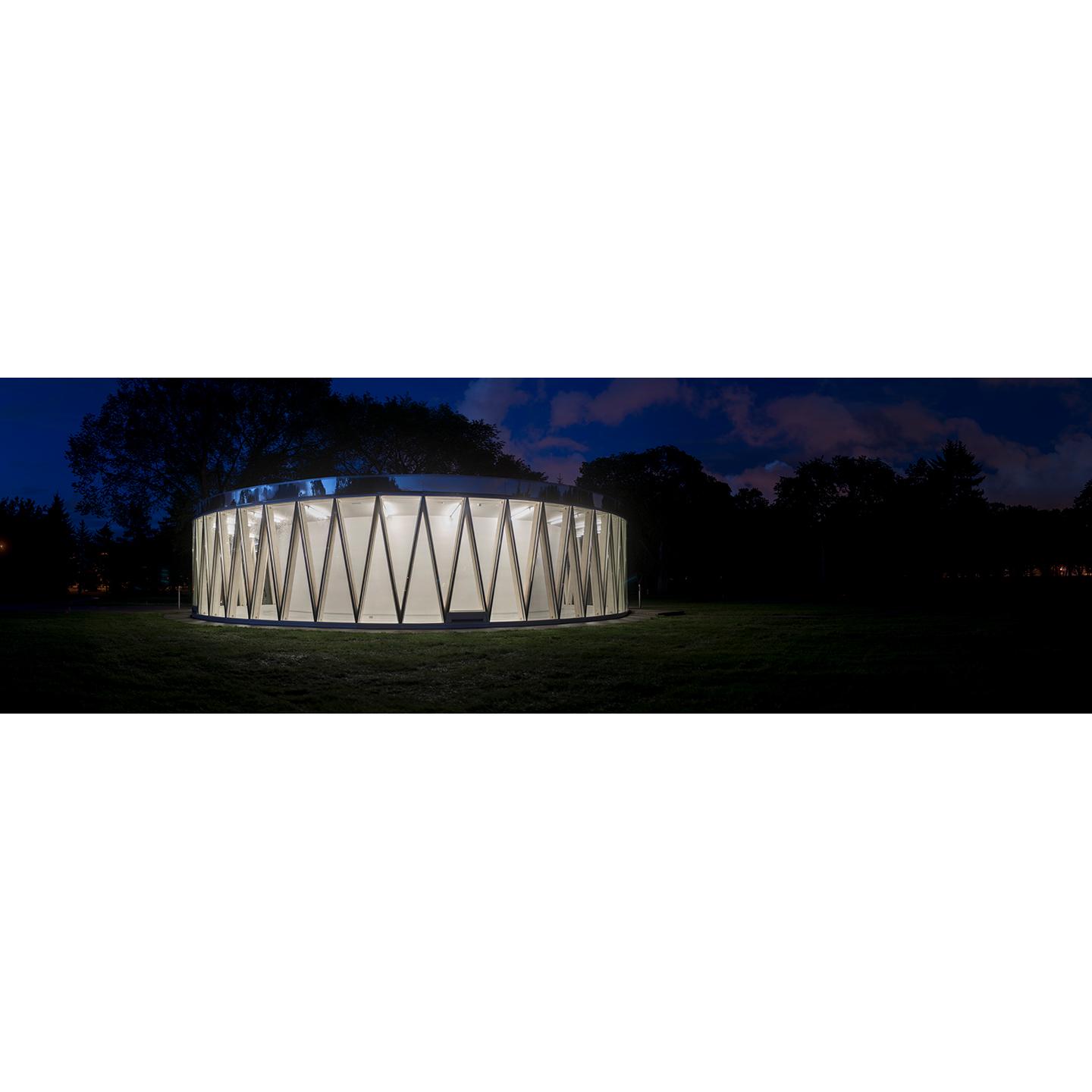
gh3*’s first project in the city – its national breakthrough, in effect – came when it won a national competition to design a new park pavilion in Edmonton’s Borden Park. Clad in reflective glass, the circular building asserts a strikingly contemporary presence; a boldness balanced by the quaint evocation of a carousel and a bandshell. Incorporating a structure of timber, concrete and glass, the light-filled building’s simple and minimal materials contribute to a sustainable design and a sociable setting. Outside, a ring of trees creates what Hanson calls a “tree room,” an open-air space to complement the pavilion.
“We were thinking about the relationship between biomass and building. It was about finding a balance of trees and building, and an effort to expand our thinking about urban water.”
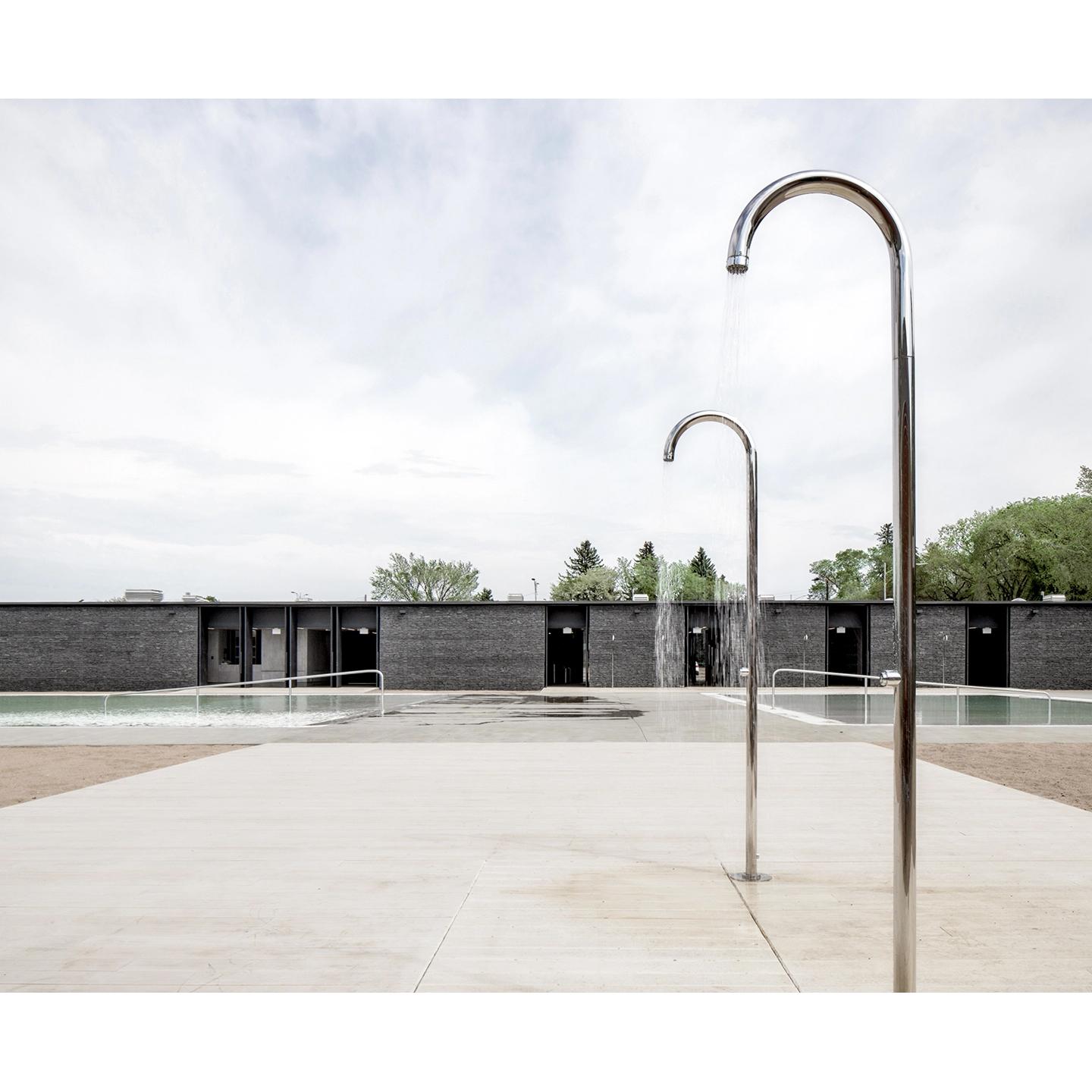
The project won a Governor General’s Medal in Architecture in 2018, widely considered Canada’s highest design honour. That same year, on the opposite side of the park, gh3* followed up the pavilion with a radically ambitious swimming pool. The Borden Park Natural Swimming Pool became the first chemical-free public pool built in Canada.
Framed by a gabion wall that houses the showers and changing facilities, the outdoor facility became an instant landmark – and a canonical work of contemporary Canadian design. Here, the movement and cleansing of water are both a technical marvel and a defining esthetic. Greywater is first channelled into an underground gravel filter bed before being conveyed into a second filter that oxygenates the water, which finally flows into a lush hydrobotanic regeneration pond, where zooplankton filters out lingering impurities. Then, the clean water enters the pool.
It all makes for a great swim. “The water feels a lot heavier and silkier than what you’d get at a chlorine pool, because it’s got a lot of the good bacteria that would otherwise get stripped out by chemicals,” Hanson tells me. The basic premise is similar to the Cherry Street facility in Toronto, and even to the kind of charcoal filter you might run tap water through at home, she says.

With Edmonton’s upcoming Blatchford Sewer Heat Exchange Energy Centre, gh3* takes the approach even further. The centrepiece of a planned 30,000-person neighbourhood that aims to be carbon neutral, the facility is designed to extract thermal energy from the buried sewer trunk that runs beneath the site. Greywater will be diverted from the main sewer line, then screened to separate solid particles before being channelled through a heat exchange system that extracts thermal energy to supply neighbourhood residents with both heating and cooling.
The building doesn’t hide its functions. In fact, its central brick walls are a tightly packed expanse of thin white brick with a dark grout, evoking the filtration process happening below, and the showpiece curved chimney serves a practical function, dispelling any trace lingering odours far above the public realm. In keeping with the emphasis on landscape and urbanism, the facility is ringed by trees and permeable paving, which allows runoff to be absorbed by the soil.
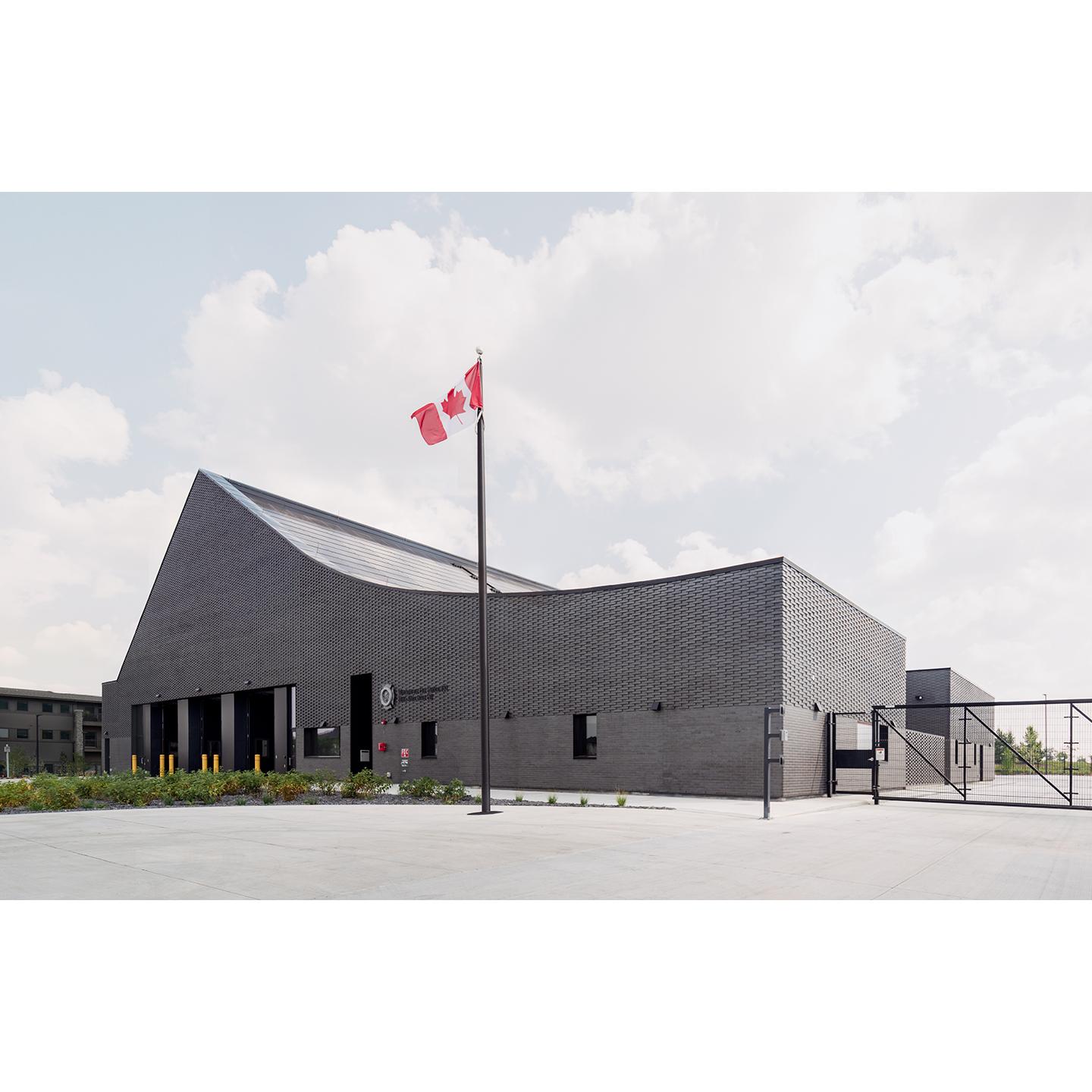
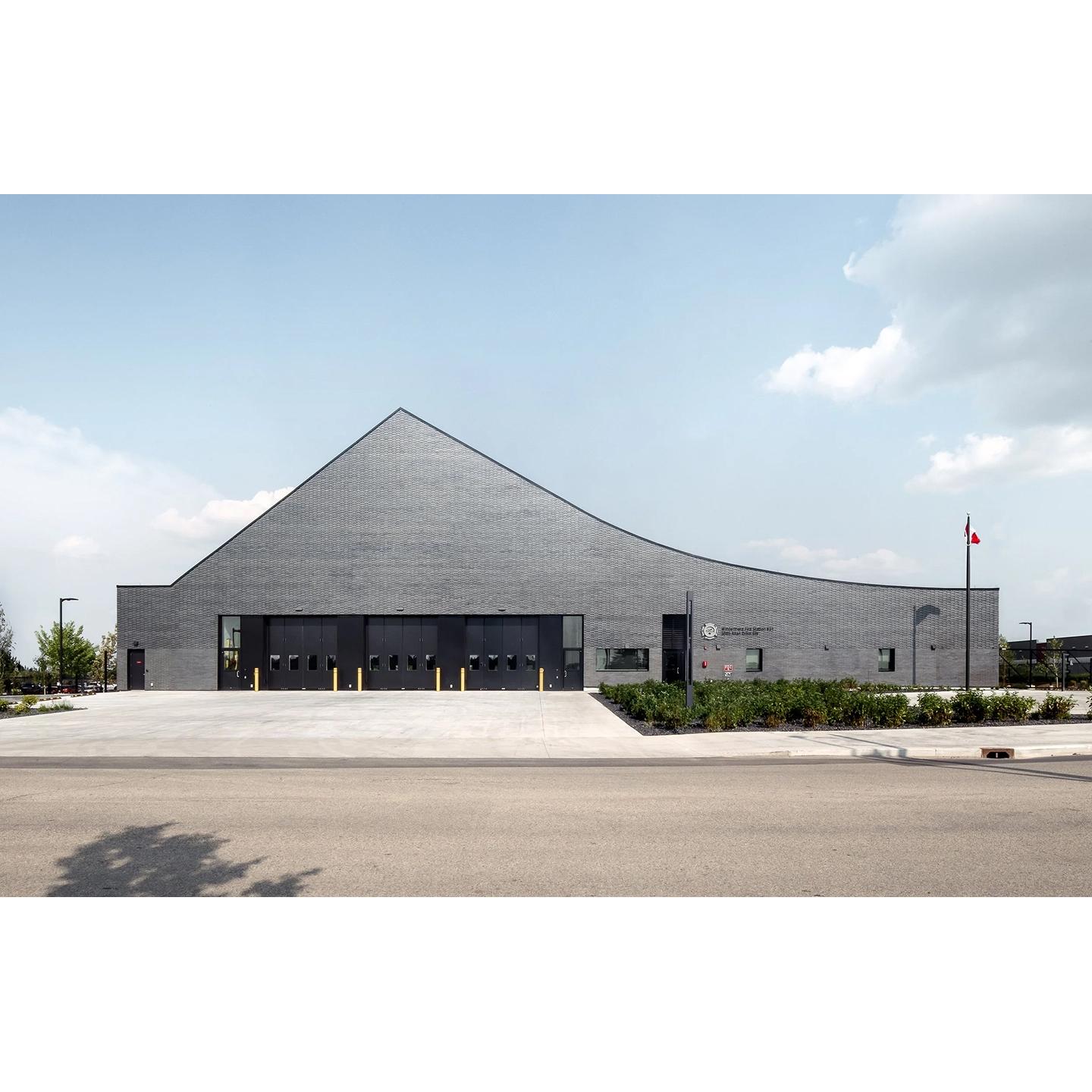
Yet the sophistication of gh3*’s design is also an overture for criticism. Consider Edmonton’s Windermere Fire Station. Completed in 2023, the facility brings together a sinuously curved roof and a ring of greenery. It’s more elaborate than your average fire hall, and ended up costing more than its original budget.
Edmonton’s 50,000-square-metre Kathleen Andrews Transit Garage takes things to a grander scale. It’s another civic icon, topped by a prominent piece of public art by Germany’s Thorsten Goldberg – five glistening metal blocks, dubbed 53° 30'N, that convey the topography of locations around the world that sit at Edmonton’s latitude. The 9.7-hectare site also pairs roads and paved surfaces “with recycled rubber crumbs that perform as a continuous bioswale, filtering and cleaning water before it gets discharged into the city’s stormwater system,” says Hanson.
But does a bus garage really need to be beautiful? And at what cost? “The City of Edmonton actually took some heat on that,” says Hanson. Yet perceptions of largesse can be deceptive, she argues. gh3*’s commissions don’t come with higher budgets than other public projects, she says, and every design gesture is in service of a practical goal.

At the Windermere Fire Station, for example, the curvature of the roof is engineered to maximize solar generation, just as the Blatchford plant’s sweeping chimney is designed to protect local air quality. At the bus garage, meanwhile, the design takes advantage of a municipal program that integrates public art into civic projects.
“It’s doing two jobs at once. It’s public art but it gets to be architecture at the same time,” says Hanson. The money would have been spent either way, though the typical result entails an art piece that simply sits next to the building.
Carol Bélanger says it’s all a testament to Hanson’s creativity – and willingness to find beauty and innovation in seemingly unattractive places. “Her work has consistently demonstrated that public architecture can be rigorous and graceful, that restraint can be powerful, and that design excellence is not a luxury deserved only by art galleries and museums.”
The rest of Canada is gradually catching up to Edmonton. In Toronto, public agencies like Waterfront Toronto, which commissioned gh3*’s stormwater facility, have introduced more design-driven procurement policies, while the city itself is now making public park competitions increasingly commonplace. For ambitious designers from coast to coast, competitions open vital new opportunities for innovation.
For Hanson and gh3*, new architectural landscapes are emerging. On the shore of Lake Simcoe, the upcoming Barrie Wastewater Innovation Centre will be clad in a vivid red array of scalloped Canadian-made weathering steel. In signature gh3* style, it’s a building with a utilitarian function that doesn’t apologize for being there. It promises to stand out in the landscape, all while speaking to the city’s industrial heritage and rich natural context.
Hanson is quick to credit her team for much of gh3*’s success. And for all the plaudits the firm has won for innovative, progressive thinking, Hanson isn't shy about looking for inspiration in the past.
“As Canadians, we often think that we don’t have too many buildings to be proud of. Yet almost a century ago, a building like Toronto’s R.C. Harris Water Treatment Plant was considered a marvel, and it was celebrated as a great work of architecture,” she says, invoking a 1941 complex immortalized as a “palace of purification” in Michael Ondaatje’s seminal novel In the Skin of a Lion. As Hanson’s oeuvre demonstrates, there’s no reason why our infrastructure can’t become the stuff of poetry once again.