In modern pharmacology, there’s a delivery paradox: the tragic biological irony that our immune system’s best internal defences against disease-causing pathogens also block most healing agents from reaching the damaged tissues they were designed to help. The most dogged of our internal border enforcers patrol the fragile central nervous system – comprising the brain, spinal cord and retina – which leaves doctors with limited options for treating debilitating conditions such as spinal cord injuries or Parkinson’s disease.
To prevent drugs or therapeutic stem cells from being rejected, doctors might turn to invasive and sometimes painful surgeries, drilling holes in a patient’s skull or implanting devices near the spine to administer treatments directly to affected areas. In some cases, they may flood the patient’s body with extremely high doses of a drug and hope at least one per cent hits the target without causing too many side effects.
This problem has stumped the pharmacology industry for more than a century, and it’s cost researchers hundreds of billions of dollars. But in a sunlit lab at the University of Toronto, Molly Shoichet, one of the world’s most decorated biomedical engineers, is poised to crack it open. There, she directs 30 or so brilliant scientists who specialize in engineering sophisticated Trojan-horse biomaterials that can slip fragile drugs, proteins and stem cells past the body’s natural defences and into hard-to-reach places. The lab’s ground-breaking polymer-based research could revolutionize drug delivery and improve treatments for diseases and conditions once thought irreversible.

Get our new book for free.
Subscribe to our newsletter and we’ll mail you a printed copy.
“I get excited by big problems, big questions,” Shoichet says with a glee most reserve for casual puzzles.
Her work has received a host of accolades, including the Gerhard Herzberg medal (a.k.a. the Nobel Prize of Canadian engineering), and won her a brief post as Ontario’s chief scientist. She has published more than 650 papers, patents and abstracts, and co-founded four biotech companies since establishing her lab in 1995. Robert Langer, the laconic MIT professor many consider the Edison of controlled drug delivery and tissue engineering, calls Shoichet “outstanding” and “a superstar.”
“I would say she’s very rare, in the sense that she can manage all of it,” says Cindi Morshead, a prominent U of T stem cell biologist who collaborates with Shoichet. “It’s a lot.”
Yet Shoichet is surprisingly down-to-earth when she talks about her work. People would think she was “a lunatic,” she says, if there weren’t other bold scientists working to overcome supposedly unalterable forms of damage to the body – strokes, cancer, spinal damage, blindness.
Ask her to describe her method of solving medicine’s drug delivery crisis and she makes it sound simple. “It’s like FedEx,” she says with a smile. “Like delivering packages.”
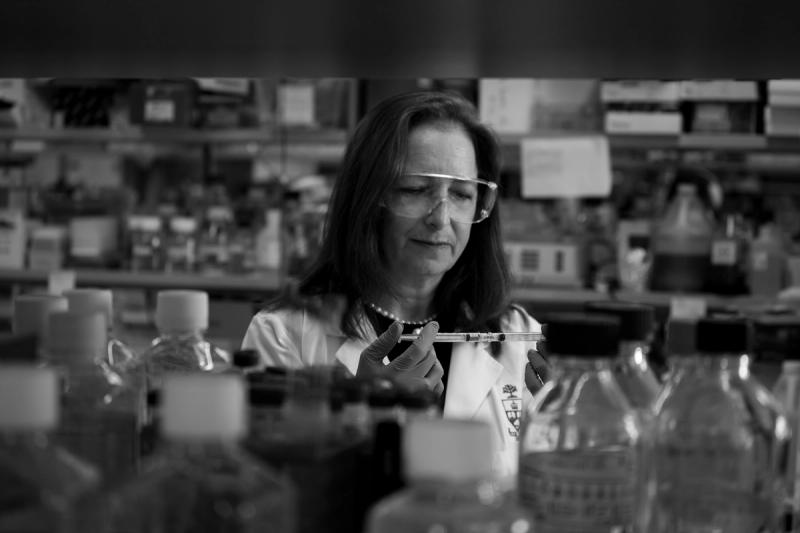
What’s not like delivering packages is deciding what shape your life should take. “I used to have a lot of stress and anxiety, because everybody knew what they wanted to be, and I really didn’t know,” she tells me from her office in early September. Shoichet was raised in Toronto in a family of ambitious, sure-footed people. Her dad, Irving, dropped out of university at 19 to run his late father’s oil and gas business, and later founded a private aviation company. Her mother, Dorothy, ran a large picture-frame manufacturing plant.
Shoichet liked that her mom was a trailblazer; that she’d earned a degree in political science and economics in the United States in the 1940s, when many women were being streamed into the “homemaking sciences”; that their pediatrician was a woman; that when Shoichet said she might like nursing, her mother asked, “Why don’t you think about being a doctor?”
She took the suggestion to heart and entered her undergraduate studies at MIT, expecting to become a doctor. When she landed there in the mid-1980s, the university was a boys’ club being electrified by the birth of tissue engineering. “I got very comfortable being around men,” she says. It was useful training for the life she didn’t predict as a trailblazer: at the time, roughly one in four students at MIT was a woman.
Back then, dogma established by pioneering neurobiologist Santiago Ramón y Cajal in the early 1900s still dictated the common wisdom: that the adult mammalian nervous system cannot regenerate. “But it wasn’t true,” says Shoichet.
Over at McGill University, the Argentine-Canadian neurologist Albert Aguayo and his colleagues were proving that the nervous system does have a desire to regenerate, and could do so given a supportive environment. “The body does a fantastic job at limiting degeneration, but it also does a fantastic job at limiting regeneration,” says Shoichet.
At MIT, she had a front row seat to the intellectual revolution in polymer science and was beginning to see how polymers could contribute to the future of regenerative medicine.
A polymer is just a large molecule made up of tiny repeating units, like a microscopic beaded necklace. Billions of them interlock to form everything from human hair and the grippers on gecko feet to butterfly wings and plastic bottles. Shoichet was learning to love them for what she came to appreciate was their versatility as building blocks, and their mind-blowing medical possibilities.
She landed a research internship with Ioannis Yannas, who had already made history by using polymers to make artificial skin for burn victims. Yannas was developing a polymer-based solution to promote the regenerative potential Aguayo had identified: a porous tube made from collagen (a natural polymer) that could act as a protective scaffold, preventing scar tissue from forming and giving regenerating nerves a tunnel to grow through and ultimately survive. Meanwhile, down the hall, Langer was making biodegradable plastic polymers that could be inserted into that tunnel, where they would slowly release growth-promoting therapeutics over time.
Polymer science was going pop. As a pre-med student, Shoichet had been on a path toward treating patients at their bedside. “I realized that doctors mostly apply what somebody else has invented,” she says. “But what excited me was actually making those inventions and hopefully seeing them applied on a large scale.”
She got into medical school, but she didn’t go. Instead, by the 1990s she was in a lab at the University of Massachusetts Amherst, setting the building blocks for her revolutionary thinking about polymer-based drug delivery in the nervous system.
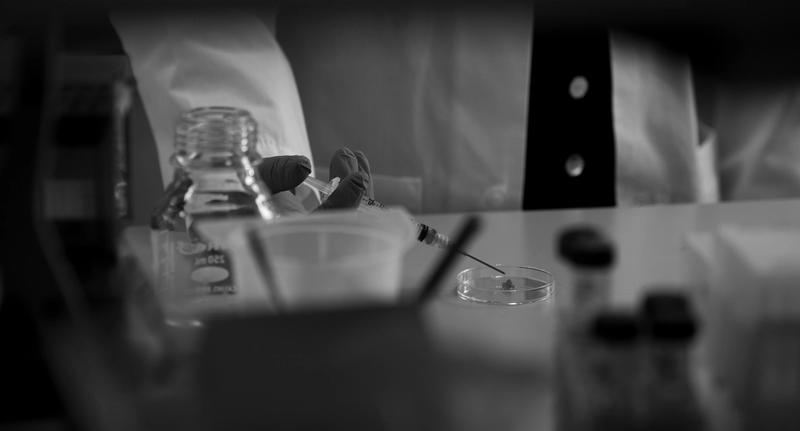
The way Shoichet explains her PhD research in polymer science offers a window into what she does in boardrooms: translate highbrow, abstract-sounding research into illuminating ideas that sound practical, good and worth spending lots of money on to bring to life.
“Think of a Teflon-coated pan,” she says. Eggs don't stick to these pans and burn, she explains, because Teflon is a polymer that food has difficulty adhering to, like an unattainable crush. The rest of the pan is metal; it’s just the top, the part you cook in, that has a different chemical makeup.
The analogy is a real-world example that helps describe what she was trying to solve: how do you change the surface properties of a polymer without changing the whole material? If she could do that, she figured she could trick living cells into recognizing synthetic materials as friendly, which could have dozens of potentially life-saving applications in medicine.
She got snapped up fast by one of the biotech firms in the Greater Boston tech corridor. CytoTherapeutics was angling to treat nervous system disorders like Alzheimer’s and Parkinson’s with a new method called cell encapsulation: enclosing stem cells inside synthetic, semipermeable polymer capsules (think of a tiny tube sealed at both ends) to deliver healing agents into the body and shield them from being destroyed by the immune system.
The idea, says Shoichet, was that our cells produce therapeutics, and if you can keep them alive after transplanting them, “they will produce the therapeutics indefinitely.” The problem? The capsules were still flagged by the immune system as threats. CytoTherapeutics was too early, limited by the materials available to them. They needed to find something new.
Shoichet had been working at “the cutting edge of science in industry,” and says the experience taught her that “if academia didn’t try to do the impossible, then nobody would.”
So she set off to invent these materials of the future herself and, in 1995, she ended up back in Toronto.
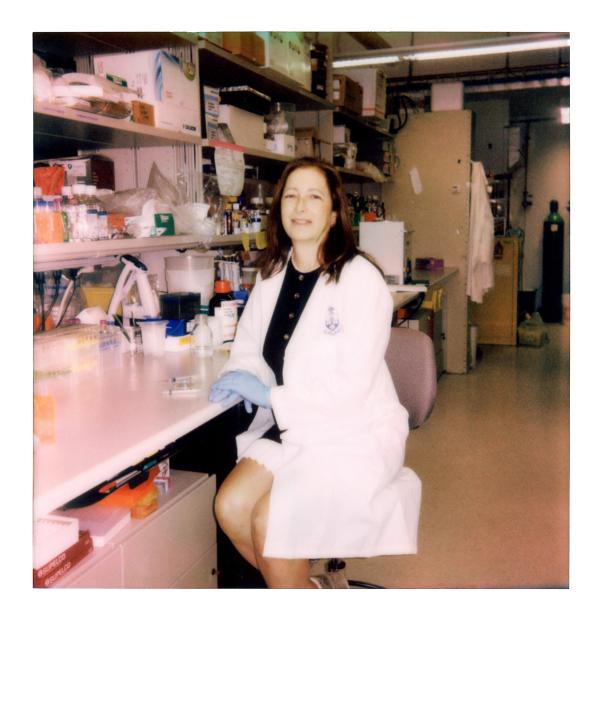
On the door at the renowned Shoichet Lab, on the fifth floor of the Terrence Donnelly Centre for Cellular and Biomolecular Research, there’s a sign that reads “Solving Important Problems Together.”
The lab is decorated with the starched, folded lab coats of former postgrads, whose last names are emblazoned across the backs and pinned to the walls like retired jerseys in a hockey arena. Collectively, they’ve produced a suite of impressive numbers, listed on their website: 346 publications, 139 awards won and an H-index of 112, a measure of research productivity and influence that even some Nobel Prize winners don’t clear. (Benjamin List, whose research “for the development of asymmetric organocatalysis” won the prize in Chemistry in 2021, has an H-index of 106. Elon Musk, who does not have a Nobel, has an index of 23.)
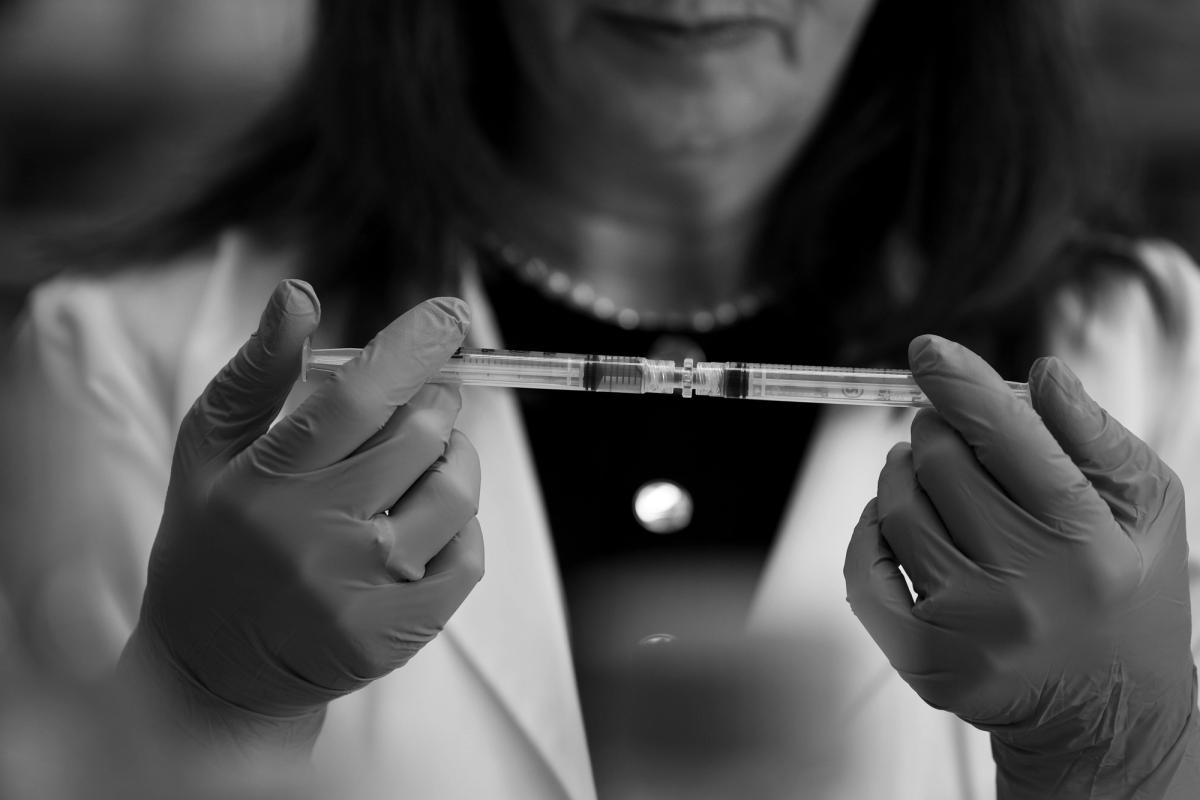
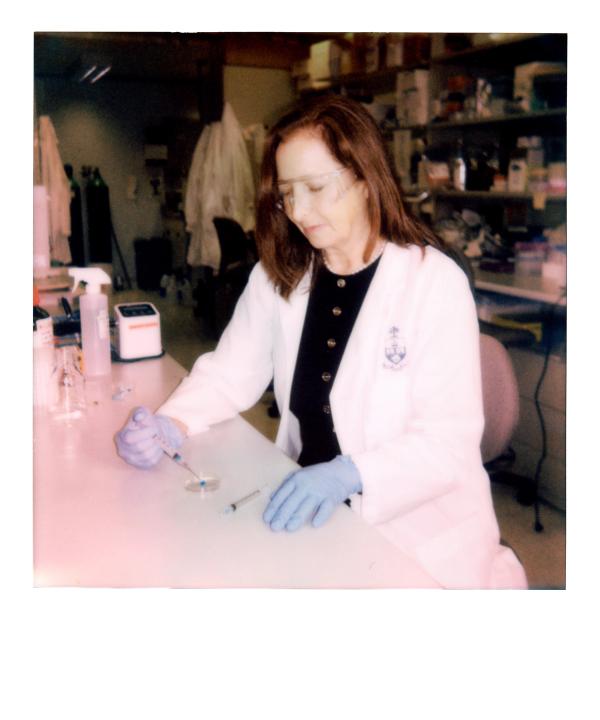
Shoichet is wearing her lab coat and holding a syringe with the future in it. For this demo, she’s added food colouring, which makes the contents look like blue Jell-O. Otherwise, she says, “it won’t look like much.”
The miracle is almost imperceptible. When pressure forces the gel through the needle’s tip, its polymer chains rearrange themselves into a straight line, becoming a liquid that can glide through soft tissue without crushing any of the delicate nearby cells. At its destination, the body’s temperature warms it back into a gel, anchoring the therapeutic in a place where it will dissolve over time.
This is a hydrogel, a network of polymers woven together and swollen with water – the kind of stuff used to make soft contact lenses, or the powder in a diaper that turns into a jelly when it gets wet. Shoichet’s lab has found dozens of more advanced uses for hydrogels beyond cradling eyes and baby butts: primarily controlled drug delivery, but also cancer cell modelling and replacing unregenerative eye fluid after retinal detachment surgery.
Because the gel beading up blue on the tip of Shoichet’s syringe was formulated mostly with hyaluronic acid – a naturally occurring, water-soluble polymer that keeps our skin plump – the immune system mistakes it for tissue and doesn’t attack it, or the therapeutic that’s been mixed into it.
AmacaThera, the startup that spun out from this invention, is perhaps Shoichet’s most significant innovation thus far, at least in terms of commercial potential. When you have surgery, the doctor injects you with an anesthetic that your body gradually flushes out, often within a few hours. Then, because the pain outlives the anesthetic and there are limits to the volume of liquid medicines that can be administered, you get prescribed opioids. Shoichet’s gel holds the anesthetic in place, preventing it from being washed away and allowing it to be secreted gradually for up to two weeks. It makes the opioid redundant.
“It fulfills a societal need, a clinical need and a market need,” says Shoichet. Canada recorded roughly 5,600 opioid-related deaths in 2025 – an average of 15 a day. And because the FDA fast-tracks the development of non-opioid pain treatments to address the global crisis, AmacaThera’s gel looks attractive to investors.
AmacaThera just entered phase two of clinical trials, a stage notorious in Canada’s biotech landscape as the place where domestic innovation typically dies due to slow-moving paperwork and dried-up venture capital. In November 2025, the company announced a licensing agreement with Pacira BioSciences worth up to US$230 million, an exceptionally rare leap across a commercialization gap that sinks nine out of 10 biotech companies.
“There are so many valleys of death here, so many graveyards,” says Shoichet. “When I first got here, I was a bit of a unicorn in terms of starting so many companies.”
Her batting average is good, but Shoichet still gets frustrated by how slowly commercialization happens in Canada. Synakis – the startup she founded to treat ocular diseases and to replace the eye’s fluid after retinal detachment surgery – just spun out of the lab in May with $2.6 million in pre-seed financing. But the research breakthrough happened back in 2018. Startups like Synakis often stall due to the headaches of complex regulation hurdles, nervous funders and fidgety, risk-averse tech transfer offices. “We need them to get out of the way, or at least be faster,” she says. “Moderna took a billion dollars of investment before it was successful. That’s a lot of money, and a lot of time. Nobody in Canada would ever do that. I’ve never seen it.”
When Kathleen Wynne appointed her Ontario’s chief scientist in 2017, bridging the lab-to-market gap was one of Shoichet’s main priorities. She had several initiatives she hoped to realize: identifying provincial policies that blocked new tech from entering the healthcare space and developing a more cohesive science strategy to set a benchmark for how research is handled. More broadly, she hoped to restore faith in the role of scientists at a time when “we’re seeing resurgence in vaccine-preventable diseases that we eradicated decades ago, because there’s a mistrust in science – all because some celebrity with a big voice says, ‘Don’t trust it.”
She was trying to strip away the bureaucratic red tape that hamstrings domestic research breakthroughs that could save lives around the world, and thus elevate Ontario’s science profile to attract global talent and international capital. Six months after her appointment, however, Premier Doug Ford’s freshly installed administration eliminated her post. She never got a reason for why she’d been fired, and the promise that a more “suitable” candidate would be installed never came to fruition.
She still thinks the post should be restored. But Shoichet has continued to forge ahead on the ground, perhaps even more invigorated. Her other grand ambition aims to solve another delivery problem: Canada’s gradual, noiseless brain bleed, in which local researchers spend a decade making some mind-blowing cellular discovery, only for an American company to swoop in, buy the intellectual property for scraps, pack everything up and move it all south.
Shoichet thinks it’s possible for academic research to make anchor companies as successful as Research In Motion, which produced the whole buzzy ecosystem around BlackBerry that made Waterloo a globally competitive tech hub. “But we need jobs,” she says. “We need more funding for these startups, which are chronically underfunded. It’s not just the private sector. It’s also that the government has to invest in programs that help us to translate these ideas more readily.”
AmacaThera, though, is one leap toward her lofty dream of transplanting New England’s innovative cells into Toronto’s resistant host body. It takes a few reasonable lunatics, after all, to really push the needle.
When she was 11 or 12, Shoichet’s eldest brother, Richard, cast her in an experimental play he wrote called LandEscape, which, she says, was about “humankind making the same mistakes, over and over again.” Her character, still young and uncontaminated by adult fallibility or ego, looked out at the world, surveyed this pattern of stubbornness and error and asked, “Isn’t it time for a change? Shouldn’t we try to do things differently?”
Shoichet is still reciting these lines. She’s just standing on a different stage.