For nearly a century, antibiotics have been one of modern medicine's greatest advances, turning once-deadly bacterial infections into routine inconveniences. But as bacteria develop resistance to the drugs designed to kill them, infections that were once easily treated are becoming increasingly dangerous. In Canada, antibiotic resistance was directly responsible for an estimated 5,400 deaths in 2018. By 2050, that toll could reach 13,700 people a year if resistance keeps climbing.
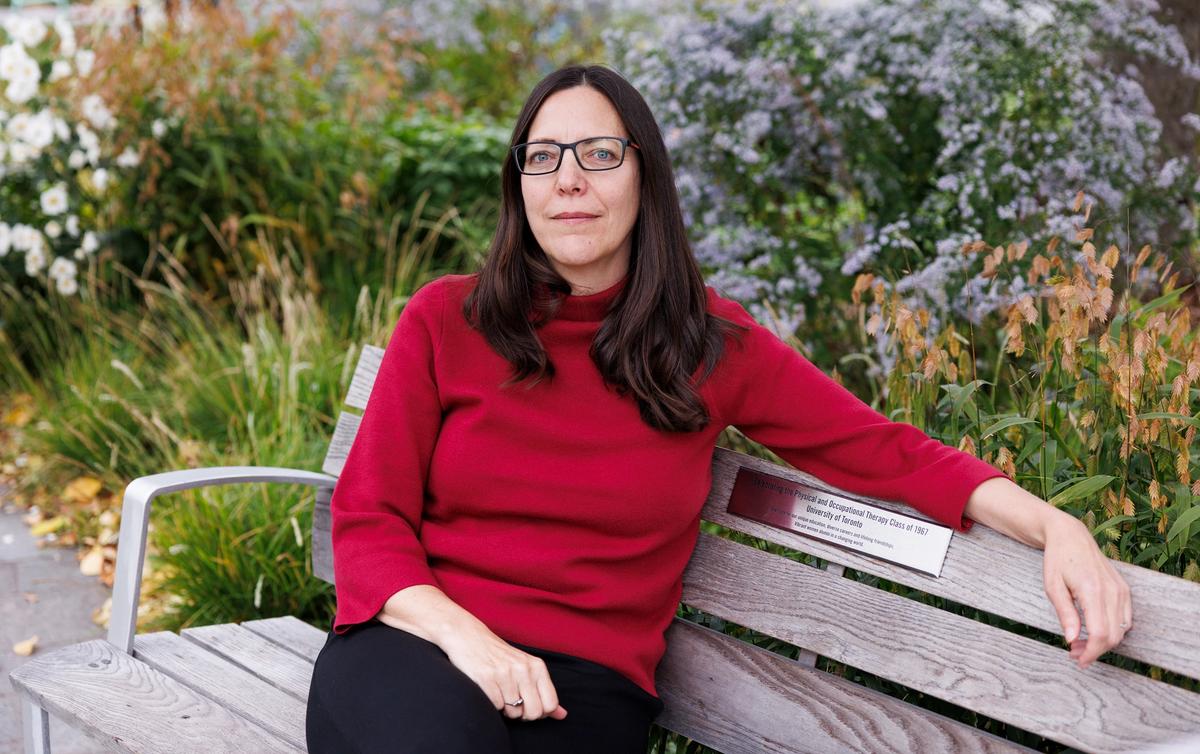
Enter an unlikely ally: viruses. University of Toronto biochemist Karen Maxwell has spent her career studying bacteriophages, microscopic predators that infect and kill bacteria. Her research explores the extraordinary evolutionary battle between these viruses and their bacterial hosts – and how they could be engineered to treat infections that antibiotics can no longer touch.
Ahead of the October 22 gala where she’ll be celebrated for winning the Peter Gilgan Canada Gairdner Momentum Award, Maxwell spoke with Be Giant about why the biggest medical breakthroughs often come from following scientific curiosity – wherever it leads.
When most of us hear the word “virus,” we think of something that makes us sick – COVID, the common cold. But you've devoted your career to studying viruses that could actually help us.
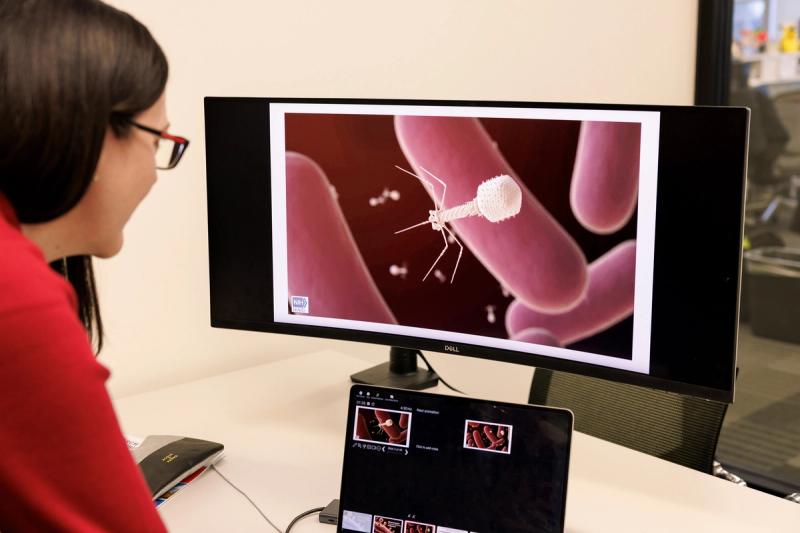
The viruses we're most familiar with infect human cells. I study bacteriophages, or phages, which are viruses that infect and kill bacteria. They're harmless to humans because they can't attach to our cells. We're actually full of them. Because they're such efficient killers of bacteria, we're looking at how we might harness them to treat antibiotic-resistant infections, which we're seeing more frequently in hospitals.
Get our weekly newsletter - the people, places, and ideas revealing where Canada is headed.
Why is that?
Overuse of antibiotics is certainly one of the reasons – bacteria will always evolve resistance to things that threaten them, and that includes antibiotics. More and more, we're seeing patients with infections that are very difficult to treat, sometimes requiring antibiotics for months on end. At the same time, the pace at which new antibiotics are being discovered and brought into clinical use is very slow, which is why we're really interested in finding alternatives.
Could phages eventually replace antibiotics?
Phages could work in conjunction with antibiotics, or potentially in place of them for many treatments. One of their key advantages is that they're very specific about which bacteria they infect and kill. Take MRSA, or methicillin-resistant Staphylococcus aureus, for example. Broad-spectrum antibiotics can resolve an infection, but they can also wipe out healthy bacteria. Phages that kill MRSA leave the rest of the bacteria in your body alone – the ones that help digest food and defend against invading pathogens.
The Momentum Award recognizes research with the potential to make a major impact. Could phage therapy make a meaningful dent in the thousands of deaths caused by antibiotic-resistant infections?
Antibiotics will always be essential in emergencies, when doctors need to start treatment before they know exactly which bacteria they're dealing with. Phages are better suited to chronic infections, where there's more time to identify and target the bacteria.
What I imagine is a future where you go in with an infection, like a chronic urinary tract infection, which can last for years and sometimes develop into fatal cases of sepsis. Doctors would sequence the bacteria to figure out exactly what it is, then synthetically design a phage that can kill it.
Can you talk more about your research? What does a day in the lab look like?
I haven't actually worked in a lab in years! These days my job is more like running a small business – writing grant applications, securing funding and training new scientists. I have a team of 12, including eight graduate students. They're the ones doing the hands-on work, collecting dirt or sewage samples, isolating and testing phages.
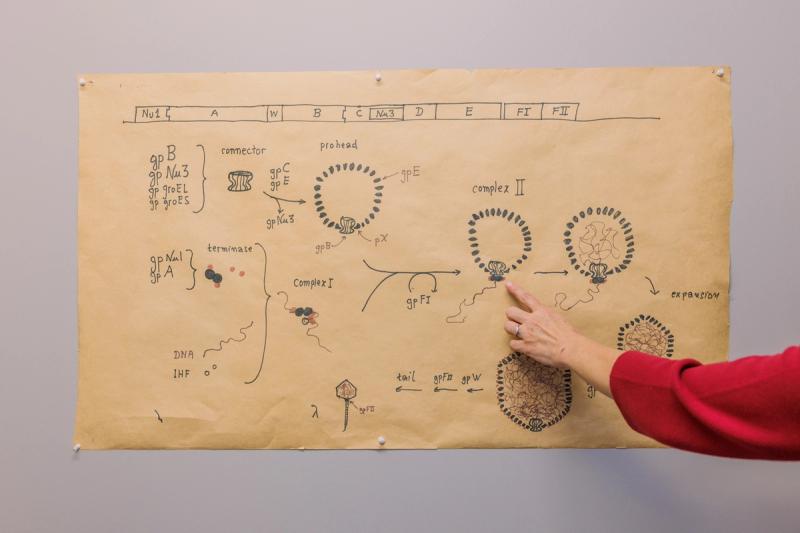
The long-term goal of our work is to be able to sequence the DNA of a bacterium, identify its defences and then design a phage that can overcome them. One of the most significant discoveries we've made involves a defence mechanism that prevents phages from infecting bacterial cells that already contain a phage. We called it the anti-Kronos effect.
For those who aren't up on their Greek mythology, can you explain the reference?
Kronos is the Greek Titan who ate his own children. We called it anti-Kronos because the phage is essentially protecting itself from its offspring. Some phages can live inside bacteria and produce new copies of themselves that go out and infect other bacterial cells. But they don't want those offspring returning to the cell that's already infected. So the phage changes the surface of the bacterium to prevent them from getting back in.
Almost like locking the door to ensure that children leave the nest.
Exactly. And don't come back in, because if you do, I'm going to eat you!
How does understanding the anti-Kronos effect bring us closer to using phages as treatments?
It's a fundamental research discovery rather than something we'd apply directly to a treatment. But to use phages therapeutically, we need to understand how they work, how they spread among bacteria and how they might behave during treatment.
How far away are we from phage treatments becoming routine?
It's difficult to put a timeline on it. There are early-stage clinical trials underway in North America and Europe, and phages have been used in individual cases where antibiotics have failed. That includes a patient in Toronto with a chronic urinary tract infection and another in Ottawa with an artificial joint infection.
One of the biggest challenges is how many ways bacteria have evolved to defend themselves against phages. Researchers are working on what we call phage cocktails – treatments containing three or five different phages. If the bacteria evolve resistance to one, the others can still kill them. The challenge is figuring out which combination will work.
There's also the regulatory challenge. Unlike conventional drugs, phages can mutate and change, which makes approval more complicated.
You've spent much of your career at the University of Toronto. What has Canada done to make your research possible, and what could we be doing better to foster innovation in your field?
The Canadian funding system has allowed me to pursue curiosity-driven, or fundamental, research. Most of what we do is asking questions and discovering new stuff. My lab has changed research directions many times, and that support has allowed me to follow where the discoveries take us.
But lately there's been a shift toward funding more directed research, and I think that's short-sighted. We don't know what we don't know. We have incredibly bright students who are excited about discovering new things, and we have no idea what they might find if they're given the freedom to do that.
Thursday’s gala at the Royal Ontario Museum sounds like the Science Oscars.
It's black tie and there will be speeches. We even get walk-up songs.
What's yours?
I'm not telling! It has to be a surprise.
My understanding is that the Gairdner Awards have sometimes been a precursor to a Nobel Prize – nearly a quarter of Gairdner winners have gone on to win a Nobel.
Well, I got the baby Gairdner! The Momentum is the mid-career award for Canadians – so we'll see what happens.