What it is
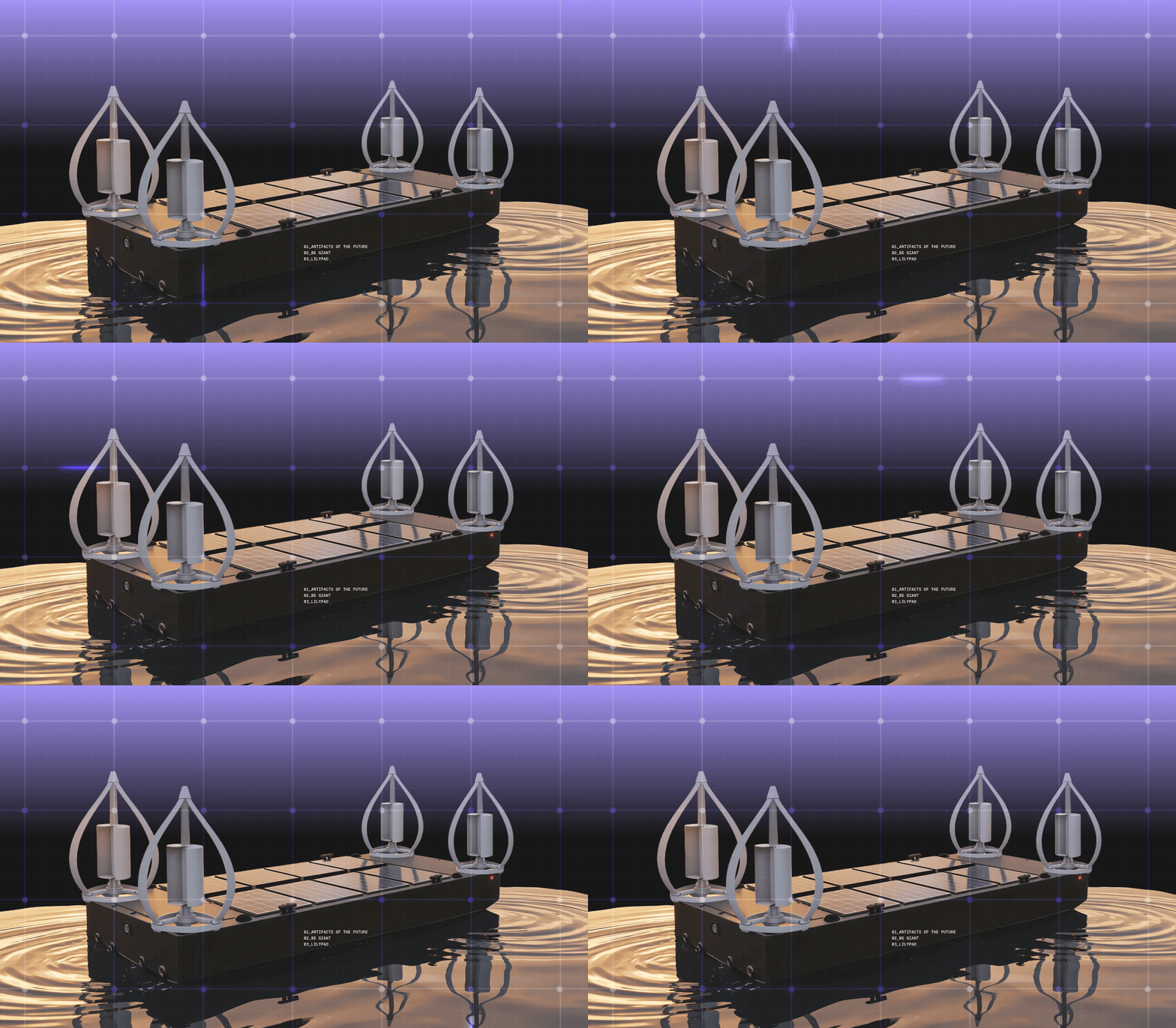
Called Lilypads, they are modular, floating, sensor-equipped battery banks that serve as portable marine power hubs tailored to customers’ needs, be that charging electric boats, running remote equipment or transmitting electricity generated from waves.
Who’s behind it
Mostar Labs is headed by Meiz Majdoub Jr., a former senior naval engineer who retired after 25 years. He’s assembled a crew with expertise in everything from business development to driving superyachts. The company’s own maritime team can test concepts year-round in the temperate ocean waters near its home base in Langford, B.C., just west of Victoria on southern Vancouver Island.
What problem is it trying to solve?
Decarbonizing the maritime sector is essential to help meet climate goals, but electrification is harder to achieve on water than on land. One light-bulb moment for the Lilypad was a project Majdoub was working on to test an electric outboard motor. A lack of in-harbour charging infrastructure meant bringing the motor back to the office to recharge – something that was inconvenient and slowed down the project “because it takes four days to recharge.” But installing fast chargers at the marina was a no-go: there was no appetite for retrofits, and hydro infrastructure would have needed upgrades. The solution: “Why don’t we just slap it on a barge?”
Get our weekly newsletter - the people, places, and ideas revealing where Canada is headed.
The Lilypad evolved from there, and, as it developed, Majdoub kept encountering new potential use cases. Ports in southern France want to add charging but not rip up historic waterfronts. A West Coast sauna operator wants to run electric-powered harbour cruises. The port authority in Singapore wants to charge harbour craft. A company in Bordeaux needs to get energy generated from waves into the grid. The Canadian Coast Guard wants to power off-grid lighthouses and get them off diesel. In other words, it’s not just about providing electricity – it’s about what the electricity can do. “We went from EV chargers to, frankly, whatever you want,” Majdoub says.
How it works
The Lilypad comes in three different types: the largest is about 5.5 metres long by about 2.3 m wide (or 18x7½ feet) and can be carried on a trailer; another is half that size; and the third is about a metre cubed. “It has a ton of batteries, a ton of wires, computer power and a bunch of sensors in there too,” Majdoub adds.
And the Lilypad units can “all connect like tiles.” On-board solar panels can provide enough power for sensors, though their capacity is limited for higher-power operations. Beyond that, units are customized to clients’ needs, such as by adding a fast DC charger for boats. Right now, the capacity of one of the larger units is 200 kilowatt-hours – “roughly two Teslas” – though he points out that battery technology is evolving quickly and that could change.
Currently, Mostar has two units in the water and two more in progress – all refuelling and sensor nodes that will operate in the Gulf Islands – with “massive plans of automating our production” and boosting output from two Lilypads a month to 30. The company is expanding their testing of running and charging electric boats and of other customer requests and looking for the best use cases for their technology. They’re also testing out how the product fits into the regulatory framework, Majdoub says, including how to make their equipment qualify for federal Clean Technology Investment Tax Credits so buyers can basically get a discount on their purchase. “That’s how we’re going to garner adoption.”
The challenges it faces
One challenge is imitators. “We’re already seeing copycats in terms of our name or even in terms of our idea,” Majdoub says. That’s one reason the company is investing in business relationships and people: so that they’re capable of quickly pivoting and responding to demand.
On top of that, their location offers both pros and cons. On the plus side, they have a harbour next door and are located near big-box stores – handy for picking up last-minute parts – and the home base for trades such as electricians. There’s also no shortage of talented potential hires who want to live in the Victoria area. On the other hand, running a manufacturing business from an island can make operations quite difficult: anything coming from the mainland needs to travel by ferry – or air – to get to Langford. “If anybody really wants to build up manufacturing here, it needs to be something you build from scratch,” he says.
What’s next?
Majdoub sees the future of his business as not just making and selling but making and selling them around the world. “What we realize is that the product is not perhaps the Lilypad but how we build them,” Majdoub says.
He envisions replicating Mostar’s operations in multiple locations, “kind of pop-up factories,” so that they can remain a B.C.-based company but license what they do around the world.
Ultimately, Mostar’s technology – as well as similar tech from elsewhere – is key to enabling adoption of electrification in marine environments. “Until we figure it out and make it simple for people, I don’t see how adoption and decarbonization on the water is going to have mass appeal right now,” Majdoub says. “But if you already have the charging network and nodes out there, at least we’ll make it easier.”