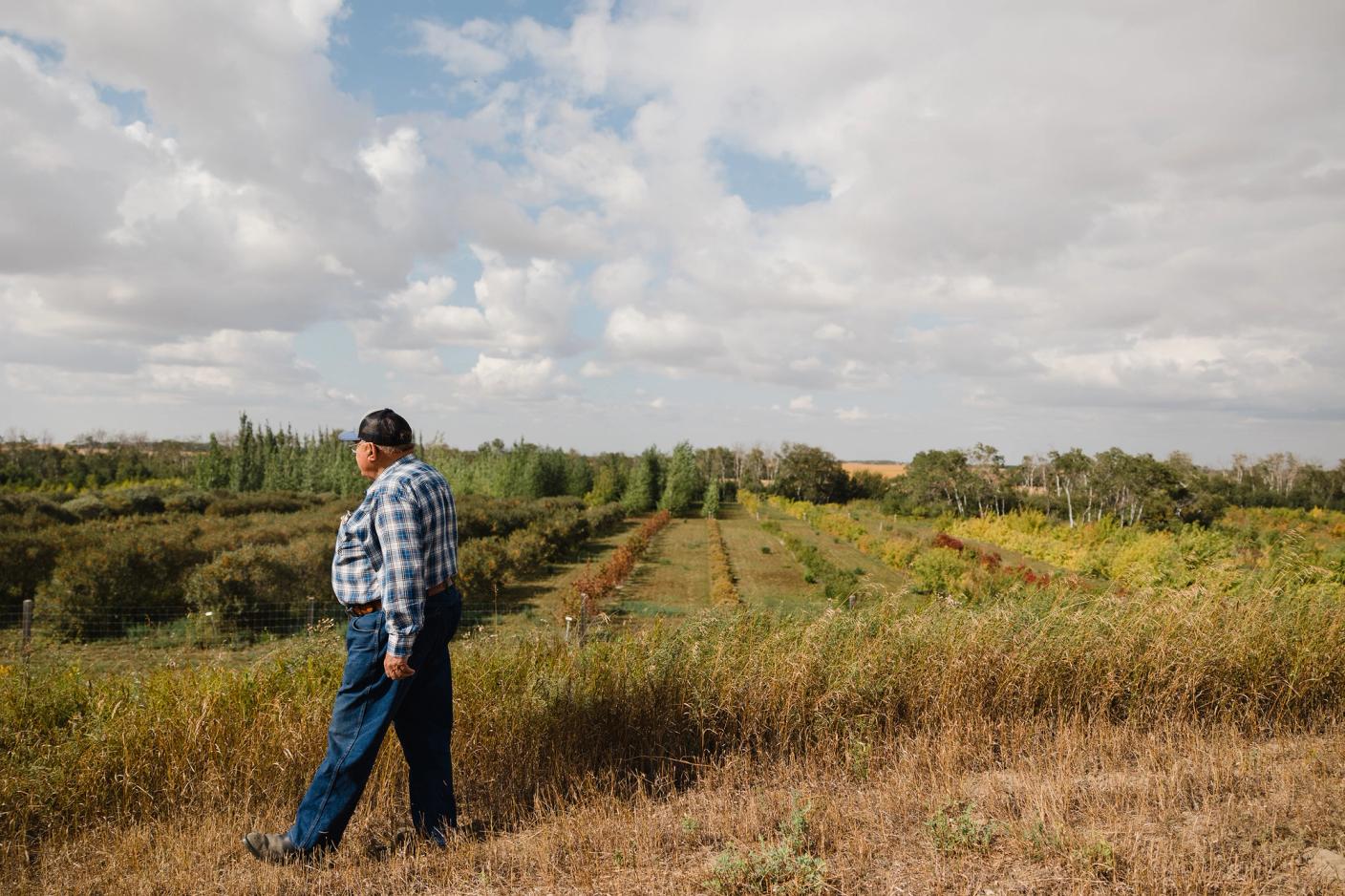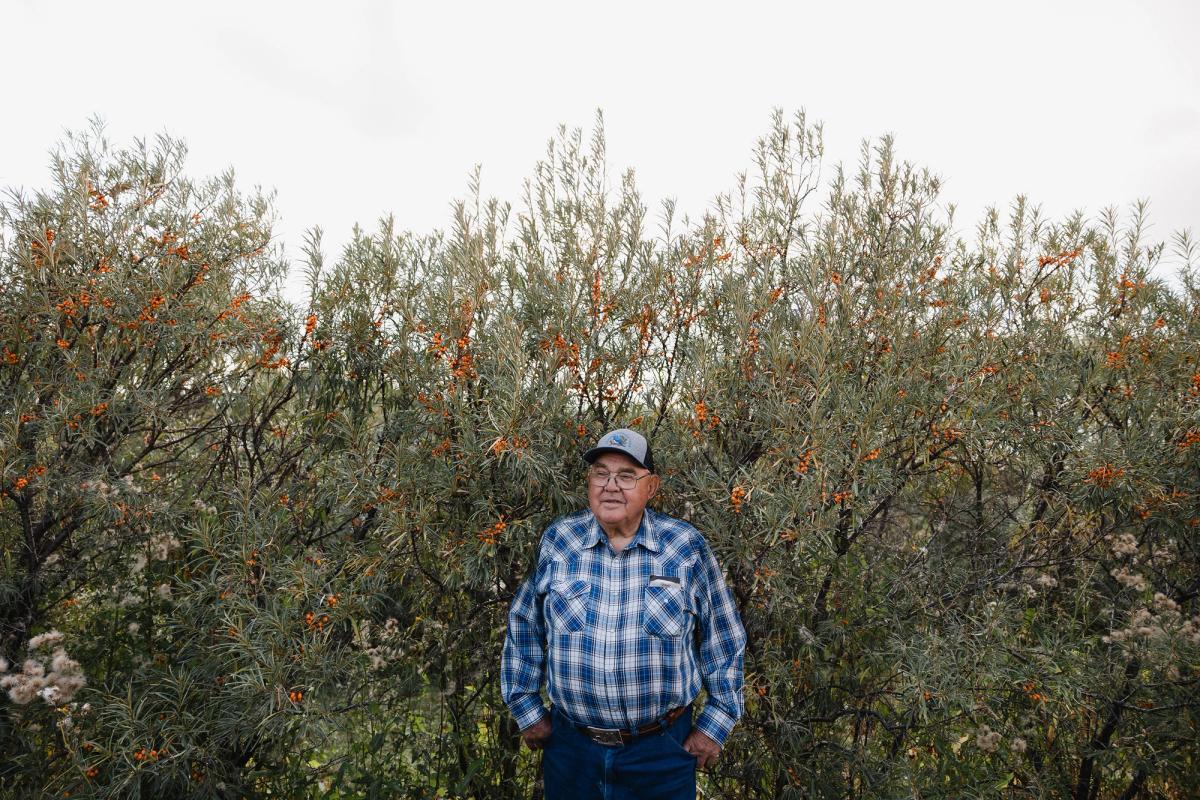
Lorne Scott calls his farm an island. Given that it’s in the prairie pothole region of southern Saskatchewan – a sweep of shallow wetlands left by glaciers – this is a metaphor, but it works: in all directions from where we stand, on a sunny day in June, are cultivated croplands. They’ve been planted to within an inch of their lives with canola, wheat, lentils. Except for a few shelterbelts, there are no trees from here to the horizon.
Then there’s Scott’s land, thick with trees, shrubs and grasses. Parts of his farm grow wild, or “never broke,” as he puts it, with aspen, snowberry, starflower, Solomon’s seal and northern bedstraw, from which the Cree, who were here before settlement, made red dye. The bedstraw seeds, when roasted, work as a coffee substitute. Scott doesn’t drink coffee. Nor does he harvest any of the Indigenous plants on his land, which sits about nine kilometres south of Indian Head and about 75 kilometres southeast of Regina. They’re just here, left to grow any which way. His land is wild on purpose.
It’s fair to call Scott a conservationist, one of the most respected in the province, still active in the community at 79. Soft-spoken and gentle, he is still a farmer: he grows wheat and oats, albeit on a small patch – 32 hectares planted this year. His grandfather was a farmer too, on a property two kilometres east, where Scott grew up.
Letting more than a quarter of his farm grow wild is a radical act. Scott wouldn’t say so. He does it “for nature,” he says, to protect the life that’s disappearing, from insects to owls to moose. The day before we met, he saw two yearling moose, as well as a whitetail doe with a fawn and a mule deer. There are bluebird nesting boxes all over the property. What makes all of this radical is the context. Modern agriculture is a high-tech, data-driven industry that uses autonomous field equipment that relies on AI, drones and satellite imagery to maximize resources – land – for profit.
“Only a wild man could be so reckless as to let a valuable thing like land go free,” says Andrea Olive, a political science professor at the University of Toronto, a friend of Scott’s and the author of Protecting the Prairies: Lorne Scott and the Politics of Conservation. “It must bother his neighbours, who only see cash crops where Lorne sees true growth.”
It does, and some have asked, politely, to rent those perfectly good hectares of his, to plow them under, get things going as God and the commodities markets intended. He tells them no, that their equipment is too big, “and they shake their heads and walk away.” There’s a sign at the entrance to his farm that says, “This Property Is Forever Protected.” That means there’s a conservation easement on part of the property to preserve its natural state. Scott still owns the land and can pass it to his children or whoever he wants, but the restrictions on development are permanent.
Scott knows about easements: he served as Saskatchewan’s minister of environment and resource management for four years in the late ‘90s, in Roy Romanow’s NDP government, and was responsible for the Conservation Easements Act, aimed at restricting development of wild land on private property. Under the act, the farmer still owns the land but enters into an agreement with a non-profit, like Ducks Unlimited, to keep it wild, as, say, wetland or grassland. There are thousands of hectares under easement in Saskatchewan. Some ranchers find them useful for protecting natural grasslands for grazing. Grazing is good for grasslands. It disturbs the plants (as does wildfire) in ways that help them grow.
A conservative estimate is that 80 per cent of the grassland in Saskatchewan has been lost since commercial agriculture began, most recently through the sale of Crown lands after Ottawa dismantled the 74-year-old Prairie Farm Rehabilitation program in 2009. In the first 20 years of the 21st century, the average farm size increased by about 20 per cent, while the number of farms shrank by 23 per cent. Farms are getting bigger, land prices are rising, and while most farms are owned by the families that work them, one to two per cent are owned by investors and 2.4 per cent by large-scale private landowners. From Manitoba to the Cypress Hills, southern Saskatchewan was once grassland where bison grazed and First Nations hunted. It’s now mostly agricultural, and many farms are dotted with oil wells and pumpjacks, sometimes called “nodding donkeys.”
To Scott and groups like the Saskatchewan Wildlife Federation, a non-profit he used to head, the mixed grasslands and fescue prairie are home to more than 30 species at risk, including the greater sage-grouse, and are valuable for that fact alone. Ottawa and the private sector (including Mosaic, a potash mining company, and the Weston family, which backs Be Giant) have donated millions of dollars to prairie habitat preservation.
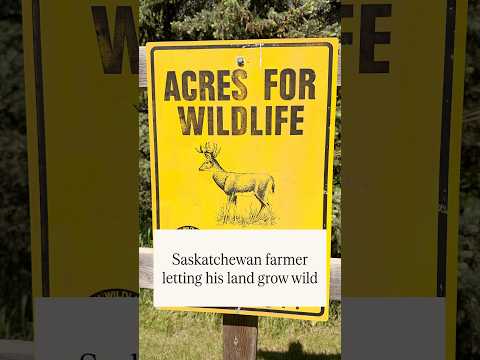
“Everything gets bigger and better, supposedly,” says Scott, a man of few words until he gets wound up. “The biggest impact I see is on the natural environment. The wetlands, the bush are being cleared, and with equipment and technology, everything is workable these days for growing canola or wheat, whatever, and it's really made a big impact on the natural environment, and consequently some bird species have declined by 90 per cent or more, and largely due to agriculture, intensive farming.”
According to Environment and Climate Change Canada, burrowing owl numbers declined 90 per cent from 1990 to 2000, then another 64 per cent between 2005 and 2015. They are small, oddball birds with long legs for running that live underground in tunnels dug by badgers. There are now fewer than 800 pairs left in Saskatchewan and Alberta. “Out in the country and the wild west, I call it, anything goes as long as it benefits you,” Scott says.
Get our weekly newsletter – the people, places, and ideas revealing where Canada is headed.
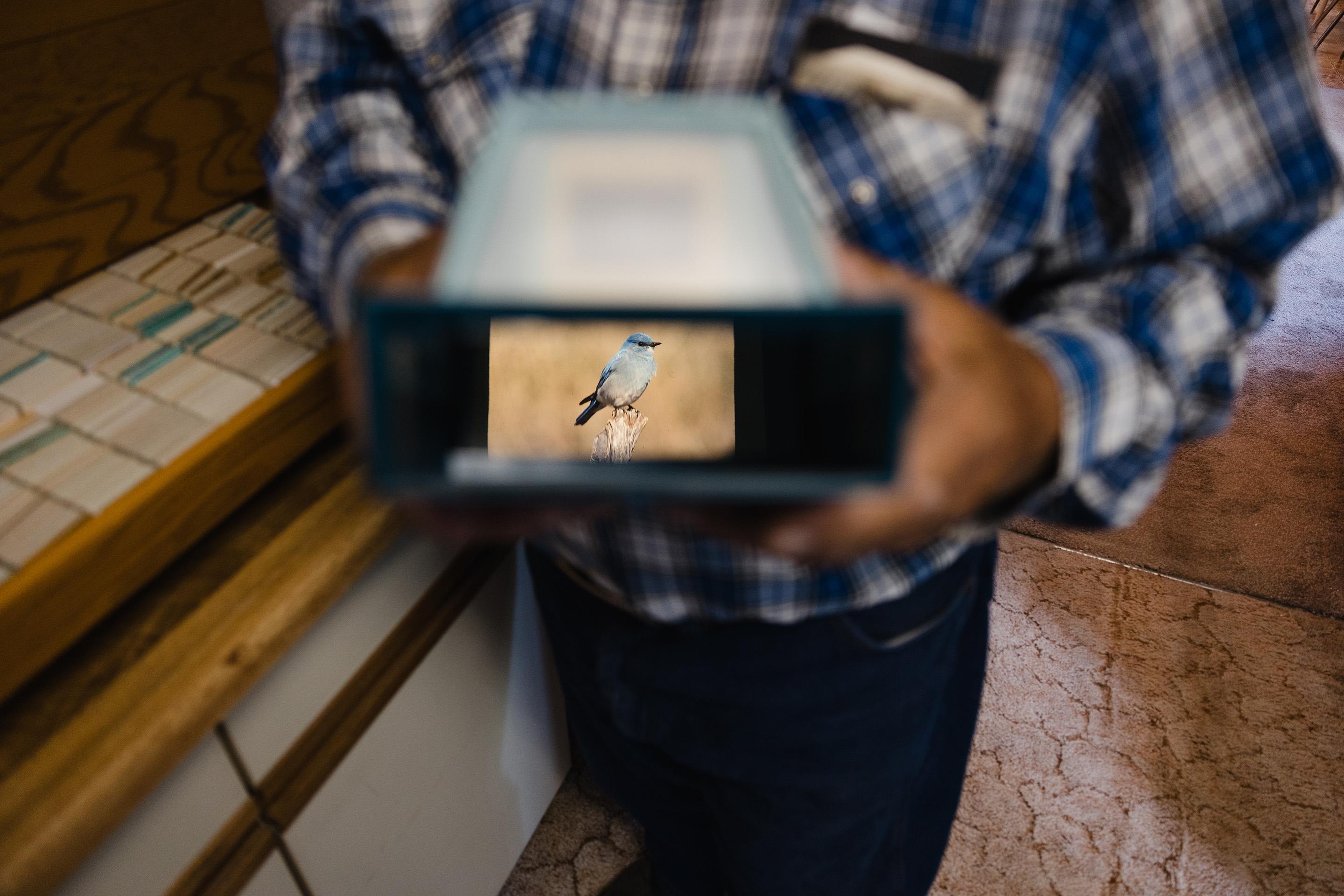
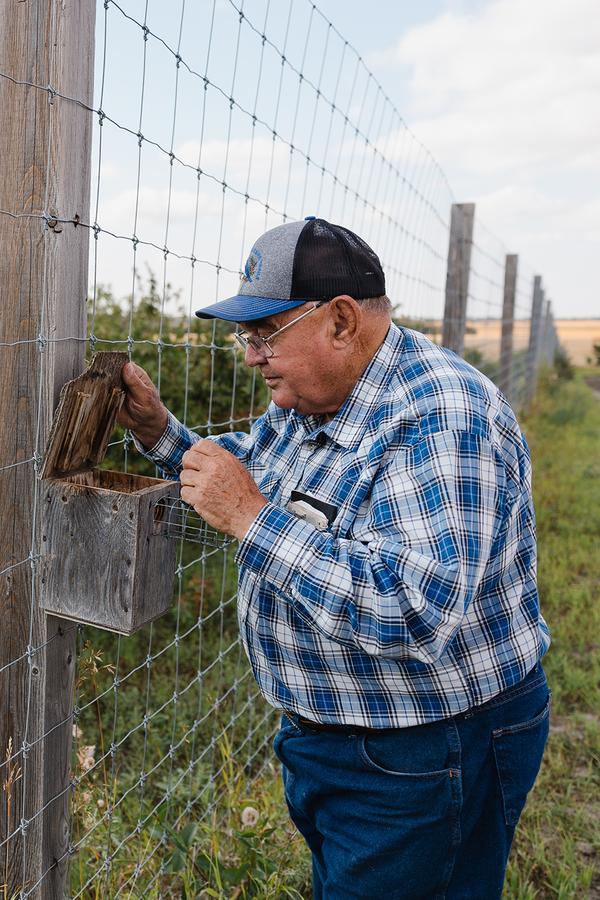
Scott is not a born politician. He’s not an ideologue. He ran for office as a New Democrat, but in the 1980s, he joined the Progressive Conservative Party. As a boy on the farm, he was more interested in birds than politics, particularly the bluebirds that nested near sloughs and aspen bluffs, in grain bins and any natural cavity, including tractor wheel wells. On a farm, bluebirds bring good luck. But as early as the 1920s, they lost habitat to industrial agriculture and urban spread, and Scott took to building simple wood houses and tacking them up on farm fences to give them a place to nest.
In 1969, he got a licence to band bluebirds and tree swallows, and in the first year banded nearly 1,000. Since then, he has banded tens of thousands of birds. With other volunteers, he built a “bluebird trail” of nesting boxes, from Brandon, Manitoba, to Raymore, Saskatchewan, north of Regina. He would drive 800 kilometres four times a year to check on the nests. It was, he says, the longest bluebird trail in the world.
Then everything changed: the climate, and the business of agriculture. Large grain farms replaced natural aspen bluffs, wetlands and grasslands. Extreme weather in the bluebirds’ Texas breeding grounds changed migration patterns. By 2014, only six came back to nest near Indian Head, and the next year, none. Scott hasn’t seen bluebirds on his property since.
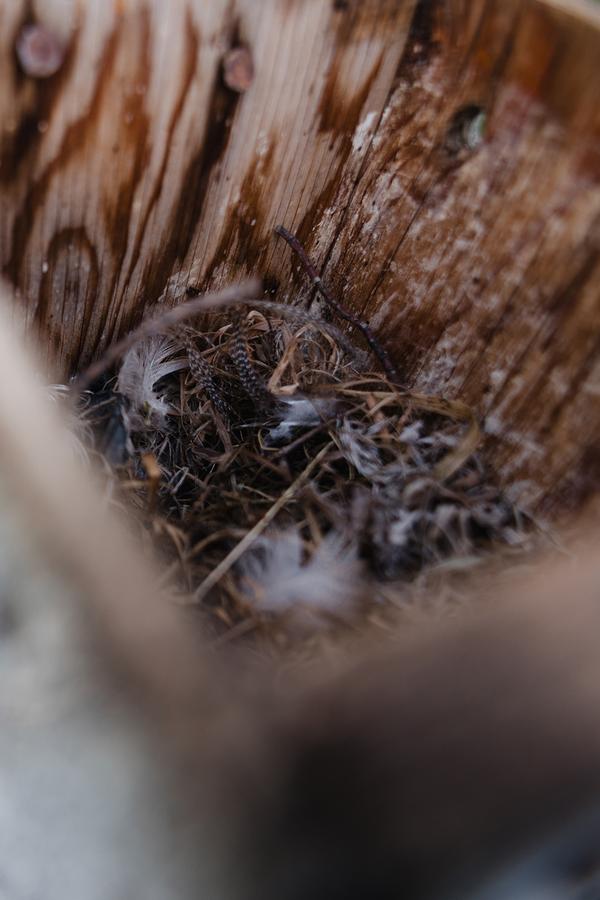
To get to the wild acreage on Scott’s farm, we drive there in a Dodge Caravan (licence plate: BLUEB1RD), not by road but over the hummocky farmland itself. He points to an eastern kingbird on the fence. “From central South America,” he says. The place is home to bees and other insect pollinators, owls, hawks, moose and songbirds. Tree swallows have taken to nesting in the old bluebird houses, and we pull up next to one on a fencepost. He opens the top to show me five white eggs in a nest.
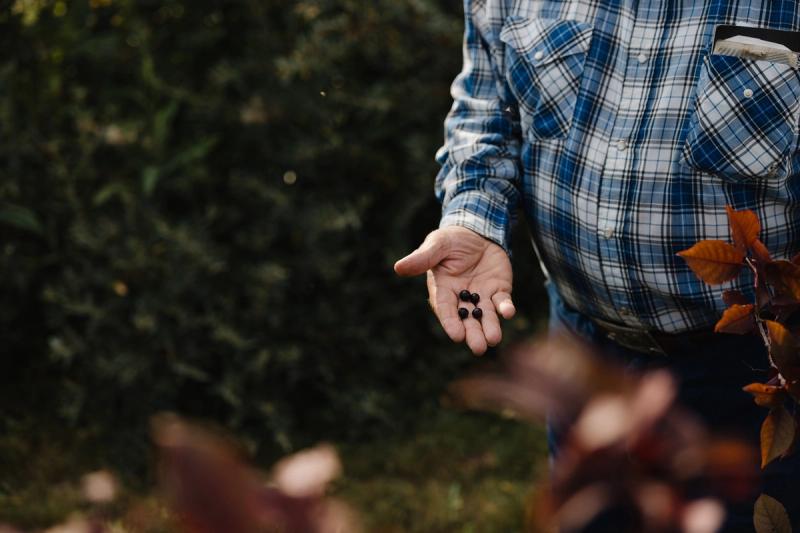
Past the fence is a new project: a tree and shrub sanctuary with dozens of species, planted on four hectares when the federal sanctuary in Indian Head was shut down in 2012 following cuts by the Stephen Harper government. Scott is growing sea buckthorn, snowberry, high bush cranberry, apples, crabapples, buffalo berry, chokecherry and poplar – 80 different species – to serve as a seed bank. There is an easement on this land, too. Meanwhile, researchers and neighbours are welcome to take cuttings from the trees.
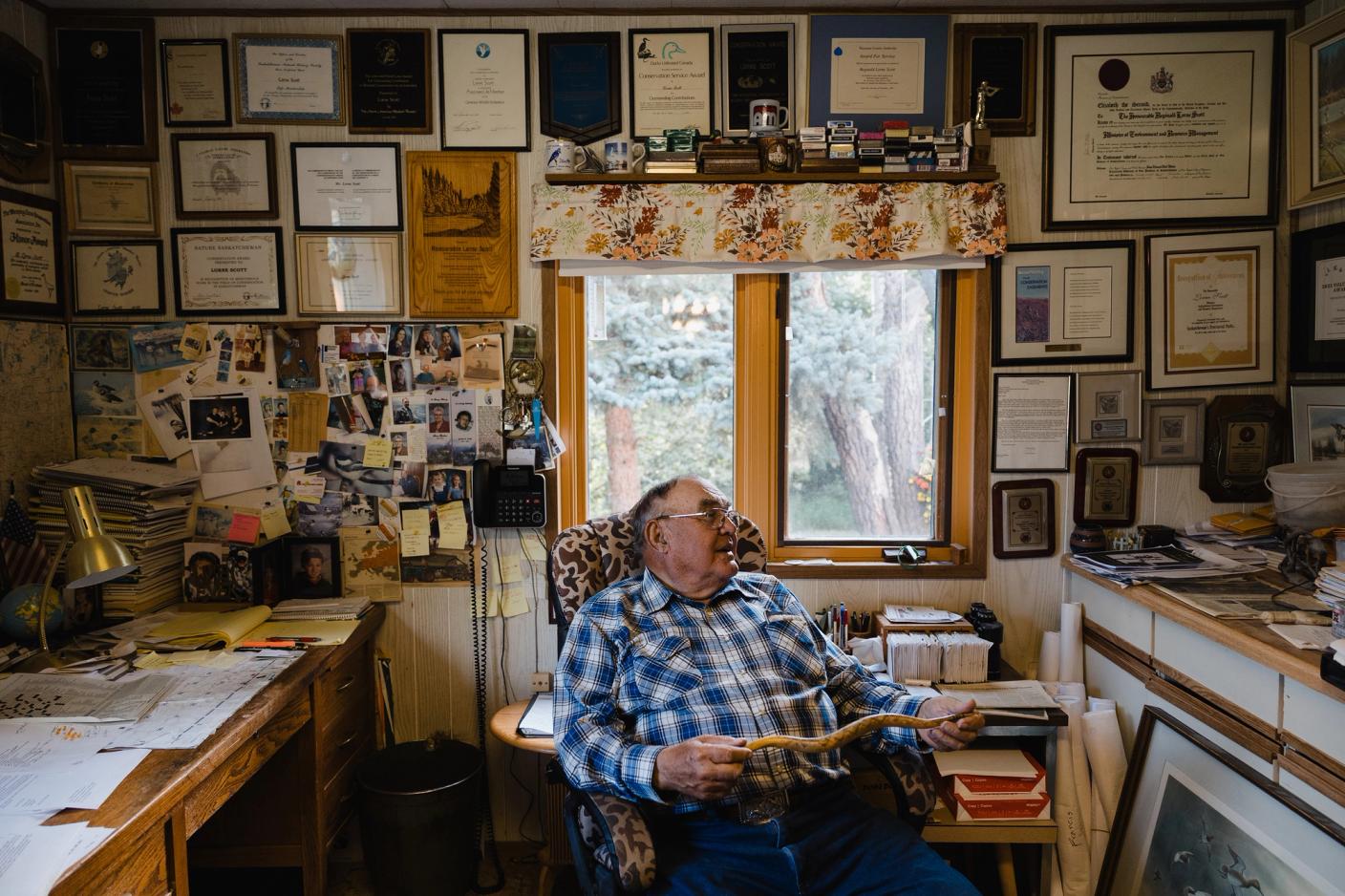
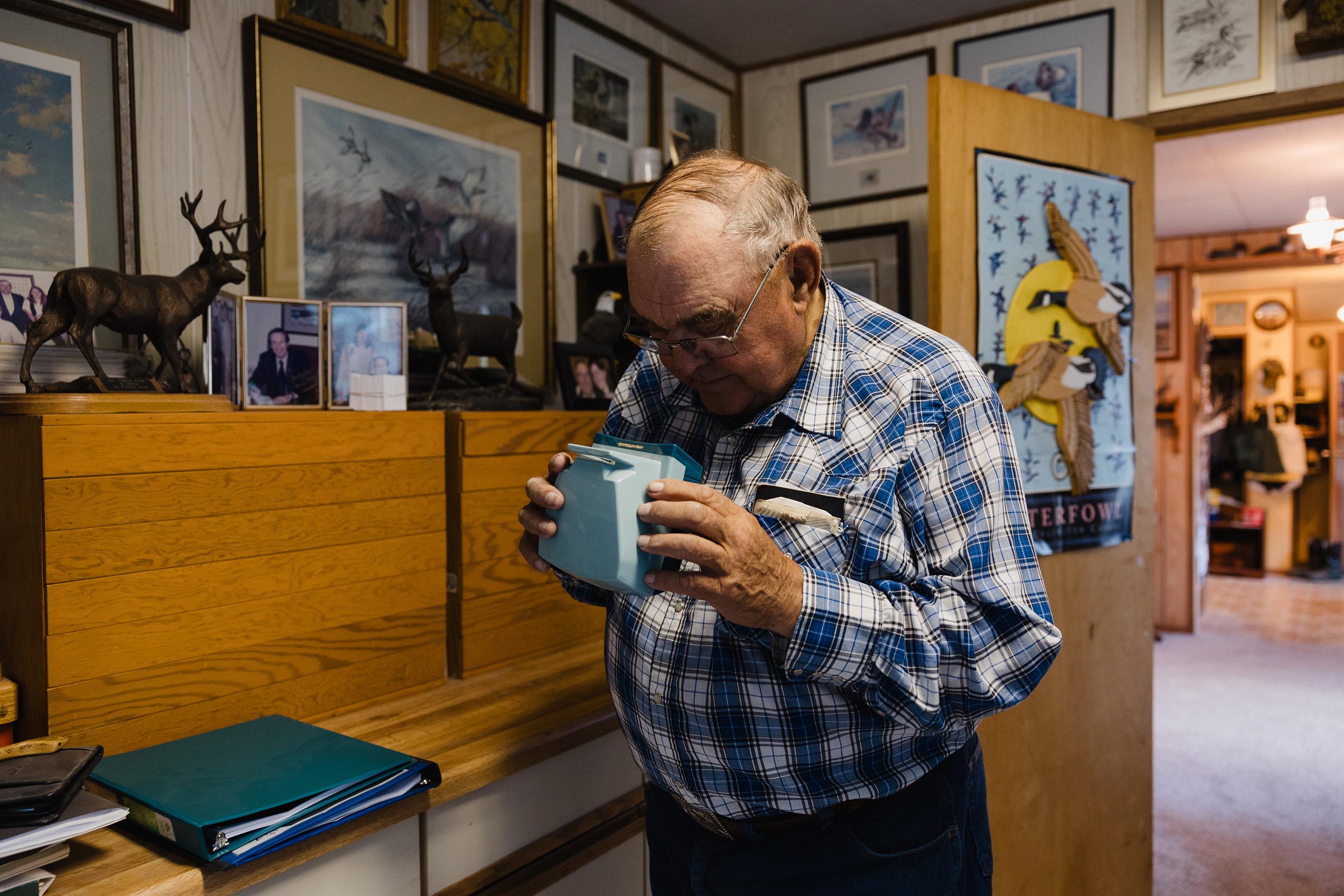
His house is cluttered with school pictures of grandchildren and paintings of ducks and birdhouses. Below a picture of a meadowlark is a small, framed photo of Scott in a suit and Canada-flag tie, receiving the Order of Canada in 2008 from Governor General Michaëlle Jean. The Governor General’s website cites his volunteer work, his political life and his reputation “throughout Western Canada as a staunch defender of wildlife and natural habitats.”
I ask him why he practises what he preaches on his own farm, whether this kind of “rewilding,” as it’s called, is more than a gesture. After all, a few hectares of aspen and bedstraw won’t save the planet. “That's the way the land was when I grew up on my dad's farm, you know,” he says.
“Back then, people lived more in harmony with nature. They didn't feel it necessary to cultivate every acre, and they relied on the sloughs [for water] and the grass for pasture for hay, the aspen bluffs for wood and [the shrubs for] berry picking.” That’s not radical. He’s talking about an idea of land use that accommodates wildlife alongside a less destructive form of agriculture, not either-or. He’s a farmer. But he paraphrases Teddy Roosevelt: wildlife in its habitat can’t speak, so we must and we will. “Somebody has to,” Scott says.