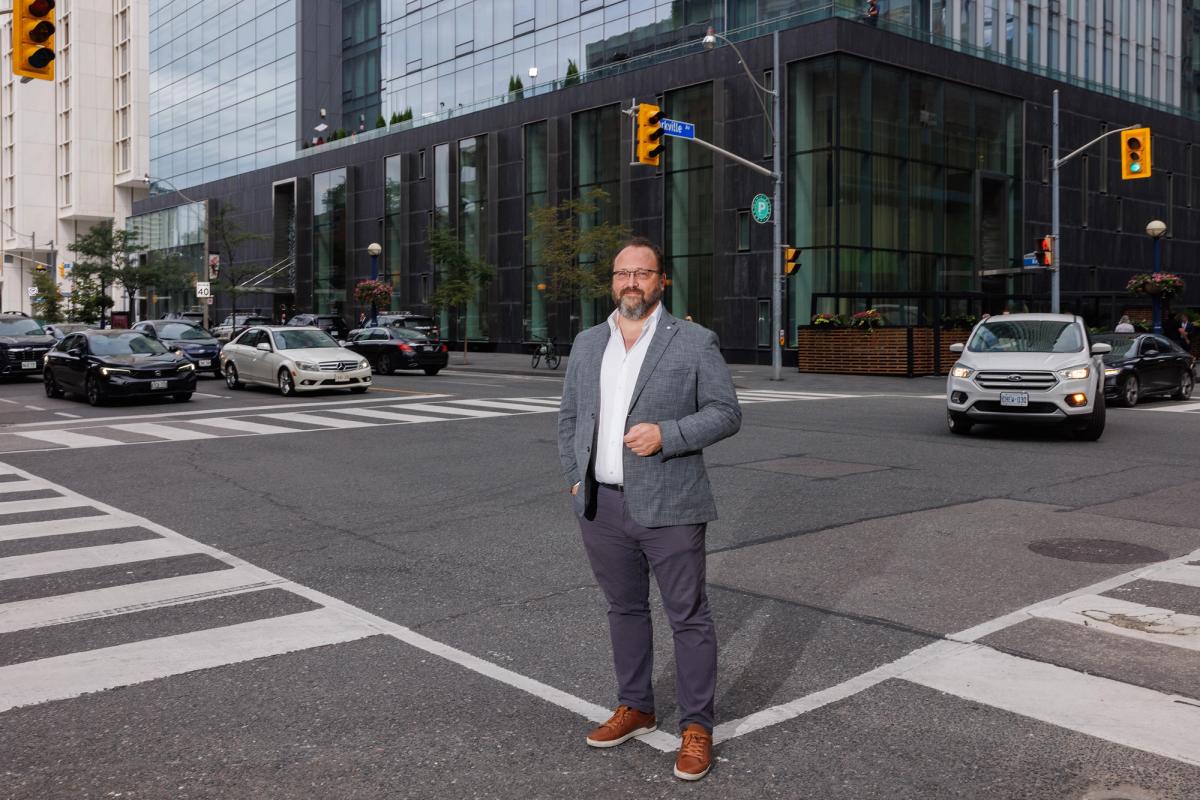
If Flavio Volpe’s plan comes together, Canadian automotive workers will soon be building military vehicles, creating a crucial backstop for an industry imperilled by the trade war with the United States.
Trying to launch a military contractor is a new role for Volpe, who has been president of the Automotive Parts Manufacturers’ Association (APMA) for 12 years, but in a way, it’s an extension of that work since the goal is to keep Canadians employed. “It’s buying the best insurance possible but in service of the country,” he says, giving the project a patriotic spin.
Volpe’s venture – Project Arrow Defence Industries – was one of the 167 featured in the deal book at September’s Canada Investment Summit, which brought many of the world’s richest investors to Toronto to listen to pitches. Because of non-disclosure agreements, Volpe isn’t able to say who he was pitching, but you can wager he was persuasive. His vigorous and forthright communication skills are familiar to anyone following auto news or the trade war. And he has a serious project to sell.
Get our weekly newsletter - the people, places, and ideas revealing where Canada is headed.
Volpe wants about $1 billion to build “land defence systems” – military vehicles – using technology from South Korea’s Hanwha Aerospace. “It’s not a startup,” he says. “We have balance sheets that are enormous. We have the technology we have deployed, but we haven’t done it yet.” By which he means he’s lined up some powerful partners. The plan is to assemble military vehicles in a newly built plant using parts and expertise from some of Canada’s biggest automotive-parts manufacturers, including Martinrea International and Linamar Corporation.
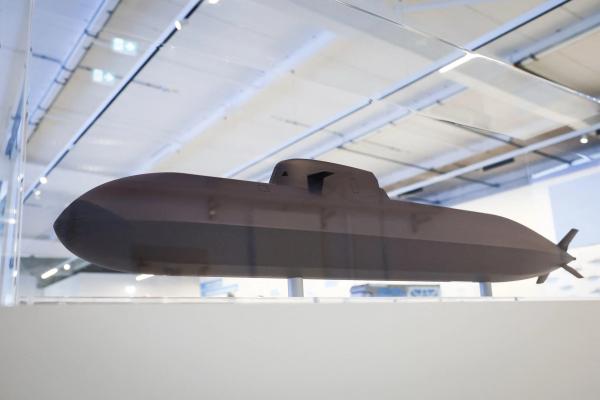
Volpe connected with Hanwha when the Korean defence giant was seeking to sell Canada a dozen submarines to replace its aging Victoria-class boats. In April, Hanwha and APMA announced a joint venture to manufacture Hanwha’s K9 Thunder self-propelled howitzers, armoured personnel carriers and uncrewed ground vehicles in Canada, contingent on their winning the massive submarine contract. That contract instead went to Germany’s Thyssenkrupp Marine Systems.
“When [Hanwha] didn’t win, I think most people thought this was dead,” says Volpe, “but the Canadian Armed Forces and the Department of National Defence have been really clear that they need these land-based systems, and we convinced them to stick with us.” Volpe kept Hanwha onside and set up meetings with Jim Jarrell, the CEO of Linamar, and Rob Wildeboer, the executive chairman at Martinrea.
“What the Koreans needed wasn’t a commitment from us to say ‘I could find these companies for you,’” Volpe explains. “[It was] ‘Show me which companies. Show me their fiscal health and show me their ability to assemble complex subsystems.’”
Wildeboer, who met with the Koreans when they were in Canada trying to win the submarine contract, says his company could produce what they need to make military vehicles in Canada. “We work for John Deere, Caterpillar, Volvo Trucks,” says Wildeboer. “If you can make a bus or that type of converted truck, you can make military vehicles.”
The steady growth of Canadian auto-parts manufacturers over the past 25 years shows the industry’s capability, he says. And they have some experience in the sector already. “We’ve been retained by people in the defence business in the States, including Raytheon, to help with their supply chain and basically go in to potentially fix suppliers, lean them out and potentially take on work and so forth. And I think it’s realistic that defence work – manufacturing, fabrication, assembly, that type of thing – can be done by auto-parts guys.”
There are still big hurdles to clear before Project Arrow starts producing armoured personnel carriers or mobile artillery. For one thing, it’s not the only supplier hoping to cash in on the federal government’s historic defence spending spree. General Dynamics Mission Systems–Canada, a Canadian subsidiary of the American defence giant, recently landed a $2-billion contract to manufacture 190 vehicles for the Canadian Armed Forces.
They’re not even the only ones looking to retool parts of Canada’s automotive sector – threatened as it is by U.S. President Donald Trump’s desire to destroy it – into a burgeoning defence industry. Roshel Group, based in Brampton, Ont., recently announced it added the French manufacturer Centigon to its operations, which could add heft to its bid to convert Stellantis’s idled Brampton plant, once home to 3,000 workers, into a military manufacturing facility. (For its part, the union representing Brampton workers opposes the refit and wants the plant reopened; Unifor is skeptical that defence work will create as many jobs as will be otherwise lost.)
And Volpe still needs to raise $1 billion. Getting into the investment summit deal book – a product, ultimately, of the Prime Minister’s Office – sent a powerful message, he says: “Being in the book says ‘We want to buy from them.’ You have to work out the details with the Armed Forces, and there’s no skimping. We’re spending time to thoughtfully walk through the Armed Forces’ requirements and understand their timing, but here, the prime minister in his investment book is saying ‘If you do it right, we’re gonna play with you.’”
Mark Carney has massively expanded Canadian defence spending under pressure from Trump; it’s up to two per cent of gross domestic product this year (from 1.3 per cent in 2024), and Carney has committed to 3.5 per cent by 2035. Tens of billions of dollars are going out the door, and part of the government’s plan is to use those dollars to produce jobs that cannot be affected by tariffs.
“It’s not just a commercial venture,” says Volpe. “There’s nothing wrong with just a commercial venture, but this one is ‘Hey, we’re going to rearm for ourselves. Well, why shouldn’t we do it ourselves?’”
The advantage for Canadian auto-parts manufacturers is in the value and reliability of military contracts. Auto manufacturers constantly squeeze suppliers to shave the price over the years a model is in production. “In defence, if you get that contract, you supply for five years at cost plus, then your customer contracts you to service that part,” says Volpe. “I think that makes your balance sheet stronger for lenders, but it also makes your balance sheet stronger for the next auto client you pitch.” Given the uncertainty around providing parts to American manufacturers, having a defence contract on the side would also give Canadian suppliers peace of mind.
The formal bureaucratic world of the Canadian Armed Forces is different than the “cowboyish system of automotive,” says Volpe, but ultimately both require “highly engineered perfection” that must be rigorously tested. “The margins in automotive are so tight that you don’t want to be subject to a major recall. And in the defence business, the margin of error is life or death. So, we find out that, in the end, we do speak the same language.”
Volpe is a political animal. His father, Joe, is an Italian immigrant who was a Toronto Liberal MP and a minister in Paul Martin’s government. Flavio’s years with the APMA gave him a wealth of experience in communication and advocacy, especially during trade disputes. He’s convinced Project Arrow meets the moment. “[Carney has] given automotive an opportunity to diversify and for Canadian auto workers to be in other products, but he also knows that that won’t keep the industry alive. But it’s good enough right now, and it’s a new customer without having to convince Hyundai or BYD to show up here at a time where there’s no return on investment.”