It was a coin flip, an actual coin flip, that put Tim Adams on the road to becoming one of the country’s great builders of youth sport. The son of a nuclear engineer, he was raised in Deep River, Ont., and couldn’t decide between a teaching career and journalism. The coin flip sent him to Carleton University for journalism, after which he was off to work as a reporter and producer for CBC Radio in Edmonton.
In 2006, he was assigned a story on school nutrition in the inner city. After some interviews at McCauley School, Adams shut off his tape recorder and started chatting with the principal about ways he might volunteer. A keen athlete and soccer player, Adams suggested he might even coach a kids’ soccer team. The principal smiled and told Adams to turn around and look out the window. What he saw was a bunch of teenagers scrambling around a soccer field, chasing a ball, none of them wearing cleats, all of them pretending they had Brazilian moves, having a blast. “Who are those kids?” asked Adams. “Your team,” said the principal.
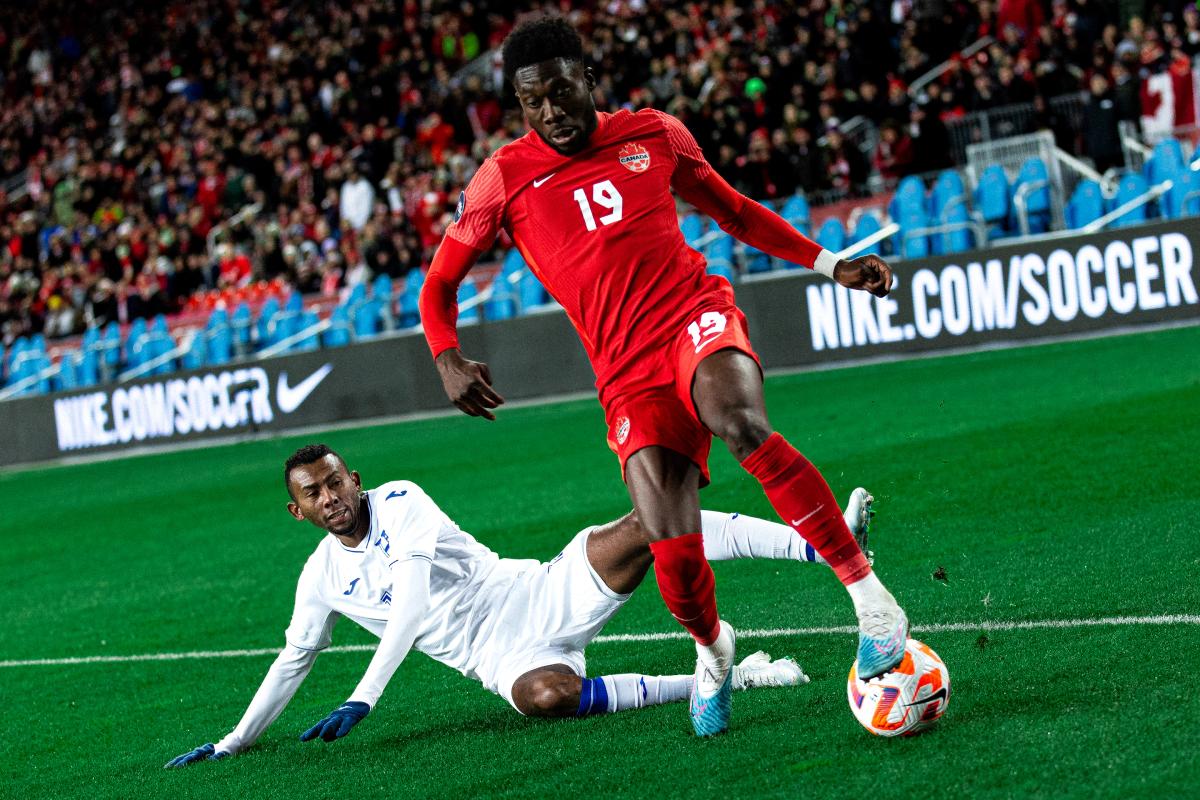
This moment – one guy wanting to coach some kids – was the start of Free Footie, an after-school program that gave kids a chance to play soccer and develop some life skills. It has grown into Free Play for Kids across many other sports, with 150 part-time employees working with thousands of children every year. And it even touched the life of Alphonso Davies, now perhaps Canada’s best soccer player, after his family emigrated to Edmonton as refugees from Ghana in 2005.
So it was literally this chance thing, looking at some kids on a school field chasing a ball around, that led to Free Footie. Once you got into it, did you see from the start it was about so much more than sport?
Absolutely. After a while, I started to become a mentor and father figure for a lot of kids. [There were] single-parent homes, families living in the river valley, kids in gangs, mothers in the sex trade. I got an education pretty quickly.
What did that education teach you?
It emboldened me to use sport to give people belief and hold them accountable to their potential. That first team I coached ended up winning their league, and that’s where Free Footie was born.

It’s a rather large step to go from coaching one team to dozens of teams.
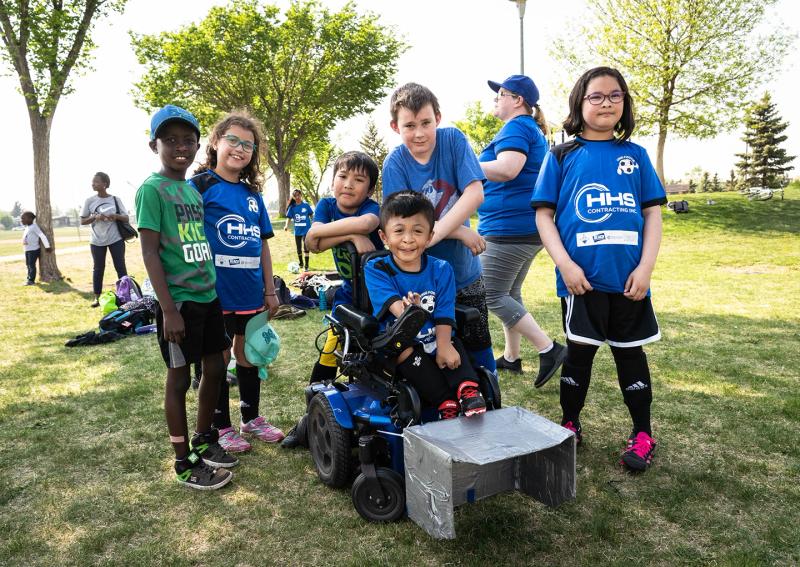
As I learned! I was coaching these kids, but they always had younger siblings around. We’d have a roster of 18 players but 75 kids hanging around. So I made a team for the little brothers and sisters. It became a little league, we invited three more schools, and it ran for six weeks or so. Then it just grew. Four schools, then eight, then 16, 26, 64. It took about 10 years to get to that – two teams per school in four different sports: soccer, hockey, basketball and flag football. At that point, there’d be a year-end tournament with 5,000 people watching the Grade 6 final. It was massive.
How did a kid like Alphonso Davies come out of Free Footie and end up being a global superstar? What do you remember about him when he was with Free Footie?
Well, to begin with, Alphonso wasn’t with us that long, maybe about a month. My memories of that period are hazy! I remember watching him play in a Free Footie tournament and thinking there was something there. What I can say is that his success belongs entirely to him and the people who were truly in his corner through the hard years – his family and people like Nedal Huoseh, his coach and now agent, who has been by his side since the beginning.
He’s an inspiration, for sure.
Yes, but what I think about more, honestly, are the kids who were just as talented, with stories just as compelling, where the conditions simply didn’t align. They didn’t get the same break, the same timing, the same set of doors opening at the right moment. Those kids are the reason we do this work. Alphonso is one we celebrate – and we should – but for every Alphonso there are dozens of kids whose potential quietly disappeared. Closing that gap is what gets me up in the morning.
Do the kids in the program have to come from what we might call less privileged backgrounds? And what if a kid might benefit from the program but they just don’t like sports?
For a lot of kids, sport isn’t their thing. But they like to be around their friends and be around a great mentor. It’s a safe place to be and there’s room for them, because the focus of the organization is more about play than sport. As for the economic side, need looks different everywhere you look. For sure there is a bit of a misperception out there that we are for people who don’t make as much money as some others. But we serve a wide range of families, and the more the kids can experience different realities, the more empathy there is going in all directions.
What are all the programs currently operating?
There are 25 schools for after-school play and sport. There’s Welcome to Play, for newcomers to Canada. And there’s the Wolves program, which is more sport-focused for teens, and they play in all the standard minor sports leagues. But the focus is still always about social-emotional development, about respect for one another.
How did you manage these programs through COVID, and what changed coming out of it?
The organization really shifted during COVID. We were able to gain charitable status and access different funding. We turned it overnight into programming with staff. That was also when we changed from Free Footie to Free Play, because we weren’t just soccer anymore.
We went from being something kids did once a week to something they did every day after school. We knew they needed care, a safe space, meaningful relationships with a mentor. We really started working on using sport as a tool to teach social, emotional and mental health. All the data and research tell us the power of one caring adult and how that can shape a future, whether that’s a family member or a coach or a teacher or somebody who really cares about you and is willing to listen and understand your needs. But also, again, to hold you accountable to the potential you have.
Where does it all go from here?
My big hope would be some level of financial stability! And maybe an actual facility we own, so that booking revenue becomes a tool to fund the programming. Expanding across the country would be great, too. You know, this is not rocket science. It’s very simple. It’s giving kids somewhere safe to be after school and playing some games. Give them a good mentor, give them a good curriculum and watch them grow. But still, there are always roadblocks. It always surprises me how hard it is to create a scenario for a kid to just go kick a ball around.

With the World Cup about to start, how do you feel about Canada not only being in it, but hosting part of it?
When I started Free Footie nearly 20 years ago, telling a kid from Edmonton that Canada would host a World Cup – let alone field a team that belonged there – would have felt like a fantasy to most people. But not to me. I was watching raw talent every single day. The potential was always there. What was missing was the pathway – and honestly, that pathway is equally confusing today, just for different reasons. The rise of pay-to-play, the obsession with wins over development, the hunt for athletes who can be sold for dollars and Instagram posts. The system has changed but the gaps haven’t closed.
What are you looking forward to this summer? How do you think it will go, and how will Canada do?
The scoreline is not what I’m watching most closely. I was vice-chair of Edmonton’s bid to bring World Cup games to this city. Losing that at the last moment was devastating – not just because of the event itself, but because of the social legacy everyone promised would flow from it.
With the World Cup now here in Canada, I intend to hold up a mirror to everyone who made that happen and ask some hard questions: what is the social legacy, the investment so more kids like Alphonso get a shot, the investment in after-school programs that use sport as a tool for human development, the investment in the coaches and administrators who quietly put their own lives on pause to support other people’s kids and families? Where is the investment in what actually makes Canada great – its people and its culture? That’s what this World Cup means to me.
This interview has been condensed and edited.