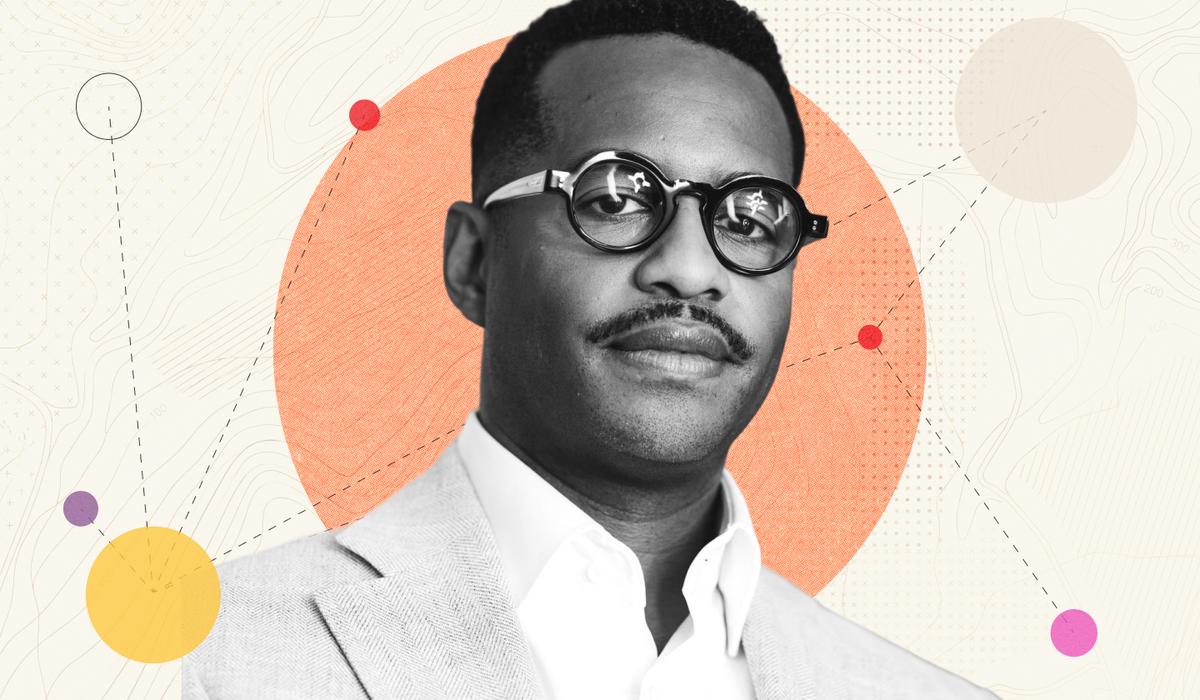
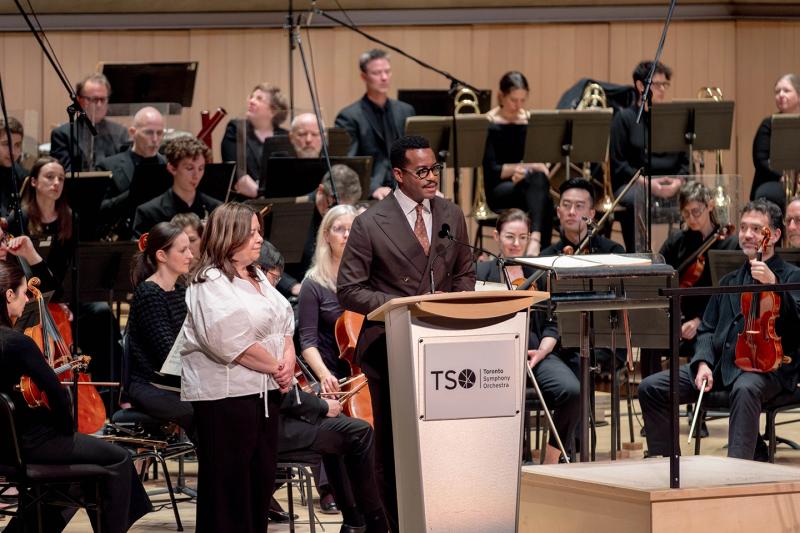
When Mark Williams became CEO of the Toronto Symphony Orchestra in the spring of 2022, he felt confident the potential audience for classical music extended far beyond people who owned opera glasses. His own backstory functioned as proof of concept: Williams grew up in Ohio with parents who were music lovers, but mostly of gospel and R&B. Orchestral music was for stuffy old culture snobs, he thought, until age 12, when he got his hands on an opera’s greatest hits compilation and became captivated by history’s great divas. “The tropes about who does and who does not listen to classical music are pervasive,” said Williams. But in his adopted city of Toronto he saw an ideal backdrop for executing his vision of symphony for all: a multicultural city, with government support of the arts and a heaping of hometown pride. Now, four years into a tenure that began with the TSO’s centennial, Williams has led his organization to booming ticket sales and renewed contemporary relevance – including a Drake collab.
Here, Williams reflects on expanding the reach of a 400-year-old art form, the case for public arts funding and why Toronto is the right city for his vision.
The show must go on, but not the hamster wheel
I’m not sure I would have ended up in Toronto without the pandemic. Before then, I was the artistic and operations director at the Cleveland Orchestra. The role was focused on programming and there was always something to deal with – you need a conductor, you need to replace a violin. COVID was a chance to get off the hamster wheel and actually take stock: how does what I’m doing in the day-to-day line up with long-term goals? With performances on hold, I spent more time working on the business and administrative side of things, and that opened a door in my brain. I was ready to assume a leadership role, and then I learned the TSO was looking for a new CEO.
True north, strong and forward-thinking
At the TSO, I became the first Black CEO of a major orchestra in North America, which meant being very deliberate about setting myself up to succeed. I have these ambitions and goals, but I had to ask myself: where will I actually be able to push them forward? I have worked in environments you might call change-resistant. And anyone who has been paying attention knows there’s been a fundamental shift in American culture over the past decade where arts funding has been cut.
Ten minutes into my meeting with the TSO, I had a sense of ‘these are my people.’ I had a vision and they could see it, too. Orchestral music, classical music – these are centuries-old pieces, but they don’t belong in a museum. When we reimagine a piece for a modern audience, we are deciding what it sounds like in this time period, and also whose voices and perspectives get to inform that. I’m extremely proud of the TSO’s Art of Healing program that creates new work drawn directly from the experiences of Indigenous communities. Orchestral music has been around for centuries, but some voices have been very obviously missing.
Little big leagues
The very first time I came to Toronto was in 2009. Before I was an arts administrator, I managed artists, and one of my clients, the Italian mezzo-soprano Cecilia Bartoli, played two shows at Roy Thomson Hall. I could never have imagined that in 13 years I would be living here, the CEO of the TSO with a poster of Cecilia hanging in my office.
All of the development I saw in Toronto when I moved here really speaks to Toronto as a city in growth mode. The momentum is a big part of what drew me. That, and how Toronto manages to marry that big-city energy with small-town kindness. People hold the door for you when entering the subway. Once, my husband and I were walking around in the financial district having a conversation about where we should go for dinner and a woman stopped and suggested Mother’s Dumplings on Spadina. That friendliness doesn’t happen in most places. And for the record, we went and I ate way too much.
We the TSO
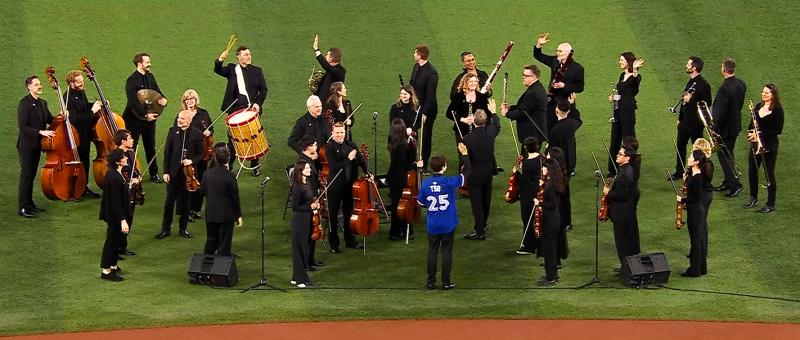
I was aware that Drake was a fan of classical music, but when his management reached out in 2023 to say he was hoping to collaborate on a promo for his new EP Scary Hours 3, I mean, you don’t spend a lot of time pondering your answer. As a fan of his music and everything he has done for Toronto, it was a fun opportunity. As the head of the TSO, it was a way to expand on our mission of introducing classical music to new audiences. The same was true when we had the chance to record the soundtrack for the Blue Jays’ World Series run in 2025. We are Toronto’s orchestra and we are a publicly funded institution, which means every person in this city is our customer, whether you buy a ticket to Beethoven’s Ninth or sit in the stands at the Rogers Centre.
How to make a spectacle
I guess you could say cool glasses are a passion of mine. The best advice I have about picking a pair is that selection is less important than the selector. You don’t spend all day looking at your face, and so it’s wise to assign a low value to what you think. I go to Karir Eyewear in Yorkville and the people who work there are absolute masters in determining what suits. I guess there is a more widely applicable lesson here: when you are lucky enough to find an expert, trust their gut, not yours.
Meet the new boss
I have come to recognize a situation where I’ll be at a cocktail party and someone will ask what I do. There’s this surprised look that says, well that’s not what I thought the CEO of the Toronto Symphony Orchestra looked like. I view it as a chance to unpack assumptions people have about the art form. The idea that orchestras are by and for rich white people is something I can dismantle just by being in a room, and then of course by what we put on our stage. In a place like Toronto, it’s just a matter of looking out into the different communities and saying we should bring Anoushka Shankar to perform one of her father Ravi Shankar’s sitar concertos. We should have the Chinese composer Wu Fei come to do Tan Dun’s Zheng Concerto for the Lunar New Year. Diversity of programming is important no matter who your audience is, but here it feels really organic.
Mission possible
The TSO receives funding from all three levels of government. We still have to fundraise, but that top-down support makes a huge difference – to our bottom line, but just as importantly, it’s a statement of values. In my home country the view is that people should pay for the things that are important to them, whether that’s social services, religious organizations, arts…. It’s a big deal that leadership in this country thinks that everyone should have access to art. So when I am approaching private donors, it’s not ‘will you pay for this superfluous cultural extravagance,’ it becomes ‘join us on our mission, be a part of something that matters to the good of our country.’ People here want to feel like their money is making a difference.
Conversations with Mark Williams have been edited for length and clarity.