When Dr. Stephen Ryan was doing rotations in rural Newfoundland and Labrador as part of his Memorial University medical school training, a realization began to dawn.
“Things looked different,” he says. “I was all over the province. Everything outside of St. John’s is rural in the grand scheme of things.
“What I was observing, without knowing the term for it, was supply chain. And these regions were the end of the road. Things didn’t get there,” says Ryan.
Often the equipment he was seeing was old or broken – and simply taking up space in small regional hospitals – with missing parts that weren’t available from the manufacturers anymore.
Around about the same time, NASA was solving a remarkably similar distance issue. The year was 2014 and a news story caught Ryan’s eye: blueprints for a socket wrench were being transmitted to astronauts on the International Space Station to print on the station’s newly installed 3D printer. “The young me went, ‘That’s teleporting. They teleported.’”
Obsessed, Ryan thought, “If they can do it on the International Space Station, it should be easy to do … somewhere rural.
“Imagine you have a piece of equipment that’s outside of a warranty window, okay? You’re not going to get any new parts for it. And you have one of two choices: it’s going to go in a landfill or you’re going to duct-tape it together,” says Ryan.
Now there is a third option.
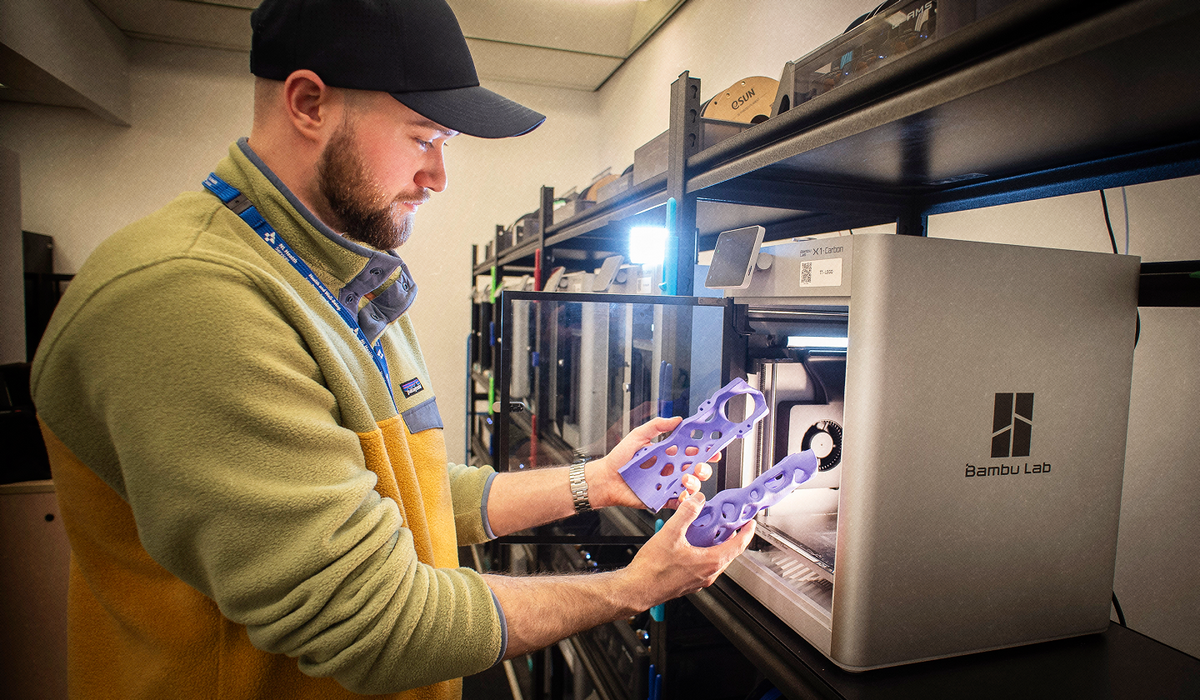
Together with colleagues Dr. Michael Bartellas and Dr. Travis Pickett, Ryan embarked on a modest research project at Memorial University of Newfoundland: MUN Med 3D, focused on creating 3D prints of educational simulators to help rural physicians maintain their skills. That idea grew to become PolyUnity Tech Inc., a St. John’s company that sits at the intersection of 3D printing technology, health sciences, engineering – and possibly even science fiction.
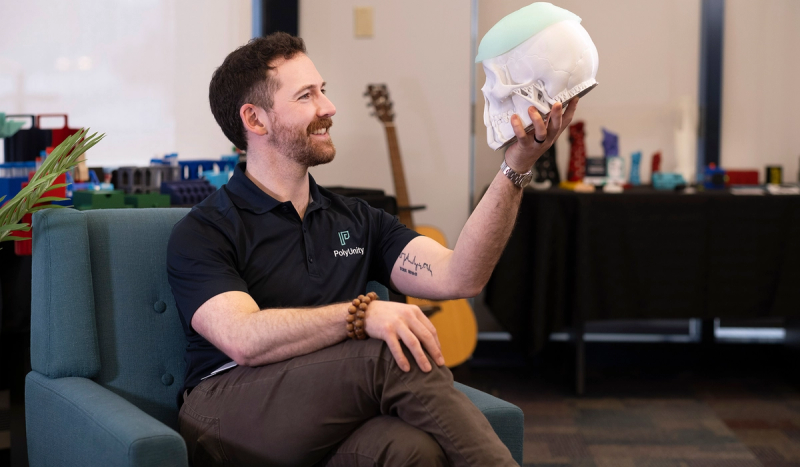
The COVID-19 pandemic put Ryan’s observations about supply chains in medicine to the test. At that point, the company was printing mostly teaching materials for medical students, such as simulated skin and tissue for practising suturing. But Ryan and his team knew the upside potential of their technology. “We really quickly mobilized it, put it in front of the province and the health authority, and said, ‘We can help,’” he says. “And the floodgates started opening.” They found themselves making everything from face shields to vaccine vial trays. “Just things that they couldn’t source really quickly. And we were able to design them, put them on machines and produce them within a week.”
The company’s software now allows health-care workers to either order custom medical-equipment components through an online system, with PolyUnity printing the product, or print the item themselves on a compatible 3D printer. “And, thus, ‘poly-unit,’” says Ryan. “Many as one, right? One catalogue and everybody can access it, and you can produce it all over Canada as you need it.”
PolyUnity’s micro factory – a St. John’s manufacturing facility on the ground floor of a corporate highrise – prints for about 20 hours each day. Its 3D printers use mostly non-petroleum-based plastics as a base material, as well as liquid resin to allow for production of more compact, durable medical components.
The infinite printing flexibility helps create tailored medical devices, models, custom surgical tools and on-demand parts, and its applications can easily extend to field hospitals in refugee camps or portable production units in the remote Arctic.
There’s not much that can’t be printed: from blood collection trays and custom casts and splints to fidget toys and nasal cavity models (which help surgeons visualize and plan their approach), and even guitar grips that help stroke victims hold a pick. The technology is short-circuiting fragile global supply chains and improving the standard of care at the same time.
One recent big win has been streamlining the production of silicone boluses for use in radiation therapy. The bolus – a flexible device placed over a part of the body that will receive radiation doses – is designed to ensure that the full treatment is delivered to specific areas without damaging neighbouring tissue.
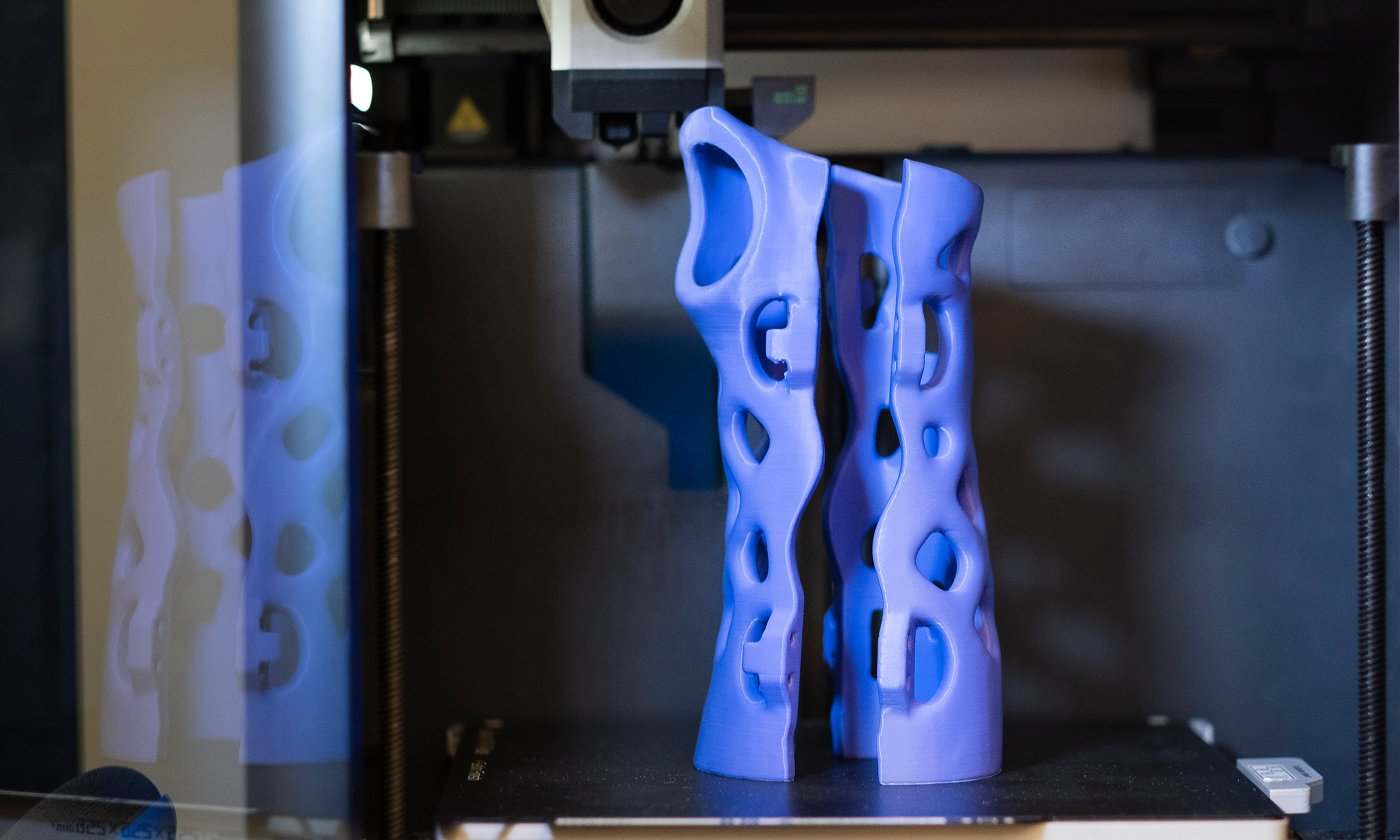
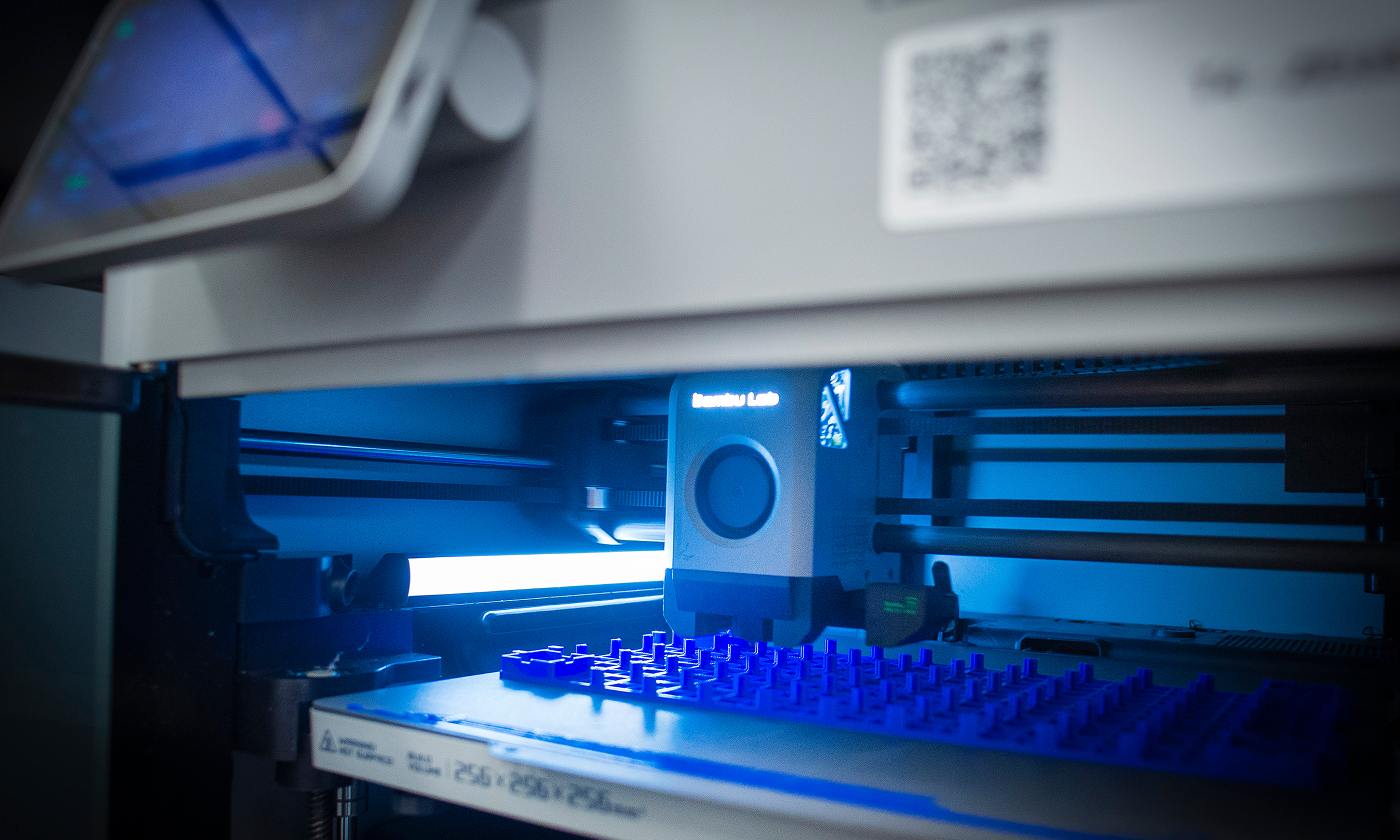
Traditionally, the bolus was made through a process requiring a plaster cast of an area of the patient’s body that would have to be created before treatment could begin. “In Newfoundland, the geography is the killer here,” says Ryan. A patient would have to travel as many as nine hours, one way, to St. John’s to have the cast made, and then return once other steps in the production process were finished to start the treatment.
No longer. Now, the patient’s CT scans are used to design and print the device, so it’s waiting for them when they show up for their first appointment. “It saves two or three trips back and forth from wherever you’re coming from,” Ryan says. As well, the 3D-printed mould has a better fit and is more comfortable than the traditional boluses.
Future applications of the technology are almost limitless; already, there are experiments with biocompatible tissue that can replace parts of a patient’s anatomy. Bringing us back to space, Ryan says, “It’s right on that verge of science fiction and reality right now.”