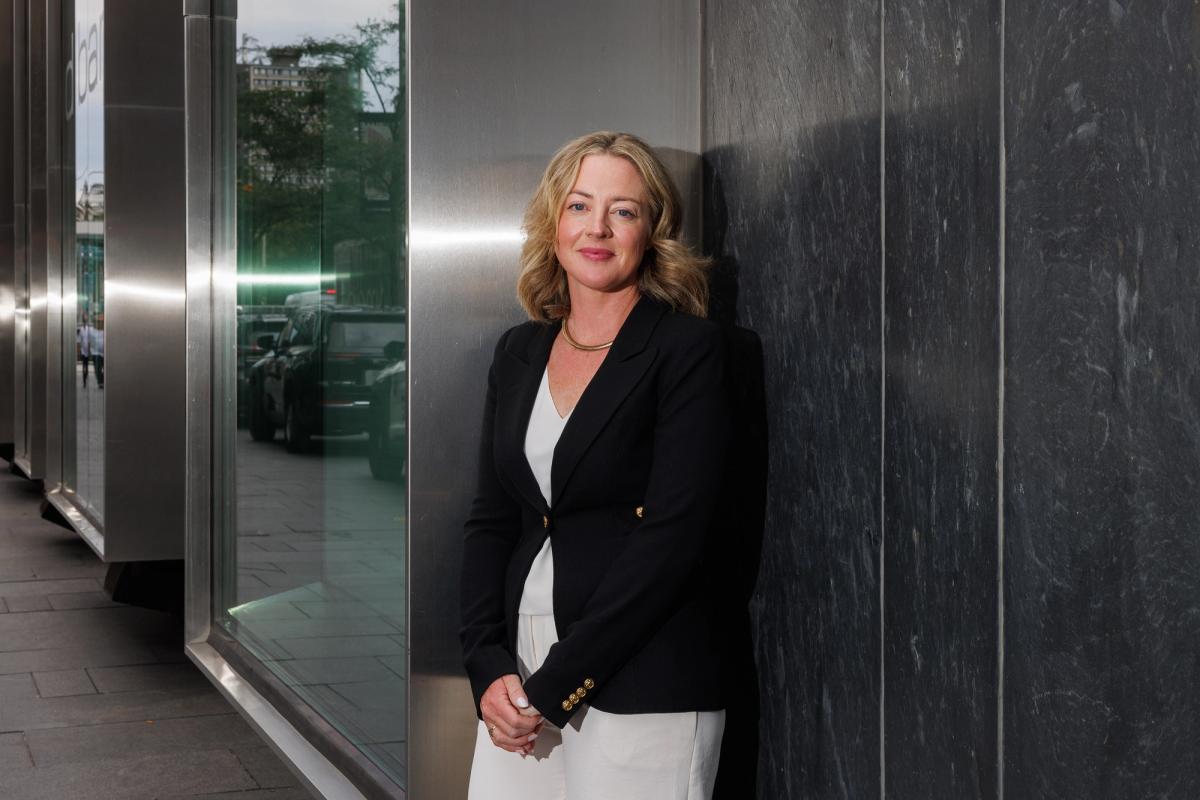
Sarah McLean didn’t find out until a few days before the Canada Investment Summit that the project she’s been working on for five years – Spaceport Nova Scotia – had made the cut. Specifically, it would be featured in the prospectus put together by the prime minister’s office for the massive two-day pitchfest at Toronto’s luxurious Four Seasons Hotel.
“It was a wonderful feeling to get the confirmation,” she said when Be Giant caught up with her near the hotel on the day the summit began.
McLean is the vice-president of Maritime Launch Services, which is building a space launch facility in windswept Canso, at the end of a peninsula jutting out into the North Atlantic.
Getting invited to the investment summit, where McLean had the opportunity to pitch investors on a $250-million accelerated expansion, was a big deal. But the notification was so last-minute, she had to scramble to book a $1,000-a-night hotel room downtown, a couple of kilometres from the event.
“It was pretty busy in Toronto. There was TIFF and the summit, and I think I was lucky to get the last hotel room in Toronto.”
Get our weekly newsletter – the people, places, and ideas revealing where Canada is headed.
But making it into the prospectus – along with 166 other projects – did not mean she could actually attend the summit. McLean did not receive a pass to get into the Four Seasons, where Prime Minister Mark Carney mingled with titans of the world’s largest investment funds. She had to hustle to set up meetings, but getting into the prospectus was validating, and it allowed her to pitch the company to investors who were in Toronto for the event.
It was a big moment for a company that has already had quite a year. Maritime Launch is the brainchild of former NASA contractor Stephen Matier, who has been working on developing launch capability in Nova Scotia since he first visited in 2016.
McLean, a former staffer in the Conservative government of Stephen Harper, joined five years ago. The company has faced skepticism and resistance as they’ve tried to achieve liftoff, looking for capital and negotiating the regulatory maze required to start launching rockets.
Nova Scotians in the area, which is better known for folk music and cod fishing than high-tech startups, were skeptical, but the site has a lot to commend it to those who want to put rockets in space. Geography is the key – it is in a sparsely populated area and there is a great deal of open water to the east, so rockets can take off without risk to residents. And the world needs more places to launch rockets. The demand for military and civilian applications keeps rising.
The company’s patience has paid off. After years of laying the groundwork, they started construction in 2022, building a road and a launch pad, and have now hosted three sub-orbital launches.
The big breakthrough came in March, when the federal government announced that it would pay $200 million to use the company’s launch facility for 10 years, and in July, the company signed a deal with Isar Aerospace, a German company that succeeded in launching a rocket into orbit from Norway in September.
Isar and Spaceport Nova Scotia will build a dedicated launch facility on its site for Isar, which it will use to launch its Spectrum rocket. The goal is to be the site of the first Canadian orbital launch, hopefully by 2028, giving Canada a defence and business application that it has thus far lacked – the ability to put payloads in space.
Canada is the only G7 country that has never reached orbit, something the Carney government wants to change. “Reliable and independent launch access will enable Canada to place critical satellites into orbit even during global uncertainty, geopolitical tensions or disruptions in foreign launch markets,” it said in a statement when it announced the money.
At the same time, the federal government launched a $105-million contest to achieve launch capability, with grants for three companies working to build rockets: NordSpace, Canada Rocket Company and Reaction Dynamics.
Although McLean didn’t get to hang out with Carney at the summit, she was able to attend related events and, most importantly, line up meetings with investors who might want to put money into expanding the spaceport project.
“There was no expectation that we were going to leave the summit with new deals or new partnerships,” she said. “For us, it was about the opportunity to be profiled and to be in the mix and to introduce ourselves.”
Toronto’s pricey Yorkville area – typically a hub for big money and celebrity spotting – was especially vibrant this week, with police cars creating a security perimeter around the hotel and the heavyweights of global finance coming and going in expensive suits with plastic security lanyards around their necks.
“The vibe was really exciting,” McLean said after she was safely home in Halifax. “You could feel it in the air. The interest in Canada, the pride for Canada. Everybody had maple leaf pins on their suits. So I felt a lot of pride.”
And she got to sell the potential of her company to investors.
“We are entering a really exciting phase of our growth, and that is the opportunity that we're sharing with investors. The space economy is expected to reach $1 trillion by 2030. The space sector in Canada is growing in a really incredible way, but you can't have a true space sector in Canada without launch.”

![“I get an inbound [email] every day asking can you get me into this meeting or that, and I’m just a small fry,” Frank McKenna says of the summit.](https://cdn.sanity.io/images/l3tzmu37/production/7faa2d5cc965d0933bd7c5a13e6fc6096ebca145-2880x1918.jpg?auto=format&fit=max&q=75&w=600)