What it is
A cluster of Canadian tech that will ride shotgun on an upcoming NASA lunar mission: a space-age lawn dart plus a toaster-sized satellite armed with a souped-up camera and antenna.
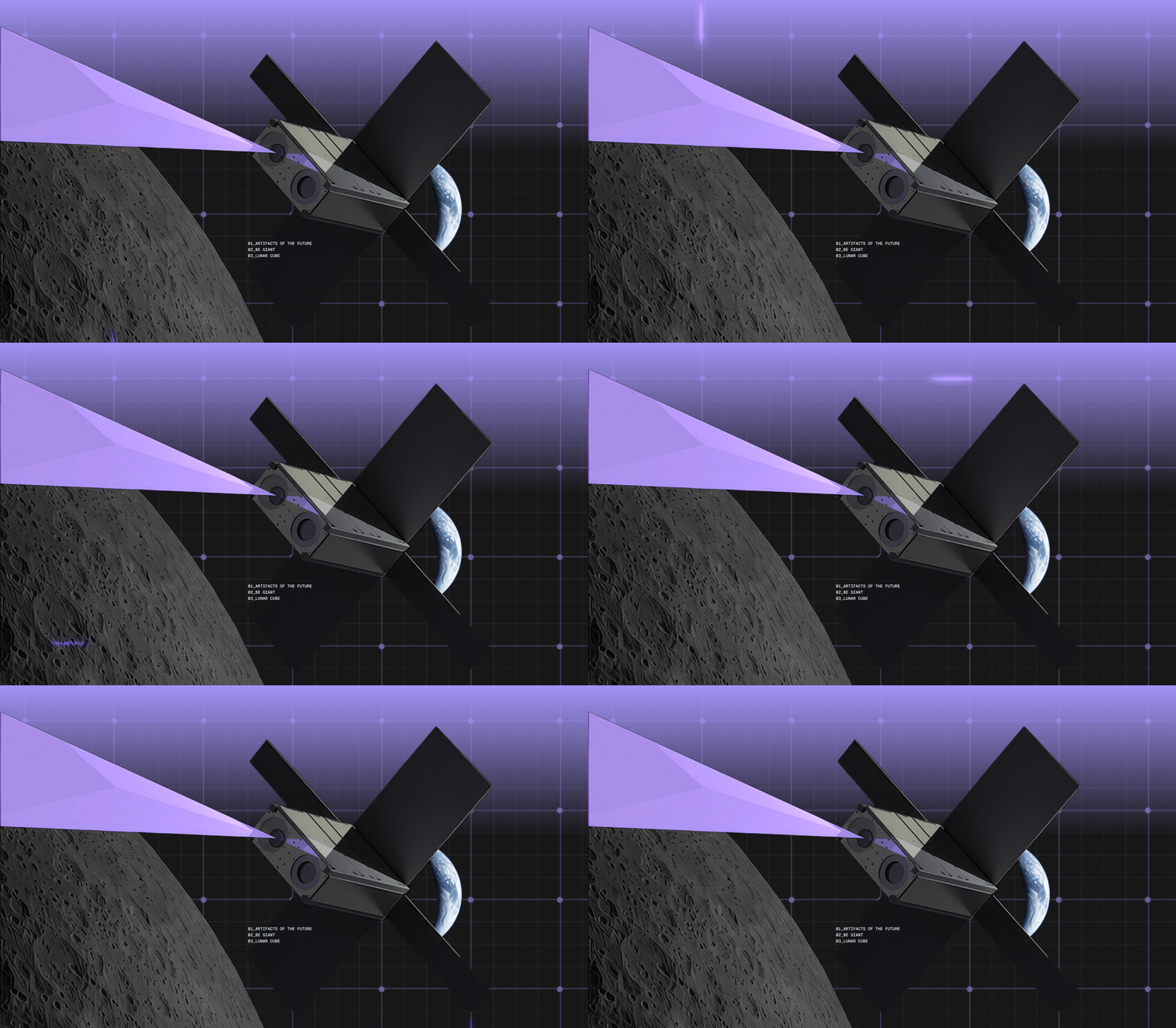
The first, called MAPLE (Multipurpose Autonomous Impact Probe for Lunar Exploration), is an impact probe that will be sent to the moon’s surface to gather data. The second, MAPPER (Multispectral Analysis Prospector and Positional Exploration Relay), is a CubeSat, a very small satellite – 30 by 20 by 10 centimetres in this case – that will orbit the moon.
Both of these, along with the camera and antenna, make up MINERAL (Multispectral Imager with Navigational Exploration Relay and Autonomous Lander), the name for the project as a whole. “We love acronyms in space,” says Philip Ferguson, professor of aerospace engineering at the University of Manitoba.
Get our weekly newsletter – the people, places, and ideas revealing where Canada is headed.
Who’s behind it
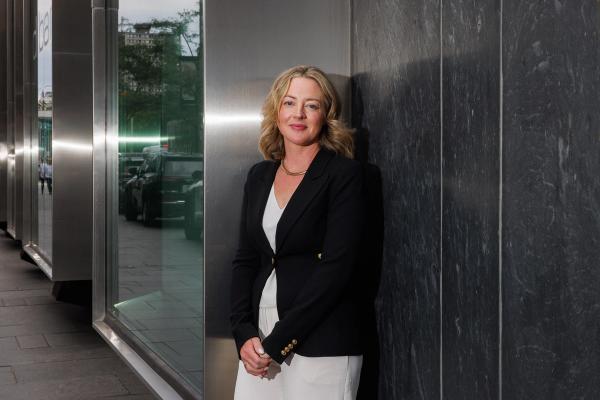
Ferguson is director of the University of Manitoba’s Space Technology and Advanced Research Laboratory (STARLab) – yes, another acronym – which he founded in 2017. He’s working on MINERAL with the Canadian company Magellan Aerospace, whose Winnipeg division won a contract last year from the Canadian Space Agency (CSA) to “design and manufacture a lunar resource exploration package” to be part of one of NASA’s missions.
The team also includes space geologists from the University of Winnipeg as well as participants from the Manitoba First Nations Education Resource Centre, who are leveraging Indigenous navigational techniques to support landmark-based wayfinding, a.k.a. using things you can see and recognize – think the North Shore Mountains in Vancouver – to find your way around. “We’re working with Indigenous youth and elders to learn about these techniques, and then we’ll be attempting to navigate around the surface of the moon using visual landmarks,” he says.
Everything is, of course, overseen by the CSA and done in co-ordination with NASA. “It’s a great example of international co-operation,” says Ferguson, who notes Canadians have been “very prominent in space exploration” since the 1950s. (Fun fact: the feet of the lunar lander for the 1969 Apollo 11 mission were made in Canada.)
What problem is it trying to solve?
“We know very little about the moon,” says Ferguson, “and we want to learn more.” Part of this is knowledge for the sake of knowledge, but there’s also a commercial draw: the moon contains many rare-on-Earth minerals that would be worth mining despite the “tremendous cost,” he says. Another motivation to improve our understanding of the lunar environment is to better prepare for a possible future moon base – a “permanent presence of people on the moon.” But before all this, we need to know more about what’s there.
How it works
MINERAL will be on an upcoming NASA lunar launch, part of the agency’s Commercial Lunar Payload Services initiative, which has private companies delivering NASA shipments to the moon on a series of trips. The details are still being finalized, but the idea is that the MAPPER CubeSat and its antenna and multispectral imager – a camera that takes pictures in different light bands – will be sent into lunar orbit while MAPLE – the lawn dart – is shot into the moon, around its equator. The two will be in contact so that MAPPER can track and photograph MAPLE and the dust cloud it creates. It will collect and process all the data and then relay it (possibly via NASA’s lander) back to Earth.
MAPLE will collect and transmit information on things like moisture content and possibly mineral composition on the surface after landing, assuming it survives. Tests to ensure it makes it in one piece have included dropping things from helicopters, Ferguson says. Meanwhile, MAPPER will circle the moon for at least two lunar days and one lunar night, or about 44 Earth days – but up to almost half an Earth year – before it’s sent on a “controlled crash” into an area that isn’t confirmed yet but requires careful selection of the moon’s surface at the end of its life. From launch to de-orbit, MAPPER’s life span could be anywhere from about 50 Earth days to just under a year.
The challenges it faces
As you’d expect from actual rocket science, there are a few challenges. One is the lunar night, which lasts 14-odd Earth days – think half a moon cycle. During this time, the surface is colder – much, much colder – than a January night in Winnipeg and equipment will have to be placed in a dormant state, just struggling to survive, meaning MAPLE and MAPPER may not be able to communicate. “We’re not expecting [NASA’s] lunar lander to be awake during that time,” Ferguson says. That said, things will be timed so that MAPLE and any other equipment lands around dawn, so to speak, meaning they’ll have a full lunar day (again, 14-ish Earth days) to accomplish the mission goals before nightfall.
Another challenge is navigation, which is part of the reason the Manitoba First Nations Education Resource Centre is on board. Earth-orbiting missions can use GPS to find their way around, but at the moment, the moon has no such satellite network. It’s also got “wonky” gravity and a “not very useful” magnetic field, says Ferguson. That means two things. First, wayfinding has to come from a combination of visual landmarks (e.g., ID-ing specific craters) and tech that uses communications to predict where a satellite is going to be. Second, the orbiting MAPPER is limited in how it can adjust its position, with only fuel-powered thrusters and reaction wheels (spinning wheels that apply torque) available rather than the magnetorquers – magnetic torquers, a kind of electromagnet – commonly used around Earth.
And then there’s space radiation. We’re shielded from it here on Earth, but lunar orbit is another ball game. “The galactic cosmic rays are a real challenge when it comes to computers,” Ferguson says.
What’s next?
The mission is currently on track for launch in 2028, Ferguson says, and there’s a lot to do between now and then. The team is currently wrapping up the initial concept study, then will move into the next phases – preliminary design, critical design, building and testing – before the moment of truth arrives. “Then we’ll operate for 100 or so days of excitement,” Ferguson says. “It should be a lot of fun.” Space travel, he adds, has become “somewhat mundane sort of old news. But it’s never going to get old, at least not in the near term, to send something to the moon.”